
Exhibition in Australia draws attention to harm caused by invasive buffel grass
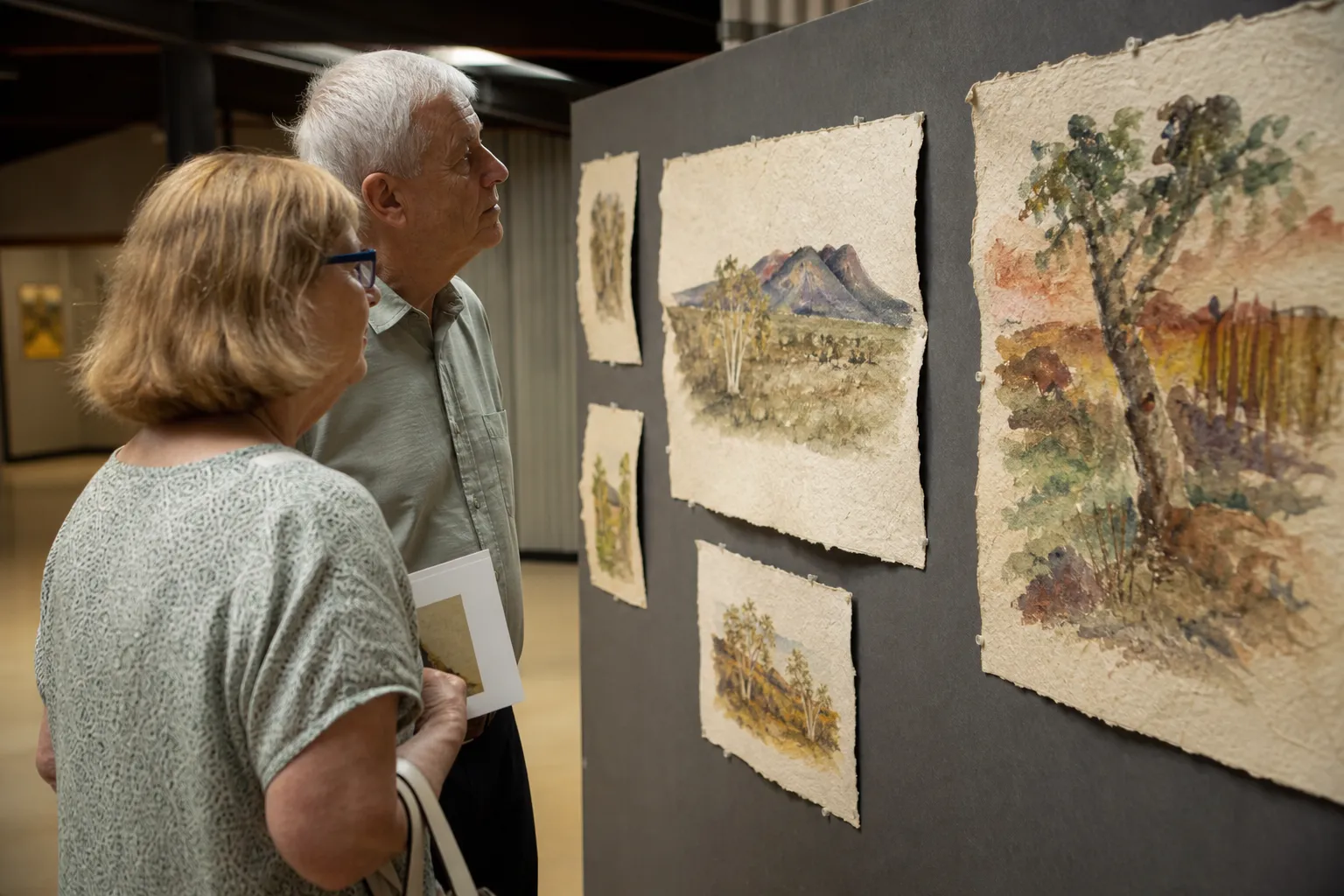
An exhibition of artists’ works dedicated to the displacement of native plants by invasive buffel grass has opened in Alice Springs, Australia. The display is being held at the Olive Pink Botanic Garden, ABC News Australia reports.
Western Arrernte artist Carita Koulthard presented watercolours depicting traditional plant foods that she gathered as a child in Hermannsburg, about 130 kilometres west of Alice Springs. These include yalka wild onion, lutjia wild potato and kutjirra ntjirrka. According to the artist, these plants are now rarely seen near Alice Springs because of the spread of buffel grass.
Paper made from buffel grass
The works for the exhibition were created on buffel grass paper, handmade at the studio of the Many Hands art centre. The grass is cut, boiled, left to soak, pulped, spread on a screen and dried. Koulthard said the first attempts at making the paper were rough, and the artists tried to make it smoother without specialised equipment.
More current news is available on the UA.News Telegram channel Telegram.
Buffel grass is drought-resistant. It was introduced to Central Australia in the 1960s to combat erosion and as feed for cattle. In 2024, the plant was declared a weed in the Northern Territory. It spreads easily, suppresses native plants and creates additional fuel for fires. Buffel grass grows in every Australian state and territory except Tasmania and the Australian Capital Territory.
Clearing overgrowth
Along the Todd River in Alice Springs, volunteers clear buffel grass overgrowth every week. Since May, participants in the initiative have spent about 150 hours and cleared an area of approximately five hectares near the city centre. Volunteer Steve Eldridge noted that a large amount of grass beneath old red gum trees increases their fire risk.
Professor Kamaljit Sangha of Charles Darwin University, co-author of an economic assessment commissioned by the Northern Territory government, said that under a model of the grass’s spread across 1,000 hectares, costs are approximately 60 times higher than the benefits received by the livestock sector. Australia’s federal government is considering listing buffel grass as a Weed of National Significance. A decision is expected by the end of the year.


