
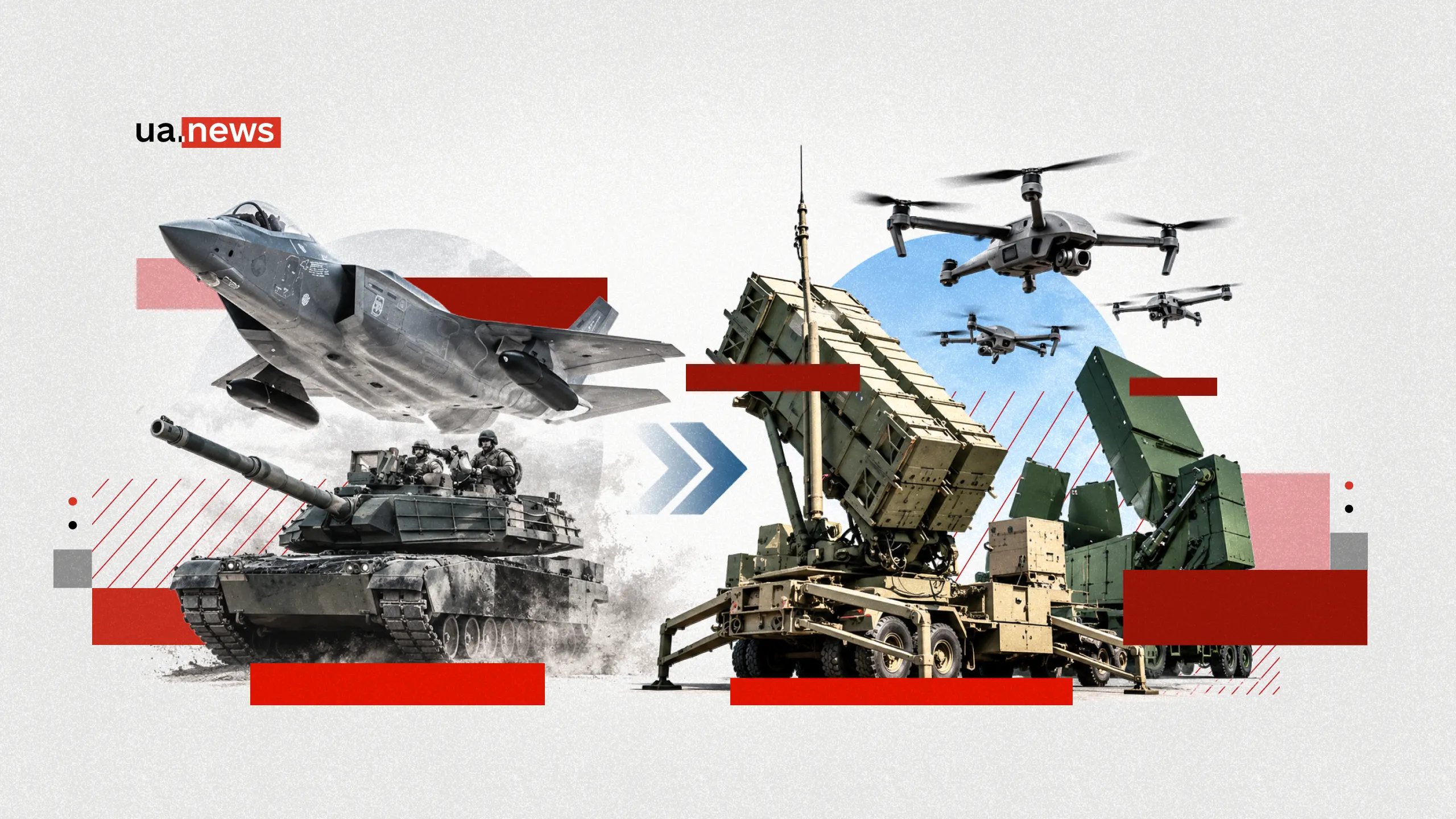
The full-scale war in Ukraine has forced NATO to take a fresh look at what a modern army should be like. The systems in which Western countries have invested billions of dollars over decades have not disappeared and remain important. However, the Ukrainian front has shown that having technologically superior weapons is not enough if there are too few of them, ammunition runs out quickly, and production cannot keep up with consumption.
In recent years, it has become clear that in a major war, modern fighter jets, tanks, and precision-guided missiles are just as important as items that may previously have seemed less prestigious. We’re talking about millions of artillery shells, large stockpiles of air defense missiles, thousands of inexpensive drones, electronic warfare capabilities, and factories capable of continuously replenishing arsenals.
In September 2026, Reuters reported that Ukraine’s experience had already sparked a debate about how prepared the Alliance itself is for a conflict of such intensity. The war has called into question several long-held assumptions—from the ability to quickly gain air superiority to the expectation of relatively short-duration combat operations and modest stockpiles of expensive ammunition.
UA News explains how the war in Ukraine has shifted NATO’s military priorities, which types of weapons have lost some of their former significance, and what the Alliance’s arsenals are now most lacking.
Relying on a small number of very expensive weapons no longer works the way it used to
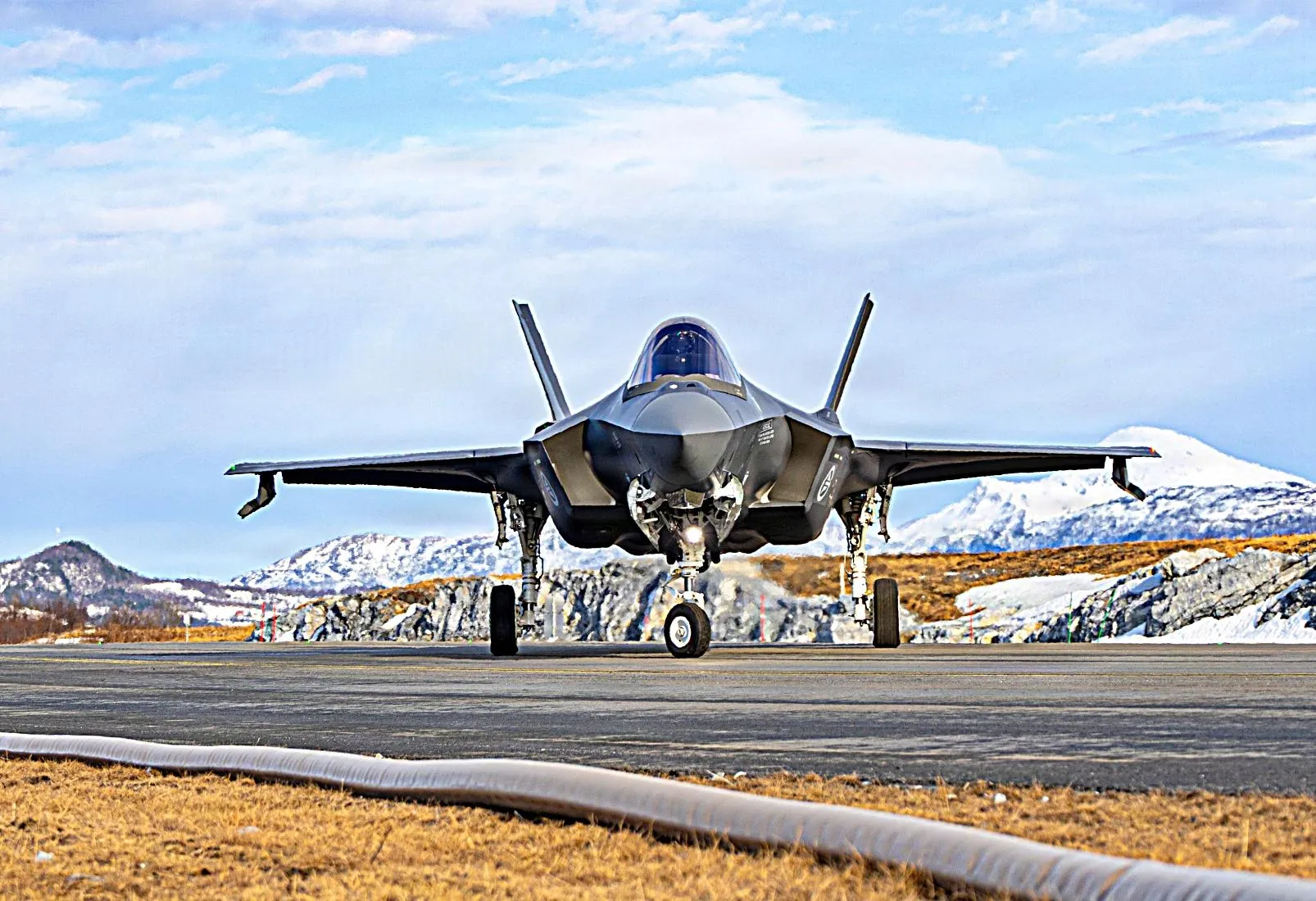
For decades, Western armies have gradually moved toward the concept of technological superiority. The logic was clear: it’s better to have fewer systems, but each one must see farther, shoot more accurately, and be significantly more effective than the enemy’s equipment.
This approach worked well in wars where the U.S. and its allies had a clear advantage in the air and could control a significant portion of the battlefield. Ukraine has painted a different picture.
When a war drags on for years and the enemy has a large army, its own industrial base, and is prepared to lose vast quantities of equipment, it’s no longer just a matter of how good a particular system is. It’s equally important how many such systems are in stock and how quickly new ones can be manufactured.
That is precisely why Europe has begun to rethink its approach even to missile systems. The war in Ukraine has prompted European armies to seek out cheaper missiles that can be produced in much larger batches. The reason is simple: expensive, high-precision munitions can run out much faster than factories can replace them.
This does not mean abandoning the Patriot, F-35, or other expensive systems. On the contrary, they remain critically important. But the old formula—“a few very expensive systems instead of a large number of simpler ones”—is increasingly being supplemented by another requirement: there must be plenty of weapons.
The war has effectively brought back into Western military planning a term that had partly faded into the background after the Cold War: mass.
Tanks haven’t become obsolete, but the war in Ukraine has changed their role
One of the most popular conclusions drawn in the early years of the war was the claim that “the tank is dead.” The reasons for such talk are obvious. On the Ukrainian front, even a very expensive armored vehicle can be destroyed by a relatively cheap FPV drone. The battlefield is saturated with anti-tank systems, mines, artillery, and reconnaissance UAVs. Hiding a large armored vehicle is much more difficult than it used to be.
But NATO has not yet concluded that tanks are no longer needed. Ahead of the Alliance’s summit in The Hague in 2025, NATO Secretary General Mark Rutte stated explicitly that countries will need thousands of additional tanks and armored vehicles. NATO’s argument is that even under new conditions, troops still need protection and the ability to maneuver on the battlefield.
It is not the necessity of tanks that has changed, but the way they are used. A large armored column without air defense cover, electronic warfare capabilities, reconnaissance, and its own drones is much more vulnerable today. It is becoming increasingly difficult for a tank to operate as an independent “strike force.” It is becoming one element of a complex system.
Therefore, it is more accurate to speak not of the disappearance of tanks, but of a decline in their autonomous value. An expensive Leopard, Abrams, or Challenger cannot fulfill its potential if a reconnaissance UAV is constantly hovering overhead, and FPV drones or artillery arrive within minutes of detection.
Drones have become one of the main weapons of war
If there is one type of weapon whose significance the war in Ukraine has undoubtedly elevated to a new level, it is drones. Small reconnaissance UAVs, FPV drones, long-range strike drones, and maritime drones have become a common part of warfare. They guide artillery, locate military vehicles, attack infantry, and strike warehouses, oil refineries, and military facilities hundreds of kilometers away.
NATO itself acknowledges the scale of these changes. In July 2026, Mark Rutte stated that drones had “fundamentally changed the nature of modern warfare.” At that time, the Alliance announced the NATO Drone Edge initiative and the allies’ plans to invest more than $40 billion in counter-drone capabilities over the next five years. NATO is already using Ukraine’s experience to train its own military personnel. The Alliance is specifically studying Ukrainian drone deployment practices through the joint JATEC center in Bydgoszcz, Poland.
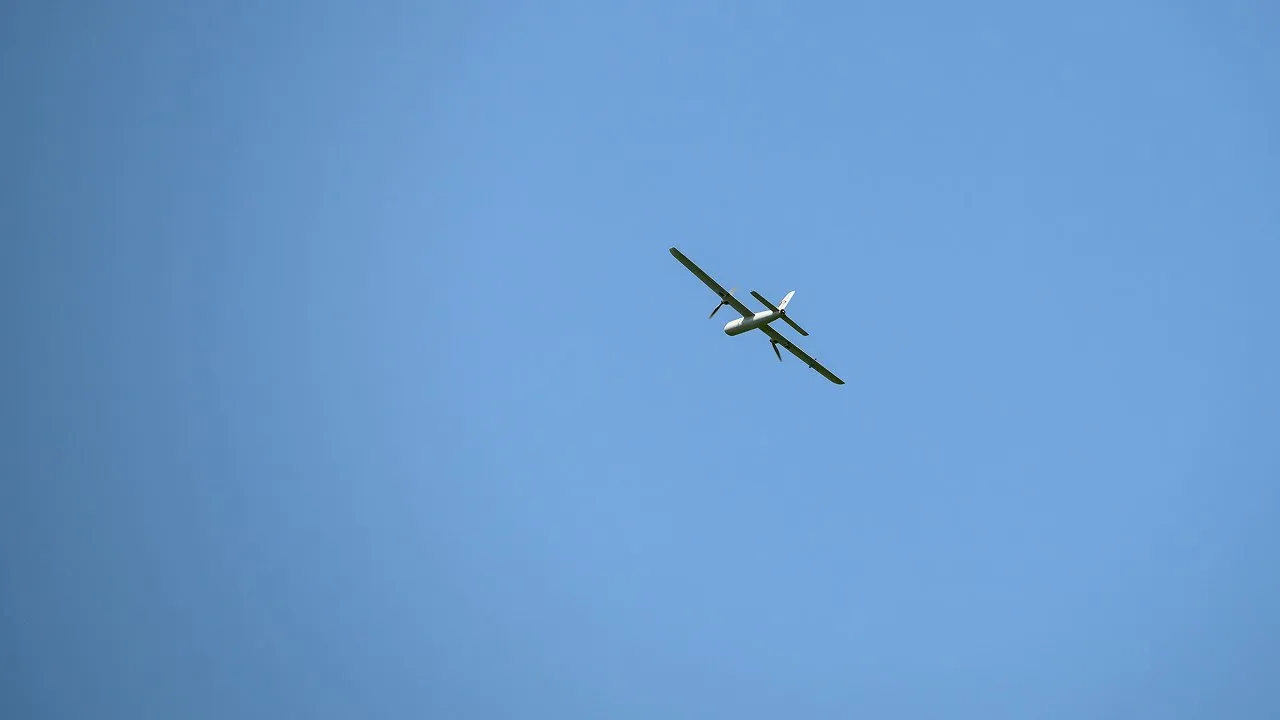
However, there is an important caveat. Drones have not replaced artillery, aviation, or missiles. RUSI analyst Justin Bronk cautioned that NATO should not make the opposite mistake and attempt to replace traditional firepower with drones. Russia itself is actively developing counter-UAV capabilities, and operators and control channels are becoming targets for strikes.
In fact, the army of the future will need drones, artillery, missiles, and armored vehicles alike. It’s just that drones have now become yet another widespread type of weaponry, without which all other systems perform significantly worse.
NATO’s greatest shortage is air defense missiles and air defense systems themselves
If drones have become one of the war’s major revelations, then air defense is one of its major shortfalls. Every day, Ukraine demonstrates just how costly it is to defend a large territory against missiles and drones.
Russia can combine cheap attack drones, cruise missiles, and ballistic missiles in a single strike. To defend against this, interceptors—which cost significantly more than the target—are often required.
The problem of ballistic missiles remains particularly acute. In September 2026, Reuters reported that Ukraine’s stockpile of U.S.-made Patriot interceptors was under serious strain amid an increase in Russian attacks. The problem no longer affects only Ukraine.
In December 2025, NATO Deputy Secretary General Radmila Šekerinská acknowledged that the Alliance’s stockpiles of air defense systems were insufficient. That is why increasing their production has become one of the priorities of NATO’s defense industry. The scale of the problem is also clearly evident in the Alliance’s own plans. Mark Rutte has stated the need to increase NATO’s air defense capabilities fivefold.
In other words, systems such as Patriot, SAMP/T, NASAMS, and others have not merely retained their relevance—they have become one of Europe’s most valuable military assets.
Firing a missile worth millions at a cheap drone is becoming too expensive
The war has brought to light another problem that had not previously been felt on such a scale: the economics of interception. A hypothetical attack drone can cost tens or hundreds of thousands of dollars. A missile from a modern air defense system can sometimes cost millions.
If the enemy launches dozens or hundreds of cheap targets every day, using an expensive missile against each one becomes financially and industrially unfeasible. That is precisely why Europe is now actively seeking cheaper systems.

European manufacturers are working on a new generation of cheaper interceptors that can be produced in much larger batches. This is not about replacing the Patriot: complex ballistic targets still require expensive systems. The goal is to avoid wasting the most valuable interceptor where a cheaper weapon can do the job.
The situation is further complicated by the development of the drones themselves. In September 2026, Reuters reported that Russia’s use of jet-powered strike drones is creating new challenges for Ukraine’s air defense. They are faster than traditional Shahed drones and can operate at altitudes where conventional mobile interceptor units have a harder time operating.
Thus, mass-produced and relatively inexpensive anti-drone systems may become one of the largest arms markets in the coming years.
155-mm artillery shells have once again become a strategic resource
Another paradox of war is the return of the artillery shell to its status as one of the most important elements of defense. Until 2022, many Western countries viewed their massive ammunition stockpiles as a relic of the Cold War. The war in Ukraine has shown that in a major conflict, ammunition can be expended at a rate that the peacetime industry simply isn’t designed to handle.
That is precisely why NATO is now talking not about thousands, but about millions of artillery rounds. Rutte explicitly named the stockpiling of millions of artillery shells as one of the Alliance’s future priorities. In July 2026, nine NATO countries went even further and agreed to develop a universal 155-mm round designed to simplify production and ensure greater interoperability among the artillery systems of different nations.
This is a significant change. Previously, the main focus was often on the gun itself: its range, accuracy, and automation. The war in Ukraine has served as a reminder that even the best howitzer is of little use if, after a few months of intense combat, it has nothing left to fire.
NATO now needs not only better weapons but also factories that can produce them for years
Perhaps the main lesson of the war does not concern a specific weapon at all. It concerns industry. Modern high-tech warfare has proven to be, at the same time, a war of factories, logistics, electronics, explosives, engines, and production lines.
NATO has already changed its approach to this issue. The Defense Production Action Plan was approved in 2023 and updated in 2025. According to the Alliance, attention is now focused not only on weapons procurement but also on supply chains, raw materials, production capacity, and long-term contracts for the industry.
In 2026, the allies also began establishing new joint production programs, specifically for American weapons in Europe. NATO explains that the goal of such programs is to more quickly address shortages of air defense systems, missiles, and other critical systems. Even companies that were not previously directly associated with missiles are now being brought into production. In September 2026, Lockheed Martin received the first components for PAC-3 MSE missiles from General Motors Defense. This is part of U.S. efforts to expand production of Patriot interceptors more quickly.

And this is precisely where the war in Ukraine has likely changed NATO the most. The Alliance does not need an army with a few hundred of the world’s best vehicles. It needs a system that, in the event of a major war, is capable of losing equipment, expending thousands of rounds of ammunition, replenishing supplies, and continuing to fight for months or years.
The old weapons are still here, but we now have to fight with them differently
Tanks haven’t disappeared. Fighter jets haven’t become obsolete. The Patriot system hasn’t become too expensive to use. Artillery hasn’t been replaced by FPV drones. But all of them now operate within a different system.
A single expensive tank requires drones for reconnaissance, electronic warfare systems for protection, air defense against aerial threats, engineering vehicles, artillery, and a constant supply of ammunition. A single Patriot battery requires a stockpile of missiles that cannot be quickly produced once a war begins. A single modern fighter jet depends on airfields, air defense systems, spare parts, and a large stockpile of weapons.
That is precisely why the main shortfall for NATO is gradually becoming not a single “superweapon,” but quantity.
The Alliance needs larger stockpiles of air defense missiles, millions of artillery shells, a vast number of drones, inexpensive interceptors, electronic warfare capabilities, and factories capable of producing all of this on the scale of a full-scale war.
Ukraine has effectively shown NATO that, in the 21st century, technological superiority remains an advantage. But if the warehouse is empty and the factory won’t produce a new missile until next year, even the most sophisticated weapon ceases to solve the problem.


