
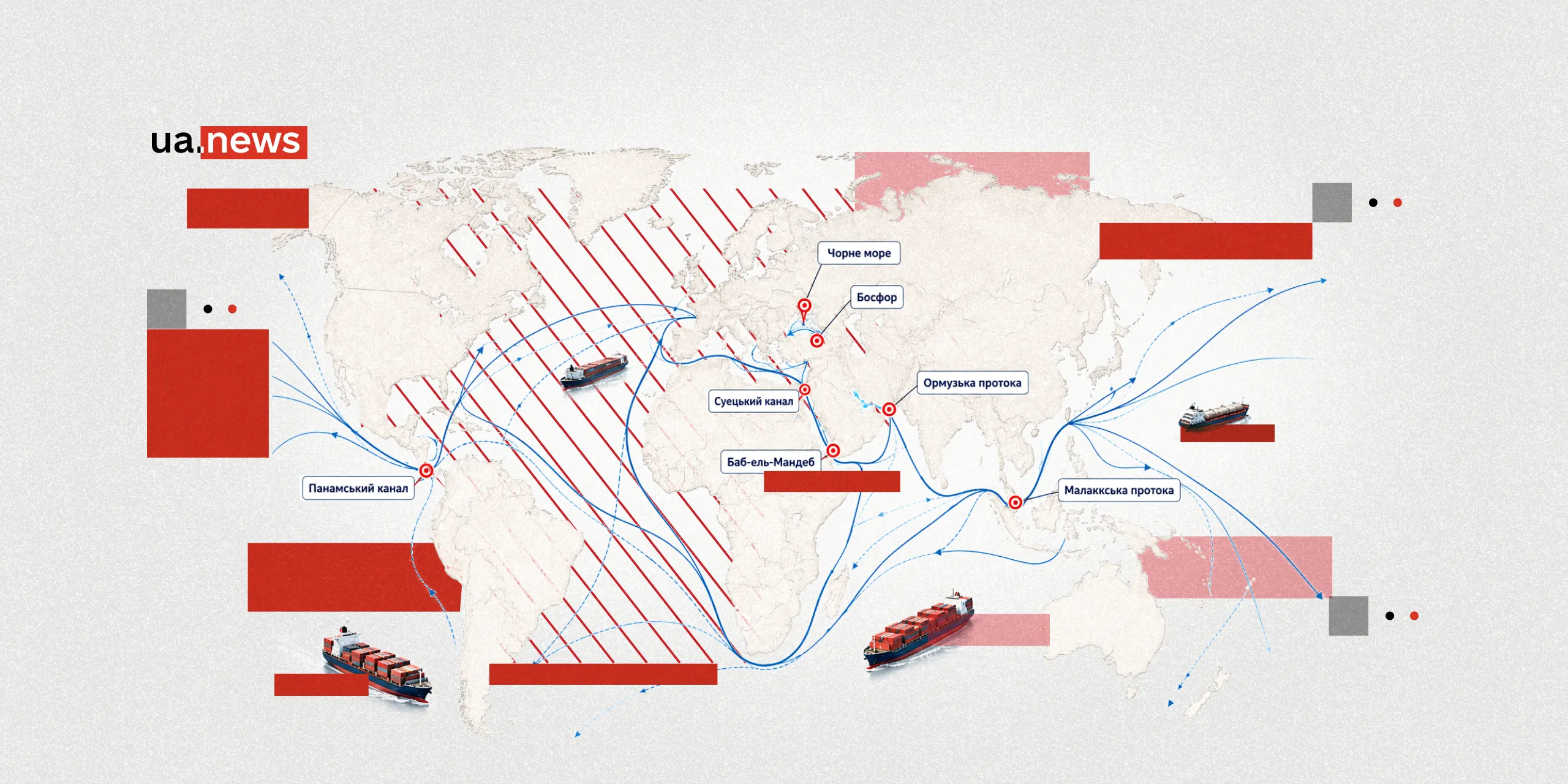
The global economy seems like a vast and extremely complex system. Millions of companies, tens of thousands of ports, railroads, highways, pipelines, and warehouses ensure the daily flow of goods between continents. However, this extensive network hides an unexpected vulnerability: a significant portion of global trade depends on just a few narrow maritime corridors.
Just look at a map. To get from the Black Sea to the Mediterranean, a ship must pass through the Bosphorus and the Dardanelles. On the route between Asia and Europe, the shortest path runs through the Red Sea and the Suez Canal. A significant portion of the Persian Gulf’s oil reaches the global market via the Strait of Hormuz. And between the Indian and Pacific Oceans, the Strait of Malacca remains the key corridor.
These are the very places referred to as “chokepoints”—the bottlenecks of global trade. And Russia’s war against Ukraine has clearly demonstrated what happens when one of these transport arteries begins to function erratically.
UA.News explains which seas, canals, and straits the global economy depends on, what exactly is transported through them, and what could happen if several key trade routes were to be blocked at once.
The Black Sea and Ukraine: An Economic Corridor Whose Importance Was Highlighted by the War
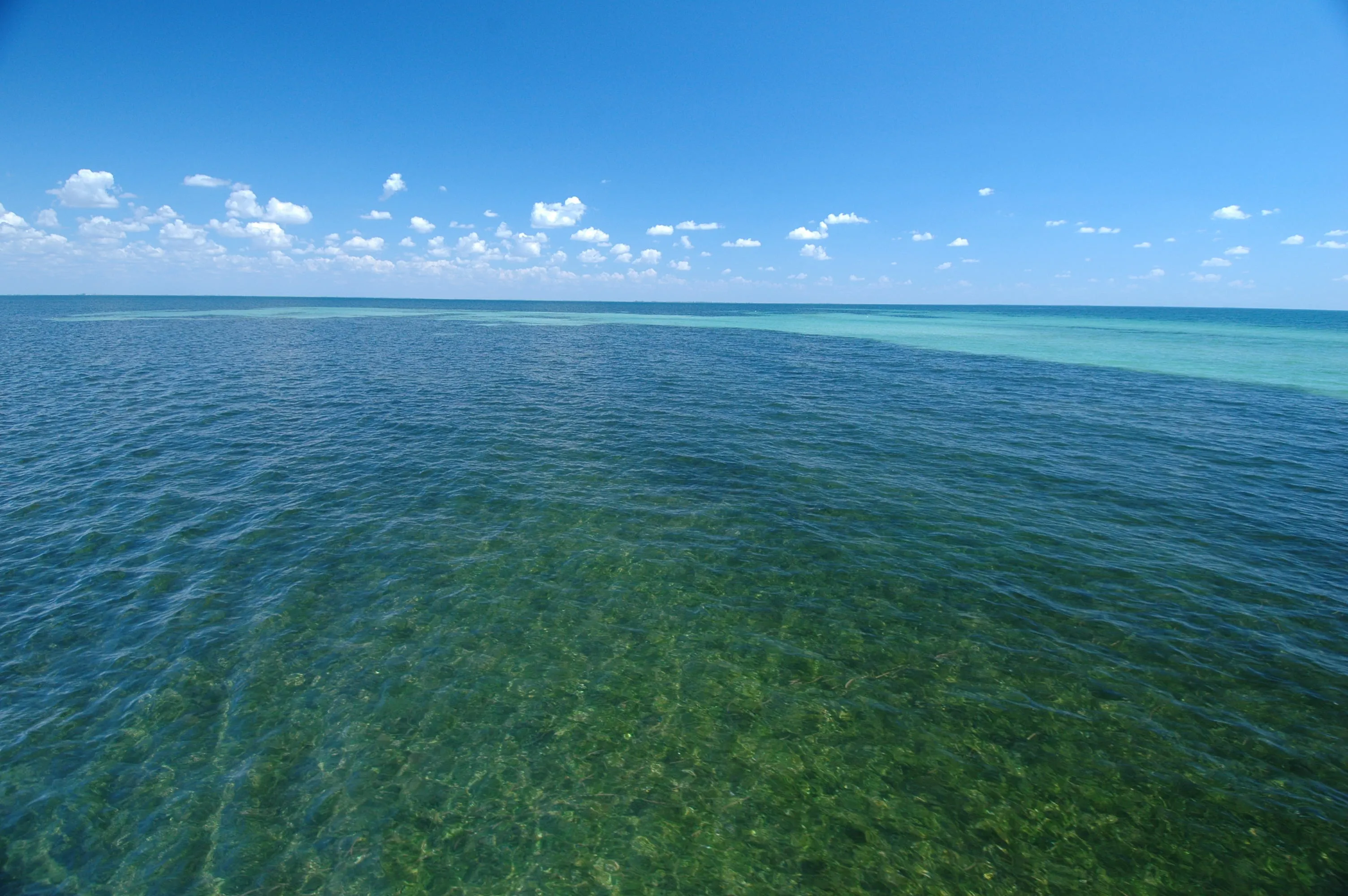
For Ukraine, the Black Sea is more than just a geographical border. It is the main gateway for large-scale commodity exports, primarily grain, oil, ore, metals, and other products that are difficult or too expensive to transport by road or rail.
Before the full-scale war, Ukrainian ports handled enormous volumes of cargo. In 2021 alone, the seaports of the Odesa region handled over 107 million metric tons of cargo.
After the Russian invasion, the situation changed dramatically. The blockade of ports, the threat of mines, attacks on port infrastructure, and the suspension of normal commercial shipping forced Ukraine to restructure its logistics. Some exports were rerouted by rail and road across the western border, while others were routed through the Danube ports.
Later, Ukraine was able to resume maritime exports through its own maritime corridor. The very fact that it is operational is important not only for the Ukrainian economy: grain from the Black Sea region is part of the global food market.
After the start of the full-scale war, UNCTAD explicitly stated that disruptions to shipping routes in the Black Sea had altered traditional trade flows of grain and oil.
But there is another peculiarity of the Black Sea. Even if a Ukrainian port is operational, that is not enough. A ship still needs to exit the sea itself.
And this is where the next bottleneck arises.
The Bosphorus and the Dardanelles: the only maritime exit from the Black Sea
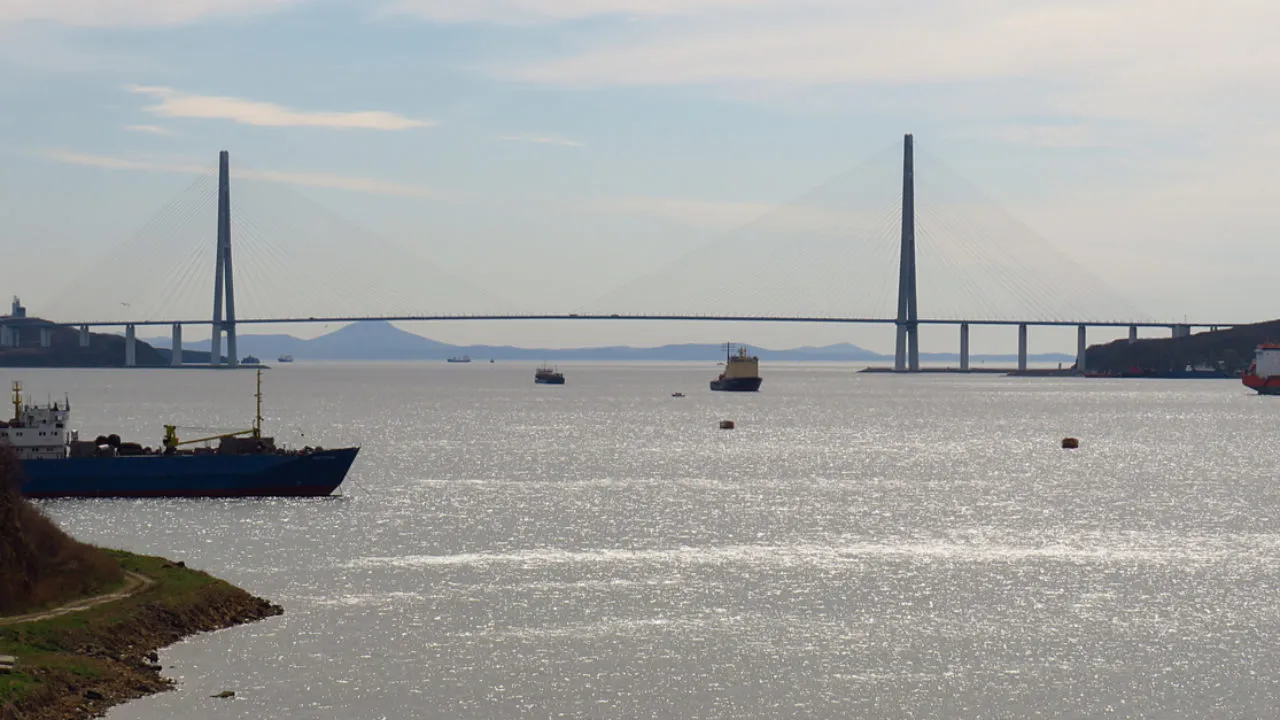
The Black Sea is essentially a vast basin with a single maritime gateway to the open ocean.
First, a ship must pass through the Bosphorus, enter the Sea of Marmara, then pass through the Dardanelles—and only then will it reach the Aegean and Mediterranean Seas.
The Turkish straits are therefore of immense economic and geopolitical importance to Ukraine, Turkey, Bulgaria, Romania, Georgia, and other countries in the region.
Grain, petroleum products, coal, metals, ore, and other bulk cargoes pass through them. The U.S. Energy Information Administration lists the Turkish straits as key routes for oil exports from Russia and other Eurasian countries, particularly Azerbaijan and Kazakhstan.
Geography makes the Bosphorus a particularly challenging route. The strait runs right through Istanbul and features sharp turns, strong currents, and heavy ship traffic.
Even a single accident can temporarily halt traffic. In January 2023, a cargo ship traveling from Ukraine ran aground in the Bosphorus—traffic through the strait had to be suspended for a time.
For Ukraine, this is a matter of fundamental importance: maritime exports depend not only on the security of Odesa, Chornomorsk, or Pivdenne, but also on the ability to pass through the Turkish straits unimpeded.
The Suez Canal: A Short Route Between Asia and Europe
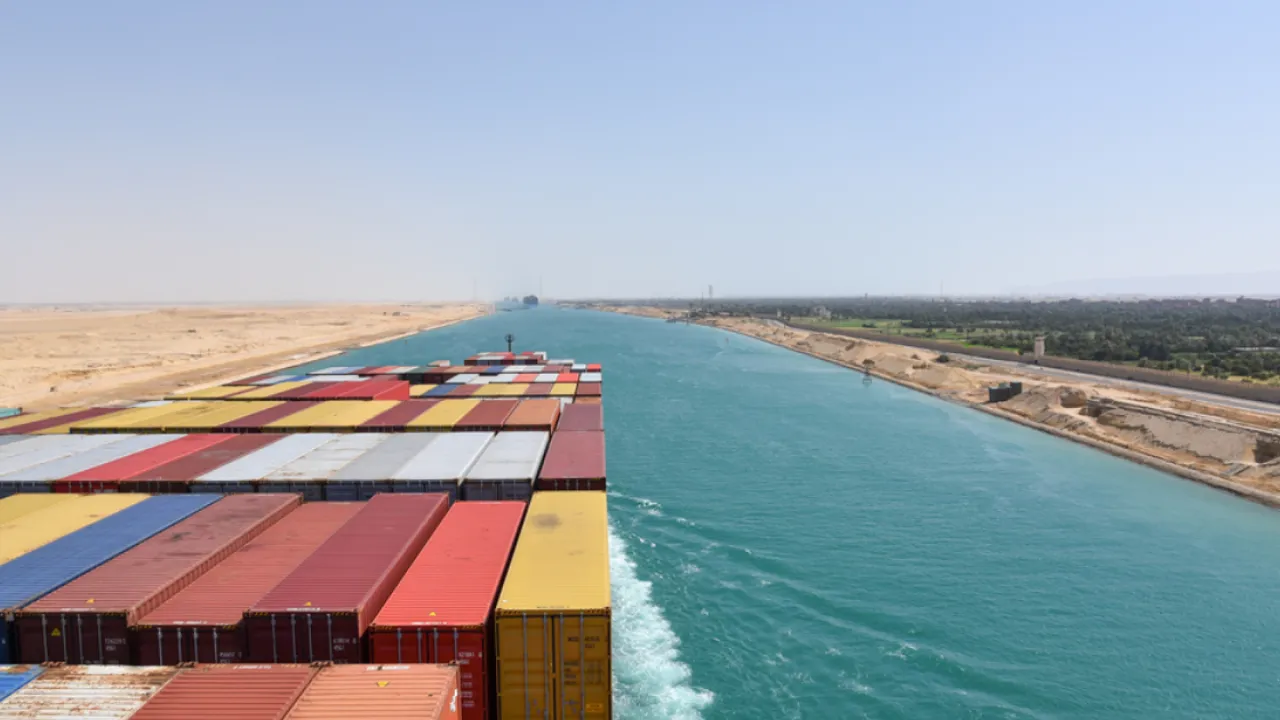
If the Bosphorus is the gateway to the Black Sea, then the Suez Canal can be called one of the main shortcuts on the map of the global economy.
Built in the 19th century, the canal connects the Mediterranean and Red Seas and allows ships to travel between Europe and Asia without having to sail all the way around Africa.
The scale of its importance is clearly demonstrated by the numbers. According to UNCTAD estimates, approximately 12–15% of global trade passed through the Suez Canal in 2023.
Containers carrying Chinese electronics, clothing, equipment, and components for European companies, as well as energy resources and other goods, can all pass through the same corridor.
An alternative exists—to sail around Africa via the Cape of Good Hope.
But this means additional distance, time, fuel, crew wages, vessel charter fees, and insurance costs. In other words, blocking the canal does not necessarily physically halt global trade. It makes it more expensive.
This is exactly what the world witnessed after attacks on commercial shipping in the Red Sea began. Some carriers began rerouting ships around Africa. According to the U.S. EIA, the flow of oil and petroleum products through the Bab el-Mandeb Strait more than halved in the first eight months of 2024.
Even in May 2025, cargo tonnage through the Suez Canal remained approximately 70% below 2023 levels.
Bab el-Mandeb: A small strait without which the Suez Canal loses some of its significance
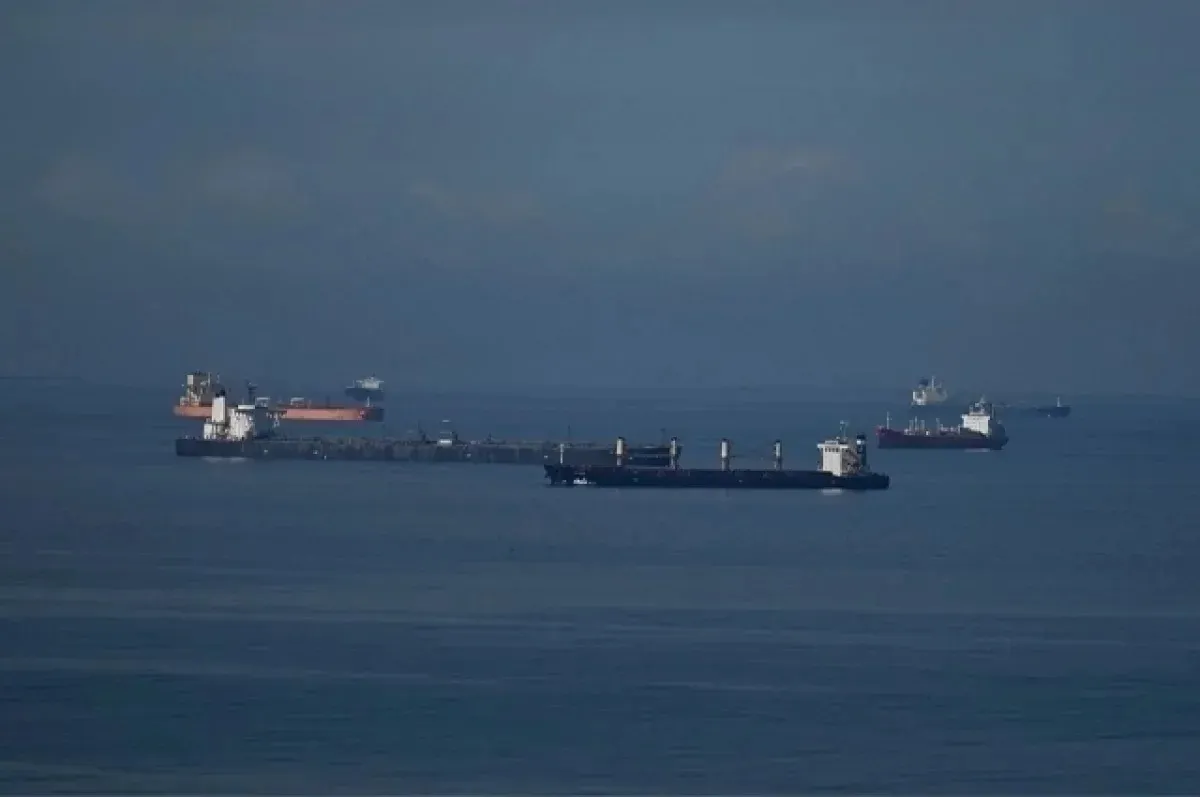
The Suez Canal does not exist in isolation from other economic arteries.
For a ship from the Indian Ocean to reach Suez via the Red Sea, it must first pass through the Bab el-Mandeb Strait between Yemen and the African coast.
At its narrowest point, it is only about 18 miles wide.
It is here that one of the main paradoxes of globalization can be seen: the vast trade system between Asia and Europe depends in part on a geographical point that a large ship passes through in a relatively short time.
If the Bab el-Mandeb Strait becomes dangerous, the problems automatically shift to the Suez Canal.
Shipowners are effectively forced to choose between the risk of passing through the dangerous zone and the long route around Africa.
The Strait of Hormuz: the world’s main oil chokepoint
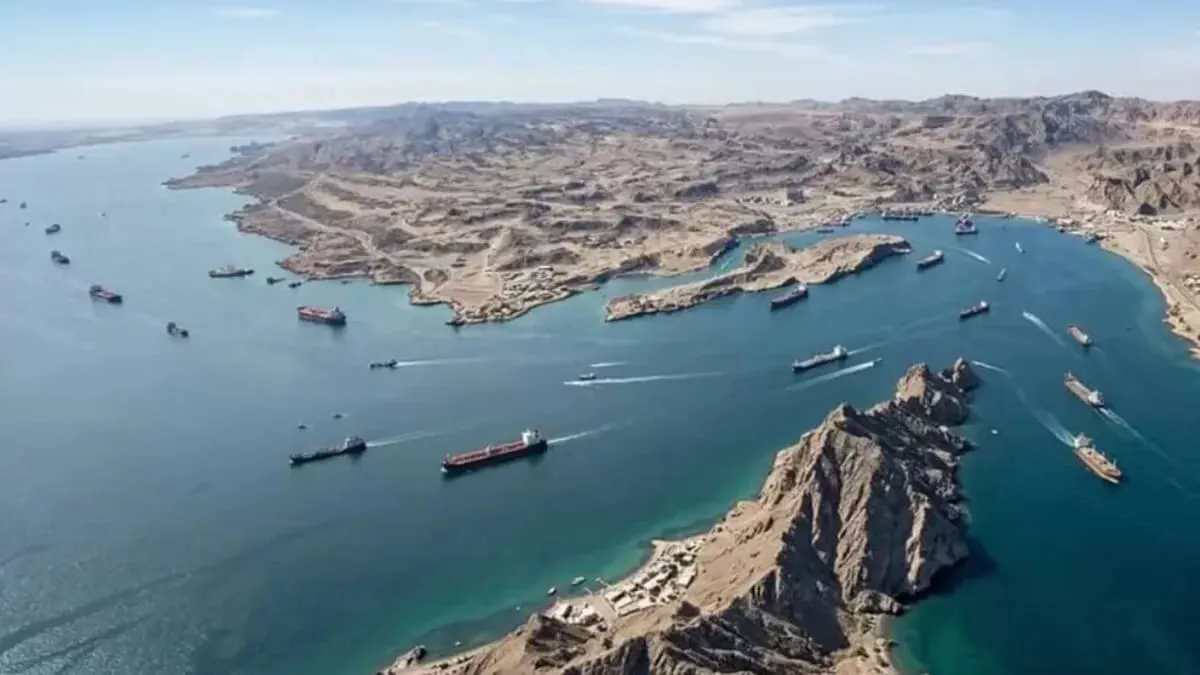
While the Suez Canal and the Strait of Malacca are particularly important for container trade, there is hardly a more critical point for the global energy market than the Strait of Hormuz.
It is located between Iran and Oman and connects the Persian Gulf with the Gulf of Oman and the Arabian Sea.
Oil from Saudi Arabia, Iraq, Kuwait, the United Arab Emirates, and other countries in the region flows through it to the global market.
According to the EIA, in 2024 and early 2025, more than a quarter of all oil transported by sea worldwide passed through the Strait of Hormuz, as well as about one-fifth of global liquefied natural gas trade.
That is precisely why any military escalation involving Iran quickly turns from a regional problem into a global economic one.
In 2026, the world effectively witnessed such a scenario unfold: due to the conflict, traffic through the strait was severely disrupted. Data from the U.S. EIA show that total oil flow through the Strait of Hormuz fell from approximately 20.7 million barrels per day in the fourth quarter of 2025 to 14.6 million in the first quarter of 2026.
Some of the flows can be rerouted via pipelines. For example, Saudi Arabia has the East-West Pipeline to the Red Sea coast, with a capacity of about 5 million barrels per day. But it is impossible to completely replace the Strait of Hormuz with such routes.
Therefore, the problem with the Strait of Hormuz is not just a potential oil shortage.
Higher oil prices mean more expensive fuel. More expensive fuel means higher costs for maritime and road transportation. These higher transportation costs are gradually passed on to the prices of virtually all goods.
A single narrow strait has the potential to trigger a wave of inflation far beyond the Middle East.
The Strait of Malacca: Asia’s Energy Chokepoint
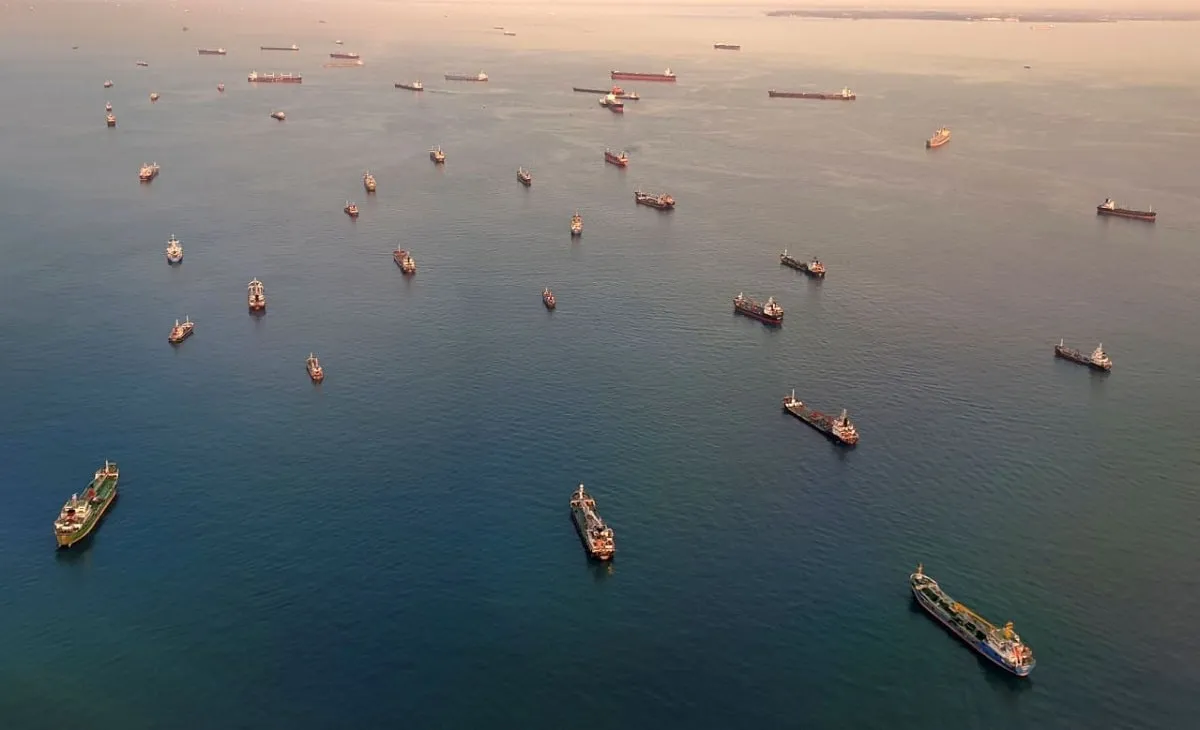
On the other side of the Indian Ocean lies another critical chokepoint—the Strait of Malacca between the Malay Peninsula and the Indonesian island of Sumatra.
It is the shortest major sea route between the Indian and Pacific Oceans.
For China, Japan, South Korea, and other Asian economies, this is a particularly vital transportation artery: energy resources from the Middle East and cargo between Asia’s largest manufacturing centers, Europe, Africa, and the Middle East pass through it.
According to the latest EIA data on global oil chokepoints, approximately 22.8 million barrels of oil and petroleum products passed through the Strait of Malacca daily in the first half of 2025.
This is even more than the traditional volumes passing through the Strait of Hormuz.
And here again, the issue of alternative routes comes into play. Ships could theoretically use other Indonesian straits, but this increases both distance and costs.
That is precisely why the security of the Strait of Malacca is, in fact, a matter of energy security for a significant part of East Asia.
The Panama Canal: A Short Route Between Two Oceans
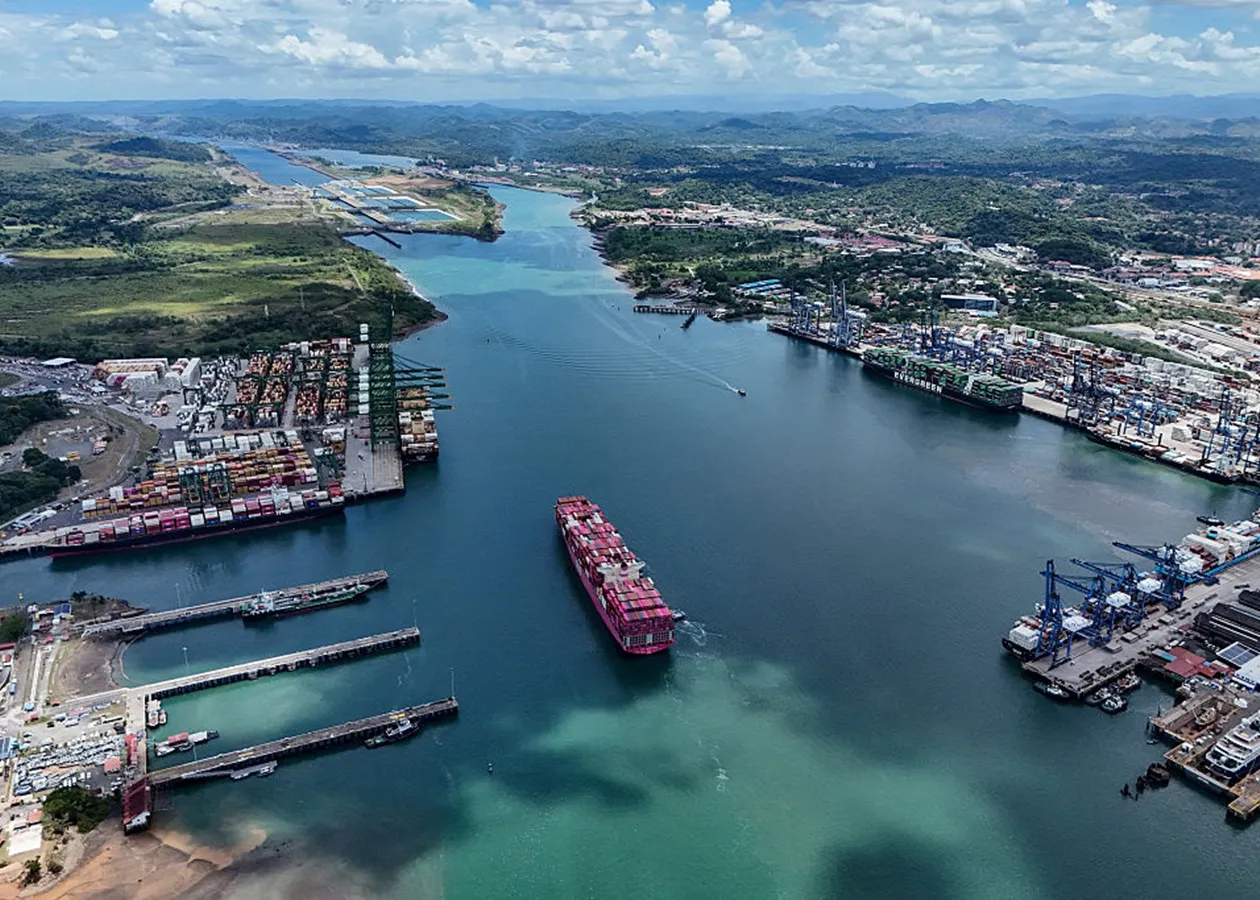
On the other side of the planet lies another man-made artery of the global economy—the Panama Canal.
It allows ships to travel between the Atlantic and Pacific Oceans without having to make a long detour around South America.
Containers, automobiles, grain, energy resources, chemicals, and other goods are transported through the canal.
In fiscal year 2025, the Panama Canal recorded 13,404 ship transits and 489.1 million metric tons according to its own CP/SUAB measurement system.
But Panama has revealed yet another vulnerability in global logistics: a war is not necessarily required to block a trade route.
The Panama Canal depends on fresh water. It is used to operate the locks, so severe droughts can limit the number of ships and their permissible draft.
Thus, a global trade chokepoint could be threatened by a factor that seemed secondary just a few decades ago—the climate.
Why Can’t the World Simply Build Alternative Routes?
At first glance, it seems illogical that an economy worth over one hundred trillion dollars is so dependent on a few narrow stretches of sea.
But the reason is simple—geography and money.
Maritime transport is particularly efficient precisely because of its scale. A single large ship can carry a massive amount of cargo. Transferring such volumes to airplanes, trucks, or even rail is often physically impossible or economically impractical.
It’s just as difficult to replace the Suez or Panama Canals. Alternative routes exist, but for the most part, they’re longer. And that’s a fundamental difference.
When a highway is blocked, a driver might spend an extra twenty minutes taking a detour. When an ocean-going container ship has to change its route, the extra distance can amount to thousands of kilometers.
That translates to extra days at sea, more fuel, a larger crew, higher insurance costs, and fewer voyages the ship can make in a year.
What would happen if several major arteries of the global economy were blocked at the same time?
The most dangerous scenario is not the closure of a single canal or strait.
Global trade can adapt to a single problem. Ships can be rerouted around Africa, some oil can be transported via pipelines, and goods can be shipped through other ports.
The real problem arises when several chokepoints cease to function normally at the same time. The world has already seen a glimpse of this effect since 2022.
The war disrupted trade in the Black Sea. Attacks on ships effectively restricted the route through the Red Sea and the Suez Canal. At the same time, a drought created problems for the Panama Canal.
UNCTAD has warned that these crises do not exist in isolation from one another. If, for example, a prolonged closure of the Strait of Hormuz or the Strait of Malacca were added to such a scenario, a domino effect would begin.
First, ship insurance costs skyrocket. Then, freight rates increase.
Ships are forced to take longer routes, so part of the global merchant fleet is effectively taken out of service for additional days or weeks. A shortage of available ships and containers arises.
Next, energy prices rise. This is followed by increases in manufacturing, transportation, and food costs.
Companies begin to build up inventories of components, while manufacturers operating on a just-in-time model—who rely on receiving parts literally right before they’re needed—face disruptions.
As a result, a problem affecting just a few points on a nautical chart gradually translates into higher prices in stores.
UNCTAD estimated that even the rise in container rates caused by the crisis in the Red Sea and problems with the Panama Canal, if sustained over the long term, could raise global consumer prices by approximately 0.6%.
A simultaneous, large-scale disruption of operations in the Strait of Hormuz, the Strait of Malacca, the Suez Canal, and other corridors would be a far more serious blow.
That is why it is more accurate to view the world’s economic map not as hundreds of equally important trade routes, but as a vast network converging at several critical points.
A Ukrainian grain carrier in the Black Sea depends on the Bosphorus. A container from China on its way to Europe depends on the Strait of Malacca, Bab el-Mandeb, and the Suez Canal. A tanker from the Persian Gulf depends on the Strait of Hormuz. A ship traveling between the east and west coasts of the Americas may depend on the waters of the Panama Canal.
Globalization has made world trade faster and cheaper, but at the same time it has created a system in which a war, an accident, a drought, or a political crisis in a few geographic locations can have repercussions thousands of kilometers away.
And it is precisely these bottlenecks that are among the most critical—and most vulnerable—points in the global economy today.


