
Romania is one of Ukraine’s key allies in the European Union, supporting our European integration and providing military assistance within the framework of NATO. Until now, the country has managed to maintain a pro-European government and keep the far-right AUR party — known for promoting Russian narratives — out of office. However, following the withdrawal of one of the coalition partners (the Social Democratic Party, PSD) from the political coalition, the country faces a government crisis, and in the future, a possible rise of euroskepticism and the far right.
What is currently driving political sentiment in Romania? Why is an “Eastern European bloc of skeptics” emerging within the EU? How should pro-European forces and the EU respond to public demands during an economic downturn? To what extent do internal political processes in EU countries influence aid to Ukraine? And why should Europeans not underestimate the vast resources Russia is directing toward hybrid attacks and disinformation?
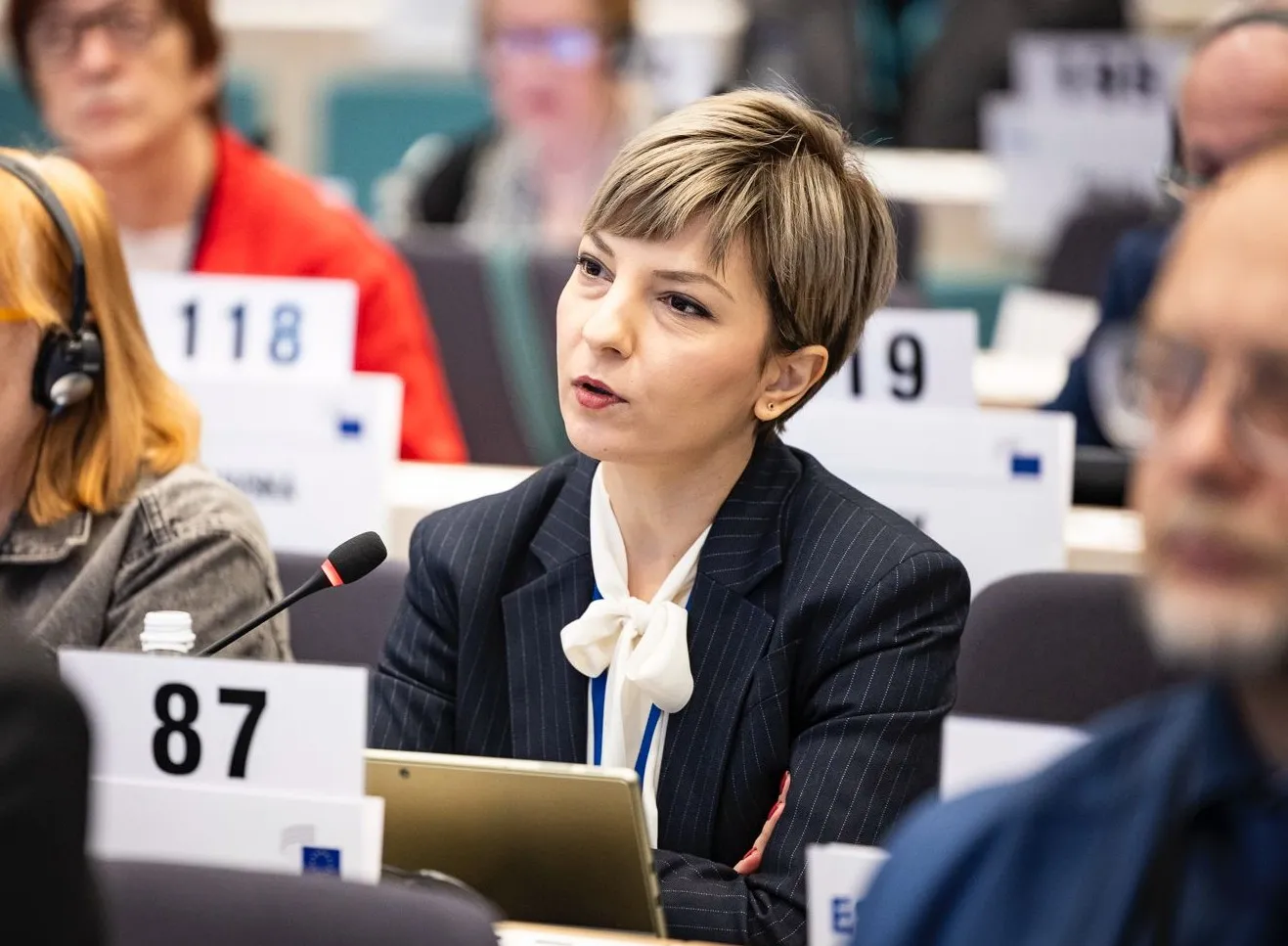
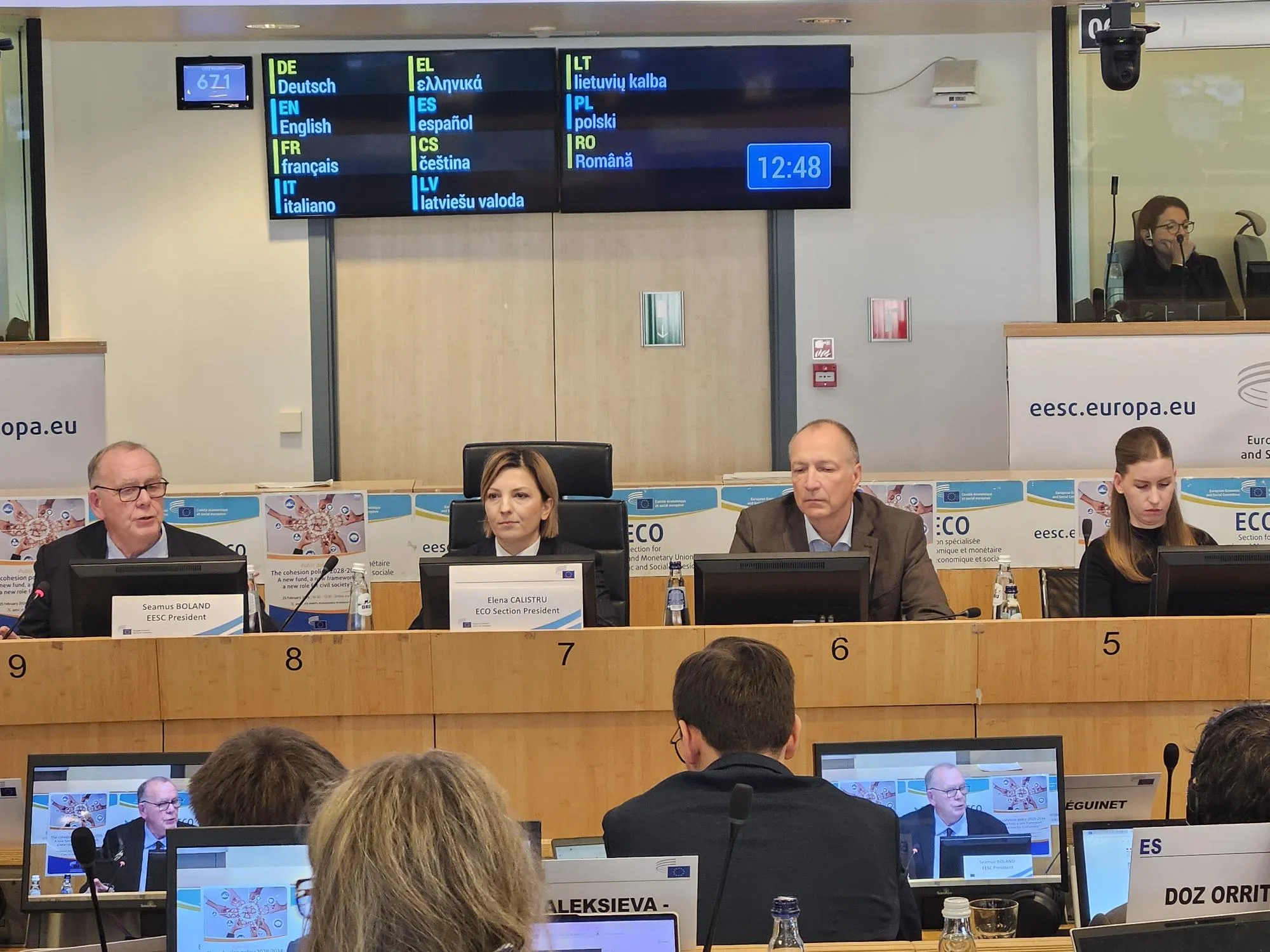
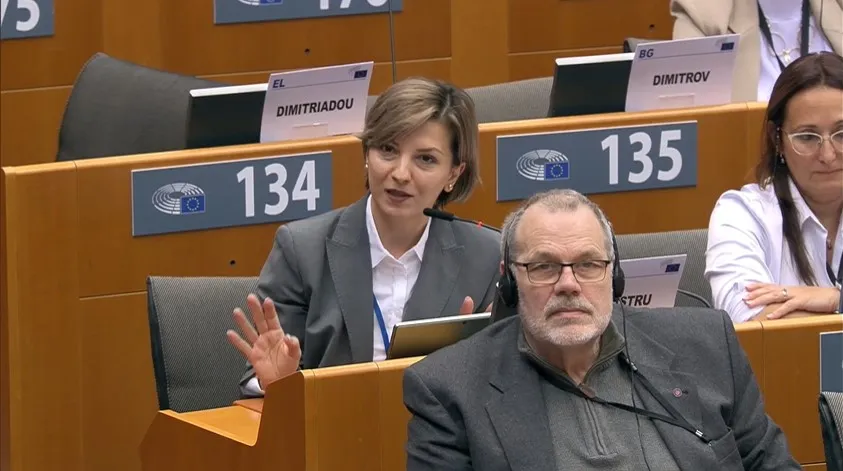
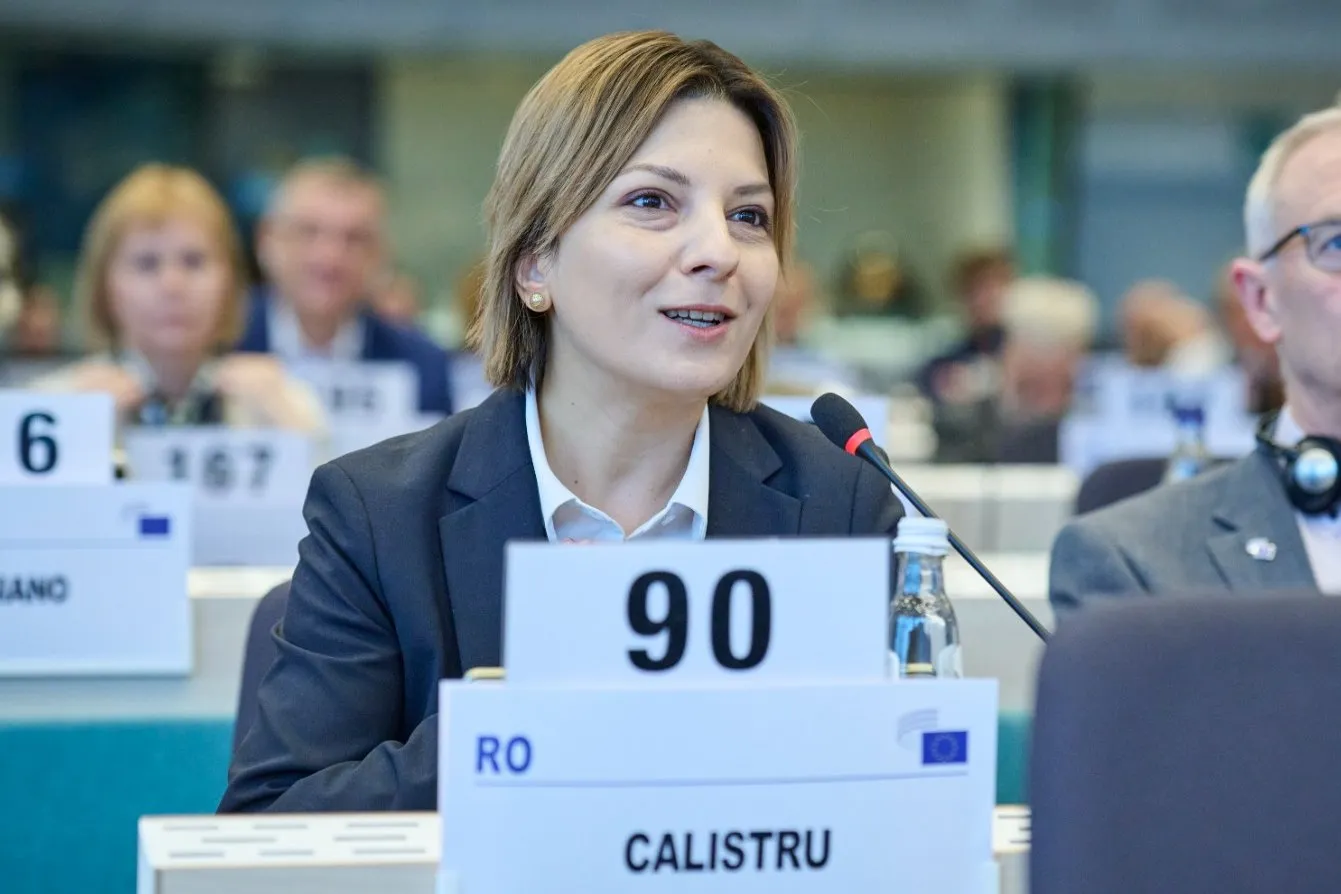
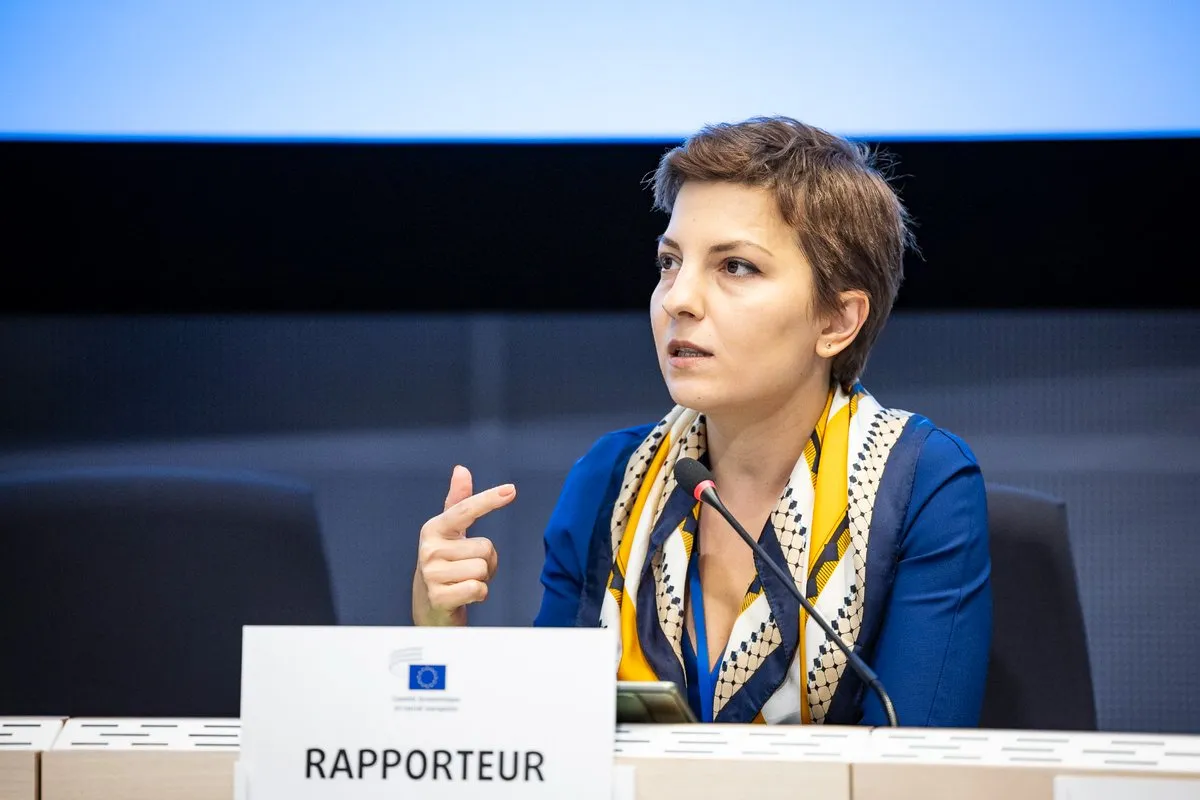
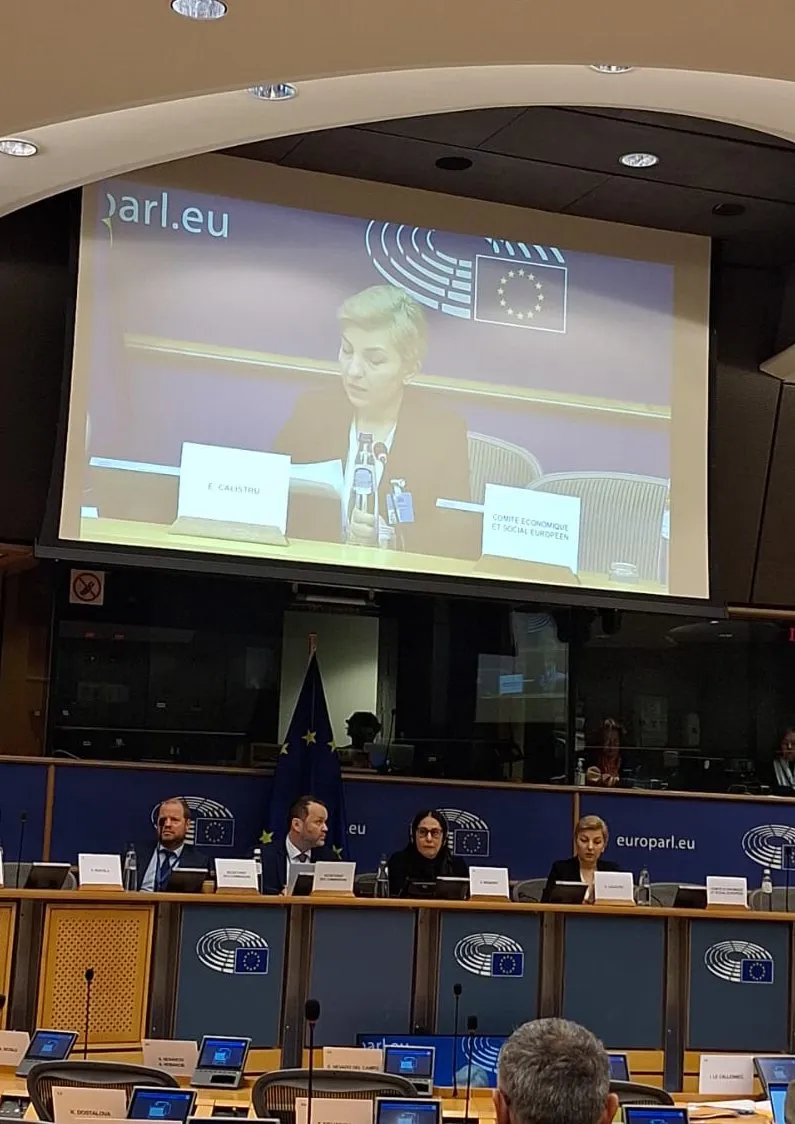
Elena Calistru, president and co-founder of the civic association Funky Citizens — which combats disinformation and coordinates media literacy projects across Romania, Bulgaria, and Moldova — discussed these issues in an interview with UA.News. Since September 2020, Elena Calistru as a representative of Romanian civil society, has been a member of the European Union’s consultative body — the European Economic and Social Committee (EESC).
The EESC plays an advisory role in shaping various aspects of common European policy, gathering and analyzing the views of civil society representatives from all EU member states.
What challenges currently pose the greatest threat to civil society movements in Romania and other EU countries?
Elena Calistru: In many European countries — and, unfortunately, in many other parts of the world — civil society faces challenges stemming from attacks on the very foundations of democracy. After all, an active civil society is one of the main pillars of a functional democratic society.
We are seeing alarming trends in many countries. There is a growing wave of opposition to civil society, accompanied by numerous slanders and accusations. Negative narratives are spreading, nearly identical across many countries, claiming that all civic leaders are “Soros’s people” or something similar. Overall, we face a series of challenges shared by other groups, such as the media, independent journalists, and anti-corruption activists.
In my opinion, the following are key to addressing these issues:
First, the need to ensure the safety of human rights defenders, civil society activists, and journalists.
Second, securing sufficient and independent resources that will enable civil society to effectively carry out its functions.
On the other hand, in my view, there is also a positive aspect: these challenges demonstrate that civil society movements in Romania and other countries are doing their work effectively. No one would attack organizations that lack significant influence. Thus, this is direct proof of their substantial contribution and real impact on society.
In your opinion, what has caused the decline in trust in pro-European forces that we are seeing in Romania? How should pro-European forces and the EU respond to this public sentiment?
Elena Calistru: First of all, I believe that our geographical location does not work in our favor. A coordinated operation of pro-Kremlin influence is underway in our region and in the European Union as a whole. In countries like Romania, Poland, and others that were once under Soviet political and military control, one cannot openly praise Russia. But one can undermine citizens’ trust in the European project.
In my opinion, this is one of the main challenges for civil society that we see in Romania. Unfortunately, this narrative is built on people’s real concerns and problems, especially economic ones. It fuels the anger that part of society feels regarding corruption, economic inequality, and inadequate social services.
So, we’re talking about a combination of real problems and influence operations aimed at undermining trust in pro-European forces. Of course, it doesn’t help that the political proposal for addressing these issues isn’t exactly “brilliant.”
In my view, when it comes to how pro-European forces and the European Union should respond to this societal need, the issue should be considered from various angles.
First, the fight against corruption must go beyond mere talk and fine words—real action is needed, particularly in reforming the judicial system. This has always been one of the top priorities for Romanian society.
Second, education and providing people with reliable information are of key importance. It is impossible to combat such sophisticated disinformation campaigns solely through press releases or verbal disputes, where politicians simply appear on television or social media and exchange mutual accusations.
We need to take more proactive action. We must explain to people the importance of the European Union and avoid situations where the EU is blamed for all problems. This is too easy an escape for many local politicians, who are actually responsible for the socio-economic situation in their own country.
Given the political crisis that erupted in Romania in April, there is a risk that reforms will be stalled and that some EU funds will be lost. In your opinion, to what extent should the European Union link funding to political stability and reforms in member states?
Elena Calistru: This is, in fact, one of the arguments I made earlier, referring to the fact that the European Union is ultimately blamed for the blunders and mistakes made by our politicians. This link to EU funding—or the potential impact on EU funding—is the most visible consequence of this.
In my opinion, it is very difficult to directly and strictly link funding to political stability and reforms. It is risky. I am strong supporter of the rule of law conditionality. Rule of law conditionality should protect EU money from corruption, yes — but regional and cohesion funds should not be held hostage to central government performance.
At the same time, there is a danger of undermining trust in the European project itself, as there is a risk of fueling populists who say: “Look what the European Union is doing to us!
Look how they treat us like a colony; they’re trying to impose something on us!” So, a too-strict link between political stability and reforms and financial support risks upsetting the balance of power.
Of course, reforms are necessary and should be part of the negotiations between the European Union and the countries receiving funding. But we must ensure that these conditions are being met. Let me give an example from the activities of the Recovery and Resilience Facility (RRF). Since the central government largely controls the funds, there have been cases where allocations to certain opposition politicians or opposition mayors were, so to speak, used as a form of punishment for the central government’s inaction.
Therefore, I believe that certain types of funding, such as regional funding and cohesion policy funding, should not be linked to the performance of the central government. Because there is, in fact, a risk of undermining the “grassroots” component, which can provide strong arguments in favor of the pro-European movement.
Regarding political stability. I don’t think this is something the EU can advocate for. After all, this is a democracy, which, unfortunately, can sometimes be chaotic and unstable.
Some political forces in Romania (in particular, the far-right AUR) openly oppose military aid to Ukraine. Is there a risk that internal political processes in EU countries will begin to directly influence the level of support for Ukraine?
Elena Calistru: Absolutely. And that is truly regrettable. We need to explain more clearly that supporting Ukraine means supporting Europe and all its member states, because Ukrainians are defending not only their own country but the entire European Union. But, of course, domestic politics takes precedence. As they say, all politics is local.
It is very difficult for any prime minister or president of a European country—which may currently be facing the economic consequences of the war in the Middle East—to announce funding for Ukraine without expecting a negative reaction. That is why we need to better explain why this is necessary for all of us.
As we can see, the European economy is currently facing many challenges: the energy crisis, rising defense spending, and competition from the United States and China. What is the first-order solution at the EU level that can help avoid economic fragmentation between the bloc’s countries?
Elena Calistru: The main priority now is to prepare the multiannual financial framework, that is, the EU budget for the next seven years after 2027. This is important because it will allow the European institutions to agree not only on a framework within which priorities are set, but also on a framework within which we can take into account the possible enlargement of the Union to include Moldova, Ukraine, and possibly the Western Balkans.
In my opinion, this is the most important priority, as it can encompass all other priorities. Moreover, we need not only to talk, but also to act, to make sure that economic fragmentation does not really become a factor that undermines the EU project itself.
The diagnosis of our current problems has already been made. Everyone knows what our problems are: defence, energy, competitiveness, etc. Now we also need to make sure that we have enough resources to solve these problems. For example, in the European Economic and Social Committee we strongly support the European Parliament's position on increasing the relevant resources in the next EU budget. Then we need to allocate more resources, also at the local and regional level, and make sure that no one is left behind. So that all countries, especially in Eastern and Southern Europe, where there is, let's say, economic inequality, can become part of a coherent European Union. Otherwise, these problems cannot be solved. We are only strong together. I know it sounds like a cliché, but it is a cliché - it is true.
The elections in Hungary and Bulgaria have demonstrated the strength of nationalist and populist parties. Do you see the emergence of an “Eastern European bloc of Euroskeptics” within the EU? To what extent does this threaten the unity of the European Union?
Elena Calistru: There is indeed a whole wave of Euroskepticism sweeping the region. In my view, this is linked to three factors. The first is somewhat historical in nature and stems from the fact that local politicians in these countries in the early 1990s, immediately after the fall of the communist regimes, to some extent failed to live up to expectations regarding what integration into the European Union would entail.
They failed to explain to citizens that they should not expect an instant, miraculous transformation of our countries. Consequently, there is a certain degree of disappointment in these societies because social services and the economy lag behind Western European standards. Demographic decline and the migration of many people to Western European countries also fuel dissatisfaction. Thus, from this perspective, euroskepticism and similar movements are to some extent rooted in the historical trauma experienced by the countries of this region.
Second, all the crises we have experienced in recent years—from COVID to, of course, Russia’s brutal aggression against Ukraine, as well as the ensuing energy crisis and what we are seeing now—inflation and so on—have hit Eastern European countries disproportionately hard. This is because their economies and state institutions were not robust enough to effectively withstand these challenges. Therefore, the negative impact on them is more severe. And skeptics and anti-European movements have even more grounds for promoting this kind of discourse.
And third, in my view, there is a certain sense of disappointment in this part of Europe regarding how we are perceived—as if we are treated as second-class member states. And here, in my opinion, anti-European forces are actively promoting precisely this kind of rhetoric.
This carries a huge risk, and our task is to ensure that society is educated and informed, bringing more sophisticated arguments into the discussion. I understand that this is difficult to do in our time. However, I do not think we have any other option but to be completely honest and transparent about the root causes of our problems and the opportunities for improving the integration of these countries into the European Union. This can be achieved through effective partnership policies, the development of civil society, the strengthening of institutions, and so on.
How would you assess the effectiveness of efforts to combat disinformation and hybrid attacks from Russia? Does the EU have sufficient tools to address this?
Elena Calistru: In my opinion, we tend to be overly critical of the European Union. Even if you currently lack the tools to counter the aggressor’s influence, over time, they begin to be developed, and their number grows. Moreover, it is important to understand that the issue is not about which tools are the right ones.
Of course, Ukraine and Moldova have significant experience in this, but so do countries like Romania, where the results of the first round of the presidential election were annulled due to large-scale interference by the Russian Federation. We all have accumulated experience. We understand well that a comprehensive combination of fact-checking, countering disinformation, quality journalism, and the development of media literacy is needed. We know the tools.
In my opinion, it is now important to have sufficient scale and resources to effectively counter these threats. After all, Russia’s hybrid attacks are not funded by small change. They actually have powerful resources. We need to ensure that when we talk about defense spending and a stronger EU defense policy, we are not only referring to protection in the physical realm but also in the online realm, which is becoming increasingly important and sometimes even takes precedence.
In your opinion, what might the EU’s strategy toward Ukraine look like: could it be strong, temporary support during the war, or rather long-term integration as a key element of European security?
Elena Calistru: Both. It would be naive to think that we can have one or the other. I believe this is the main lesson we must learn from what has happened in Ukraine. Security isn’t cheap, and it isn’t something to be taken for granted. Unfortunately, it’s something we need to invest in immediately and for the long term.
The answer can be very, very short: yes, we need both of these approaches. Although, of course, this means we need to have the resources to implement them. But this is not a matter of choice.
We cannot afford to lose Ukraine as a strong state capable of ensuring its own security and, consequently, the security of the European Union.
