
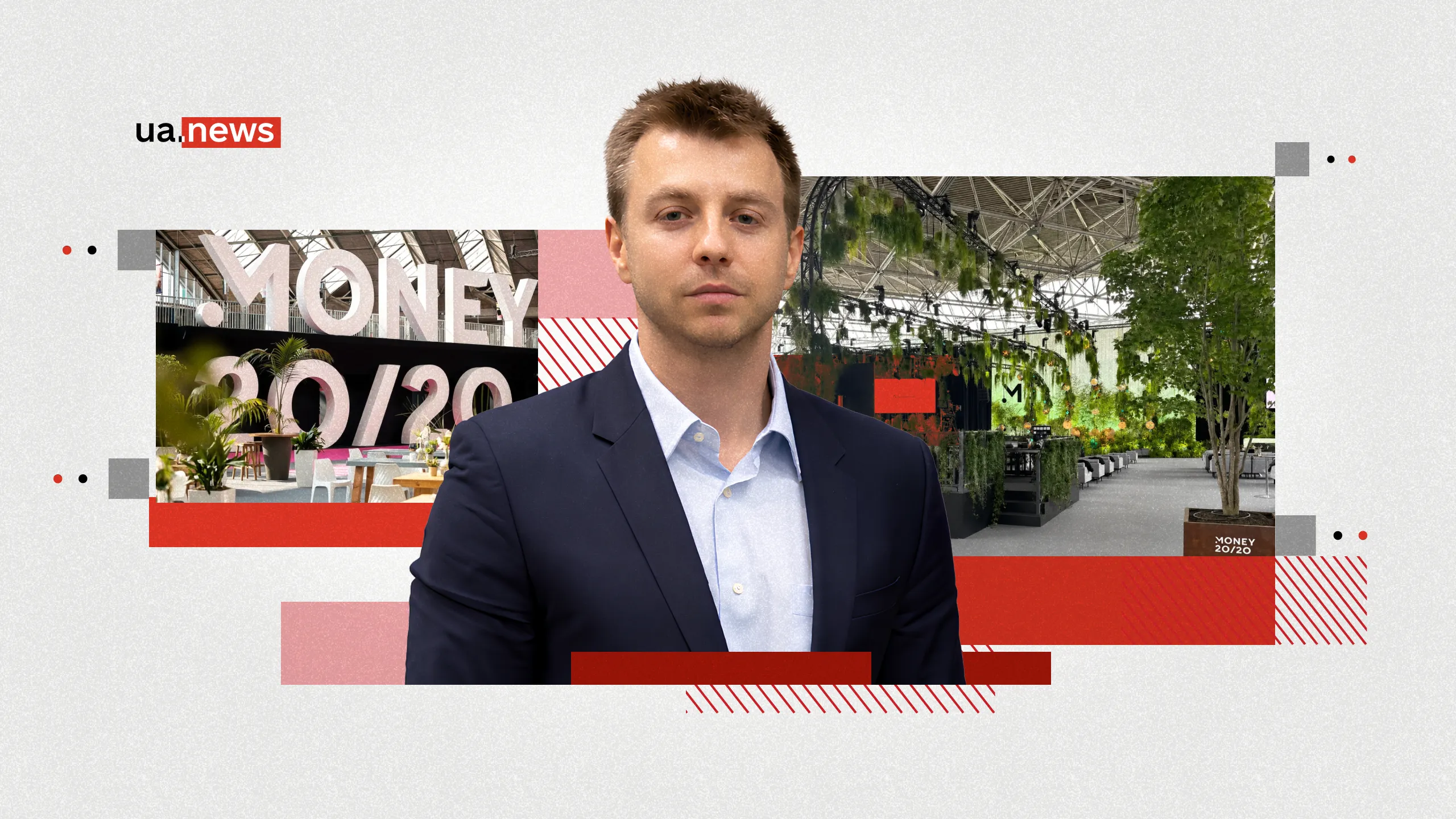
What’s happening in the market for international fintech forums: Yuriy Danilov shares his impressions of Money20/20 Europe
04 June 2026 17:30Half-empty pavilions, sky-high participation fees, and a more pragmatic approach by companies to event spending—this is how this year’s Money20/20 Europe fintech conference in Amsterdam was remembered. Yuriy Danilov, a well-known fintech entrepreneur specializing in payment and regulatory infrastructure, shared his personal impressions of one of the industry’s major events exclusively with UA.News. Below are his direct comments.
Mixed feelings
For many years, Money20/20 Europe has been regarded as one of the most important fintech events in the world. That is why this year’s conference in Amsterdam left me with mixed impressions.
On one hand, the event remains highly professional, visually impressive, and prestigious. Global industry leaders such as Visa, Mastercard, international banks, payment companies, fintech providers, and representatives from Germany, the United Kingdom, China, Italy, Malta, and many other countries were present. The digital assets, crypto infrastructure, and DeFi sectors were also strongly represented.
On the other hand, compared with 2025, 2024, and especially 2022, attendance appeared to have declined significantly. For me personally, this was the most noticeable change. The exhibition felt considerably less crowded than in previous years. There were fewer pavilions, wider walkways, and in some areas the event felt almost half-empty.
This was particularly visible during keynote sessions and panel discussions. In many cases, speakers seemed to be presenting almost to themselves. From a media perspective, everything looked impressive and large-scale, but when looking at the actual audience inside the halls, attendance was often surprisingly low. For an event of this calibre, that felt unusual.
On the reasons for the failure
In my opinion, one of the key reasons is the cost of participation. For example, my standard attendee ticket cost approximately €4,800. However, the ticket itself is only part of the overall expense. Companies also need to cover flights, accommodation in Amsterdam, local transportation, meals, and other travel-related costs. As a result, even a short two-to-four-day business trip can easily become a substantial investment running into many thousands of euros. For many businesses today, these expenses require careful justification.
As a consequence, more companies are evaluating events based on measurable business outcomes rather than brand prestige alone. It appears that the international conference market is going through a period of transformation. Businesses are becoming more selective with budgets and increasingly favour specialised industry events or private executive meetings where return on investment can be measured more directly.

The significance of Money20/20 for the industry
Does this mean that Money20/20 has lost its relevance? No. It remains one of the world’s most important networking platforms for banks, payment systems, fintech companies, and technology providers. However, it is becoming clear that the industry is evolving and event organisers will need to adapt to changing market expectations.
I would also like to highlight Amsterdam itself. It remains one of Europe’s most attractive cities, successfully combining innovation and technology with a strong commitment to preserving its history and culture. The city is clean, well-maintained, international, romantic, and highly business-friendly. The only downside is the weather. Strong winds, constant drafts, and frequent rain can sometimes diminish an otherwise excellent experience, particularly for visitors attending only a few days.
Not a crisis, but the beginning of a new phase of development?
Personally, I will be very interested to compare Money20/20 Europe 2026 with other major industry events later this year. We are currently preparing to attend G Gate in Georgia and iGB L!VE in London. These events will provide an opportunity to compare attendance levels, audience quality, and overall business effectiveness. It may turn out that what we are witnessing is not the decline of a single exhibition, but rather the beginning of a broader transformation across the global conference industry.
IURII Danilov
Fintech Entrepreneur and Payments Industry Expert


