
There have been no prison sentences handed down in corruption cases in Ukraine
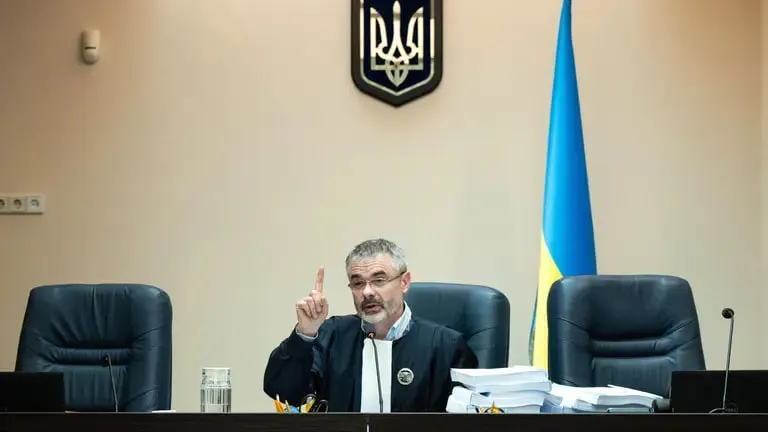
In the first months of 2026, not a single case of actual imprisonment was recorded in Ukraine in cases involving corruption offenses.
Defendants in corruption cases heard by the courts during this period did not receive prison sentences. Instead, most rulings were limited to fines or the classification of the actions as administrative violations, which do not entail imprisonment.
This is according to statistics from Opendatabot.
In total, during this time, courts issued 814 rulings in corruption-related cases. At the same time, none of the convicted individuals were imprisoned, as some of the proceedings were reclassified as administrative offenses. It is also noted that criminal corruption cases often take years to be heard, which affects the final rulings.
Most cases involving financial fraud were not initiated due to bribery. 91% of cases involve violations detected during financial audits. These include, in particular, errors in filling out declarations, mistakes in reporting, or violations of document submission rules. At the same time, actual corruption was the basis for suspicion in only 6% of cases.
According to calculations by the National Agency for Corruption Prevention, there are fewer actual criminal offenses than administrative ones. Furthermore, such cases generally take longer to process, which is why not all serious corrupt officials have yet been included in this year’s statistics. Meanwhile, administrative offenses appear in the registry more quickly and frequently.
Interestingly, no serious penalties or community service were imposed on the offenders. All sentences involve fines ranging from 850 to 34,000 hryvnias.
This is precisely why the statistics on administrative violations differ significantly from the criminal proceedings of NABU or SAPO, which investigate large-scale schemes of illicit enrichment or bribery.
There were quite a few cases this year involving minor bribery, such as an attempt to bribe border guards with 300 euros, or an attempt to have a case of a DUI dismissed after “paying off” a police officer.
In both cases, the courts imposed the same penalty—a fine of 34,000 UAH. For context: in 2025, there were also actual prison sentences, including up to 10 years in the most serious cases, according to Opendatabot.
The highest number of rulings this year were in Lviv, Dnipropetrovsk, and Kharkiv regions. Overall, the number of cases decreased by 27% compared to last year.
The highest number of violations in officials’ declarations was found in Dnipropetrovsk Oblast. Slightly fewer violators were recorded in Kharkiv, Vinnytsia, Zhytomyr, Khmelnytskyi, Kyiv, Odesa, Zakarpattia, and Lviv Oblasts, as well as in Kyiv.
Recently, the NACP has stepped up inspections of officials, lawmakers, employees of the Territorial Medical Commission, medical boards, and local government bodies. That is why a significant portion of the current cases pertain to financial reporting.
What cases of corruption did the NACP highlight?
The NACP report details recent corruption cases on which the court has already issued rulings.
One case involved the deputy head of the Vinnytsia United City Medical Examination Commission and Social Security Office, who was convicted of knowingly submitting a false declaration. The state collected 34,000 hryvnias from him.
In Kharkiv, the Industrial Court fined an expert and member of the Regional Medical and Social Examination Commission at a regional medical facility 17,000 hryvnias for the same violation.
In Lviv, the deputy director of a radio repair plant received a fine of 17,000 hryvnias for issues in his submitted declaration.
The Lypovetsky District Court in Vinnytsia Oblast found the village head of Lozuvata guilty of filing an inaccurate declaration. The court imposed a fine of 25,500 hryvnias for this violation.
Another case involved the chief specialist of the Bohynivska Village Council in Dnipropetrovsk Oblast, who also submitted false information in his declaration. The fine for these actions was 17,000 hryvnias.
A deputy of the Khmelnytskyi City Council and the senior secretary of the Orzhitskyi District Court in Poltava Oblast were each fined the same amount.
According to the agency, judges are currently reviewing 56 additional indictments for false declarations, as well as two cases opened on grounds of suspected illicit enrichment.
The results of the comprehensive audits contribute to budget revenue. In particular, between 2024 and 2026, at the initiative of the NACP, regional offices of the State Tax Service of Ukraine conducted audits of compliance with tax legislation by declarants and/or their family members; as a result, an additional 13.8 million UAH in taxes and fees was assessed, experts reported.
However, this system of penalties has drawn criticism. Most corruption cases result only in fines, which do not constitute a significant punishment for certain officials. Consequently, there are frequent debates regarding the effectiveness of applying administrative liability measures in the fight against corruption.
What is the penalty for money laundering in Ukraine?
If a person is charged under Article 209 of the Criminal Code of Ukraine, they may be involved in the legalization or so-called “laundering” of property obtained by criminal means. This refers to situations where illegally obtained money or assets are attempted to be “cleaned” through financial transactions, fictitious deals, shell companies, or other schemes.
The maximum penalty under this article ranges from 8 to 12 years of imprisonment, with confiscation of property and a ban on holding certain positions.


