
Tattoo researcher Oskar Poll on the evolution of tattoos in Estonia — ERR News
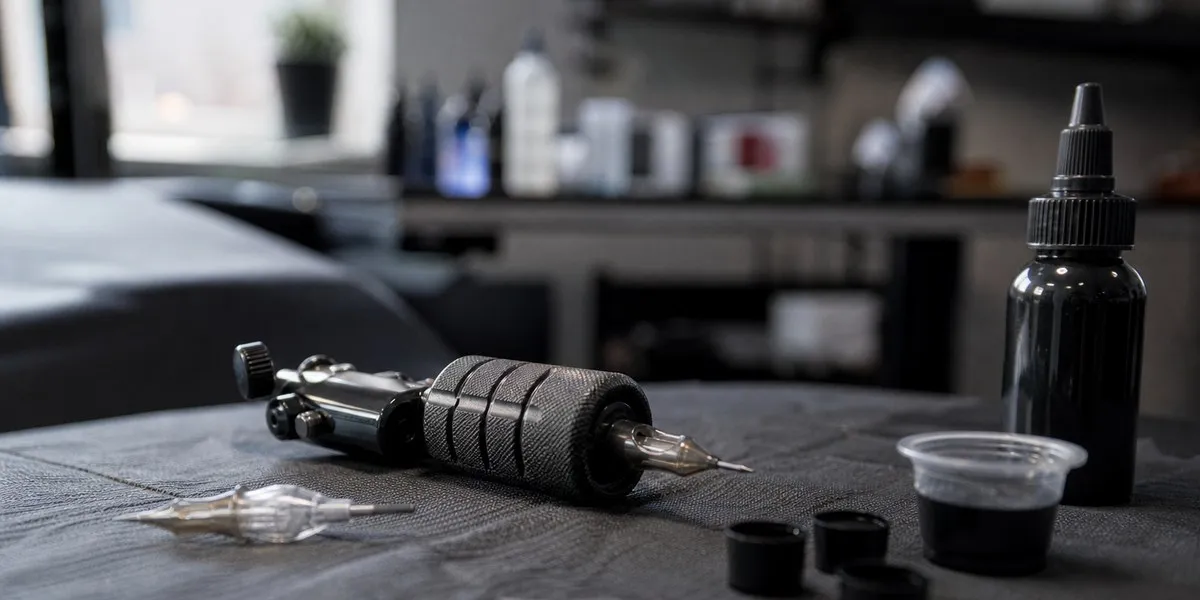
In Estonia, tattoo artist and researcher of local tattoo culture Oskar Poll is studying how motifs, techniques and the tattoo artist profession have changed from the Soviet period to the present day. He spoke about his work to ERR News.
Poll has been tattooing for about ten years. He earned a bachelor's degree in graphic art at the Estonian Academy of Arts, and devoted his bachelor's and master's theses to the history of tattoos in Estonia. The researcher is now continuing to work on this topic in his doctoral dissertation.
Motifs of the Soviet period
For his master's thesis, Poll photographed tattoos from the Soviet era and collected information about when, where and under what circumstances they were made. According to him, nautical motifs were the most common at the time: anchors, ships, seagulls and similar images. Images of women were also popular.
More current news is available on the UA.News Telegram channel Telegram.
The researcher explained that in Western countries, tattoo culture was predominantly male for a long time because it was associated with subcultures dominated by men. As a result, men often put images of women on their bodies. At the same time, tattoos among women in Soviet times and earlier were much less common than they are now.
Studios and new tools
In his doctoral dissertation, Poll focused on the transitional period and the emergence of the first professional tattoo artists and studios in Estonia in the 1990s. He is studying where artists obtained machines and other equipment, as well as how the very idea of working as a tattoo artist emerged — a profession that had effectively not existed before.
In Poll's view, the main difference between modern tattoos and Soviet ones is the much wider choice of motifs, including thanks to the internet. During the Soviet period, the set of motifs was more established: it included skulls, roses, cats, military symbols and anchors. He also noted that tattoo machines are used today. According to him, homemade machines were used in prisons for some time during the Soviet period, while earlier tattoos were made with a needle and ordinary ink.




