
Japanese art of ikebana attracts those seeking tranquility — Asharq Al-Awsat
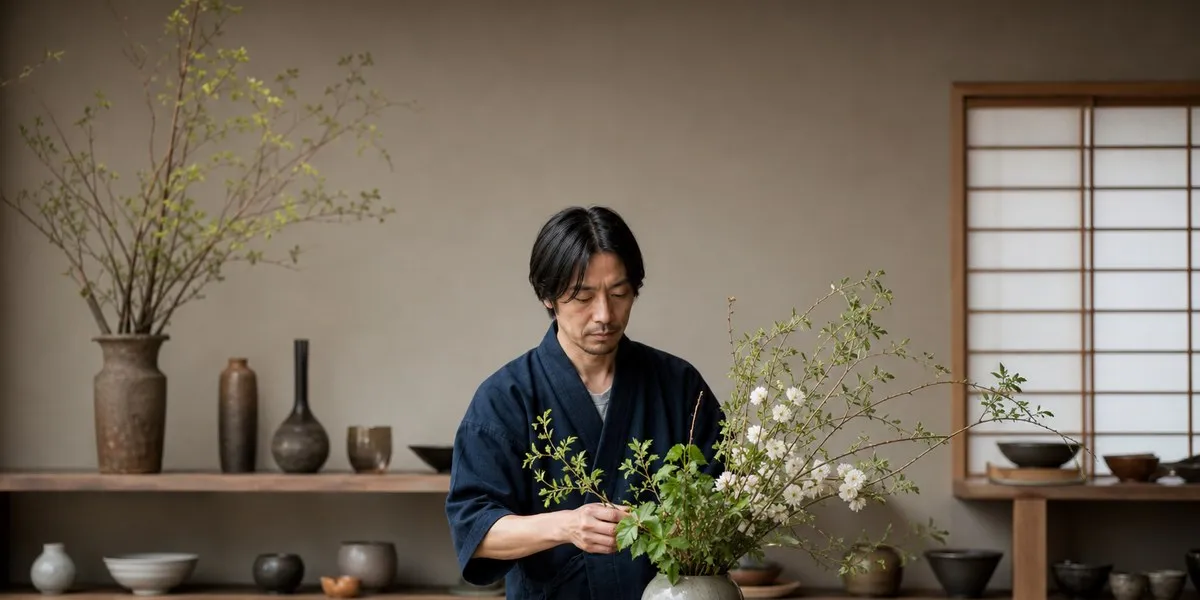
In Tokyo, Japan, the art of flower arranging known as ikebana, whose history spans more than 500 years, attracts not only followers of tradition but also new students seeking a creative practice and concentration. Asharq Al-Awsat reports, citing the Associated Press.
Forty-year-old Hiroyuki Okada began studying ikebana about seven years ago and now teaches the art of the Ikenobo school, the oldest of the three main schools of ikebana. In his view, people come to classes seeking joy, meaning, or relief from everyday stress. Okada noted that while creating an arrangement, a person works with the life and beauty of flowers and can at the same time better understand themselves.
Observing nature
Ikebana involves interaction with nature on a small scale, usually through an arrangement in a vase. According to Senka Ikenobo, the future head of the Ikenobo school, this practice is based on the relationship between the creator and the flowers. The school, which is based in Kyoto and has Buddhist roots, now has branches in different countries.
More current news is available on the UA.News Telegram channel Telegram.
Jeanette Haviland-Jones, a professor of social psychology at Rutgers University, said that research links flowers and their scents with feelings of happiness. Okada also emphasizes the importance of tactile contact with petals and leaves. Ikenobo students include both small children and people over 100 years old.
Traditional arrangement
One of Ikenobo's traditional styles, shoka shofutai, recreates how flowers, leaves, and branches might look in nature: reaching toward the sun or bending in the wind. A wooden or ceramic vase is also part of the arrangement.
The style consists of three main elements: the tallest, shin, which symbolizes a person's inner core and is directed toward the sky; soe, positioned on the side and about two-thirds the height of shin; and tai, which represents the future and may be a flower or young leaves. Alongside the traditional style, there are also freer forms of ikebana that may resemble Western bouquets and be more accessible for beginners.




