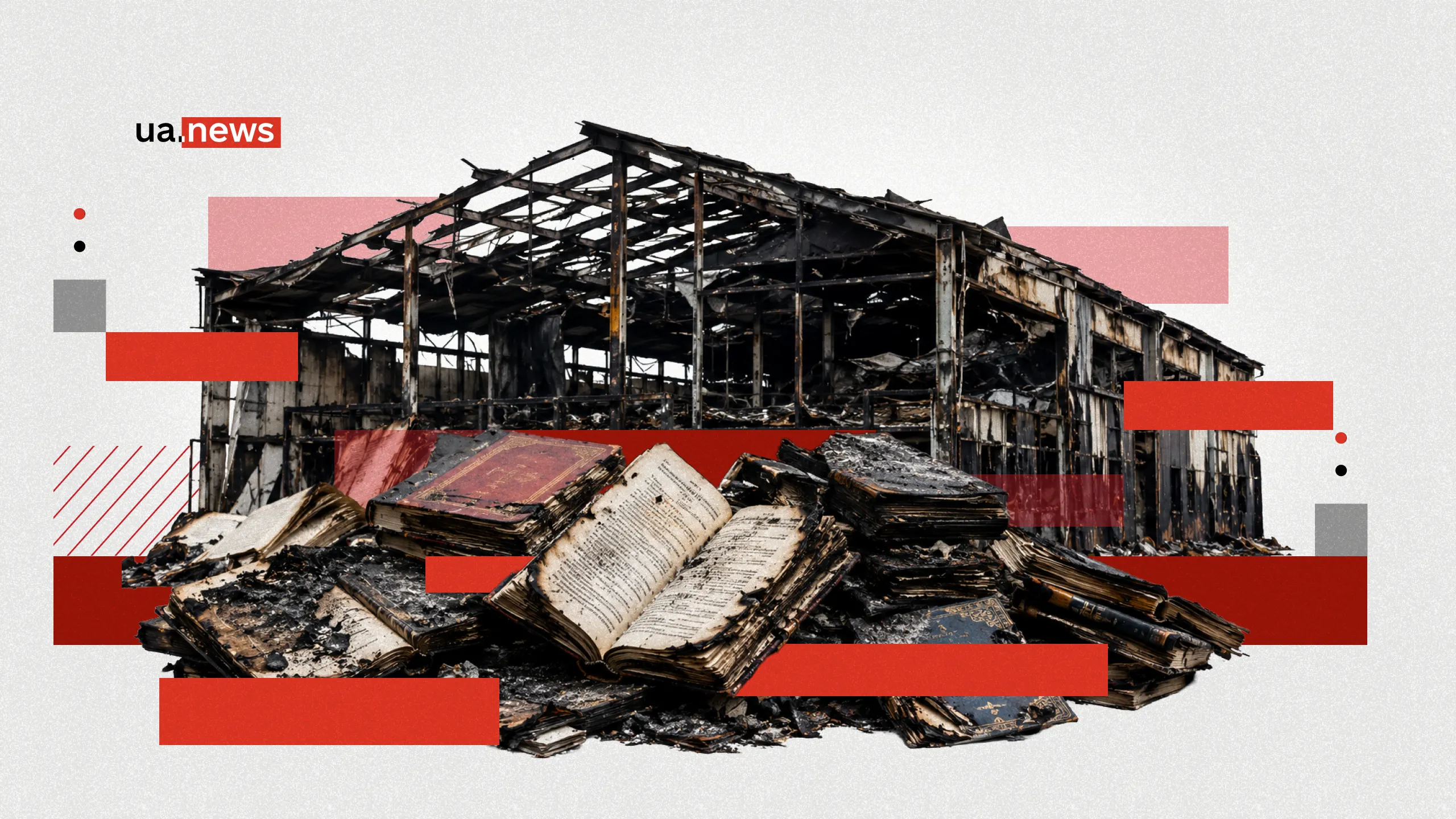
We have long since grown accustomed to the fact that the enemy targets far more than just critical infrastructure. Hospitals, schools, residential buildings—all of these, unfortunately, have become part of Russian military tactics that can hardly be described as anything other than terrorism against the civilian population. However, people often forget about another front: the cultural one. From the very first days of the full-scale invasion, Russia has been targeting Ukrainian publishing houses, printing presses, libraries, and book warehouses. In the summer of 2026 alone, Russia destroyed nearly 10 million copies—a third of Ukraine’s annual book production.
UA.News has compiled a timeline of the attacks on the book publishing industry. We explain why this is no coincidence and what each of us can do to support Ukrainian book publishing. Read more in our article.
This Is No Coincidence: Why Attacks on Books Are a Strategy
To understand what’s happening, just look at the timeline of these attacks. From March 2022 through August 2026, there have been at least 20 documented attacks directly targeting book publishing infrastructure. In other words, this is a systematic destruction. And that’s not even counting libraries in small towns and villages.
The logic behind these attacks is quite simple and clear: books are a time-honored way for society to pass on memory, shape its worldview, define itself, and so on. And destroying all of this means destroying identity. Throughout history, empires have burned the books of the peoples they sought to subjugate. After all, a people without its own books is eventually forced to read others’ books and believe in someone else’s truth. This is one way to destroy a culture. A textbook that burned in a warehouse before the start of the school year represents more than just material loss. It means thousands of children who may have to go to school without textbooks. The aggressor is carrying out an act of symbolic annihilation—seeking to turn our cultural landscape into a “blank slate,” to prove that our culture does not exist as a fully-fledged institution capable of defending and reproducing itself.
There is another important aspect worth noting. The warehouses of major publishing houses, such as “Ranok,” “Knyholav,” or BookChef, have never been secret facilities. Their addresses are easy to find on websites and maps, which allows the enemy to target them with missiles using only open-source information, even without the involvement of local spotters (although, according to the SBU, the recruitment of spotters via Telegram channels remains a systemic problem). Perhaps, given the constant missile attacks, logistics hubs and production facilities should reconsider their approach to disclosing their locations.

Chronology of the Destruction of Ukrainian Books
The very chronology of the strikes proves that this is no coincidence. It all began in Kharkiv: the largest city closest to the border, which bore the brunt of the first strikes as early as the winter and spring of 2022. On March 12, the Unisoft (Book Factory) printing plant was struck, and on April 24, the enemy attacked the “Ranku” logistics center—one of the largest publishers of educational literature (it would later be attacked repeatedly). On July 31 of that same year, a single strike put two production facilities out of commission at once—the printing plant and the typesetting shop of the House of Printing.
In the spring of 2024, the attacks resumed with renewed intensity. On March 20, the “Gurov & K” printing plant and the “Aurora” typesetting facility were hit, and on May 23, the powerful “Faktor-Druk” printing complex and the Vivat publishing house’s printing plant were destroyed in a single day.
Subsequently, the scope of the terror began to expand. In 2025, Kyiv and Dnipro became targets. In the capital, the “Ukrainian Priority” warehouse was attacked on June 17, and on July 4, the “Nash Format” warehouse was attacked (damages exceeded 100 million UAH). On September 30, the “Smaki” publishing house warehouse in Dnipro was targeted. Also, on November 25, the “From A to Z” printing house was targeted.
But the industry suffered its most devastating losses in the summer of 2026. On July 2, the BookChef warehouse and the “Megapoligraf” printing house in Kyiv were targeted—800,000 copies were destroyed in the fire, and losses totaled approximately 20 million hryvnias. On July 19, a massive attack targeted four Kyiv facilities simultaneously: the “Knyholav” warehouses, the “Ark.Yuey, the MISON office (which was completely destroyed, along with its equipment), and the Konvi printing house, whose shutdown disrupted printing for more than a dozen publishing houses.
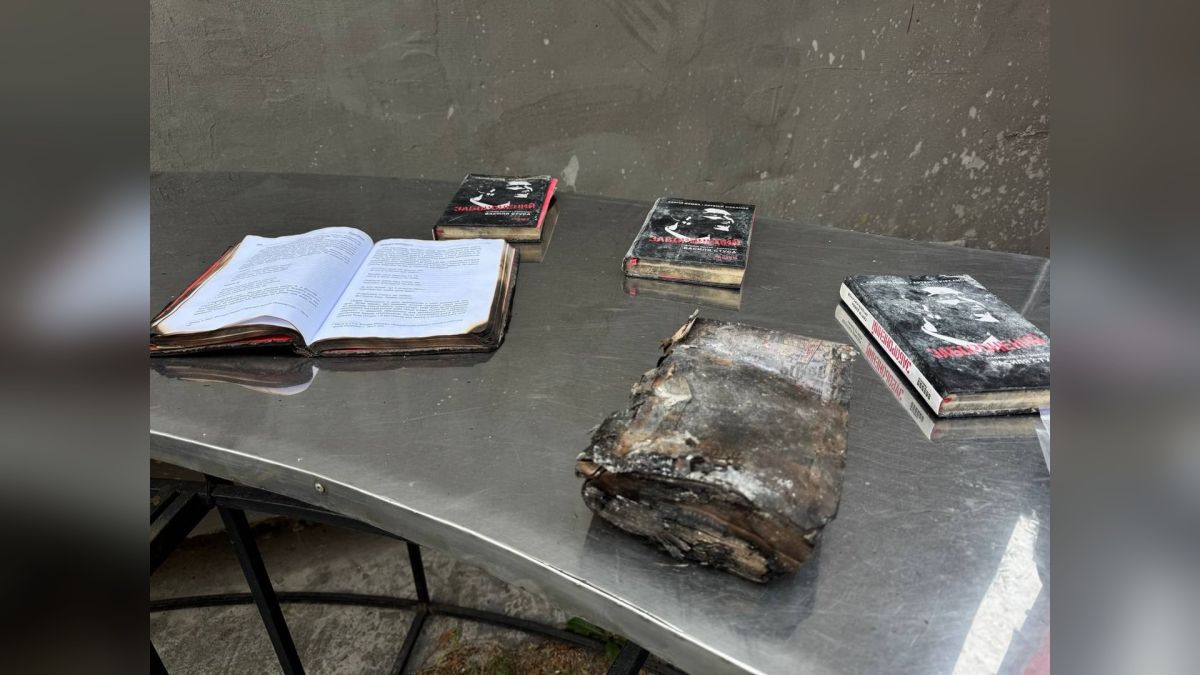
August 2026 turned into a veritable catastrophe. On the 1st, the “Ranok” warehouses and “KnigoLand” bookstores in Kharkiv were destroyed—nearly 8 million books were destroyed there, including over 28,000 school textbooks. And on August 16 in Kyiv, three strikes were recorded at once: one at the “Laboratoriya” warehouse, a second at the “Nash Format” warehouse, and another at the book market on Pochaivska Street. The open-air space, where readers had for years been accustomed to wandering among the rows and selecting books under the open sky, went up in flames.
Damages that are hard to fathom
The summer of 2026 became a period of terror against the publishing industry. Between May and August alone, the industry’s infrastructure suffered at least 15 targeted attacks. The consequences of these attacks include the destruction of 9.65 million copies, and the direct financial loss exceeded 1.19 billion hryvnias—a figure that publishers themselves consider far below the actual (much greater) losses.
Over the course of just two months, July and August, the industry lost 33% of its annual production capacity. To grasp the magnitude of this, just imagine that the number of books burned over the summer is equal to nearly one-third of all print runs released throughout the entire year of 2025. The consequence for readers is disheartening: one in three planned new releases will either never see the light of day or will reach the shelves with a significant delay and a reduced print run. All of this is accompanied by colossal additional costs for a business that is already struggling to survive.
The blow to the education sector is particularly cynical. On the eve of the start of the school year, 1.2 million textbooks—8.6% of the total volume of educational literature—were destroyed by fire. And although publishers are making every effort to quickly reprint at least some of what was lost, a portion has been irretrievably destroyed.
The government, in turn, has announced support for affected businesses. Printing houses and publishing houses affected by the attacks can receive grants of up to 16 million hryvnias to restore equipment and compensation of up to 30 million hryvnias under the war risk insurance program. But government support is only part of the solution. The other part depends on readers.

Piracy: The Second Front We Are Opening Ourselves
While Russia is striking warehouses and printing houses from the outside, there is another problem emerging from within. Namely, book piracy: illegally reprinted books sold on marketplaces and social media, and e-books distributed via Telegram channels and specialized websites at rock-bottom prices—or even for free. Oleksandra Koval, acting director of the Ukrainian Book Institute, estimates the losses from book piracy at hundreds of millions of hryvnias each year.
When you download a book from an illegal website or buy it from a dubious Telegram channel for a nominal price, the money goes to who knows whom and who knows where. Not to the author, who spent months or years writing it. Not to the translator, who put in just as much effort. Not to the editor, proofreader, illustrator, or typesetter—not a single one of the people who made the book what it is. Not to the publishing house, which bought the rights to the book and risked its own funds to publish it.
This creates a paradoxical situation: people love to read, but through their choices, they undermine the very possibility of books continuing to be published. A publishing house that doesn’t generate revenue cannot publish new books. An author whose royalties vanish into thin air cannot afford to write the next novel; they will literally lack the means to make a living. A translator who receives no fee takes on other projects. The artist who illustrated the cover can no longer make a living from illustrations. Ultimately, the industry shrinks, the variety of publications decreases, and readers get less and less of what they’d like to read. Piracy accounts for up to a third of the market—and this is happening at a time when the industry is already suffering billions in losses from Russian attacks.
How to Support Ukrainian Book Publishing
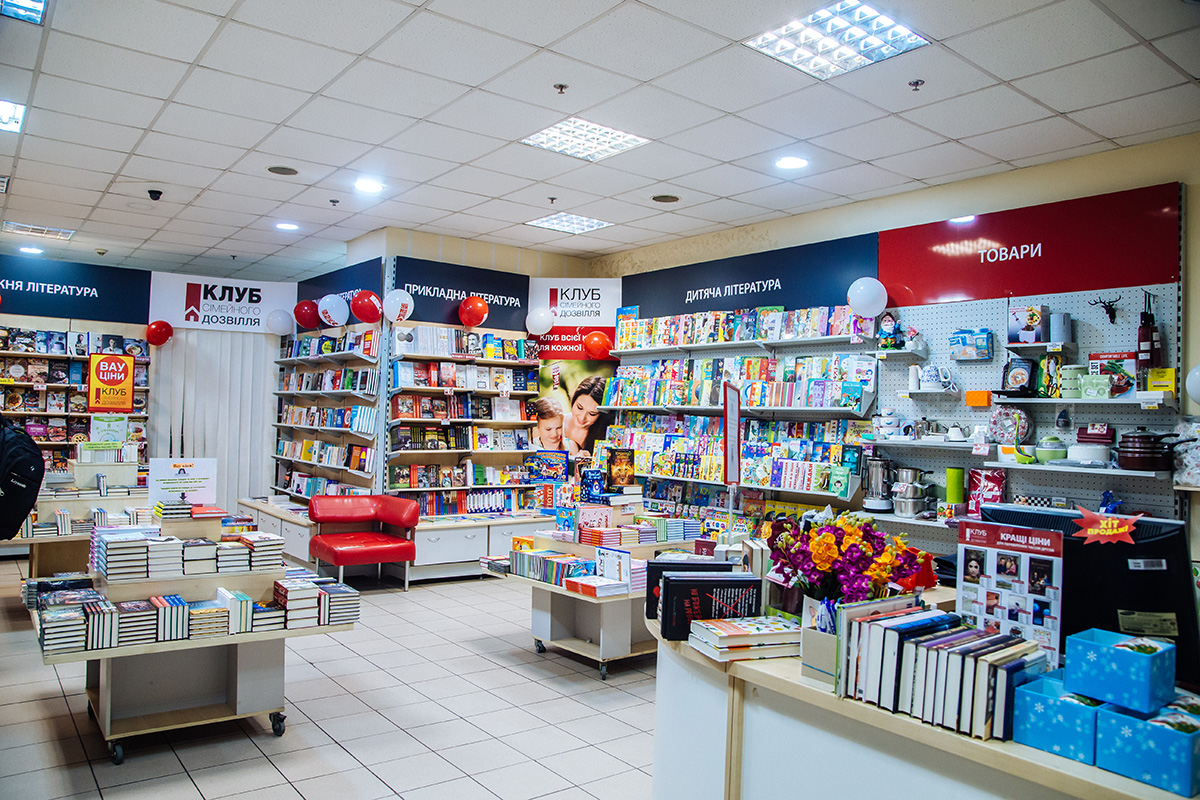
Supporting the industry is easier than it seems. As noted above, it’s important to buy from official websites and avoid piracy. Most publishers have their own online stores or sell books through trusted bookstores: “Knyholand,” “Yakabu,” Readeat, “Knyharnya Ye,” and others.
If you prefer e-books, you can easily purchase them on publishers’ websites as well. Most publishers now offer digital versions of their books on platforms like “Chytanka” or on their own websites. The price is usually significantly lower than that of the print version—and all the money goes to those who worked on the book. Alternatively, you can subscribe to Librarius so you don’t have to pay for each book individually, while still supporting publishers and authors.
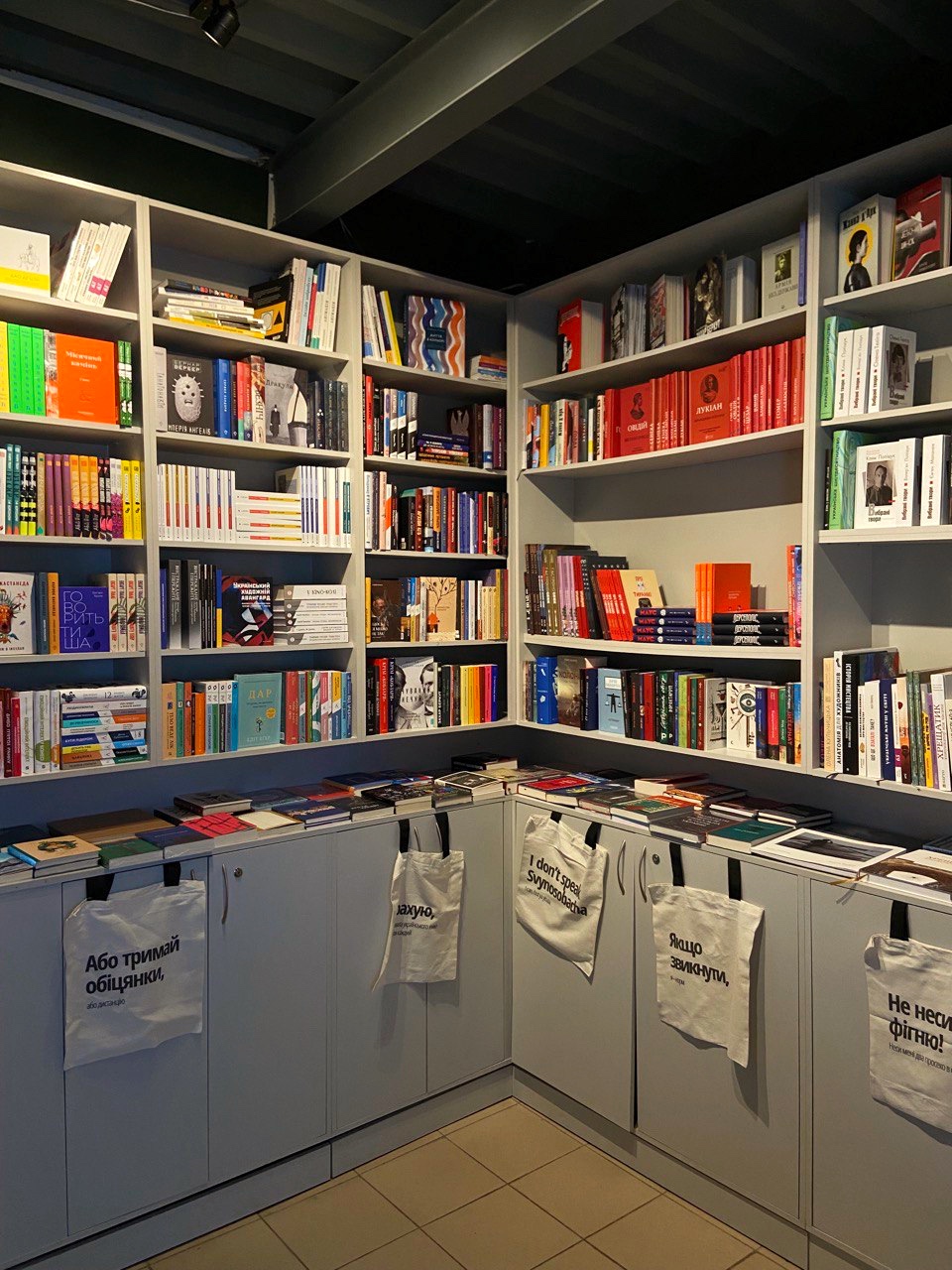
Another way to support them is through pre-orders. This is when you pay for a book before it’s even printed. For the publisher, this means actual revenue even before the book is released: they can plan print runs with more confidence and take fewer risks. Many publishers offer a pre-order discount specifically as a thank-you to readers who place their trust in them in advance. You can find books available for pre-order directly on publishers’ websites—usually in the “Coming Soon” or “Pre-orders” section. As soon as the book you’re waiting for is printed, it will be sent to you immediately. This way, you’ll receive the book before the print run is shipped to bookstores for sale.
In summary, Ukrainian publishers continue to work despite everything. Publishers who have lost their own warehouses are seeking new logistics solutions. Printing plants that have suffered damage are recovering and getting their equipment up and running. While warehouses are burning, Ukrainian publishers are opening new ones. While print runs are being destroyed, they are launching new ones.
Ukraine’s publishing industry continues to operate—and this is its response to attempts to destroy it. Every book purchased is a small but real and much-needed contribution from the reader.