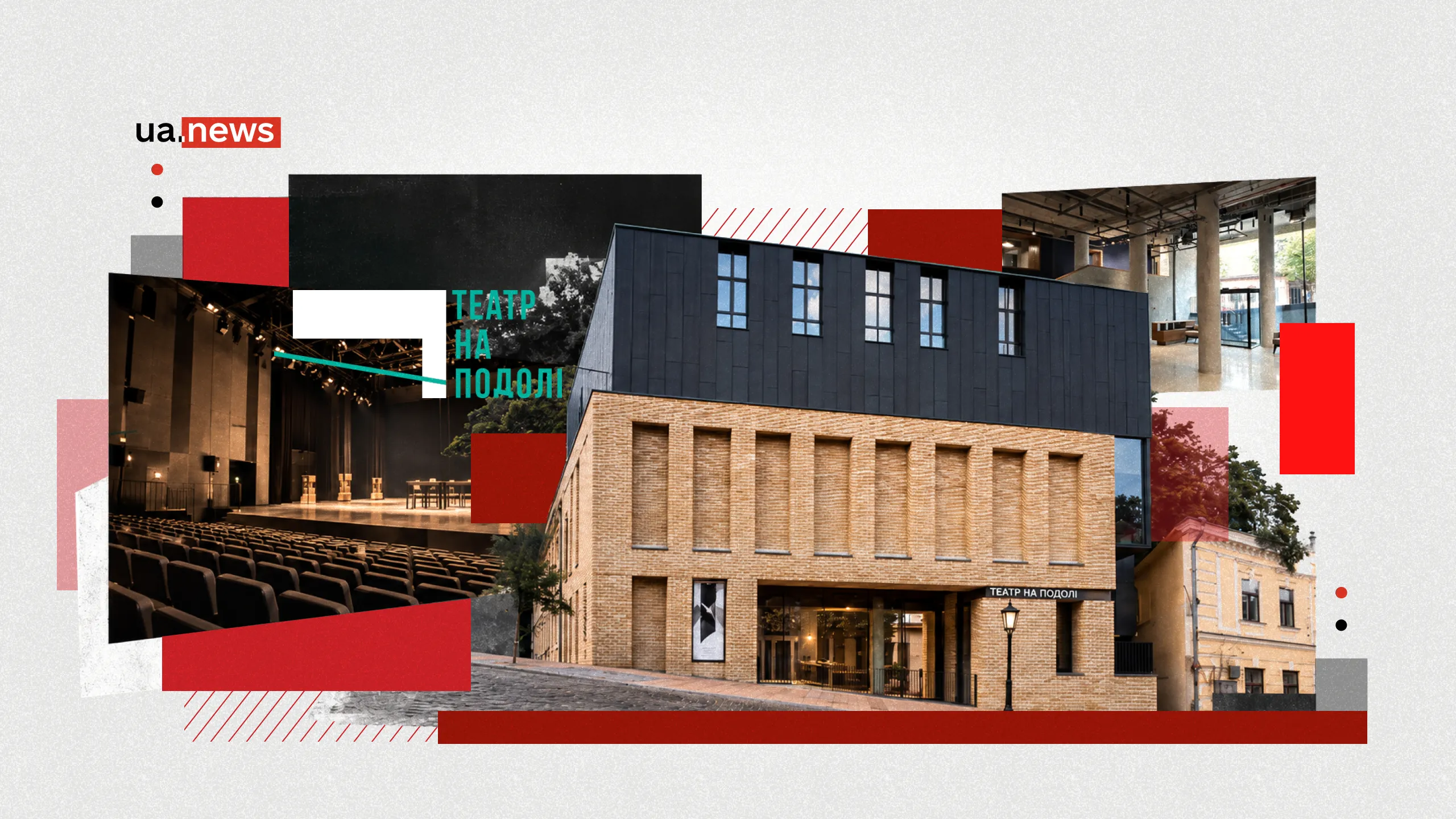
Kyiv has been under shelling for more than four years now—and in recent months, the situation has only worsened. Air raid alerts have become part of daily life for both residents and visitors to the capital, and nighttime shelling has become almost a familiar backdrop to everyday life…
In such a situation, one might think there’s no time for the theater at all. But available seats for performances at the Podil Theater are selling out fast; tickets don’t linger on the market, and almost every time, the actors see full houses. Kyiv residents and visitors to the capital dress up nicely, leave their homes, and head to Podil to see the shows—despite everything happening around them.
Why is that? What keeps both the audience and the actors in this space when all around them there is nothing but war, grief, and death? How does the theater survive? What goes on inside—how do rehearsals take place, how are new productions discussed, and so on? How does all of this look not from the audience’s perspective, but specifically from the stage’s point of view?
UA.News journalist Anita Violina spoke about this and more with Daria Protsenko, an actress at the Podil Theater. About her debut in a leading role among seasoned professionals, what happens behind the scenes during an air raid alert, the atmosphere within the troupe, and why theater today is neither a luxury nor an escape from reality, but something far more important—read about it in our article.
How long have you been performing at the Podil Theater—and do you remember your debut there?
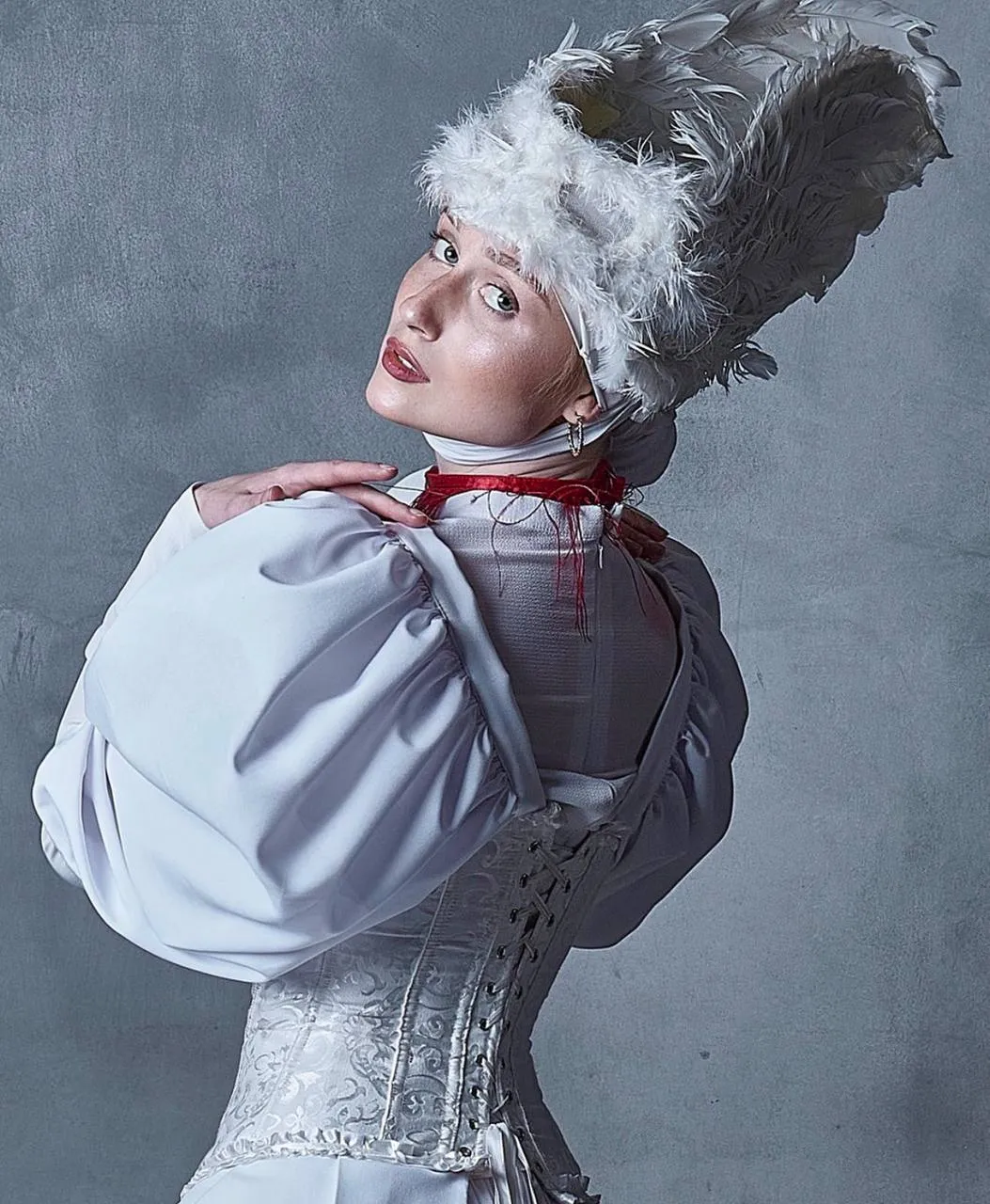
Daria Protsenko: This is my fourth season at the Podil Theater. I made my debut in the play *A Midsummer Night’s Dream* by Lithuanian director Andra Kavaliuskite, playing the role of Hermia. An incredible experience! I can say that it was a real stroke of luck to land a role with a great director right away—and in the lead role, no less.
But it was a real challenge: I was inexperienced among professionals. The cast was so supportive and believed in me so much that to this day I remember those late-night rehearsals, the nerves, and the exhaustion—and I want to relive that experience. Despite all the challenges, in just one month—which is very little time!—we produced a decent production. And, to be honest, it’s still my favorite role from all my years in the theater!
Where did you study, and what turned out to be completely different from what your teachers said?
Daria Protsenko: I graduated from the Kotlyarevsky Kharkiv National University of Theater and Arts, and I’m very glad to have received a wonderful Kharkiv acting education. Perhaps the only thing that didn’t match the teachers’ expectations was the war. We took our last two semesters online, and I had no experience performing on stage. I gained all my knowledge through a screen, so I could only guess what it would be like in reality.
The Podil Theater has continued to operate throughout the full-scale invasion. What do you think keeps the troupe from simply stopping and ceasing to perform during such a difficult time?
Daria Protsenko: I believe that the Podil Theater—and theater in general—is needed by all of us more than ever right now—both actors and audiences. Theater unites us. It allows us to reflect on shared themes, find psychological relief, and—quite simply—take our minds off the terrible reality. It’s a space for honest conversation among us, Ukrainians. And it’s not just a purgatory for our thoughts and feelings, but also a way to communicate with the world.
Many
of your theater’s productions are consistently sold out. Why do you think Ukrainians need art so much right now? And do you feel this need when you’re standing right on stage?
Daria Protsenko: Art—and theater in particular—is therapy. Right now, we’re constantly under fire, we’re sleep-deprived, and we’re on edge. On both a physical and psychological level, our basic needs aren’t being met. And it would seem—at times like these—that tickets for a show would sell out in a matter of minutes… Well, that’s surprising.
But it’s precisely in this state that people need art the most. They find healing during the performance—it’s like a session with a psychotherapist. The most interesting thing is that for us, the actors, it works the same way. Because through our characters, we mirror the audience, and they mirror us. It’s a mutual exchange that keeps us, Ukrainians, afloat.
How is the theater doing right now? What’s happening behind the scenes? Tell us about rehearsals, new productions, and the atmosphere within the troupe.
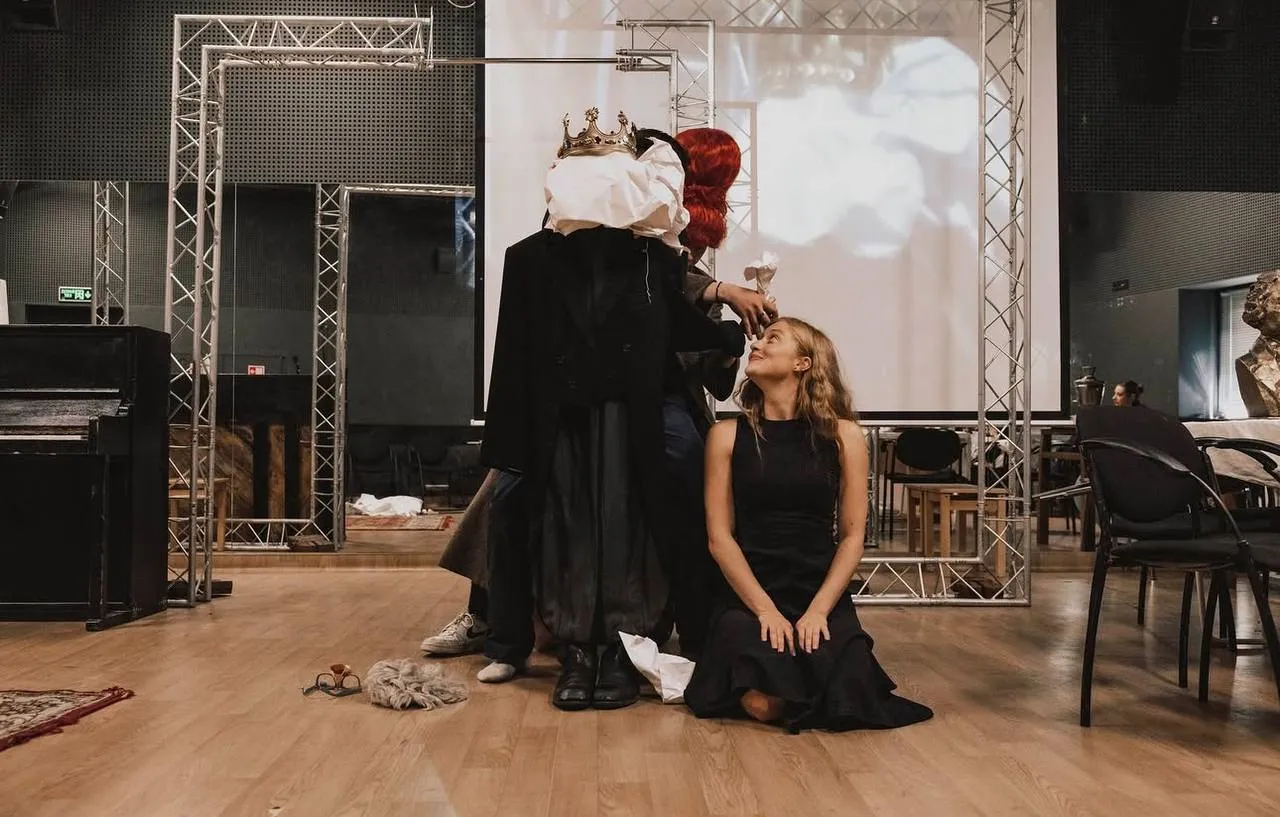
Daria Protsenko: The theater is operating at full capacity, and we’re currently preparing new premieres. I hadn’t worked in theater before the war, but I can say that I specifically wanted to join the Podil Theater. Not only because of the high-quality productions, but especially because of the troupe, which has managed to create an atmosphere of complete acceptance—of you as a person and as an actor. This atmosphere was established long before I joined the theater, and it is precisely this atmosphere that allows one to be free in one’s creativity and honest with one’s colleagues.
I sincerely believe that art should be born precisely in such an atmosphere. Art is a synthesis of humanity and professionalism. And for this, we certainly owe a debt of gratitude to the founder of the Podil Theater, Vitalii Malakhov.
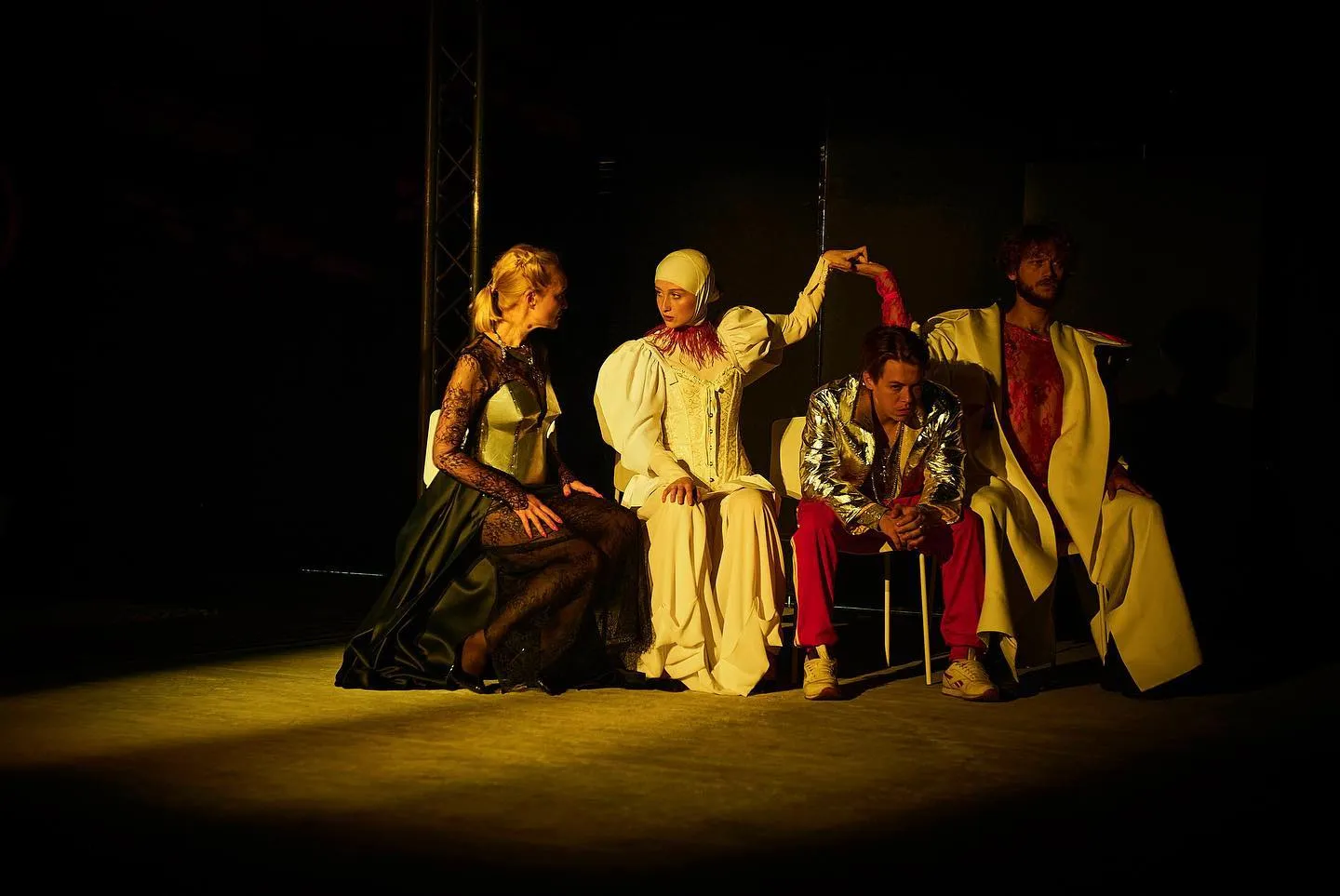
What happens to the performance during an alert? Is there a specific protocol, or does it vary each time? And how does the audience react in such moments?
Daria Protsenko: During a yellow alert—when a drone threat is detected—the performance does not stop, but audience members are free to go down to the shelter on our theater’s grounds if they wish. During a red alert, when a missile threat is detected, the performance is paused and resumes after the all-clear is given. The audience, like us, has unfortunately grown accustomed to this turn of events. So when an air raid alert is sounded, we’re all united by a single wish—that it ends quickly so we can resume the performance as soon as possible.
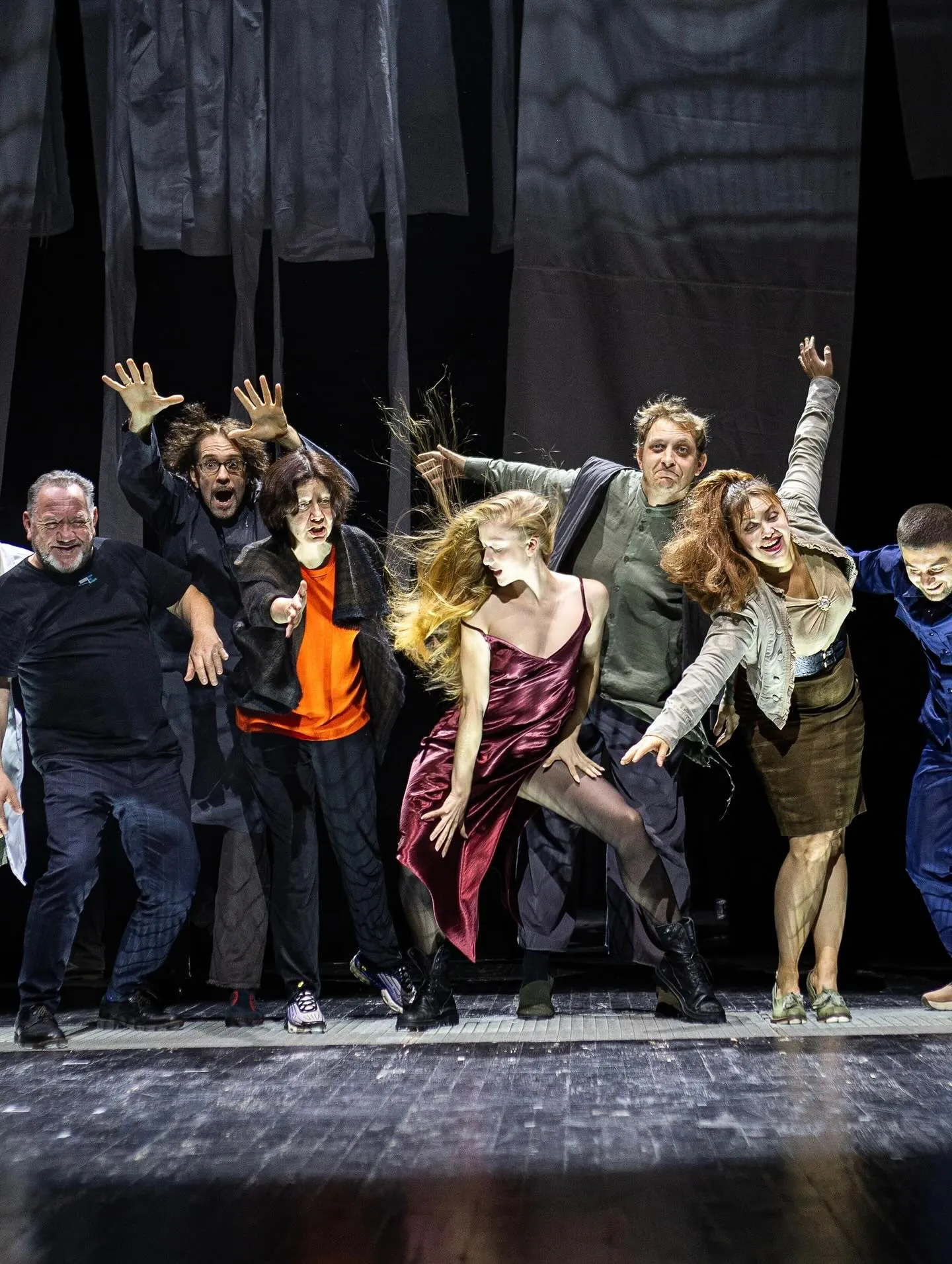
Do you have fellow actors who are currently serving in the Armed Forces of Ukraine? Have they returned to work after being demobilized? What is it like for them to return to the stage and to the troupe?
Daria Protsenko: Yes, we do have colleagues who are serving. But I’m not in close contact with them, so I’d prefer to refrain from answering that question.
The theater is a state institution. Do you feel the financial pressure of the war from within—on productions, costumes, and technical capabilities? This is rarely discussed publicly, but it is a reality.
Daria Protsenko: My only experience working in the theater has been during a full-scale invasion, so I’m not in a position to compare the financial conditions of the pre-war theater with those of today.
And finally: what role do you dream of playing? Perhaps one that inspires you to become a better version of yourself every day?
Daria Protsenko: Usually, the role I dream of playing is the one I’m working on right now, at this very moment. And right now, that’s Marina from Panteleimon Kulish’s play *Pathetic Sonata*. As for whether she inspires me to seek a better version of myself—you’ll be able to see for yourselves very soon at the performance of “Opus 13” at the Podil Theater on October 10 and 11, to which I cordially invite everyone!