

In just a few days, Black Rock City—the temporary city of Burning Man, built each year by tens of thousands of participants and almost completely dismantled a week later—will once again emerge in the middle of the Black Rock Desert in Nevada.
Burning Man 2026 will take place from late August through September 7, and this year’s theme is Axis Mundi.
Over the decades, the festival has evolved from a small event involving the burning of a wooden figure called “The Man” into a global cultural phenomenon that attracts artists, entrepreneurs, tech professionals, and investors from around the world.
Ukraine holds a special place in this story: Ukrainian teams have been bringing large-scale installations to Nevada for many years, and since the start of the full-scale war, Burning Man has also become a platform where they use art to tell the world about the Ukrainian experience.
UA.News explains how Burning Man works, which Ukrainian projects have been presented there, and why a festival that is fundamentally opposed to advertising is so appealing to entrepreneurs.
Burning Man is a festival that’s almost nothing like a typical festival

The history of Burning Man began long before multimillion-dollar budgets, giant installations, and celebrities.
In 1986, Larry Harvey and Jerry James, along with a small group of people, burned a wooden effigy of a man on Baker Beach in San Francisco. The idea gradually gained a following, and in the 1990s, the event was moved to the Black Rock Desert in Nevada.
It was there that the format we know today took shape.
Burning Man fundamentally rejects the model on which most major festivals operate. There is no traditional division between organizers, performers, and spectators. A person who comes to Burning Man isn’t just buying a ticket to a show—they’re expected to participate in creating the environment itself.
Some bring art installations. Others set up camp. Some prepare coffee or food for strangers for free, give lectures, put on performances, organize parties, repair bicycles, or build a huge mobile stage.
Burning Man itself puts it quite plainly: the event isn’t just attended—it’s created by the participants themselves.
This is the basis for Burning Man’s famous 10 principles: radical openness, gifting, decommodification, radical self-reliance, radical self-expression, collective effort, civic responsibility, the “leave no trace” principle, participation, and immediacy.
In practice, they constitute a rather unusual system.
You must take care of yourself, but at the same time help the community. After the event ends, you cannot leave any trash behind. People don’t just observe art—they interact with it. And instead of traditional commerce, a culture of gift-giving prevails.
That is precisely why Burning Man can be called a massive social experiment: every year, the organizers create a framework, but a significant part of what happens within it is devised by tens of thousands of participants.
An anti-advertising festival that has itself become one of the world’s strongest brands
The most paradoxical aspect of Burning Man begins where money comes into play. One of the festival’s core principles is called “Decommodification.”
Burning Man strives to create an environment free from conventional commercial logic: corporate sponsors, advertising banners, promotional campaigns, and the constant drive to sell something.
The organizers explicitly state that they protect the event from having its culture exploited for the sake of advertising companies, goods, or services. Within Black Rock City itself, there is virtually no conventional commerce, advertising, or sponsored content.
And this is where an astonishing business paradox arises. Burning Man does not want to be a brand in the traditional sense—and that is precisely why it has become an extraordinarily powerful brand.
There is no “Pepsi Burning Man Stage.” There is no massive “Mastercard Zone.” A car manufacturer cannot simply buy a space, put up a logo, and call it the “Center for Freedom.”
Yet Burning Man’s brand recognition is enormous.
In marketing, this is almost a textbook example of just how powerful a product can be when people don’t just consume it, but begin to feel like part of a community.
A Burning Man participant doesn’t receive a ready-made experience. They invest time, money, and effort into creating it. It is precisely this investment that enhances the emotional value of the event.
There’s an important lesson here for business: the strongest communities emerge when people can not only buy a product but also influence it, create their own rituals around it, and feel a sense of belonging.
Burning Man has, in fact, built its entire model around this.
Burning Man Is Still a Major Business, Even Without Advertising
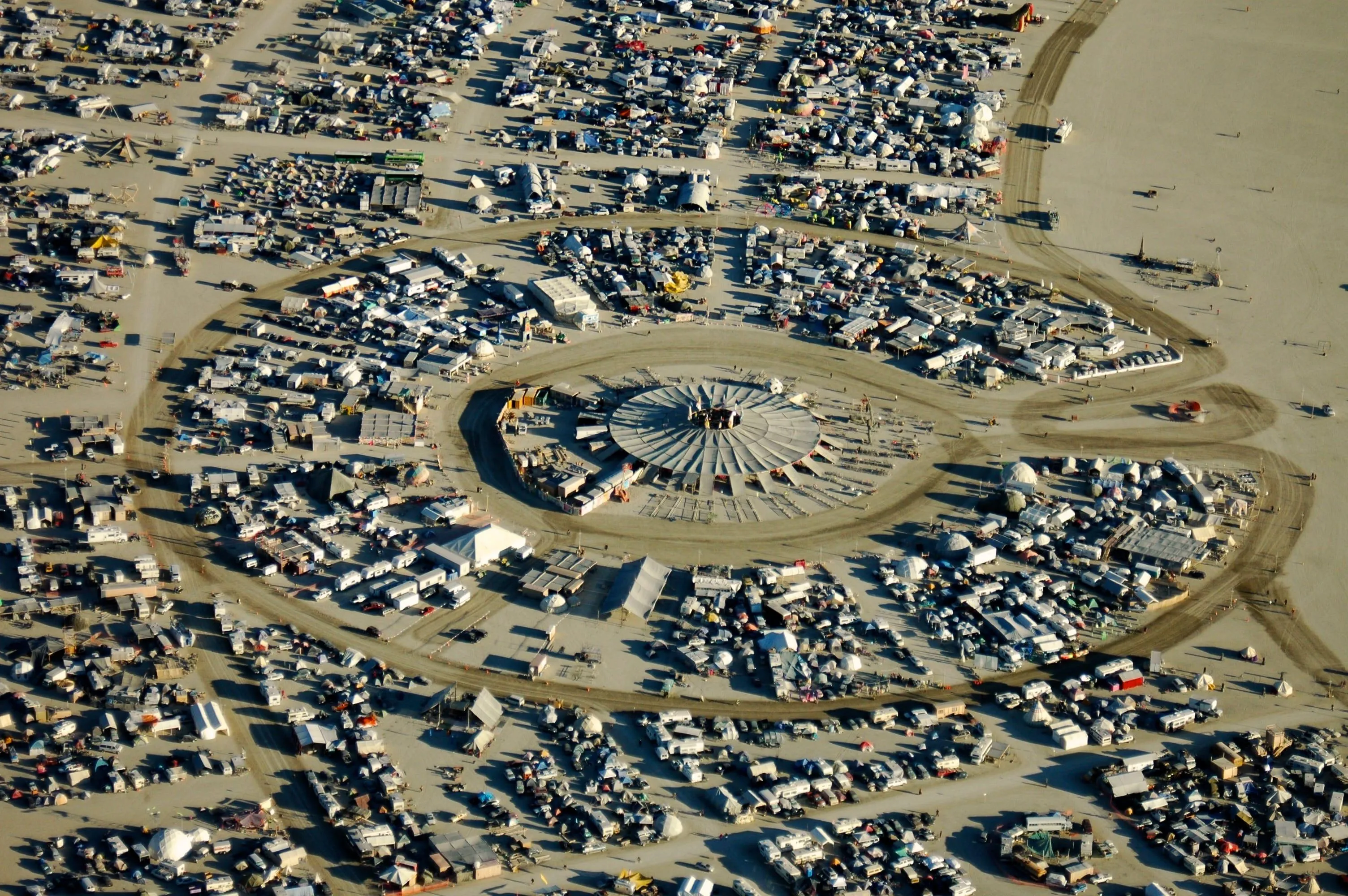
The absence of advertising does not mean the absence of an economy. The Burning Man Project is a nonprofit organization, but Black Rock City is an extremely complex and expensive project.
According to the Burning Man Project’s financial data, in 2024 the organization’s total revenue was approximately $57.5 million, while expenses totaled about $68.2 million. The year ended with a deficit of $10.7 million. Approximately 85% of the organization’s total expenses at that time were directly related to the Black Rock City platform.
Ticket sales remain the primary source of revenue.
In 2026, Burning Man will offer several different ticket price tiers. In the most recent ticket sale, tickets were offered at $550, $675, $775, $975, $1,500, and even $3,000, while a separate vehicle pass costs $165. The organizers explain that the base price of approximately $775 actually corresponds to the cost of one person’s participation, and the more expensive tickets help subsidize the cheaper categories.
But the true economy of Burning Man is much larger than the organization’s own budget.
Participants need transportation, housing before and after the festival, food, water, building materials, solar panels, generators, costumes, bicycles, and equipment. Large camps raise funds for infrastructure, and building a complex art car or a multi-ton sculpture can turn into a full-fledged engineering project.
Why Entrepreneurs, Tech Professionals, and Investors Come Here
Burning Man has long held a special status in the U.S. tech community. The reason isn’t just the celebrities or the expensive camps. The event’s format itself closely mirrors the way the startup community thinks.
Imagine a typical business project. There’s an idea. A limited budget. A team of people with diverse skill sets. A tight deadline. You need to source materials, organize logistics, build the product, and make it work.
Now let’s take away the office, the power grid, reliable internet, the hotel, and the store around the corner—and move the team to the desert. That’s roughly how a major Burning Man project is born.
That’s why setting up a camp, an art car, or an installation is very much like launching a small company. It requires project management, financing, design, production, technical specialists, logistics, communication, and people skills.
The only difference is that the end result isn’t an app or a service, but an object that may only exist for a week.
This is precisely why Burning Man is interesting to entrepreneurs not so much as a place to hold a business meeting, but rather as a vast environment for horizontal networking. At a conference, people often introduce themselves by their job title: CEO, investor, designer, journalist. In the desert, these social markers are partially erased.
The person next to you might help you build a structure or fix a bike, and only later will it turn out that back home they run a company.
This format fosters incredibly strong networking—but, paradoxically, precisely because, formally speaking, no one is supposed to come here to promote themselves or their business.
Burning Man as a marketing school: story first, reach second
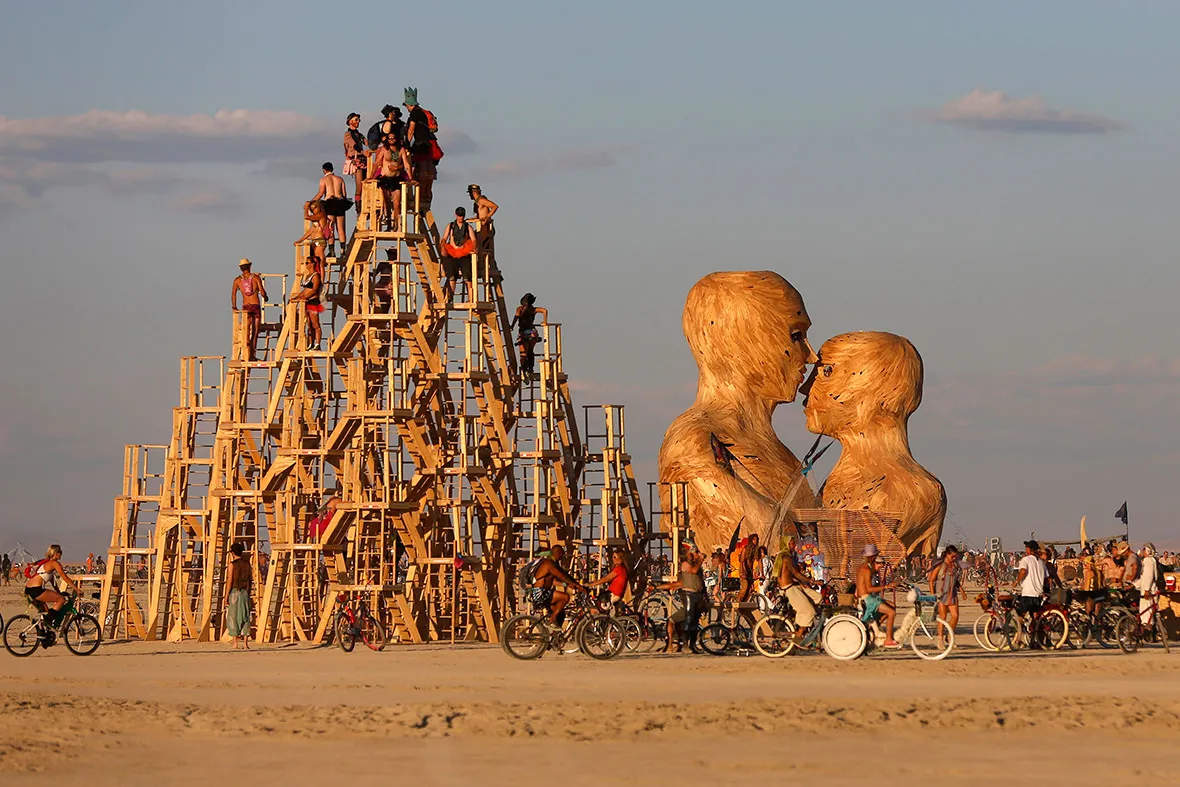
Burning Man can be especially useful for entrepreneurs who work with brands. In traditional advertising, the process goes something like this: a company pays for a person’s attention and then shows them an ad.
Burning Man works the other way around. First, you need to create something so interesting that people will want to come up to it on their own, take a photo, tell their friends, or share it on social media.
That’s why dozens of meters of metal, fabric, and light can prove to be a more powerful communication tool than an advertising campaign.
Ukrainian projects in recent years have demonstrated this dynamic very well. They didn’t just plant the Ukrainian flag in the desert. The teams created an image that could be understood without a long lecture about the war.
And it was precisely this image that became the vehicle for the message.
From “Love” to “Kurenivka”: How Ukraine Made Its Mark at Burning Man
One of the most famous early Ukrainian stories at Burning Man took place in 2015. Back then, Odessa-based artist Oleksandr Milov presented the sculpture “Love.”
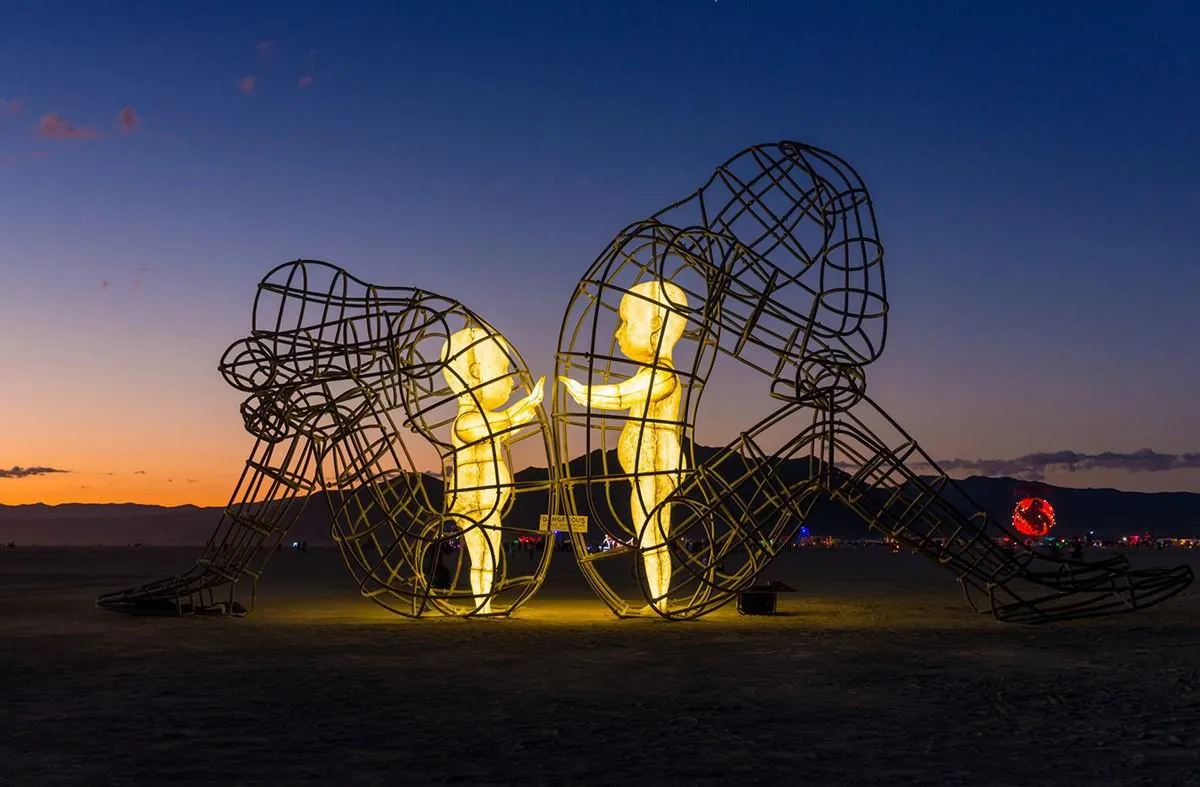
Two enormous metal figures of adults sat with their backs to each other, as if after an argument. Inside them were two child figures reaching out toward each other. In the darkness, the children began to glow.
The work received the Burning Man Honorarium and became one of the most recognizable Ukrainian art installations ever featured at the festival.
Interestingly, the festival’s success had a purely business-oriented follow-up. Milov went on to turn monumental art into a professional career, and his company today directly uses the story of “Love” at Burning Man as one of the cornerstones of its portfolio.
In 2017, another important milestone emerged—the Ukrainian camp Kurenivka, founded by Yaroslav Korets. Today, the team calls itself the first major official Ukrainian Burning Man camp. According to their own data, over 500 participants have passed through Kurenivka, and the team has brought several art projects to Black Rock City.
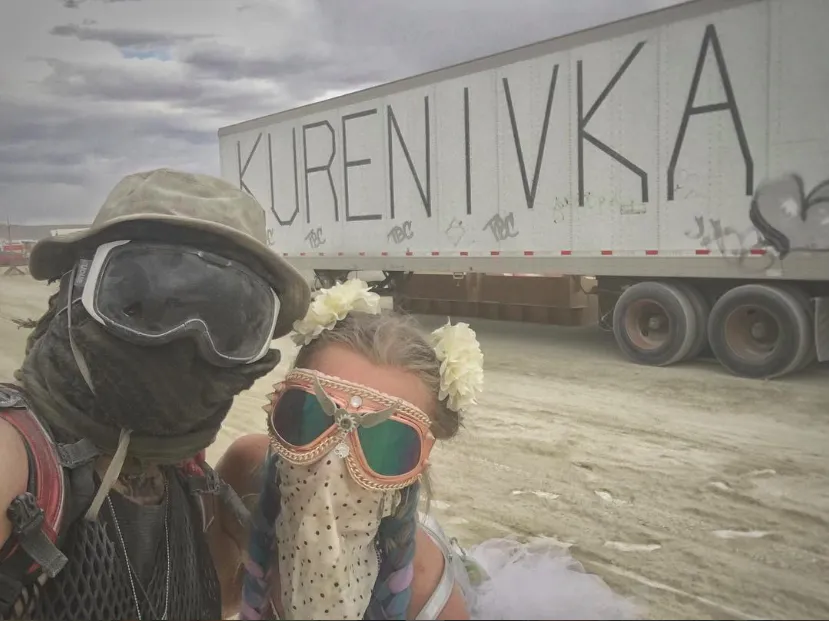
In fact, Burning Man has begun to transform for Ukraine not only into a platform for individual artists but also into a permanent international community.
The Petrykivka Butterfly and Digital Prometheus: Ukrainian Burning Man Before the Great War
In 2019, one of the most notable Ukrainian projects was Catharsis. It was an approximately three-meter-tall illuminated butterfly, whose design combined modern construction with motifs from traditional Petrykivka painting.
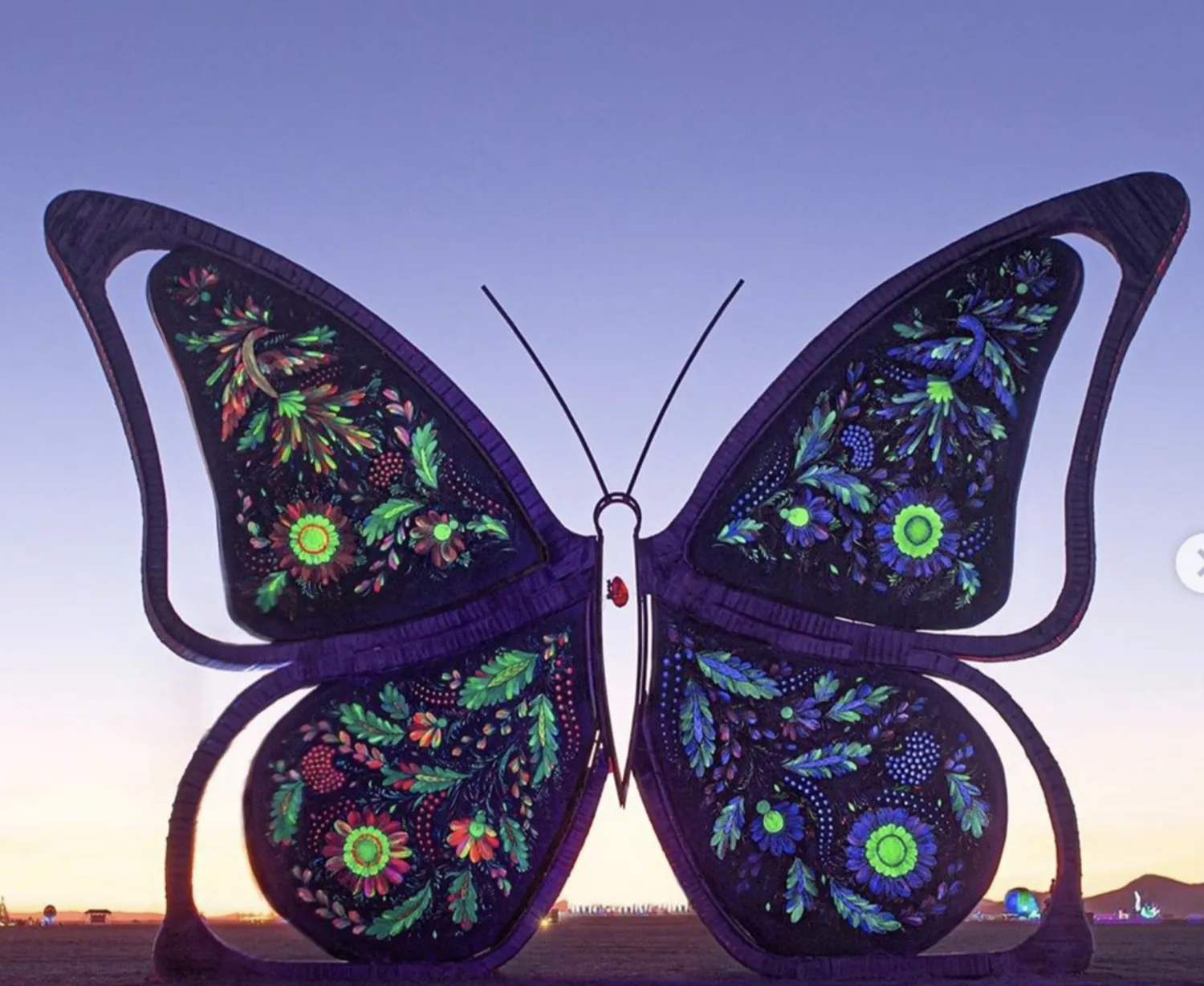
The project was created by an international team of Ukrainians and members of the Ukrainian diaspora. The butterfly symbolized purification and rebirth, while the Petrykivka style brought a recognizable Ukrainian cultural language into a completely unconventional setting.
In 2020, the pandemic put a halt to the usual Burning Man format, but some of the activities moved online. Among the Ukrainian works at that time was the virtual bas-relief ARTEFACT: PROMETHEUS by Valerii Korshunov—the hand of Prometheus passing fire to humanity.
And then a full-scale war began. And the tone of Ukrainian art in Nevada changed.
“The Hedgehog’s Temple” and “Phoenix”: It Was No Longer Just Ukrainian Culture That Was Brought to the Desert, but the Ukrainian War
After 2022, Burning Man also became a platform for international cultural diplomacy for Ukrainian teams.
One of the most impactful years was 2023. That’s when the Kurenivka team presented “The Hedgehog Temple.”
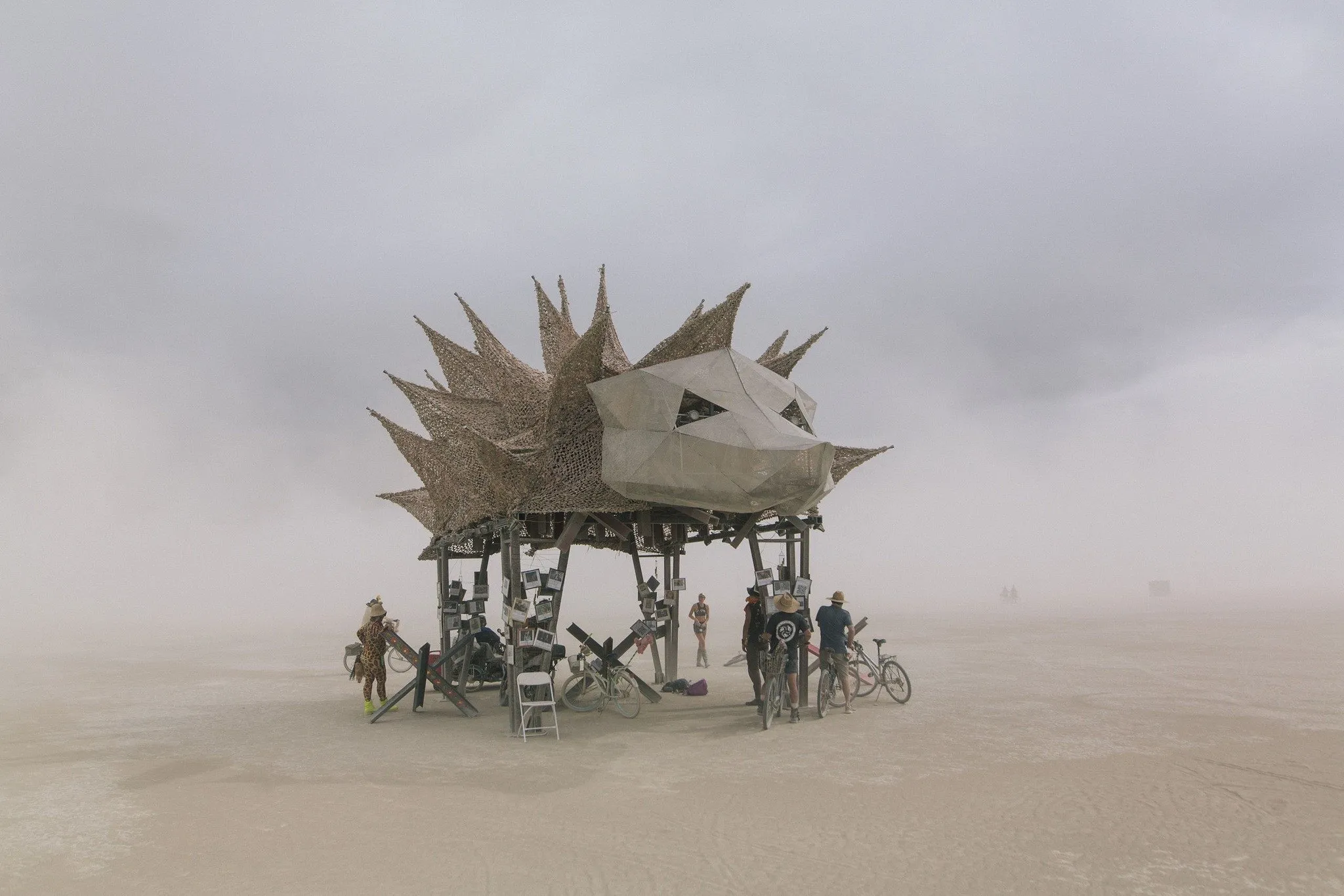
The seven-meter-tall structure was made of metal and real anti-tank hedgehogs. Inside, photographs and stories of Ukrainian members of the Burner community who died as a result of the Russian invasion were displayed.
The installation served both as a memorial and as a symbol that was highly recognizable to an international audience: a structure that people in the West are accustomed to seeing in historical war films had once again become part of everyday life in Ukraine.
That same year, Oleksii Sai and Bohdana Kosmina created “Phoenix.” At first, visitors saw a structure resembling the protective barriers around Ukrainian monuments. Then it was set on fire, and once the outer shell had burned away, a metal bird emerged, its shape also reminiscent of the Ukrainian trident.
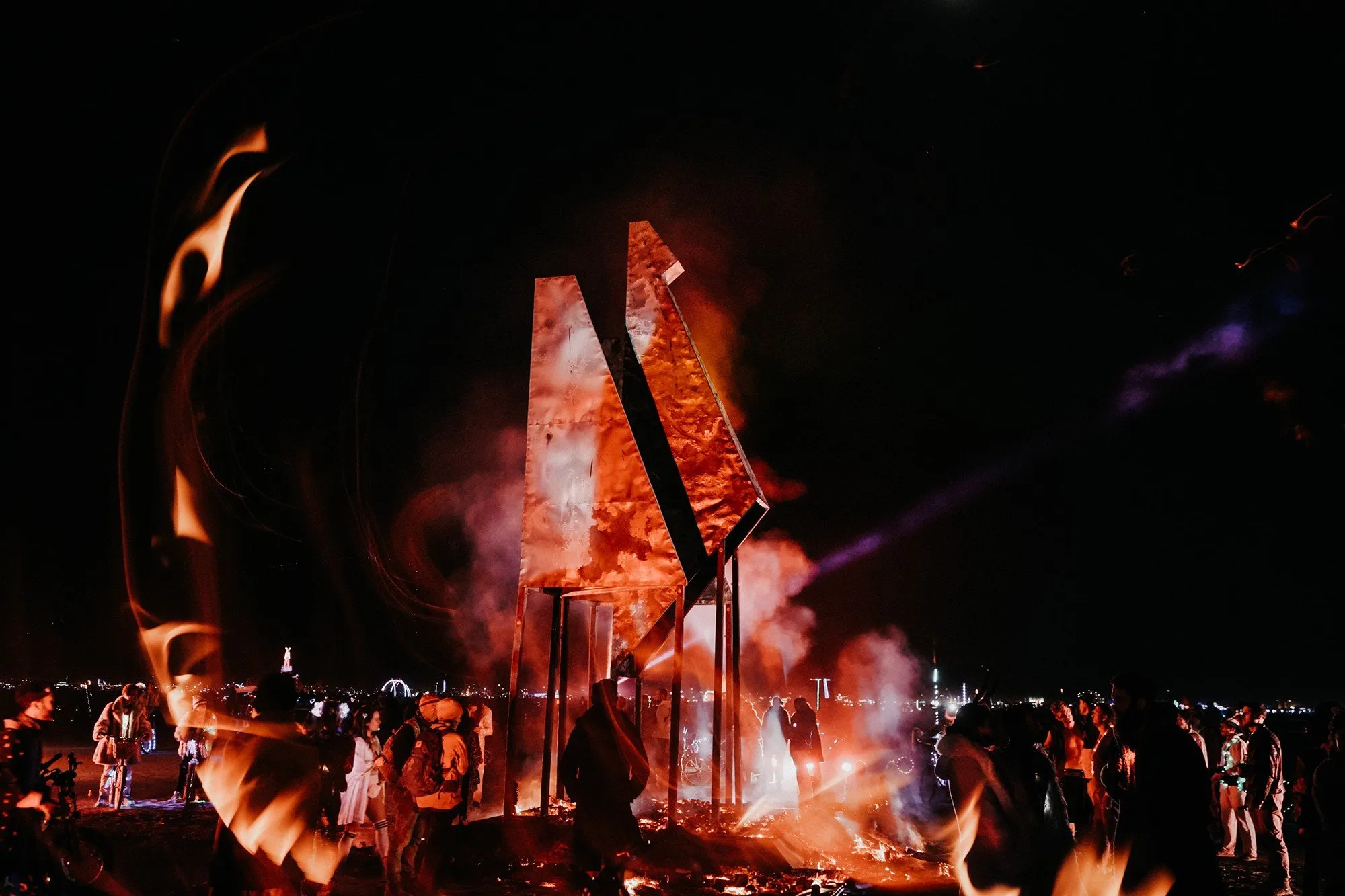
It was a literal embodiment of a country passing through fire and emerging from it.
“I’m Fine;)”: one phrase that said more about Ukraine than dozens of presentations
In 2024, the Ukrainian team created what was likely one of their most powerful works at Burning Man—I’m Fine;).
From a distance, it looked almost like a playful internet meme. Huge multicolored letters, about 32 meters long and roughly seven meters tall, spelled out “I’m Fine;)”—meaning “I’m okay.”
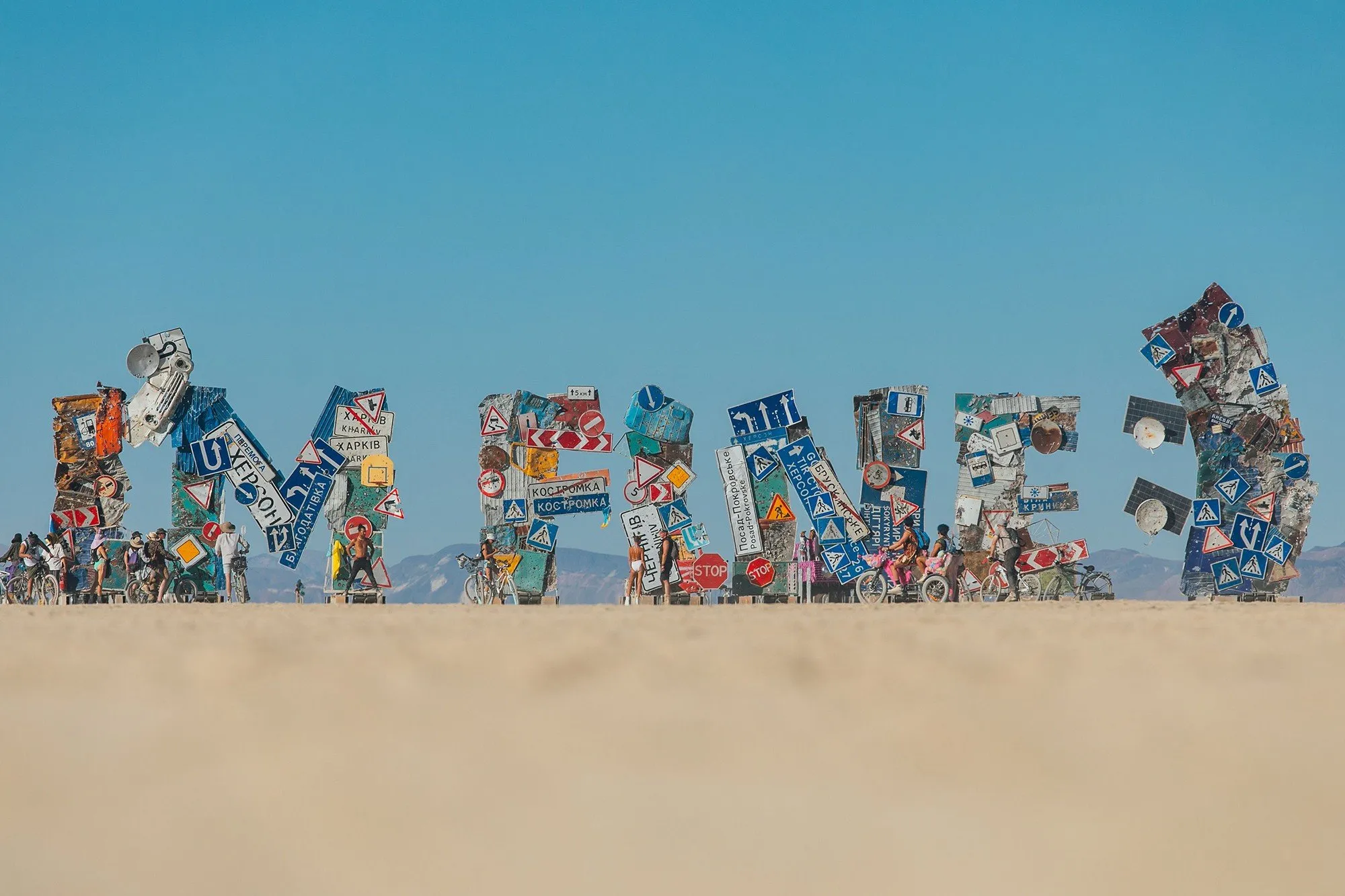
But up close, it became clear what they were made of. The installation was constructed using war-damaged road signs, town name signs, solar panels, fences, and other materials brought from Ukrainian territories that had survived Russian shelling.
This is where it becomes clear just how effectively contemporary art can serve as a marketing tool for a country—in the best sense of the word.
You don’t need to force someone to read a ten-page text. At first, they see the familiar “I’m fine.” Then they step closer. They see bullet holes and shrapnel marks. And only then do they learn the story of Ukraine.
The message works through curiosity, contrast, and personal emotion—the very mechanisms on which the most powerful advertising campaigns are built.
“Black Cloud,” which fell, and No Fate, born from the rubble
In 2025, Ukraine’s presence grew even larger. One of the central projects was Black Cloud by Oleksiy Say.
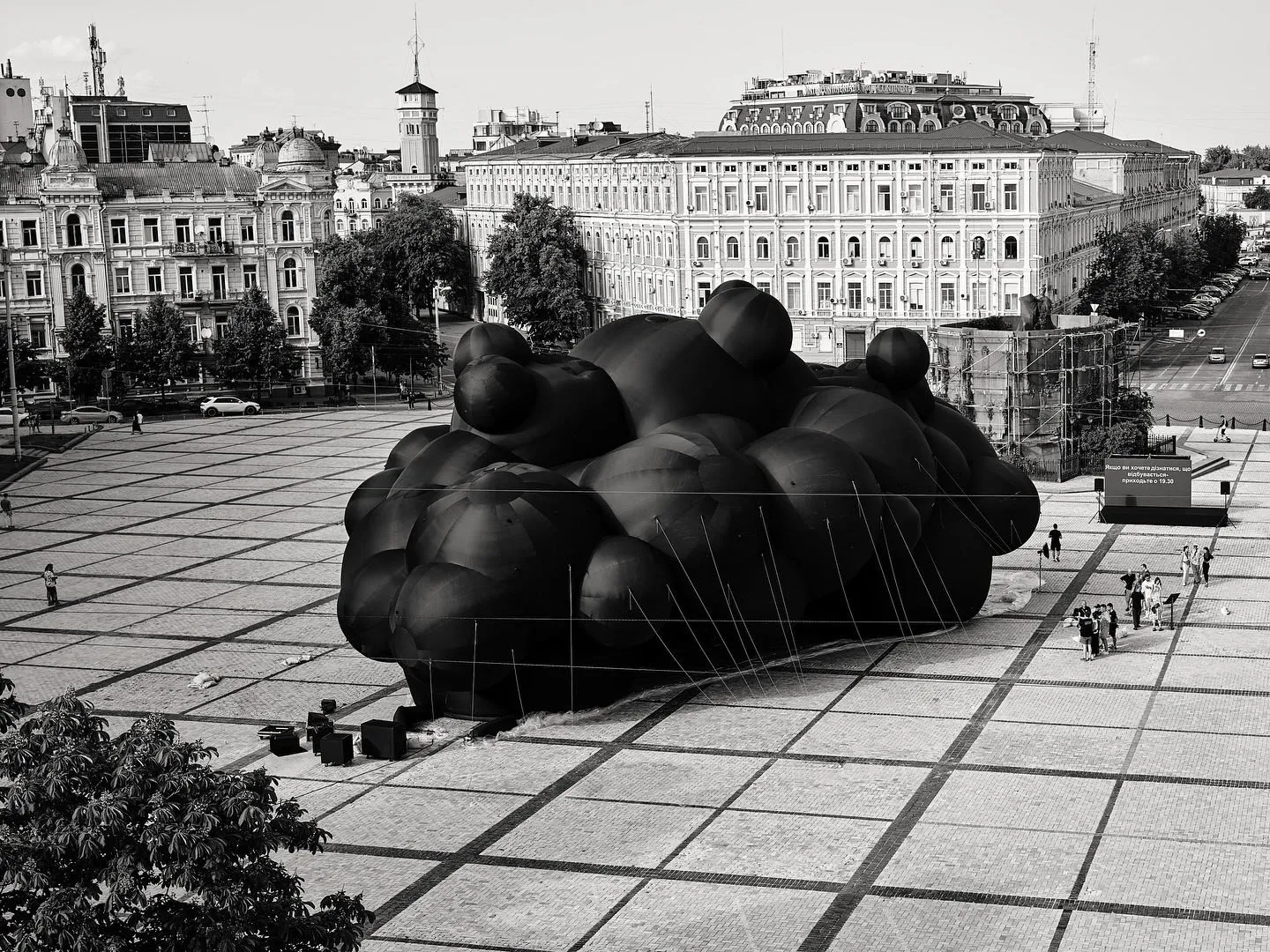
The installation was approximately 30 meters long, 15 meters high, and weighed about seven metric tons. It used about four kilometers of black fabric.
It mimicked a thundercloud, but instead of ordinary stormy weather, it evoked the war: inside, it featured light effects and sounds associated with shelling, drones, and explosions. The goal was for people not just to read yet another news story about Ukraine, but to physically feel the anxiety—even if only for a few minutes.
The situation took an unexpected turn during the festival itself. Due to strong winds, the Black Cloud installation was destroyed, but the team decided not to end the project there.
Using some of the materials left over after the “Black Cloud” was damaged, the Ukrainians created a new work—NO FATE. Its title references the phrase “No fate but what we make”—“There is no other fate except the one we create ourselves.”
The Blue Bull: Prymachenko Transformed Ukrainian Art into a Moving Stage
Another striking Ukrainian project in 2025 was Blue Bull. It was based on the eponymous painting by Maria Prymachenko. But instead of a replica of the painting, they created a massive two-story art car—a moving platform covered in blue fur, decorative elements, and lighting.
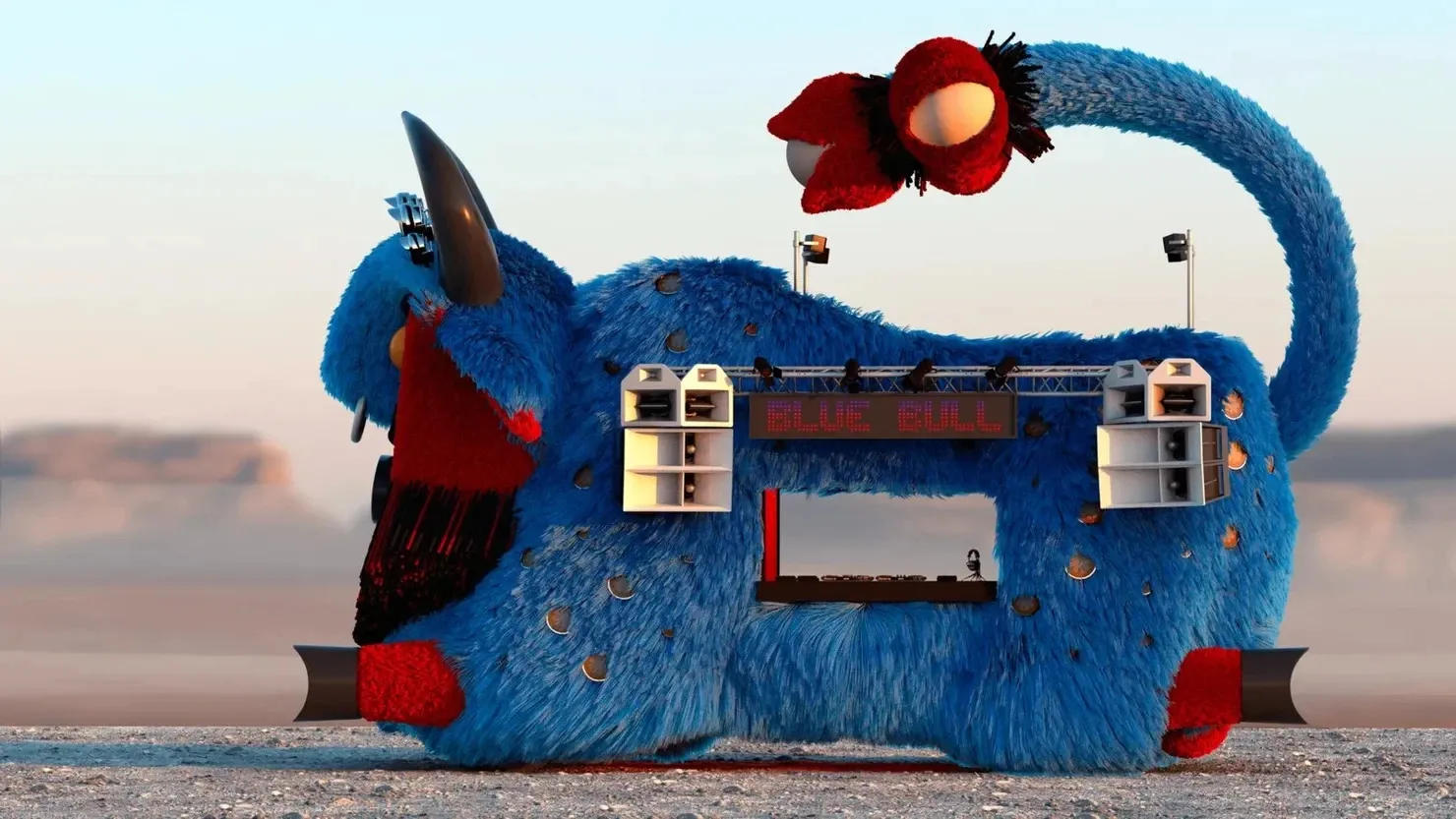
At night, this fairy-tale Ukrainian beast roamed the desert, while its upper level served as a stage for Ukrainian and international musicians.
Alongside it, other works represented Ukraine in 2025, including Mykola Kabluka’s *The Point of Unity*, Volodymyr Semkiv’s *He Overcame Death with Death*, *Merman*, *HeyDay*, and *Black Cloud*.
What Burning Man Can Teach Ukrainian Business
Despite the festival’s eccentricity, its model offers entrepreneurs several very practical lessons.
First, the product itself can be the marketing. Burning Man spends far less on traditional promotion than one might expect for an event of this scale. People take photos of it themselves, the media write about it on their own, and participants share stories about their own experiences for years to come.
Second, a community is often more valuable than an audience. An audience observes a brand; a community begins to build it.
Burning Man has managed to create an international network that has long extended beyond Nevada. Today, the official Regional Network spans more than 75 countries, and more than 80 regional events bring together over 100,000 people each year.
The third lesson is that a story is more powerful than a logo. Ukrainian brands like I’m Fine, Black Cloud, and Hedgehog Temple are memorable not because they have “Ukraine” written in capital letters.
They offer people a story they want to share.
And the fourth lesson is that constraints sometimes stimulate creativity better than an unlimited budget. If a company can’t simply buy an advertising banner, it has to come up with something that will make people want to pay attention to it on their own.
That said, it’s important for an entrepreneur attending Burning Man to understand the limits. Using the event as a covert advertising conference goes against its culture. Burning Man explicitly prohibits the exploitation of the festival, its symbols, and imagery for commercial promotion.
Therefore, the main business value here isn’t about bringing a company logo to the desert. It lies in the people, the ideas, and the experience of co-creation.
The city, built from scratch every year, may well be Burning Man’s main art installation
On August 31, 2026, Burning Man will once again gather its community in the Nevada desert, and Black Rock City will begin to take shape the day before. A week later, what will remain are the photos, videos, stories, and projects that participants will take back with them to their everyday lives.
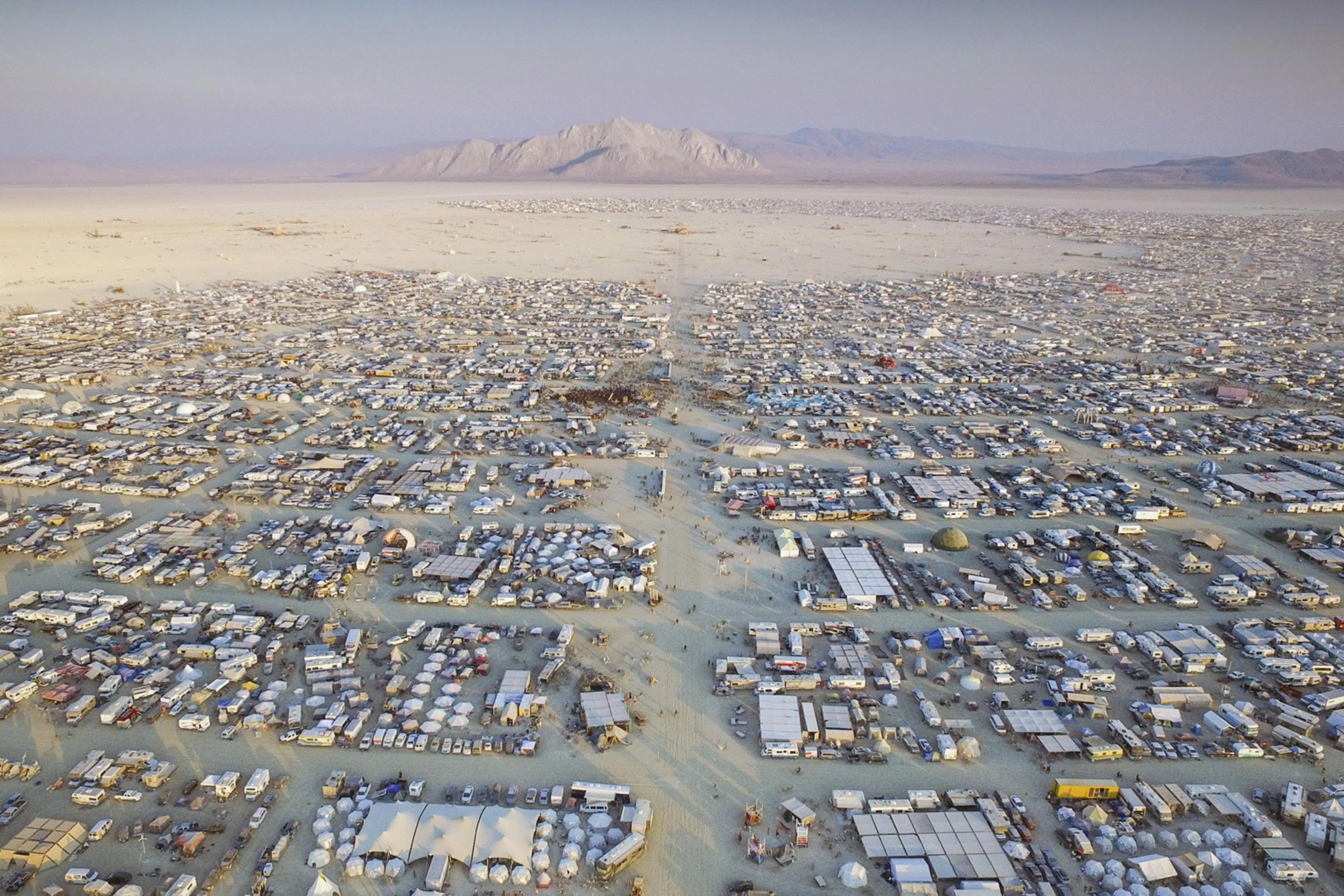
It is precisely this transience that largely explains the festival’s phenomenon. Every year, Burning Man invests enormous resources into a city that is doomed to be dismantled from the very beginning.
Artists spend months creating installations, some of which are burned at the end. Entrepreneurs are used to measuring success by sales, profit, or the number of users. Here, success can be a connection between people, a new idea, or a story that will be retold for years to come.
That is precisely why Burning Man has become more than just a festival. It is a massive experiment exploring a question familiar to both artists and entrepreneurs: what happens if you give people enough freedom, remove the pre-determined script, and invite them to create for themselves the very thing they came here for?
And for Ukraine, the Black Rock Desert has, in recent years, become yet another international platform where one can speak to the world without diplomatic speeches.


