
Why Brent remains below $100 despite export disruptions
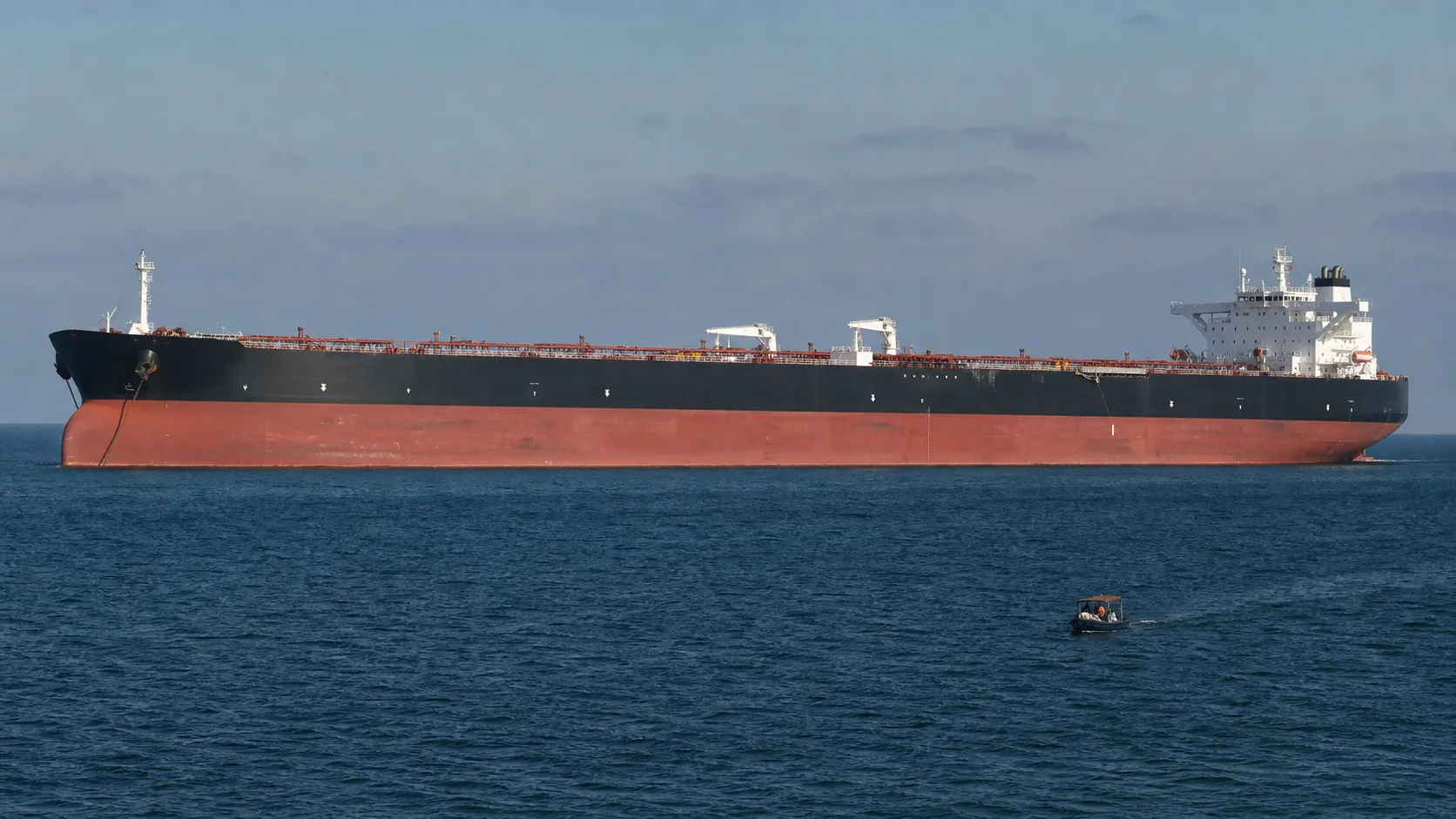
Global benchmark Brent crude has risen this month but remains below $100 per barrel despite disruptions to exports from Persian Gulf countries through the Strait of Hormuz and the Red Sea amid an escalation in the confrontation between the United States and Iran. Dawn reports, citing Reuters, that supplies from Middle Eastern producers stand at around 11 million barrels per day, compared with 18 million barrels per day before the U.S. and Israeli war against Iran began seven months ago.
Flows through the Strait of Hormuz
According to Claudio Galimberti, chief economist at Rystad Energy, 8–9 million barrels per day passed through the Strait of Hormuz in the week before the new outbreak of hostilities on August 30 — twice as much as a week earlier. After that, volumes fell below 2 million barrels per day, although the daily average stood at 4–5 million barrels.
Galimberti believes that at this level of flows, the “fair” price of Brent is about $95 per barrel. Industry estimates put daily exports through the strait at 6–8 million barrels. According to Kpler, as of Monday, no very large crude carrier had been recorded leaving the strait since September 2. During the temporary U.S.-Iran peace agreement in July, exports through the Strait of Hormuz reached the pre-war level of 16 million barrels per day.
Alternative routes and demand
Persian Gulf exporters are using alternative routes and ship-to-ship cargo transfers outside the Strait of Hormuz. Saudi Aramco resumed loading at the Ras Tanura port in August, while supplies from Yanbu on the Red Sea remain under pressure from the maritime blockade by Yemen’s Houthis. Exports from Yanbu fell to a six-month low of 1.43 million barrels per day in August, while their average level over the previous three months was 3.9 million barrels.
More current news is available on the UA.News Telegram channel Telegram.
Exports from Egypt’s Sidi Kerir port rose to 2.14 million barrels per day in August, more than doubling from June. Iraq increased supplies to about 2.34 million barrels per day, while UAE exports in July and August remained near 2.9 million barrels per day. According to Rystad Energy founder Jarand Rystad, production in the United States, Canada and Guyana will collectively grow by 1.4 million barrels per day this year, partially offsetting the shortfall.
Rystad Energy also estimates that demand for oil for petrochemicals and transport fuel will decline by 3.5 million barrels per day in the third quarter, compared with 4.5 million in the second quarter. More than half of this figure is attributable to China. China’s seaborne crude oil deliveries fell to 7 million barrels per day in July and August from more than 11 million in February.
At the same time, the physical market points to limited available oil: Oman crude futures stood at $104.54 per barrel on Monday, while cash Dubai traded at $105.10. Morgan Stanley forecasts an average Brent price of $100 per barrel in the fourth quarter, while Goldman Sachs expects Brent at $85 in December 2026.


