
Heat and drought are limiting the operation of nuclear power plants in several European countries
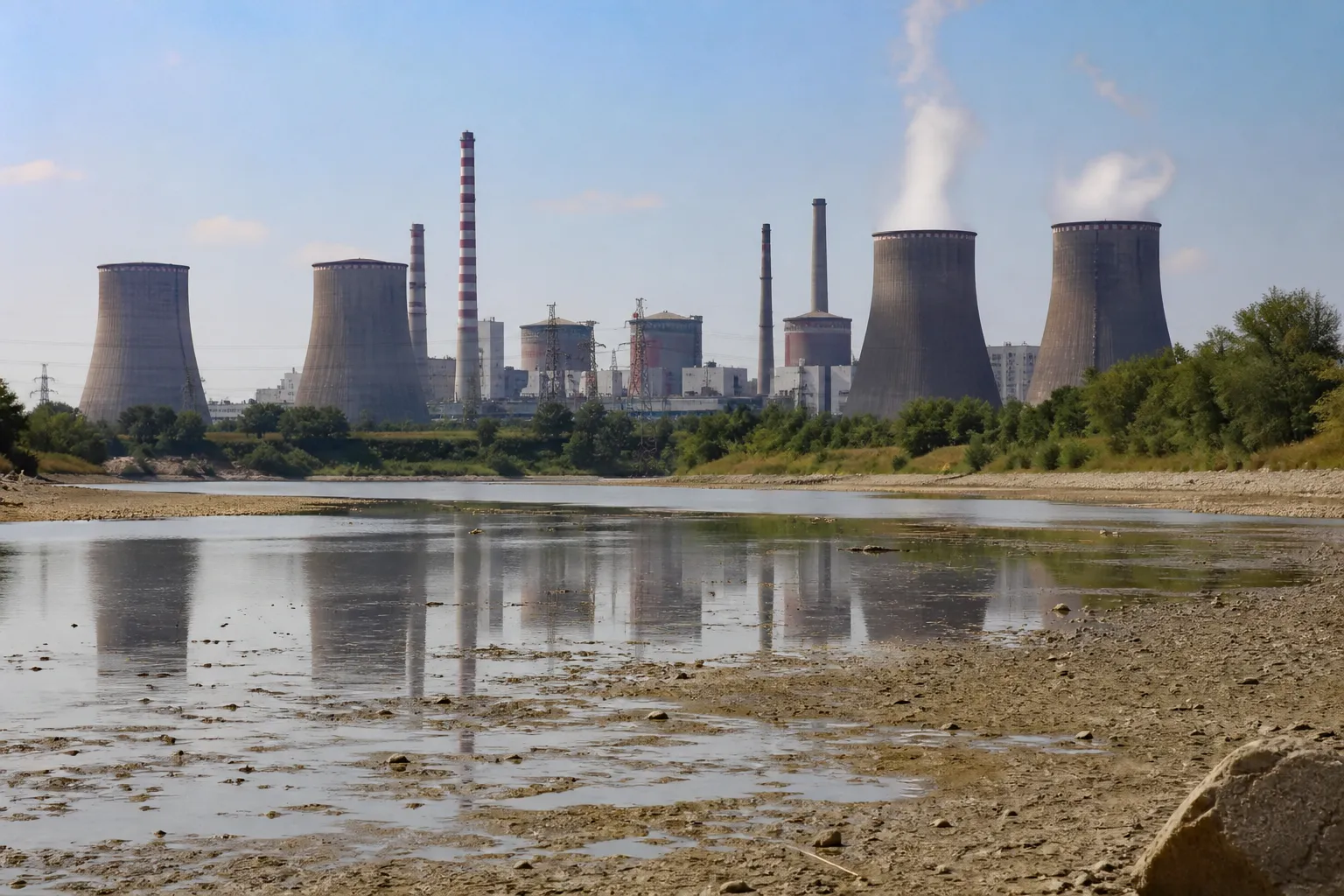
Extreme heat and drought in Europe have disrupted operations at nuclear power plants: in Romania, due to falling water levels in the Danube, officials are considering shutting down a reactor at the Cernavodă Nuclear Power Plant, while France’s EDF has reduced electricity production at several reactors, according to CNBC.
Romania’s state-owned operator, Nuclearelectrica, warned that the reactor could be shut down as early as Thursday if the Danube’s water level continues to drop. The government has declared a state of emergency in the energy sector through the end of August. To improve the flow of water to the nuclear power plants’ cooling systems, Romanian authorities are dredging the riverbed and sinking barges filled with rocks.
Last week, the Romanian Navy also carried out a controlled underwater explosion at the bottom of the Danube to deepen the riverbed and direct more water to the Cernavoda plant’s cooling systems. The two reactors at the country’s only operating nuclear power plant typically account for about one-fifth of Romania’s electricity production.
For more breaking news, follow the UA.News Telegram channel.
In Hungary, the situation has improved somewhat following rainfall that raised the Danube’s water level. This allowed for the resumption of operations at another turbine at the Paks Nuclear Power Plant. According to Hungarian Prime Minister Péter Magyar, as of Monday, two of the plant’s eight turbines were generating electricity, providing nearly half of the country’s power supply.
In France, EDF announced a reduction in the output of several reactors for environmental reasons. Earlier, the company shut down three reactors at the Gravelines Nuclear Power Plant in the north of the country due to a massive jellyfish infestation, which triggered automatic safety mechanisms. Nuclear power accounts for about 70% of France’s electricity generation.
According to an estimate by the Dutch bank Triodos, the heatwave’s impact on the European Union could cost 180 billion euros, or approximately 1% of the bloc’s GDP. The bank attributes the potential losses to reduced labor productivity, lower crop yields, higher food prices, restrictions on energy production, and transportation disruptions.


