
South Korea tests hydrogen production using wave energy
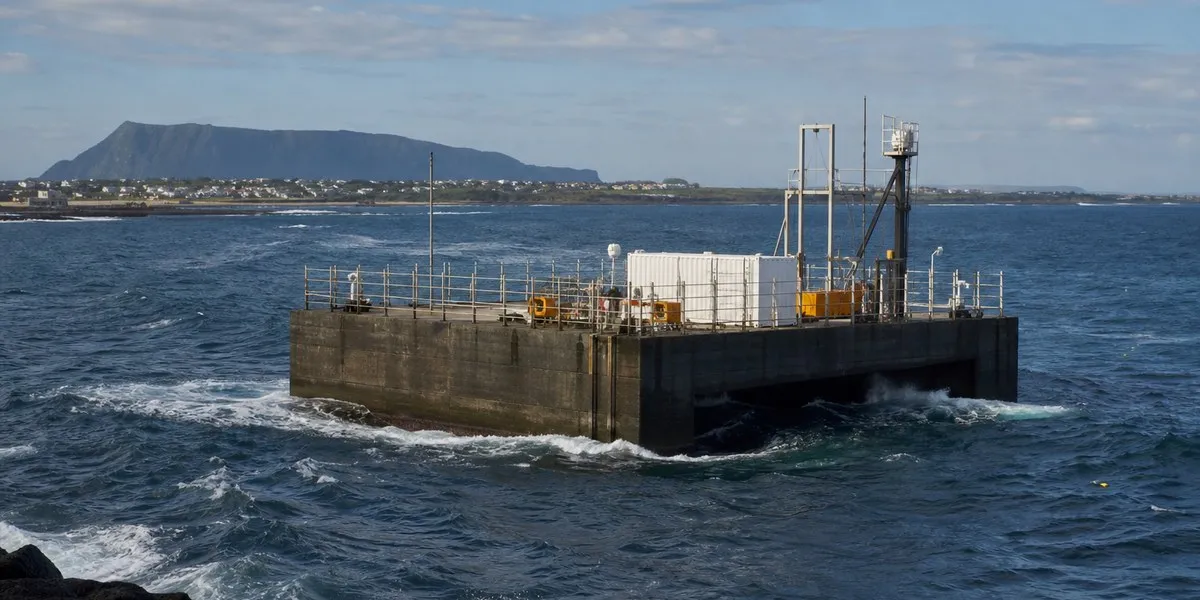
Near the western coast of Jeju Island in South Korea, researchers are testing a facility that produces hydrogen from electricity generated by sea waves. A 100-kilowatt electrolysis system operates on a platform of the Korea Research Institute of Ships and Ocean Engineering. As The Korea Herald reports, the project is intended to test the possibility of long-term storage of surplus renewable energy without transmitting all of it to land.
Platform near Jeju
The concrete platform is 32 meters long and 23 meters wide. It is anchored in water about 15 meters deep. Strong northwesterly winds and the absence of natural obstacles create conditions for powerful waves in the area, making it possible to test equipment in changing and often harsh marine conditions.
Waves enter an oscillating water column chamber, where changes in the water level create an airflow. It turns a turbine that generates electricity. The electrolyzer then splits water into hydrogen and oxygen. According to KRISO lead researcher Kim Kyeong-hwan, specialists are also working to install a hydrogen storage tank and a fuel cell to produce electricity directly at the site.
An alternative to underwater cables
The platform has four additional connection points for wave and wind generation equipment to an offshore substation. The hydrogen system being developed for wave energy could eventually be combined with offshore wind power plants.
More current news is available on the UA.News Telegram channel Telegram.
Kim noted that laying and maintaining underwater cables becomes more expensive as offshore wind farms are built farther and farther from the coast. Producing and storing hydrogen directly at an offshore facility could potentially reduce dependence on cables.
At the same time, converting electricity into hydrogen can result in costs or losses of about 40% of the original energy. Hydrogen is less efficient than direct use of electricity or short-term storage in batteries, but it is considered an option for long-term storage of large volumes of energy, its transportation from remote offshore facilities, and use as fuel or industrial feedstock.
Previously, wind and solar power generation on Jeju was curtailed when its volume exceeded local demand and grid capacity. A third high-voltage direct current line to the mainland, completed in 2024, and changes in the electricity market reduced forced generation curtailments. At the same time, the island plans to expand renewable generation and energy storage systems by 2030.


