
In China, magnetic bacteria extended nematodes’ lifespan by 43% — ScienceDaily
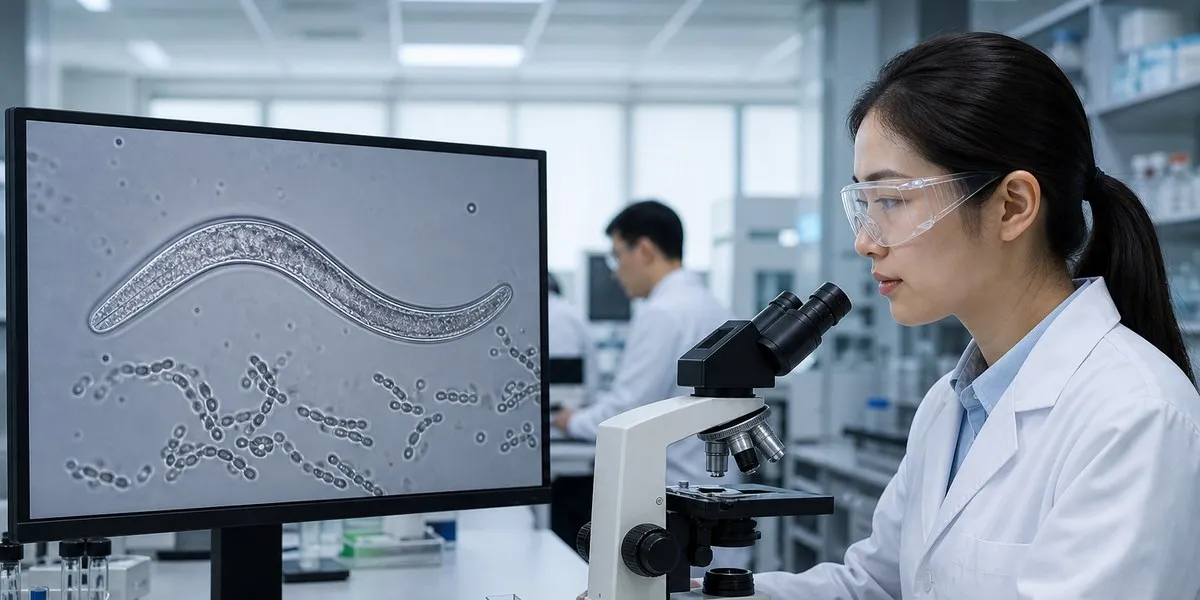
Researchers at the Hefei Institutes of Physical Science of the Chinese Academy of Sciences found that the magnetotactic bacterium Magnetospirillum magneticum AMB-1 extended the average lifespan of the nematode Caenorhabditis elegans by 43.39%. The bacterium also helped preserve neurological functions and intestinal integrity in older worms, ScienceDaily reports.
The role of magnetosomes
Scientists studied AMB-1, a bacterium capable of producing magnetosomes, specialized intracellular structures. Experiments showed that magnetosome production itself plays an important role in extending nematodes’ lifespan.
The regular AMB-1 strain had a more pronounced effect than the reversibly non-magnetotactic RNM-AMB-1 strain. At the same time, the non-magnetotactic NM-AMB-1 strain did not extend the lifespan of the test worms.
More current news is available on the UA.News Telegram channel Telegram.
Suppression of ferroptosis
Further analysis indicated that the bacteria reduced iron accumulation and lipid peroxidation in nematodes. These changes suppressed ferroptosis, a form of cell death associated with excess iron and oxidative damage to fats in cells.
Genetic analysis showed that several ferroptosis-related pathways, including the ftn-1, bli-3, and ads-1 genes, are involved in regulating lifespan. The results were published in the journal Free Radical Biology and Medicine.
C. elegans is a common model system in aging research. The study’s authors view the findings as a basis for further research into magnetotactic bacteria in the context of geriatric medicine.




