
In Lviv, doctors saved an infant with a rare congenital condition
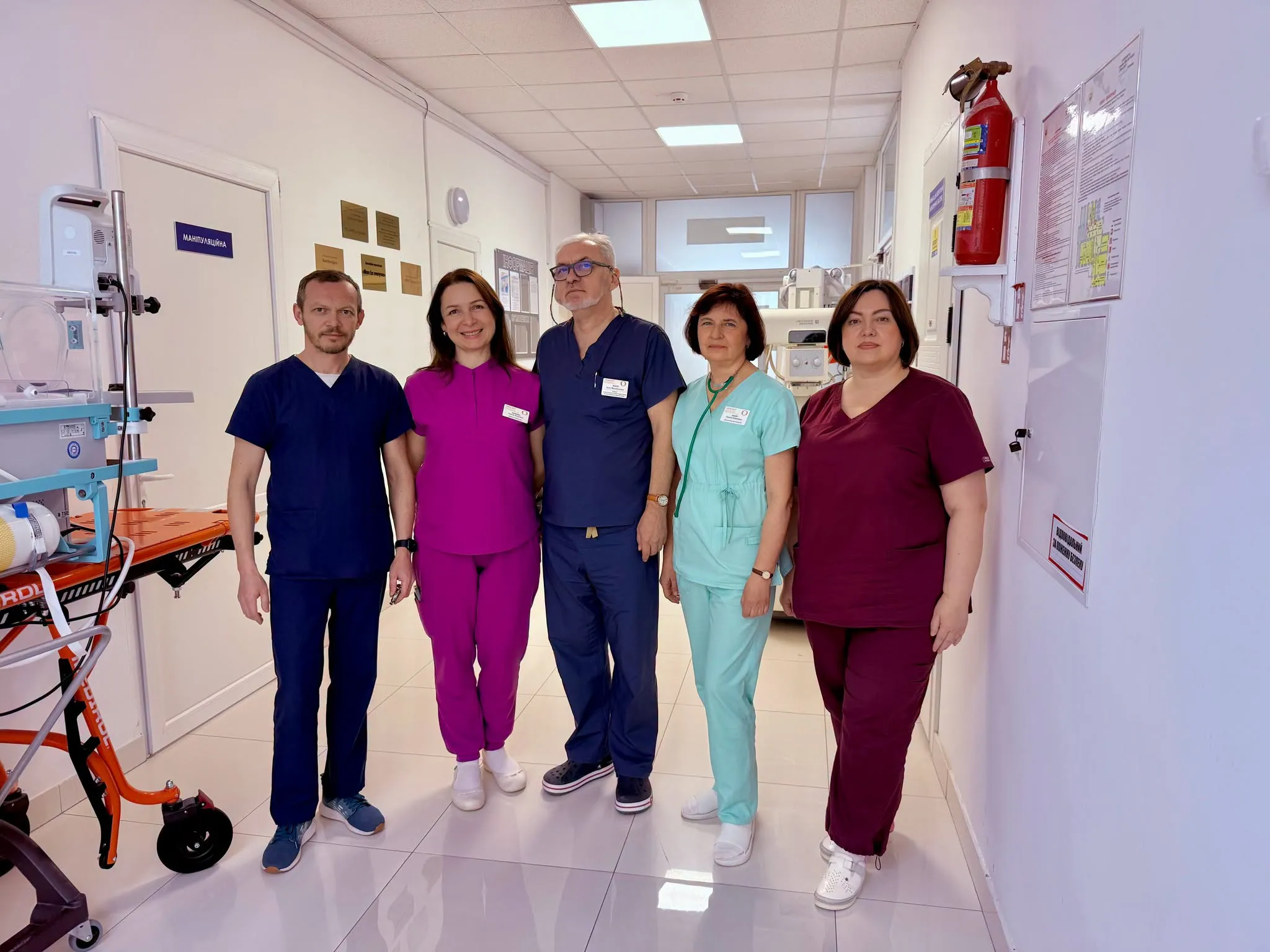
In Lviv, doctors performed a complex surgery and saved an infant whose abdominal organs were located in the chest cavity. The doctors also diagnosed significant underdevelopment of the child’s left lung, a condition that required urgent surgical intervention.
Specialists at the Center for Pediatric Medicine successfully operated on a premature baby boy whose abdominal organs had migrated into his chest cavity. This displacement shifted the heart to the right and significantly impaired lung function.
The boy, Nathan, was born prematurely at 33 weeks of gestation with a complex congenital defect—a left-sided diaphragmatic hernia. This is a condition in which the abdominal organs shift into the chest cavity. In Nathan’s case, a significant portion of his intestines, stomach, and spleen ended up in the left half of his chest, displacing his heart to the right and significantly impairing lung function, the hospital reported.
The baby was urgently transferred from the maternity ward to the Center for Pediatric Medicine because he required intensive care. The child was intubated and placed on a ventilator.
“Children like this require very careful stabilization before surgery. It’s important to wait until his respiratory parameters allow for safe intervention,” says thoracic surgeon and department head Oleg Leniv.
Once the boy’s condition had stabilized, he underwent surgery. The procedure was performed endoscopically—using thoracoscopy—through three small incisions. During the operation, the surgeons returned the abdominal organs to their anatomical positions. They also identified a diaphragmatic defect (known as a Bogdale hernia) and performed a repair. However, the greatest challenge was not the hernia, but the condition of the lungs.
“We saw that the left lung was significantly underdeveloped, measuring only a few centimeters. In such cases, the prognosis depends precisely on lung function,” explains Oleg Leniv.
After the surgery, the baby spent about three weeks in the neonatal intensive care unit, where a team of doctors monitored him around the clock. The boy’s condition was successfully stabilized. The hospital noted that the boy is currently under the care of pediatricians and has every chance of developing like a typical child.
Read:
Chinese surgeons performed the first-ever ear-to-foot transplant on a patient following a workplace injury.
In the U.S., the first patient to receive a pig kidney transplant has died.


