
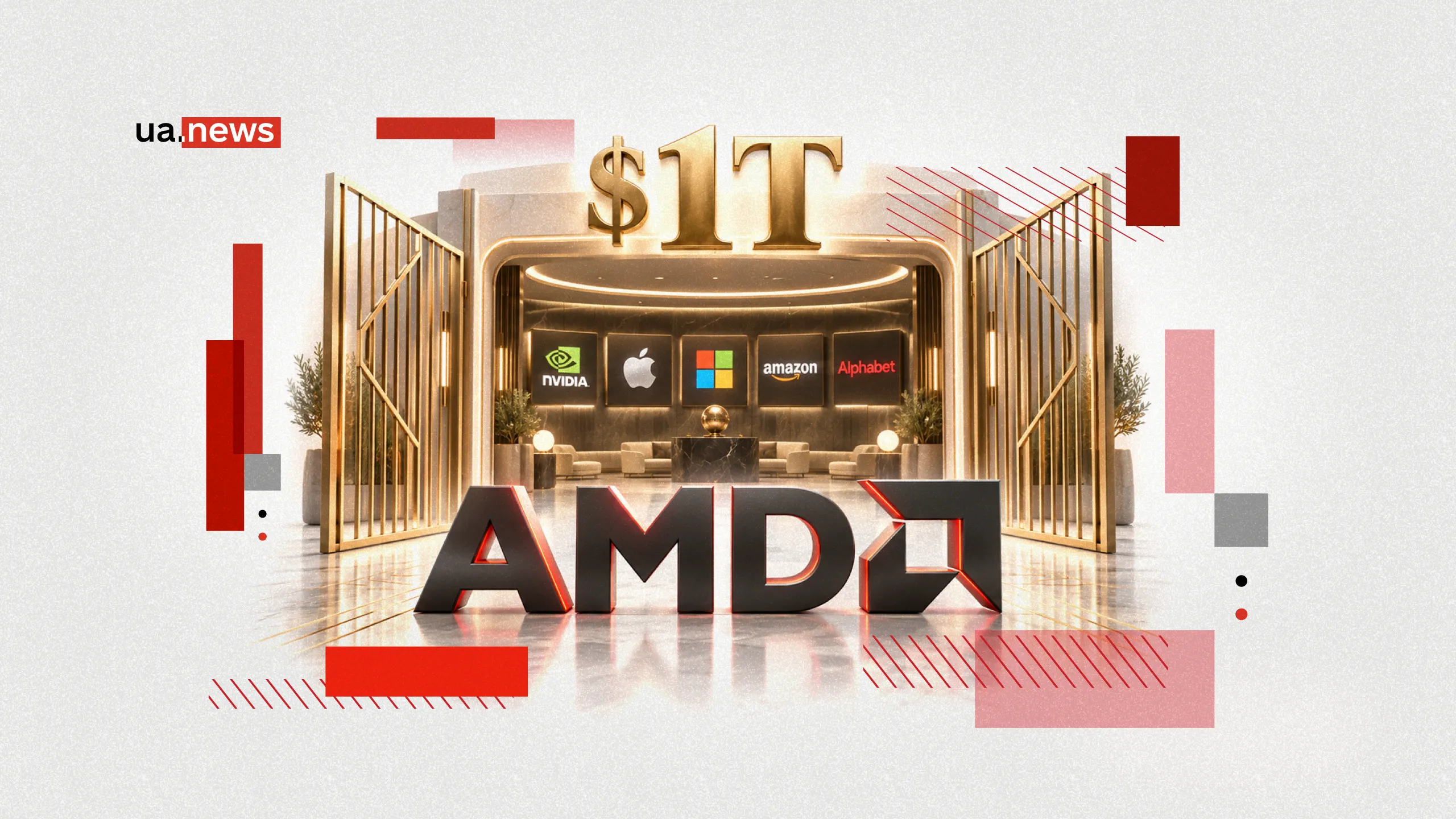
Ten years ago, AMD was worth just over $2 billion and was primarily fighting to keep Intel from dominating the processor market. Now, for the first time, the American chipmaker has crossed a completely different psychological threshold—its market capitalization has exceeded $1 trillion.
However, even a trillion isn’t enough today to make it into the top ten most valuable companies in the world. Nvidia is already valued at more than $5.4 trillion, Apple at nearly $5 trillion, and Alphabet at more than $4 trillion. Several other tech giants have long since left the first trillion behind.
UA.News explains how AMD joined this exclusive club, which companies are currently the most valuable in the world, how they earned their trillion-dollar valuations, and why nearly the entire top tier of the global stock market is now, in one way or another, linked to technology and artificial intelligence.
AMD Becomes a $1 Trillion Company: What Led to Its Historic Valuation
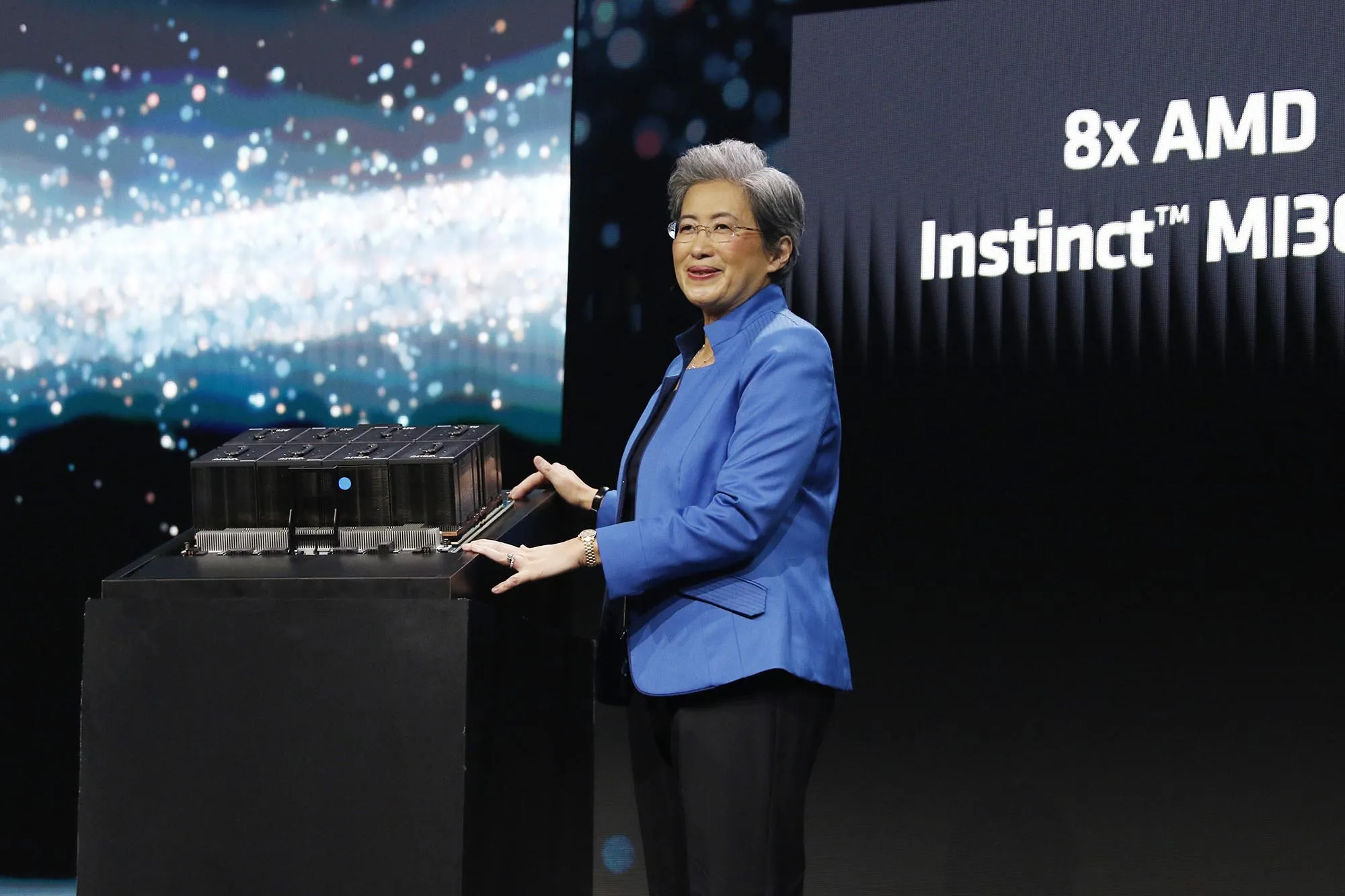
AMD’s market capitalization exceeded $1 trillion for the first time in history following a sharp rise in the company’s stock price. As reported by Reuters, the chipmaker’s shares rose 9.6% in a single day, with the price climbing to a record $613.31.
The growth was significantly higher than that of the U.S. stock market as a whole. Since the beginning of 2026, AMD’s stock has risen by approximately 185%, while the tech-heavy Nasdaq has gained about 16% over the same period. In other words, investors are placing a particularly strong bet on AMD and its potential to profit from the continued expansion of the artificial intelligence market.
For AMD, this result is particularly telling when viewed in historical context. In the mid-2010s, the company was going through a difficult period. Intel dominated the market for personal computer and server processors, while Nvidia was steadily gaining a stronger foothold in the graphics processor market.
The situation gradually changed after the launch of Zen-architecture processors and the EPYC server lineup. AMD began to take market share from Intel in the server segment, but the boom in generative artificial intelligence gave the company a real new opportunity. Now, AMD is no longer just competing for sales of individual processors or graphics cards.
The company is moving toward full-fledged systems for AI data centers. In July, it unveiled the AMD Helios platform, which integrates dozens of Instinct accelerators, EPYC server processors, networking equipment, and ROCm software into a single system.
The list of clients already looks much more impressive than it did a few years ago. AMD itself reports partnerships with OpenAI, Meta, Microsoft, Anthropic, Oracle, and other major players. The company has also reached an agreement with Anthropic to deploy up to 2 GW of computing infrastructure on its GPUs, and Microsoft plans to use AMD’s new systems in Azure.
Financial results also explain investors’ optimism. According to second-quarter 2026 results, AMD’s revenue reached $11.5 billion, and the data center segment more than doubled its revenue year-over-year. CEO Lisa Su directly attributed this to growing demand for AI computing.
It is particularly important for AMD that it is trying to compete on two fronts simultaneously. In server processors, its main competitor remains Intel, while in AI accelerators, it’s Nvidia. And although the company is still a long way behind Nvidia, the market itself is expanding so rapidly that even a relatively small share of it can generate tens of billions of dollars.
Nvidia is valued at over $5.4 trillion: how the AI boom propelled the company to the top spot in the world
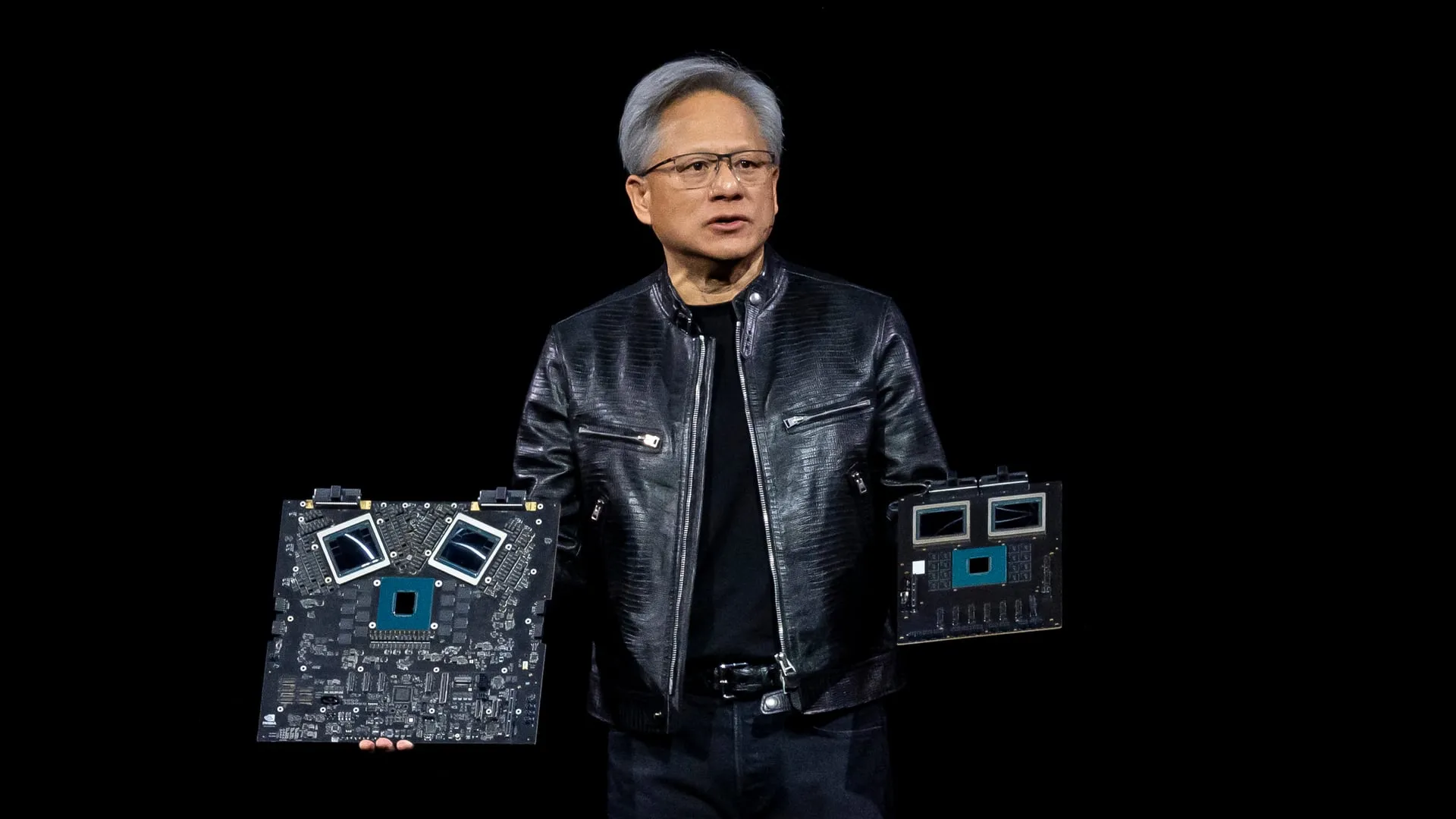
While AMD has only just crossed the $1 trillion threshold, Nvidia is already in a completely different league. According to market data as of September 24, its market capitalization stood at approximately $5.45 trillion. Nvidia remains the world’s most valuable public company, ahead of Apple, Alphabet, Microsoft, and Amazon.
Just a few years ago, such a result would have been hard to imagine. At the end of 2022, Nvidia was valued at less than $400 billion. The company was well known among gamers, programmers, and high-performance computing specialists, but it was not yet a central player in the global tech economy.
The generative AI boom changed everything. Today’s large language models require a colossal amount of computing power. They must be trained on thousands or tens of thousands of high-performance accelerators, and once launched, they must continuously process user requests.
Nvidia found itself in an almost ideal position: its GPUs and the CUDA software ecosystem were already widely used for machine learning even before ChatGPT appeared. When demand for AI computing began to skyrocket, companies didn’t have to wait for new infrastructure to emerge—a ready-made solution already existed.
The financial results demonstrate the scale of this shift. Nvidia ended fiscal year 2026 with revenue of $215.9 billion—65% more than the previous year. In just one quarter, the data center business generated a record $62.3 billion, a 75% increase year-over-year.
In other words, Nvidia isn’t just capitalizing on the current hype around artificial intelligence. Behind its trillion-dollar valuation lies a real, multi-billion-dollar cash flow from Microsoft, Meta, Amazon, Alphabet, and other companies building AI data centers. To put its market capitalization into perspective, it can be roughly compared to the economy of a major country. About $5.4 trillion is on the same order of magnitude as the annual nominal GDP of Germany, Europe’s largest economy.
However, such a comparison should be viewed merely as a way to illustrate the scale. GDP measures the value of goods and services a country produces in a year. Market capitalization is the value of all a company’s shares at their current market price. These are fundamentally different metrics.
And yet, the very fact that a single chipmaker can now at least be placed on par with Europe’s largest economy clearly demonstrates just how much the AI boom has transformed the global stock market.
Apple Is Valued at Nearly $5 Trillion: How the iPhone Became the Foundation of a Global Tech Empire

Apple ranks right behind Nvidia. As of September 24, its market capitalization stood at about $4.9 trillion. On September 22, the company’s market value even briefly exceeded $5 trillion during trading.
Apple’s story, however, is fundamentally different from the current rapid growth of AMD or Nvidia. The company has built its valuation over decades by creating an ecosystem of devices and services that users find increasingly difficult to leave. The iPhone remains the foundation, but today’s Apple has long since ceased to depend solely on sales of a single smartphone.
The Mac, iPad, Apple Watch, AirPods, App Store, iCloud, Apple Music, payments, and various subscriptions have created a system where a single user can generate revenue for the company for many years.
In August 2018, Apple became the first U.S. public company to cross the $1 trillion mark. At the time, that figure seemed like an almost historic peak in the corporate world. Only eight years have passed—and now Apple itself is valued at nearly five such trillion.
At the same time, the company is forced to adapt to a new phase of the technology race. While Apple largely drove the previous revolution itself thanks to the iPhone, it is no longer the undisputed leader when it comes to generative AI. Therefore, one of the main questions for investors is whether Apple can transform hundreds of millions of iPhones, Macs, and other devices into the world’s largest platform for personal artificial intelligence.
The company’s advantage is clear: it doesn’t necessarily have to build the world’s best large language model. All it needs to do is make AI an integral part of the devices already used by a vast number of people and find a way to monetize it just as systematically as it does with the App Store and its services.
Alphabet is valued at over $4.1 trillion: how Google earns its trillions
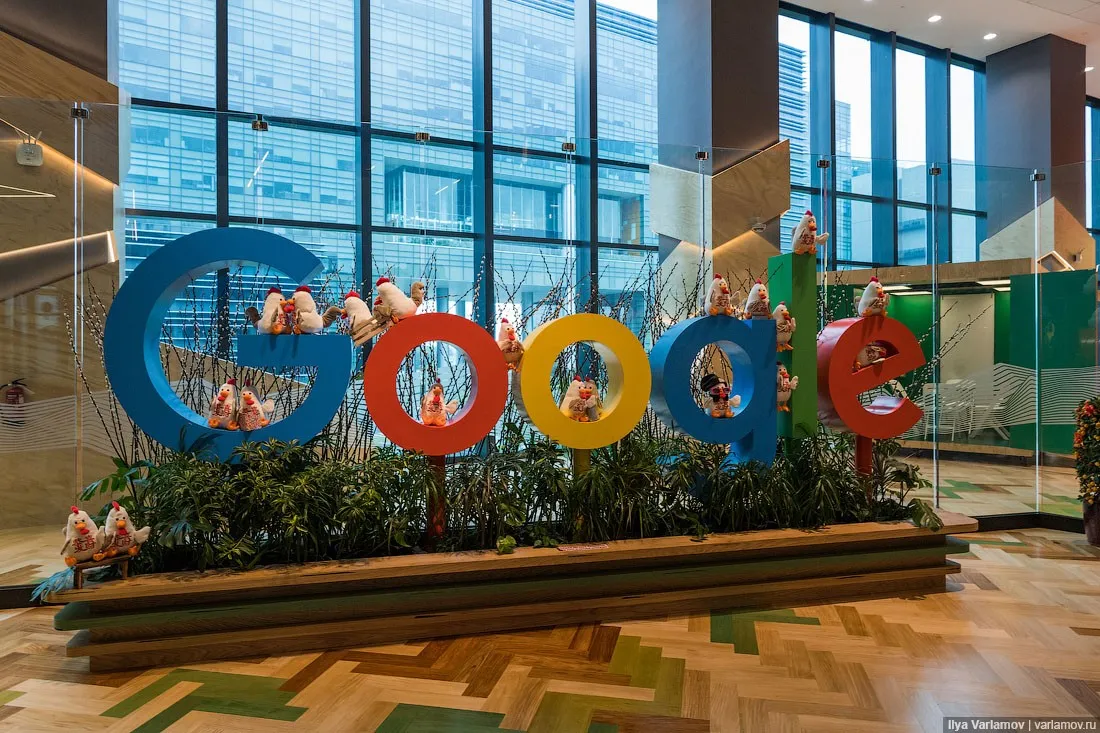
Alphabet—Google’s parent company—ranks third among publicly traded companies. According to market data as of September 24, the company’s market capitalization stood at approximately $4.18 trillion. Historical data on Alphabet’s market value shows that it crossed the $4 trillion mark several times in September alone.
Alphabet’s business model, however, remains surprisingly simple: billions of people search for things online every day, and companies pay Google for the opportunity to show ads to these people.
Google Search has become one of the most profitable digital products in history. It has been joined by YouTube, Android, Gmail, Google Maps, a massive advertising network, and the Google Cloud business. But Alphabet now faces one of the greatest challenges in its entire history.
AI assistants are changing the way users search for information. Instead of a list of ten links, a person can ask a chatbot a question and immediately receive a ready-made answer. This is potentially dangerous for Google, because traditional search results have been the ideal place for advertising for decades.
At the same time, Alphabet has strong assets of its own: the Gemini family of models, one of the world’s largest cloud platforms, its own TPU accelerators, and a vast ecosystem of products with billions of users.
Therefore, AI may not only take a share of the old search business but also create a new one for Alphabet. The stock market is currently betting on exactly this scenario—and values the company at more than $4 trillion.
Microsoft is valued at about $3.7 trillion thanks to Windows, Azure, and artificial intelligence

Microsoft is currently valued at approximately $3.7 trillion and remains the fourth-largest public company in the world. Its history is interesting in that the corporation could have become a relic of a bygone technological era on several occasions, but each time it found a new source of growth.
Initially, Microsoft built its empire on Windows and Office. Later, it was often criticized for missing the mobile revolution and losing ground to Apple and Google in the smartphone market.
However, Microsoft made the right move at the right time by investing in cloud technologies. Azure became one of the two biggest competitors to Amazon Web Services, Office evolved into the Microsoft 365 subscription, and enterprise software began to generate stable, recurring revenue for the company.
The next major step was generative AI. Microsoft began integrating Copilot into virtually all of its key products: Windows, Microsoft 365, GitHub, and enterprise services. At the same time, the company is monetizing AI through Azure by selling computing power to other businesses.
Now Microsoft is also directly expanding alternatives to Nvidia. In July, AMD and Microsoft announced a large-scale deployment of the new AMD Instinct and EPYC processors on Azure. As a result, Microsoft can monetize AI on multiple levels simultaneously: by selling cloud computing, selling Copilot to end users, and integrating AI into existing enterprise software.
This explains why the company, founded back in 1975 and having weathered the eras of personal computers, the internet, smartphones, and cloud services, is once again practically at the top of the tech market.
Amazon is valued at about $2.7 trillion thanks to e-commerce, cloud computing, and AI
Amazon ranks fifth with a market capitalization of approximately $2.7 trillion. At first glance, its business model is the most straightforward in the entire ranking. Amazon sells goods online, has a vast logistics network, warehouses, and millions of customers.
But that alone cannot explain its valuation of nearly $3 trillion. Amazon Web Services (AWS) has become one of the corporation’s most valuable assets. The cloud service began as the technological infrastructure Amazon needed for itself, but the company later realized that it could sell server capacity to external businesses.
Today, AWS is used by startups, banks, large corporations, streaming platforms, and government agencies. In fact, a vast portion of the modern internet runs not on companies’ own servers, but on rented infrastructure from Amazon, Microsoft, or Google.
Artificial intelligence has created yet another massive market for this business. Companies that want to launch their own AI models but aren’t ready to spend billions on building data centers can rent the necessary computing power from AWS. At the same time, Amazon is developing its own AI products. In particular, the company recently launched an updated version of its voice assistant, Alexa, with AI support.
At the same time, Amazon continues to generate revenue from advertising, its marketplace, logistics, Prime subscriptions, and other services. It is precisely this combination of brick-and-mortar retail and one of the world’s key digital infrastructures that has allowed the former online bookstore to transform into a company worth nearly $3 trillion.
From TSMC to Eli Lilly: Who Else Is in the $1 Trillion Club?
The list doesn’t end with the five most valuable companies. On the contrary, it’s the companies that follow that best illustrate just how much the “trillion-dollar club” has changed.
Right behind Amazon is Taiwan’s TSMC, with a market capitalization of approximately $2.3 trillion. TSMC is, in effect, the factory for a significant portion of the modern tech world. Nvidia, Apple, AMD, and many other companies can design extremely complex processors on their own, but the physical production of the most advanced chips is concentrated in just a few companies, and TSMC holds a special place among them.
In its 2025 annual report, the company explicitly identified AI as one of the main drivers of future demand. In dollar terms, its revenue for 2025 grew by 35.9% to $122.4 billion, and net income exceeded $55 billion.
Next comes Meta, with a market capitalization of approximately $1.9 trillion. Facebook, Instagram, WhatsApp, and advertising remain the core of its business, but Mark Zuckerberg is now spending tens of billions of dollars on the company’s own AI models, data centers, and computing infrastructure. Investors reacted particularly positively to the company’s new AI products. In September, following the launch of the Muse assistant, Meta’s stock surged, and Reuters reported that in just a few weeks, the company’s market capitalization had increased by approximately $200 billion.
Broadcom is valued at approximately $1.7 trillion. The name is far less familiar to the general public than Apple or Tesla, but the company manufactures semiconductor and networking components that are essential for building modern data centers. In other words, Broadcom essentially sells one of the components of the very same AI infrastructure that has made Nvidia and AMD so wealthy.
Tesla is currently valued at approximately $1.5 trillion. Formally, it remains an electric vehicle manufacturer; however, the stock market has long viewed it differently than Toyota, Volkswagen, or General Motors. Tesla’s valuation is driven by expectations surrounding autonomous driving, robotaxis, batteries, energy, robotics, and artificial intelligence. This is precisely why the company’s market capitalization can significantly exceed that of traditional automakers, even when they sell more cars.
Samsung Electronics has also found itself at the forefront of the new technology cycle. The company manufactures smartphones, TVs, processors, and memory all at once, but the latter segment is particularly important for the AI boom. Modern AI accelerators require high-speed HBM memory. The more accelerators that Nvidia, AMD, and other manufacturers sell, the more memory is needed for them to operate.
This same factor has become extremely important for Micron as well. Its market capitalization already exceeds $1.2 trillion. Just a few years ago, the company was very far from this threshold, but the sharp increase in demand for memory for AI data centers has completely changed investors’ expectations.
Berkshire Hathaway, with a market capitalization of approximately $1.1 trillion, stands somewhat apart from this tech wave. It is the most traditional member of the club. The conglomerate, built up over decades by Warren Buffett, owns insurance companies, railroads, energy assets, industrial enterprises, and a large portfolio of stocks.
Another unusual member of the trillion-dollar club is the pharmaceutical company Eli Lilly, which is hovering just shy of the $1 trillion mark. Its rapid rise in value is primarily linked to the massive global market for drugs to treat diabetes and obesity.
And AMD now stands alongside these companies.




