
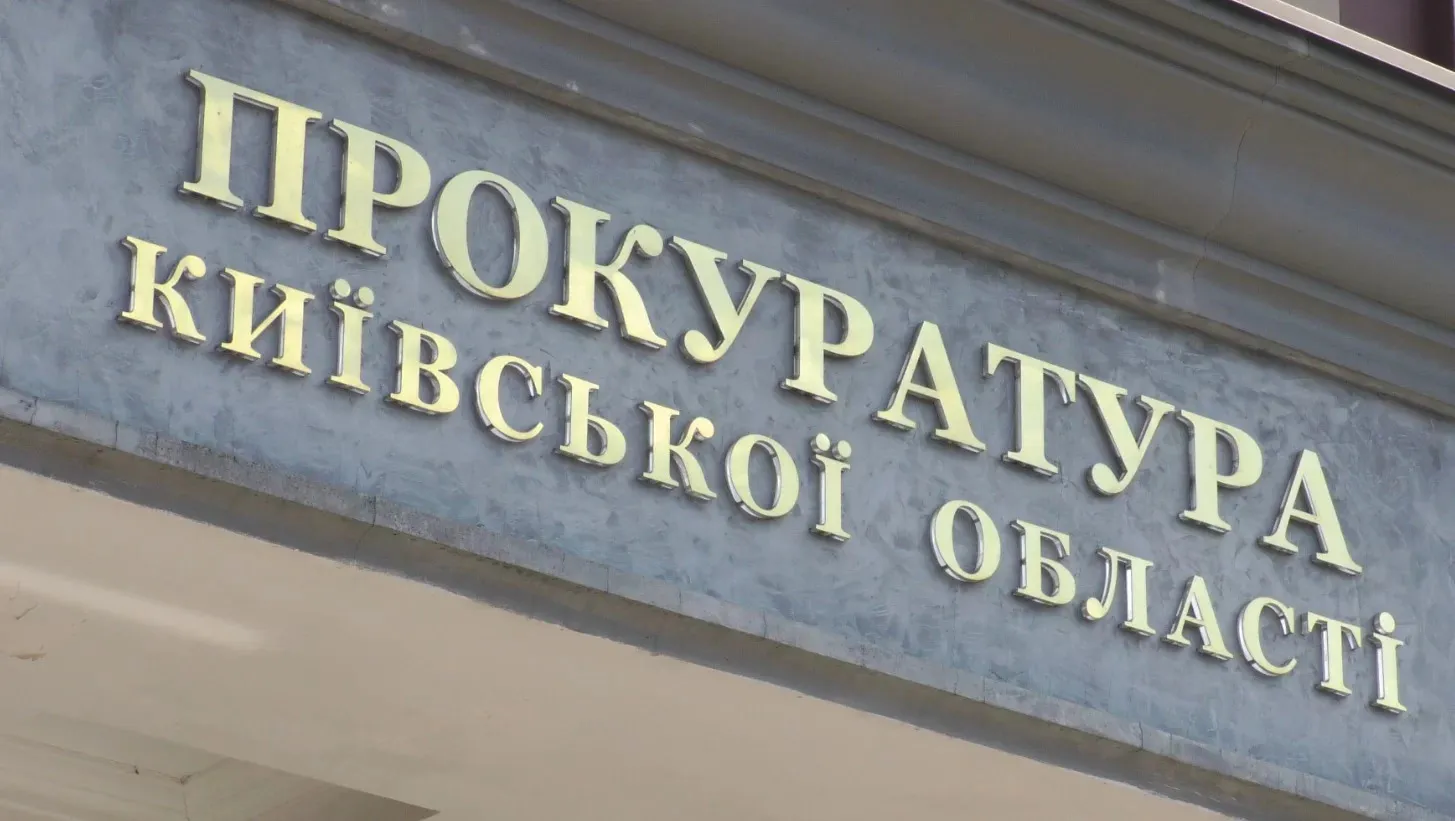
Detectives are investigating the Kyiv Region prosecutor’s “shady” finances: they are scrutinizing seven years of Anna Popova’s life
17 April 2026 15:43Law enforcement officials have launched an investigation into the lifestyle of Anna Popova, reportedly a prosecutor with the Kyiv Regional Prosecutor’s Office. Anti-corruption activists are demanding that banks disclose banking records not only for the official herself but also for her parents over the past seven years.
UA.NEWS journalists learned this from their own sources.
What exactly are the detectives investigating?
The anti-corruption agency has submitted requests to banking institutions as part of its monitoring of Popova’s lifestyle (in accordance with Article 51-4 of the Law “On Preventing Corruption”). The agency is examining the family’s financial activity for the period from January 1, 2019, to April 2026.
In addition to the official herself, the following individuals are under investigation:
- Lyubov Petrivna Popova (mother);
- Volodymyr Ivanovych Popov (father).
What information interested the Agency
Investigators sent a request to banks to provide comprehensive data, which constitutes banking secrecy, regarding the aforementioned individuals:
- Accounts and balances: A complete list of account numbers, dates of opening/closing, and balances as of each reporting date (end of the year).
- Funds movements: Detailed statements of all debit and credit transactions, and payment purposes.
- Counterparty data: Full names, personal identification numbers of individuals, and EDRPOU codes of companies with which the Popov family conducted transactions.
- Safe deposit boxes and loans: Information on the rental of bank safe deposit boxes, amounts of loans received, outstanding debt, and sources of loan repayment.
- Electronic payments: Data on payment instruments (cards) and financial transactions conducted without opening accounts.
What’s in the prosecutor’s declarations
In 2026, Prosecutor Anna Popova filed a declaration for the previous year, in which she listed three properties that she owns or uses.
The first property is an apartment in the city of Kakhovka, Kherson Oblast, with a total area of 51.40 square meters, acquired on August 1, 1994, where the official holds joint ownership rights together with Lyubov Petrivna Popova and Oleksandr Volodymyrovych Popov (presumably her mother and brother).
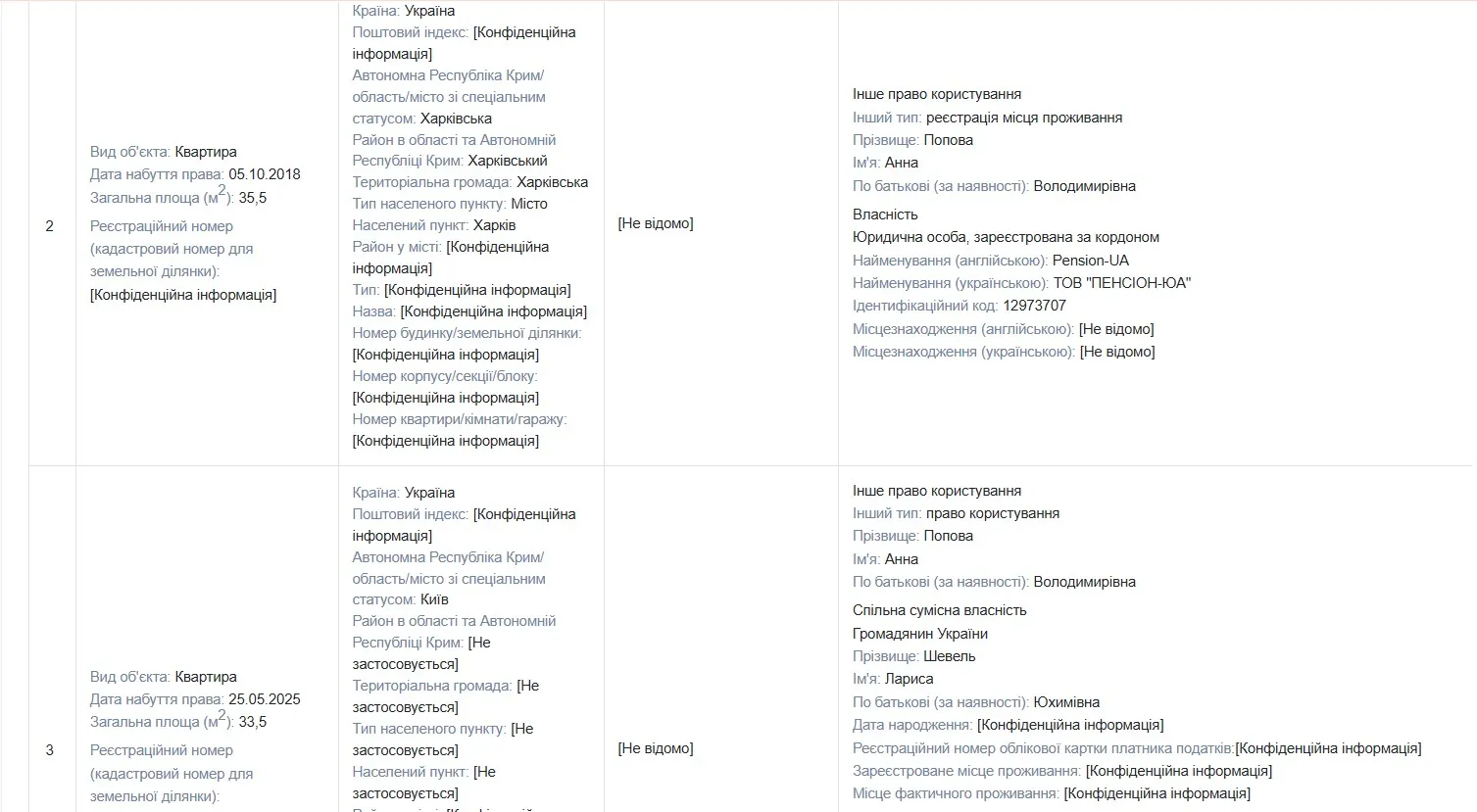
The declaration also lists an apartment in Kharkiv with an area of 35.5 square meters, the right to use which arose on October 5, 2018, through registration of residence, while the owner of the property is listed as a legal entity registered abroad—PENSION-UA LLC. The third property is an apartment in Kyiv with an area of 33.5 square meters, the right to use which the prosecutor acquired on May 25, 2025, and the owners of this property under joint ownership are listed as Larisa Yukhimivna Shevel and Natalia Anatoliivna Negreba. It is noteworthy that the value of all real estate properties as of the date of acquisition or according to the latest monetary valuation is listed as “unknown” in the declaration.
As for financial assets, the prosecutor declared $10,000 in cash, and she has 63,800 UAH in bank accounts.
Mykhailo Vulah’s trail
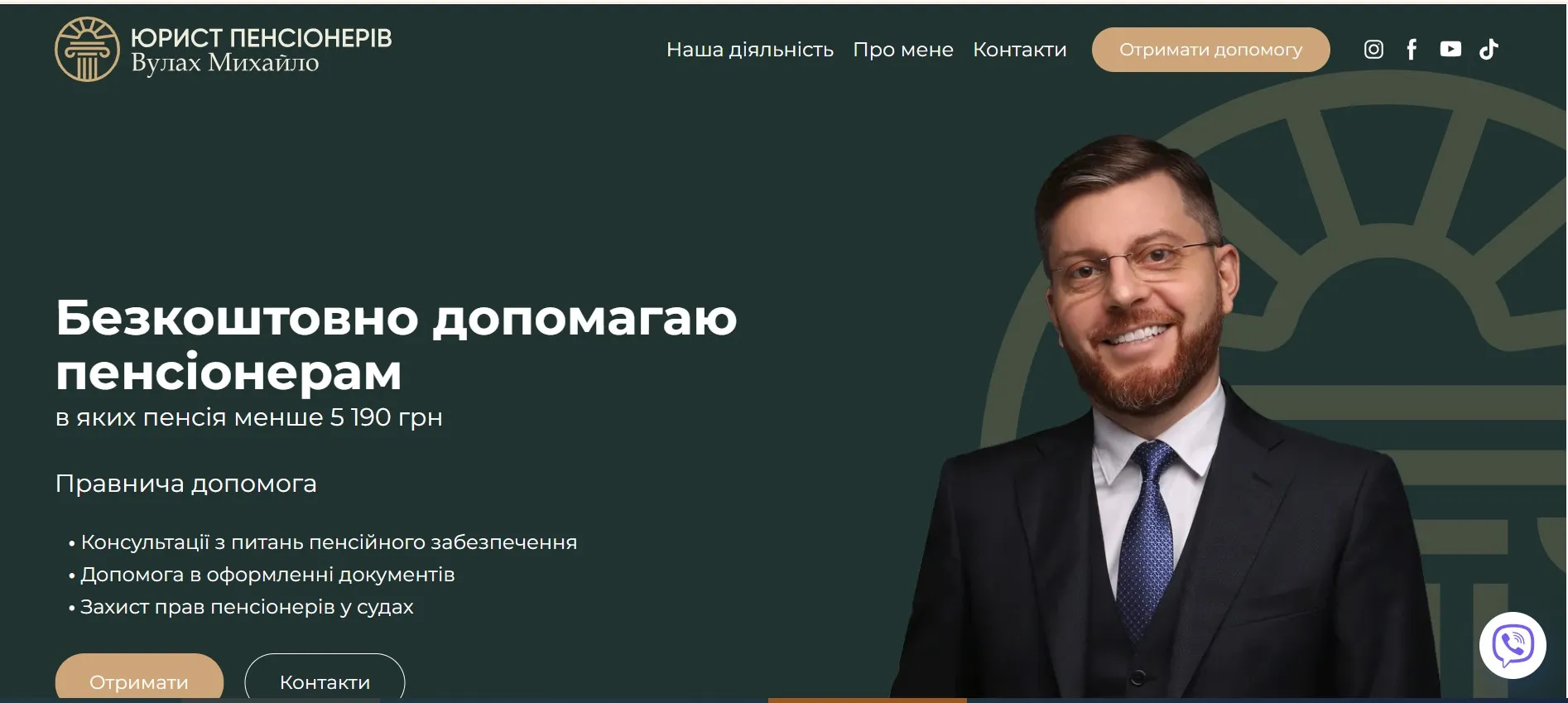
When checking the foreign LLC “PENSION-UA,” the open analytical platform Youcontrol shows LLC “RENTA-CAPITAL,” whose beneficiary is Mykhailo Vulah, a well-known lawyer and businessman whose activities focus on managing the property of the elderly.
How “Pension” Works
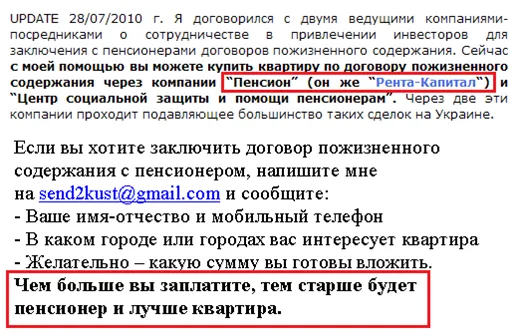
What actually lies behind the “free assistance for pensioners” was revealed in an investigation by the “Fourth Power” agency: a cynical scheme to enrich themselves at the expense of lonely pensioners, organized by Mykhailo Vulakh and his partners under the guise of the “Center for Social Protection.” Using aggressive advertising on national radio, Vulakh’s organizations (the “Pension” and “Renta-Capital” brands) lure vulnerable elderly people with promises of lifelong care in exchange for transferring ownership of their homes.
The organizations use names that mimic government agencies, but are in fact private investment businesses. For pensioners, they are a “help center”; for investors, they are a platform for buying apartments at a third of the price.
The business model is openly based on life expectancy calculations. On the company’s internal resources, they display “pensioner databases” with charts showing average life expectancy. Their key success metric is the “waiting period for the apartment to become available,” which averages 3.2 years.
The contracts are structured so that actual care (food, medicine, cleaning) is replaced by a meager cash payment (at the time of the investigation—500 UAH in 2011). This deprives the pensioner of assistance and the investor of the obligation to actually care for the person, reducing everything to mere financial transfers.
Under the guise of charitable campaigns such as the “Health Relay,” Vulakh’s organizations collect data on the health status of the elderly to more accurately assess the “potential” of the investment and the speed of the transfer of ownership.
Intermediary firms do not appear in the contracts as liable parties. After signing the documents and receiving their commissions, they effectively disappear, leaving pensioners alone with their new “owners,” who often ignore the terms of care.
The investigation confirms: behind the facade of “helping the lonely” lies a ruthless real estate business, where a person’s life expectancy is merely a variable in the profit formula.
Where did the prosecutor get her apartment?
In Anna Popova’s declaration, attention is drawn to the fact that the prosecutor uses housing owned by LLC “PENSION-UA,” an entity specializing in concluding lifetime maintenance agreements with single pensioners.
At the same time, the official’s declaration lacks information regarding her acquisition of ownership rights to the property in question, which may indicate the use of schemes to register real estate in the names of third parties or legal entities.
The fact that the prosecutor uses property belonging to Vulah’s companies may indicate hidden agreements or the receipt of improper benefits in the form of free housing or rent at below-market rates.
This is likely why anti-corruption authorities are demanding that banks fully disclose information about all payments made by Popova and her parents to determine whether third parties associated with the legal real estate business were financing her lifestyle.
Earlier, the UA.NEWS editorial team received new evidence of Viktor Goldsky’s possible involvement in schemes targeting socially vulnerable citizens and their real estate. Read the details in our investigation.


