
“It’s Enough Just to Say ‘Stop’”: Why the Volyn Police Prefer to Look On in Silence as the TCC Runs Amok
02 September 2026 11:37“Sometimes it’s enough for a police officer to simply tell the TCC personnel to stop,”—that’s exactly how Police Colonel Serhiy Kozak described situations where, during joint public safety drills, TCC employees begin to act unlawfully. According to the deputy chief of the Main Directorate of the National Police in Volyn Oblast, a police officer is obligated to stop obvious violations of the law—including those committed by TCC personnel—and does not have the right to simply stand by and watch what is happening.
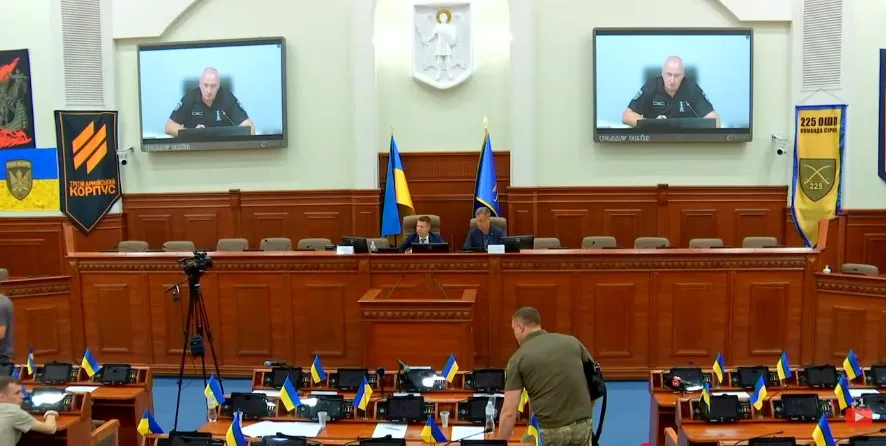
“In some cases, a police officer’s word is enough to prevent TCC military personnel from taking… any kind of aggressive action or committing violations against a citizen,” Kozak explained during a TSK meeting chaired by Oleksiy Goncharenko. However, the colonel was unable to specify exactly how many such cases there had been in Volyn, as he does not keep such statistics.
At the same time, the scale of the problem is illustrated by other statistics cited by the colonel: since 2024, the Volyn police have registered 70 criminal cases related to the actions of TSK employees or military personnel. In 2024, there were three such cases; in 2025, 18; and in the incomplete year of 2026, already 49.
The largest number of cases—41—were filed under the article on unlawful deprivation of liberty or kidnapping. Another 17 involved minor bodily injury, and 12 involved hooliganism. According to Kozak, six cases were sent to court with indictments. Pretrial investigations are ongoing in 52 other cases; 10 cases were closed, and two were suspended.
“Forgot” to turn on the body camera—so, is there something to hide?
Body cameras were discussed separately at the TSC meeting. The colonel cited a specific example from the village of Verbka in the Kovel district, where two police officers were present on June 9 during a conflict between local residents and TSC employees.
Kozak explained that an internal investigation was conducted following the incident. It found violations on the part of both law enforcement officers. After all, police officers are required to record all incidents on body cameras when interacting with citizens. A device that is not turned on constitutes a direct violation of official discipline. It was precisely in the village of Verbka that the police officers received reprimands because their body cameras were turned off while pursuing citizens.
“Based on the results of the internal investigation, we identified shortcomings on their part and held them accountable through disciplinary action — both officers received reprimands for failing to turn on their body cameras while pursuing citizens in a vehicle, thereby violating the instructions. Because of this, we were unable to review the video footage of the incident from their perspective.”
At the same time, Colonel Kozak assured that there are no issues with the supply of body cameras for the Volyn police. However, even if the body camera had been recording, a citizen’s chance to prove their case is limited by time. Recordings from police body cameras are stored for only 30 days, after which they are automatically deleted.
“If no complaint is filed by a citizen within 30 days or no criminal case is registered, the footage is erased from the server. It disappears,” explained the deputy chief of the Volyn police.
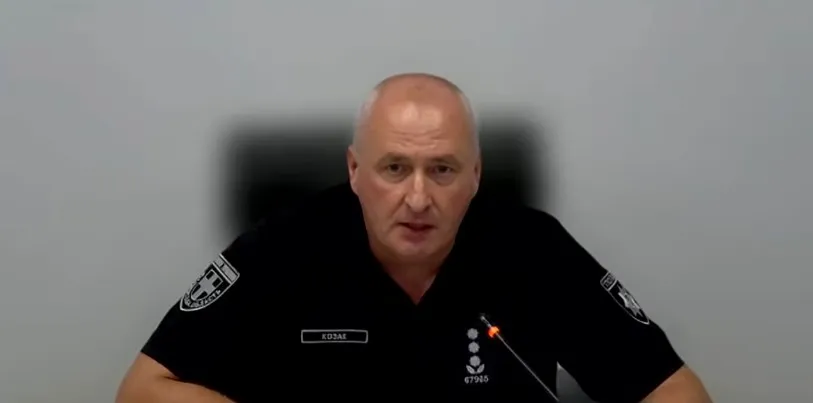
Serhiy Kozak, Deputy Chief of the Main Directorate of the National Police in Volyn Oblast
“Blind” checks: databases don’t see everything
Sometimes, certain problems arise even before a person is taken to the TCC, during the initial document check on the street. Before taking any action or complying with requests to transport a citizen, police officers are required to check the individual using available information systems. This includes verifying whether the person is wanted, their military service status, and grounds for deferment.
However, the colonel acknowledged that the technical capabilities of the databases are far from ideal, and the police officers on the scene do not always have a complete picture of a person’s health status or any disabilities they may have.
“If a person claims on the spot to have a disability or health limitations, we try to verify it. Unfortunately, information about disabilities isn’t always reflected in our registries,” explained Serhiy Kozak, adding that if a man doesn’t have paper documents or confirmation in the electronic registries, they are still sent to the TCC for “data verification,” where a medical commission must then determine their fitness for service. It is precisely this discrepancy between the registries that most often leads to conflicts right on the street.
A recent incident in the village of Boholyuby serves as a telling example of these flawed databases. There, TCC officers fired tear gas into a taxi carrying a driver with a disability since childhood and a pregnant woman. The victims claimed that police officers with their body cameras turned off were also nearby; however, the colonel explained that the officers on the scene were patrol police who report directly to Kyiv, not to the regional police department.
“Since these were not our officers, we did not conduct an internal investigation,” Kozak stated, adding that the case materials regarding the TCC were forwarded to the Military Prosecutor’s Office, where one of the servicemen was ultimately held administratively liable.
“We Work Every Other Day”: Why It’s Hard for Cops
Summarizing the reasons for regular conflicts and disruptions in law enforcement operations during mobilization efforts, Serhiy Kozak complained about chronic exhaustion and a staffing shortage within the Volyn police force.
Currently, the staffing shortage at the regional police headquarters stands at 14.7%. The situation is further complicated by the fact that a significant portion of police officers are carrying out missions directly on the front lines—13% of the region’s officers are engaged in combat operations as part of combined units and combat units.
The colonel explained that Volyn police officers are serving as part of the National Police’s “Lut” assault brigade, “Khizhak” patrol police brigades, the KORD special forces unit, as well as in the newly formed rifle battalions. They work in close coordination with the Defense Forces—from the National Guard and the State Border Guard Service to the 425th Separate Assault Regiment “Skelya” and the 225th Separate Infantry Battalion—particularly in the Pokrovsk sector and along the northern border.
Due to this outflow of personnel, police officers “on the ground” are forced to work under extreme conditions—on a “every other day” schedule or even two consecutive days on duty with a break once every eight days—and no influx of new personnel is expected due to mobilization restrictions.
The workload and constant pressure in the rear create additional risks of burnout and errors while performing daily duties, although this does not relieve law enforcement officers of their responsibility to uphold the law.
Finally, the deputy chief of the Volyn Regional Police Department addressed not the lawmakers, but the public. Colonel Kozak identified mutual aggression on the streets as the biggest problem.
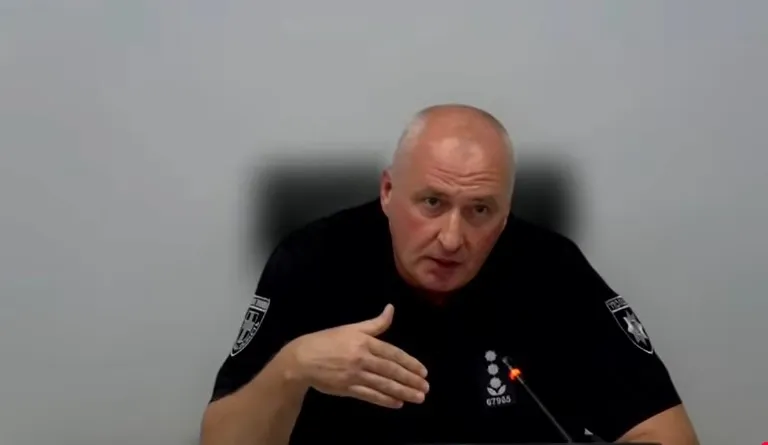
Colonel Serhiy Kozak
“I would like to appeal to those subject to military conscription to show less aggression toward TCC servicemembers and police officers. Unfortunately, the war has been going on for a long time. As they used to say, everyone will have to fight. But the best part of our society is fighting there right now—in the trenches in the east and north. And for some reason, a certain segment is trying to fight the Territorial Defense Forces and the police,” the colonel concluded with a touch of self-irony. “Well, that’s my personal opinion—a subjective one. I’m an artist; that’s how I see it.”


