

The Hunt for Farmers: How Russians Used Three UAVs to Kill a Philanthropist’s Family in the Sumy Region, and Why the SBU Is Investigating the Theory That They Were Guided
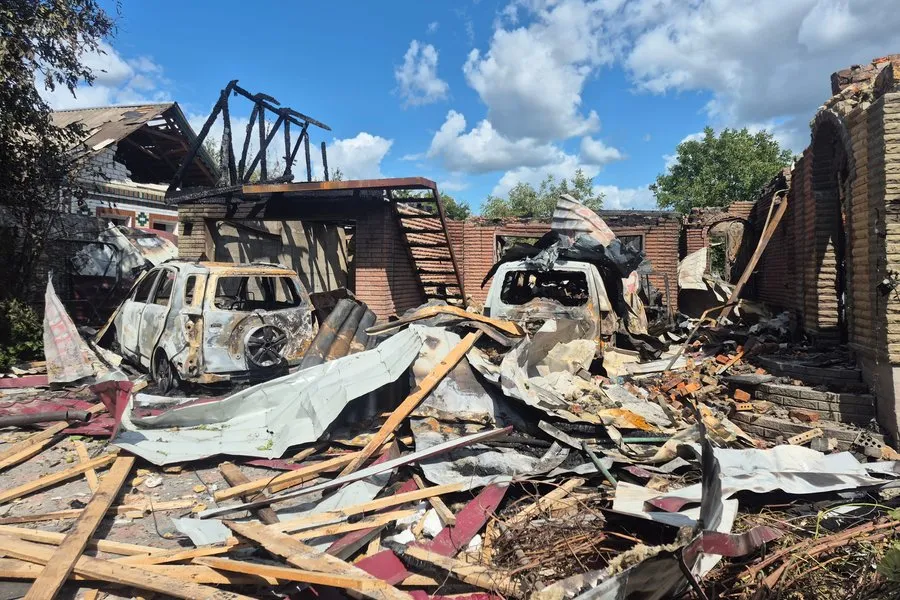
04 September 2026 17:05On August 14, 2026, the village of Stepanivka in the Buryn community was jolted awake by explosions at 5:00 a.m. Russian drones attacked the residential area. All three strikes hit a single yard and a single house.
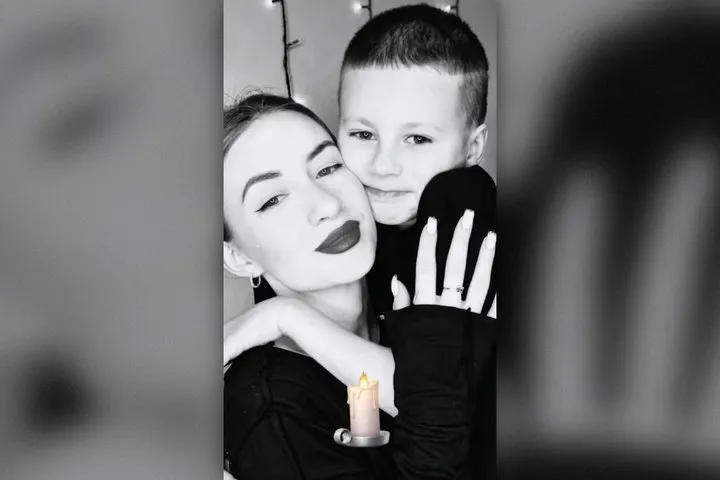
The first strike shattered the roof, forcing the family to wake up and run out into the street. The second drone struck the yard, where a fire broke out. The third drone hit the center of the house, which was already engulfed in flames. As a result of the attack, 29-year-old Olga Kovtunenko and her 9-year-old son Gleb were killed. Four other people suffered severe burns and injuries.
In the news reports, the incident unfortunately became yet another entry on the list of Russia’s war crimes. However, the timing and precision of the attack led local residents and law enforcement officials to ask: Was this tragedy an accident?
“The first hit the house, the second hit the yard, the third hit the center of the fire”: the tragedy in Stepanivka
According to the regional military administration, the occupiers attacked the village with two rocket-propelled drones. But eyewitnesses tell a different story: the Kovtunenko family’s homestead was struck three times. The first explosion, then the second—the fire instantly engulfed the outbuildings and the surrounding area. The third drone struck right in the center of the burning house.
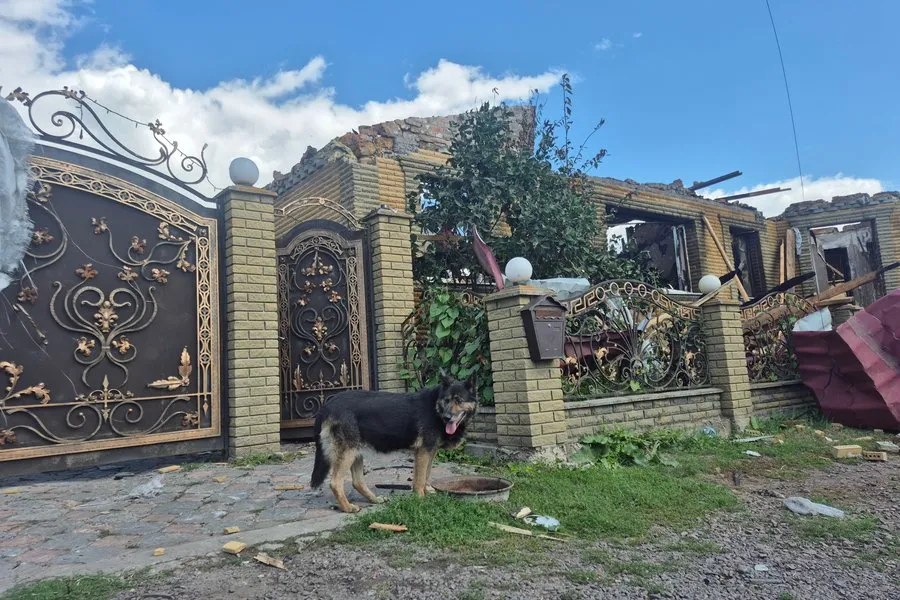
Olga Kovtunenko, 29, and her son Gleb, who had just turned nine in July, were killed instantly. Olga’s husband (the boy’s father) and his mother suffered severe burns and were hospitalized. Several neighbors who rushed to help were also injured.
Were the discrepancies between official reports of “two UAVs” and witness accounts of three separate strikes enough for investigators to begin speculating about a “deliberate attack” by competitors, ill-wishers, or envious individuals? After all, if all three strikes were directed at a single estate, the theory that this was a contract attack has merit
“There’s nothing to divide; it’s not like taking a wallet”: a lawyer on business, heirs, and a contract killing
The house that became a target for Russian drones belongs to Anatoliy Kovtunenko—the founder and head of the “Zlagoda-10” farming enterprise. In the community, he is known not only as a landowner but also as a philanthropist who, for years, has repaired roads, maintained the school, and cleaned up the village at his own expense.

Anatoliy Kovtunenko, “Zlagoda-10” Farm
The company’s lawyer, deputy, and close friend of the family, Yevhen Lishunov, when asked about the deliberate targeting of the UAV due to a business conflict or land redistribution, is immediately categorical: “I don’t believe it.”
The lawyer then explained his position by citing the technical complexity and high cost of such an attack:
“I spoke with Anatoly Ivanovich about this; I asked him repeatedly: ‘Maybe someone called, said something—were there any disputes?’ Absolutely nothing. To be honest, I can’t imagine this scenario—how Russian UAVs could be guided to specific coordinates within Ukraine’s territory in a private capacity, so to speak. And not just one, but three! Jet-powered ones, equipped with video cameras. That means their price starts at $200,000 per unit—and it could be even higher.”
The theory about a business takeover or raiding also doesn’t hold up to the lawyer’s rational analysis. Yevgen emphasizes the legal absurdity of such a motive:
“There’s nothing to divide. Everything has long been divided. Look, there’s a farm, a legal entity. It has a certain amount of land—some leased, some owned. Let’s assume: they eliminated the family—the entire family. First of all, he still has an older son in Britain. Few people know this, but Anatoliy Ivanovych was married twice; he still has an older son. All of this is inheritable! Well, the land—it’s not going anywhere. I mean, excuse me, this isn’t like shooting someone and taking their wallet... He also has two sisters, with whom he’s on excellent terms.”
Nevertheless, assessing the political mood in the community, Yevgeny Lishunov ultimately admits that, yes, certain political forces may try to exploit the tragedy for their own interests:
“Although in 2022, my opponents and I, as they say, buried the hatchet. There is no political conflict as such, but the opposition remains. And personally, I can only attribute the rumors to the fact that someone wants to exploit this conflict for their own political interests. That is, there are certain people who are currently in very active conflict with the mayor. But Anatoliy Ivanovych currently has an excellent relationship and dialogue with the mayor. He helps the city council and cleans up the village entirely at his own expense. In the past, he paved about a kilometer of road and maintained the school… The mayor knows there’s a responsible person in the village.”
Separately, the attorney drew attention to the inaction of law enforcement agencies during the initial stage of the investigation:
“The investigation—it’s not just that there’s no progress; there’s absolutely no movement at all! No one is being questioned or interviewed, and overall, it feels like no one is interested in this. People say different things, but when they start checking—it turns out that no one sees or knows anything.”
A new weapon for criminals: targeted drone attacks on farmers are no longer the exception
The tragedy in Stepanivka is not the only instance where the homes of Ukrainian farmers have been targeted by UAVs equipped with explosives.
A similar incident occurred last year in the Lviv region. In the village of Sokilnyky, around 4:00 a.m., a drone carrying explosives struck the Kovals’ home, piercing the roof and destroying the facade. Miraculously, no one was injured.
The homeowner, Natalia Koval, is a co-founder of a farming enterprise specializing in grain cultivation and the owner of several plots of land. Shortly before the explosion, her husband had leased a pond for fish farming. No air raid alert was issued in the region, and the National Police immediately classified the incident under Articles 15 and 115 of the Criminal Code of Ukraine—as attempted murder.
The National Police then called for the urgent adoption of Bill No. 13600, which had been registered in the Verkhovna Rada. The bill provides for:
- mandatory registration and maintenance of a State Register of UAVs;
- state registration of all civilian drones by National Police units;
- clear identification of users and the establishment of strict flight rules;
- criminal and administrative liability for launching unregistered drones or operating them without the appropriate documentation.
Case Referred to the SBU: Law Enforcement Does Not Rule Out the Possibility of Provocation
Following the shelling of the Kovtunenko family estate, the Main Directorate of the National Police in Sumy Oblast opened a case on August 14, 2026. On the same day, the case materials were transferred to the Sumy Oblast Directorate of the Security Service of Ukraine (EDR No. 22026200000000509) under Part 2 of Article 438 of the Criminal Code of Ukraine (violation of the laws and customs of war, combined with intentional homicide).
Investigators confirmed that among the working hypotheses being explored is the possibility of fire correction or deliberate targeting.
“We have documented the fact of the shelling; the case has been transferred to the SBU, and they are considering this version as well. I simply know the people there well—I know what drives them and what they’re all about; I’ve personally documented many collaborators. Somewhere deep down… Let me put it this way—anything is possible,” the investigator said in a comment regarding the progress of the investigation.
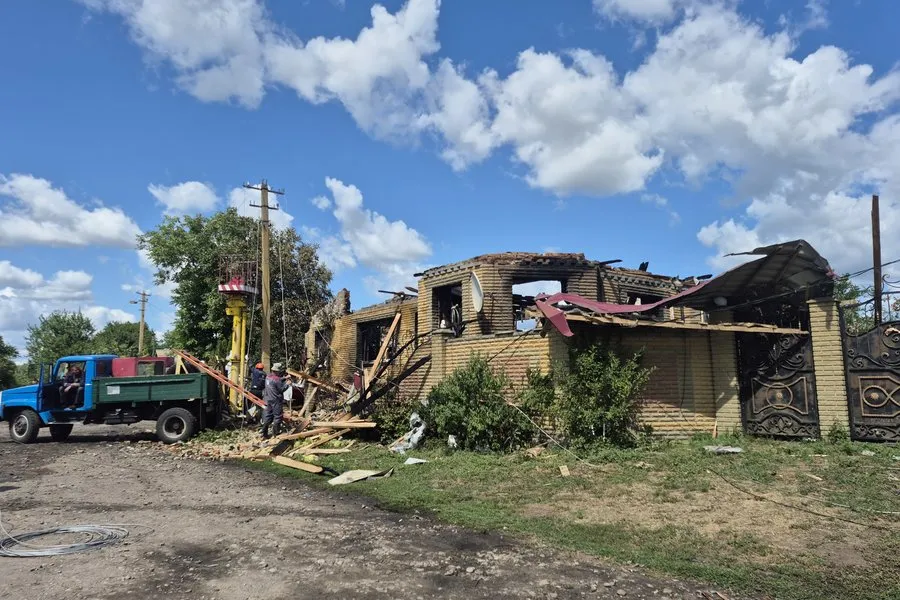
Whether the strike on the Kovtunenko family’s home was a direct war crime by the Russian Federation involving a random target selection or yet another instance of “drone terror” carried out with the involvement of local spotters—there are currently no official conclusions regarding the presence of a spotter. Investigators are continuing their proceedings.


