
Injections: where the line between aesthetics and overcorrection lies, explained by Aliona Panchuk, dermatologist at Leo Beauty Club (Kyiv)
The world of aesthetic cosmetology is constantly evolving. Specialists now have a wide range of tools to enhance beauty. But is there a clear line between true aesthetics and overcorrection?
Cosmetology today is a highly modern, trendy, and sought-after specialty in Ukraine and other developed countries. Along with this, many practitioners have emerged, each with their own aesthetic perspective, techniques, and understanding of beauty. That’s why clients are always looking for a professional with whom they share a common vision of aesthetics.
Aesthetics is when the result subtly enhances appearance, highlights features, and preserves natural traits without changing the face.
Overcorrection occurs when volume or shape exceeds anatomical norms and becomes noticeable.
Signs of overcorrection:
- Excessive volume (lips, cheekbones, chin)
- Persistent under-eye swelling after fillers
- Uneven contours or product migration
- Altered natural proportions, sometimes to the point of being unrecognisable
Why overcorrection happens
- Patient desire for “just a little more”
- Lack of clear aesthetic boundaries in the practitioner
- Incorrect choice of product or injection technique
- Gradual accumulation of volume without evaluating the overall picture
- Blindly following trends or social media influencers
When a practitioner should say No?
An experienced specialist should intuitively understand the patient and know when the best decision is not to proceed. This protects both the patient and the practitioner’s reputation.
If a patient requests more volume than appropriate
- If the desired result does not align with anatomy or risks overcorrection
- Refusal = professionalism
- It is better to preserve harmony than to compromise naturalness
If expectations are unrealistic
- Examples: “I want to look like the filter,” “make my face like a blogger’s,” “completely erase expression lines”
- When expectations cannot be met, honesty is more important than compliance
If there are signs of procedural dependency
- Constant desire for “just one more injection”
- Dissatisfaction with normal results
- Frequent visits to different clinics or practitioners
- Self-prescribing procedures or home care
- Dishonesty with the specialist
- In such cases, a pause, explanation, or sometimes a referral to a psychologist is appropriate
If the procedure is driven by emotions rather than choice
- Stress, family issues, depression, or low mood are not reasons for injections
- Sometimes what the patient needs is support, rest, and other ways to feel joy rather than a procedure
If the area is already overloaded or there is product migration
- When the face has been subjected to multiple procedures, with swelling, asymmetry, or filler migration, initial steps should include dissolution, recovery, and regeneration before any correction
Why saying “No” builds trust and reputation
The ability to refuse a procedure appropriately builds trust. Explaining why something is not aesthetically appropriate demonstrates professionalism. Clients value practitioners who prioritise natural beauty and health over chasing procedures.
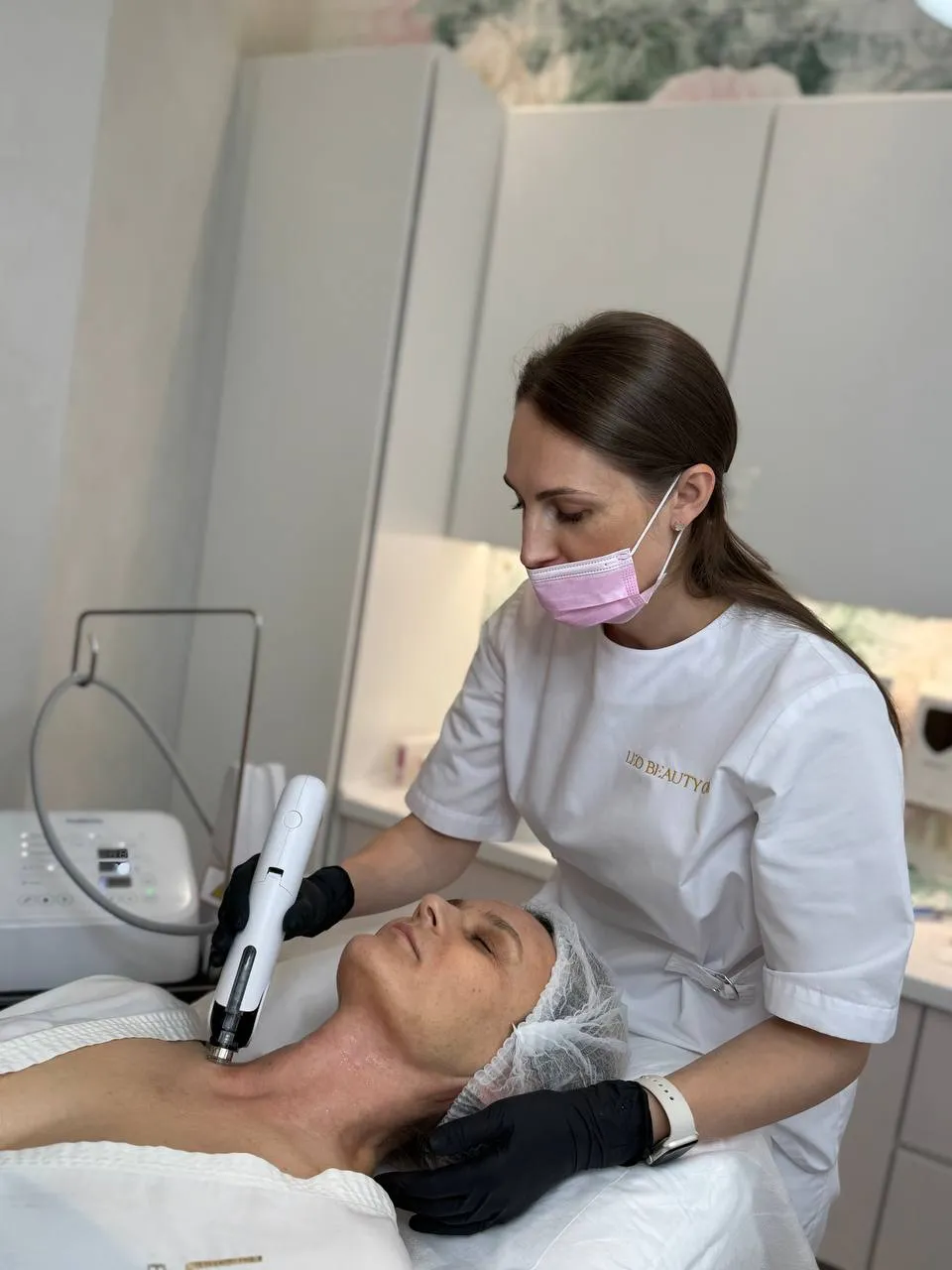
Combining device-based and injection methods safely
I particularly enjoy combining device-based and injectable methods in aesthetic treatment protocols, as this combination consistently delivers the most visible and long-lasting results.
When selecting procedures, it is essential to adhere to the correct protocols, intervals, and indications.
Injectable treatments such as biorevitalisation and polynucleotide-based mesotherapy are often used to prepare patients for device-based procedures, enhancing outcomes and ensuring smoother recovery.
For contour enhancement and botulinum therapy, it is generally recommended to start with a course of device-based treatments, followed by injectables. Device procedures can sometimes influence filler positioning, migration, or swelling at injection sites. There is also evidence suggesting that device protocols may affect the duration of botulinum effects.
In recent years, aesthetic medicine has established new standards: natural results, harmonious appearance, and preservation of individuality.
Aliona Panchuk, Dermatologist, Leo Beauty Club (Kyiv)


