
Training Methods of an Experienced National Beach Soccer Team Player: Konstantin Makeev’s Approach and Practice at the Professional Level
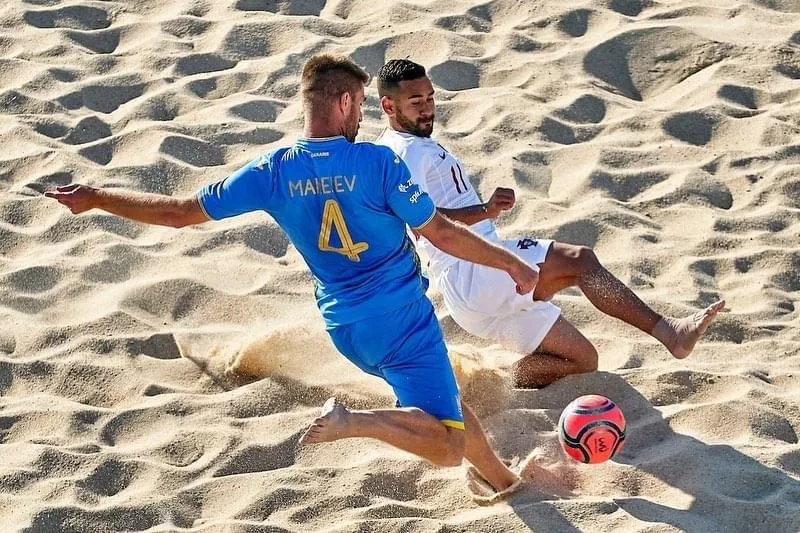
“Over the years of competing in beach soccer at the national and international levels, I have developed my own system for preparing athletes for tournaments, which is based on a phased approach and takes into account the specific nature of the physical demands of this sport,” — says Konstantin Makeev, a player on Ukraine’s national beach soccer team.
Konstantin has been playing soccer since 2005. He started out playing futsal, but eventually became passionate about beach soccer. Drawing on his accumulated professional and practical experience, the athlete decided to develop his own training methodology, which helps him and other soccer players achieve the best results.
Features of the Method
“My system for preparing athletes for tournaments involves starting the training process 4–5 months before the season’s main competitions. In the first stage, the main focus is on developing functional endurance, strength, and explosive power. It is this period that lays the physical foundation without which it is impossible to perform successfully at a high level in beach soccer,” the athlete explains.
He also emphasizes the importance of gym work as a crucial part of training. Within his system, significant attention is devoted to strength training, working with weights, and developing the muscles of the legs, core, and stabilizers. Explosive power is developed separately through sprints, accelerations, jumping exercises, sharp leg pushes, and other elements that help build power. “This is particularly important for beach soccer, since every movement on the sand requires significantly more energy than on a regular surface.”
According to Makeev’s methodology, cardio training is an important component of an athlete’s training process. The program is tailored individually based on the player’s physical characteristics and includes training on a bicycle or stationary bike, interval training, long cross-country runs, and runs covering distances of up to 10 kilometers. This stage of preparation develops the soccer players’ endurance and ability to maintain a high pace of play throughout an entire match or series of matches without a significant drop in performance.
“The second phase of my training program involves a gradual transition to specialized training on sand. Significant attention is paid here to ball work, coordination of movements, technical elements, and the development of decision-making skills under high-intensity game conditions.”
An essential component of Makeev’s methodology is an individualized approach to each athlete. “I believe that modern training must take into account the player’s physiological, anatomical, and functional characteristics. This allows for the proper distribution of training loads, the selection of an optimal recovery regimen, and the achievement of maximum training effectiveness.”
Equally important elements of the system include sports nutrition, the use of modern recovery methods, massage, cryotherapy (a method of treatment, healing, and rejuvenation using extremely low temperatures), and sleep quality monitoring. Konstantin is convinced that recovery is one of the key factors in achieving consistently high results at the international level.
“The effectiveness of this system is confirmed by my many years of playing for the Ukrainian national team, my participation in top-level international tournaments, and my victory in the European Beach Soccer League Super Final. In the future, I plan to develop and implement this methodology while working with young athletes and professional teams in other countries as well, passing on my accumulated experience to a new generation of players.”
Athlete Training
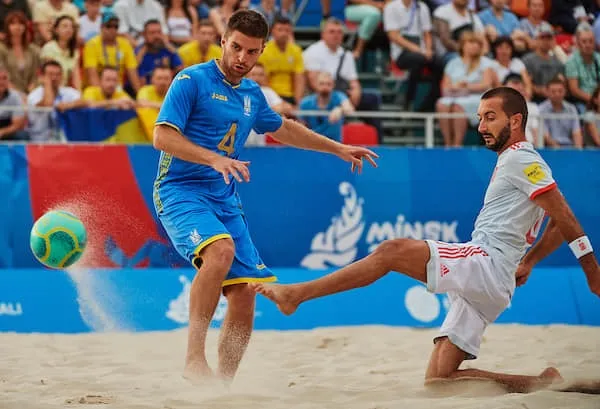
Konstantin discusses the physical qualities that are most important for success in beach soccer. “Physical conditioning is the foundation of performance in beach soccer. It is what lays the foundation for all other components of the game. That’s why I developed my own training methodology to build a foundation that helps players fight for every ball on the field and maintain a high pace throughout the entire match. Even if a player has certain technical shortcomings, a high level of endurance, stamina, and physical readiness can compensate for them.”
When preparing for competitions and tournaments as a team, we always review video recordings of our own matches and those of our upcoming opponents. This allows them to analyze and better understand the opponent’s strengths and weaknesses, prepare for specific game situations, and make the right decisions directly on the field.
It’s also important for an athlete to be mentally prepared, because their emotional state directly affects their confidence, concentration, and decision-making during the game. “If the coaching staff notices that a player is experiencing a psychological slump, a loss of confidence, or is under excessive emotional pressure, additional work and one-on-one conversations are conducted to help restore psychological balance. Constant communication between the player and the coach fosters a positive atmosphere within the team and an optimistic mindset for every player. In my opinion, the combination of high-quality physical training, tactical analysis, and psychological support ensures that every athlete achieves effective results at a high international level.”
Challenges on the Path to Success
Konstantin explains that today, many athletes are forced to balance sports with their day jobs. This makes it essential to properly plan training loads and recovery. A nutritious diet, sports supplements, and constant monitoring of physical condition are crucial. To reduce the risk of injury and help the body recover more quickly after exertion, massages, saunas, and other modern methods are essential. Attention to oneself, one’s body, and one’s physical well-being is what distinguishes top-level athletes from merely good players.
Often, they neglect these aspects: they don’t get enough sleep, don’t follow a proper diet, skip recovery sessions, ignore the first signs of overexertion or minor injuries, fail to monitor their training intensity, and don’t give their bodies enough time to rest. As a result, chronic fatigue sets in, the player’s performance on the field declines, results worsen, and the risk of injury increases.
“That’s why I developed my own training method for athletes. It provides a clear, straightforward, step-by-step plan that will help beach soccer players achieve excellent physical condition and strength, and enable them to maintain a high pace of play. Several of my teammates have already tried it. They’ve noticed improved endurance and faster recovery after intense training sessions and matches. Their performance metrics remained consistently high throughout the tournament.”
Makeev’s system was developed based on his many years of experience playing at the professional level, analysis of training processes, and practical work with athletes. By using it, players will be able to make steady progress, avoid overtraining, maintain a high level of physical fitness, and develop a comprehensive, professional approach to their own health.
In the future, Konstantin plans to refine it. He is convinced that his systematic approach to the training process can be beneficial for professional players as well as those just starting out in this sport. He has created an effective training model that helps athletes achieve high results and maintain consistent physical fitness over the long term.


