
In Korea, referees were paid for sexual favors before matches
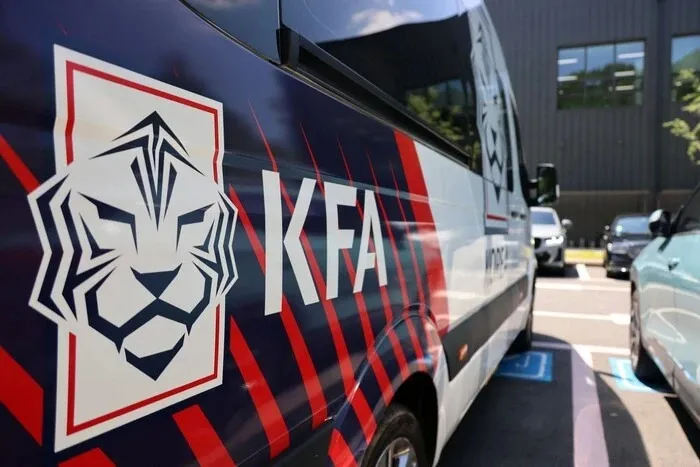
An old scandal involving the South Korean soccer association has come to light. In 2011–2012, its employees arranged for foreign referees to visit massage parlors and adult entertainment venues before and after the national team’s matches. The costs for these services were paid using the organization’s corporate credit cards.
This came to light after the Korean press published details of a report by the country’s Ministry of Culture, Sports, and Tourism. An audit of the Korea Football Association was conducted back in 2016, but the information from the document has only now become publicly available.
According to the report, the association organized trips to adult entertainment venues for foreign referees. As noted in the document, the expenses for these outings were charged to the organization’s corporate credit cards. This was not an isolated incident: the audit materials mention at least 12 referees and coordinators. All of them were involved in seven international matches involving the Republic of Korea’s national team. The referees included representatives from Japan, the United Arab Emirates, Iran, Bahrain, and Uzbekistan.
Which matches came under scrutiny
These were matches that were of great importance to the South Korean national team. Some of them were part of the qualifiers for the 2012 Olympic Games, while others were qualifiers for the 2014 World Cup. The results of these seven matches are particularly noteworthy. South Korea did not lose a single match officiated by the referees mentioned in the report. The team recorded five wins and two draws.
At the same time, this fact alone does not prove that the referees’ decisions were influenced by the entertainment organized for them. The available materials mention payments for such services and violations by soccer officials, but a causal link between these expenses and specific refereeing decisions must be established by a separate investigation.
The referees themselves requested such services
Former employees of the Korea Football Association stated that sometimes the referees themselves were the ones who initiated such outings. According to them, some referees directly asked for visits to such establishments to be arranged for them.
One of the association’s former executives described such requests as commonplace during that period. This suggests that this was not an isolated, one-time occurrence, but rather a practice that, according to former employees, may have been repeated.
At the same time, the question of why the soccer organization paid for such services for foreign referees remains particularly important. Even if there is no direct evidence of influence on match results, such expenditures raise serious questions regarding ethics, transparency, and a potential conflict of interest.
Why is this coming to light only now?
The scandal resurfaced during a new investigation related to the appointment of Hong Myung-bo as head coach of the South Korean national team. It was during the review of old documents that a report from the Ministry of Culture, Sports, and Tourism caught attention.
As a result, a story that is more than ten years old has once again come under the spotlight. It concerns not only individual referees but also how soccer officials operated at the time and how the association’s funds were used. Such cases are particularly sensitive for soccer organizations. A referee must remain independent of teams and officials, and any gifts, services, or paid entertainment can cast doubt on the impartiality of the officiating.
What is known about the match results
According to the information released, the seven matches involving the referees mentioned in the report ended without a single loss for Korea. The team won five matches and tied twice. This is precisely what made the story particularly controversial. However, it is important to distinguish between established facts and assumptions: the fact that referees were paid for their services does not automatically mean that specific results were fixed.
At this point, the most obvious fact is that the soccer association used its corporate funds to organize intimate entertainment for foreign members of the refereeing teams. Whether this influenced the officiating depends on the evidence that may be uncovered during a further investigation.
History also shows how long such incidents can remain out of the public eye. An audit was conducted back in 2016, but the information only gained widespread attention years later, when old documents were reviewed again as part of another case. This was reported by the Korea Herald.
Svitolina advanced to the round of 16 at the WTA 1000 in Toronto.
Prior to that, Elina Svitolina advanced to the third round of the WTA 1000 tournament in Toronto. In a tough match, the Ukrainian defeated Spain’s Jessica Buzas Maneiro 6-7, 7-6, 6-4. The match lasted nearly three hours, and Svitolina clinched the victory after three tense sets.
Earlier, Ukrainian tennis player Elina Svitolina advanced to the quarterfinals of the WTA 500 tournament in Washington. In the round of 16, she defeated Polina Kudermetova, who previously represented Russia and now plays for Uzbekistan. Following this victory, the Ukrainian continues her quest for the title on American courts.




