
A unique sunspot has turned toward Earth, defying Hale's law
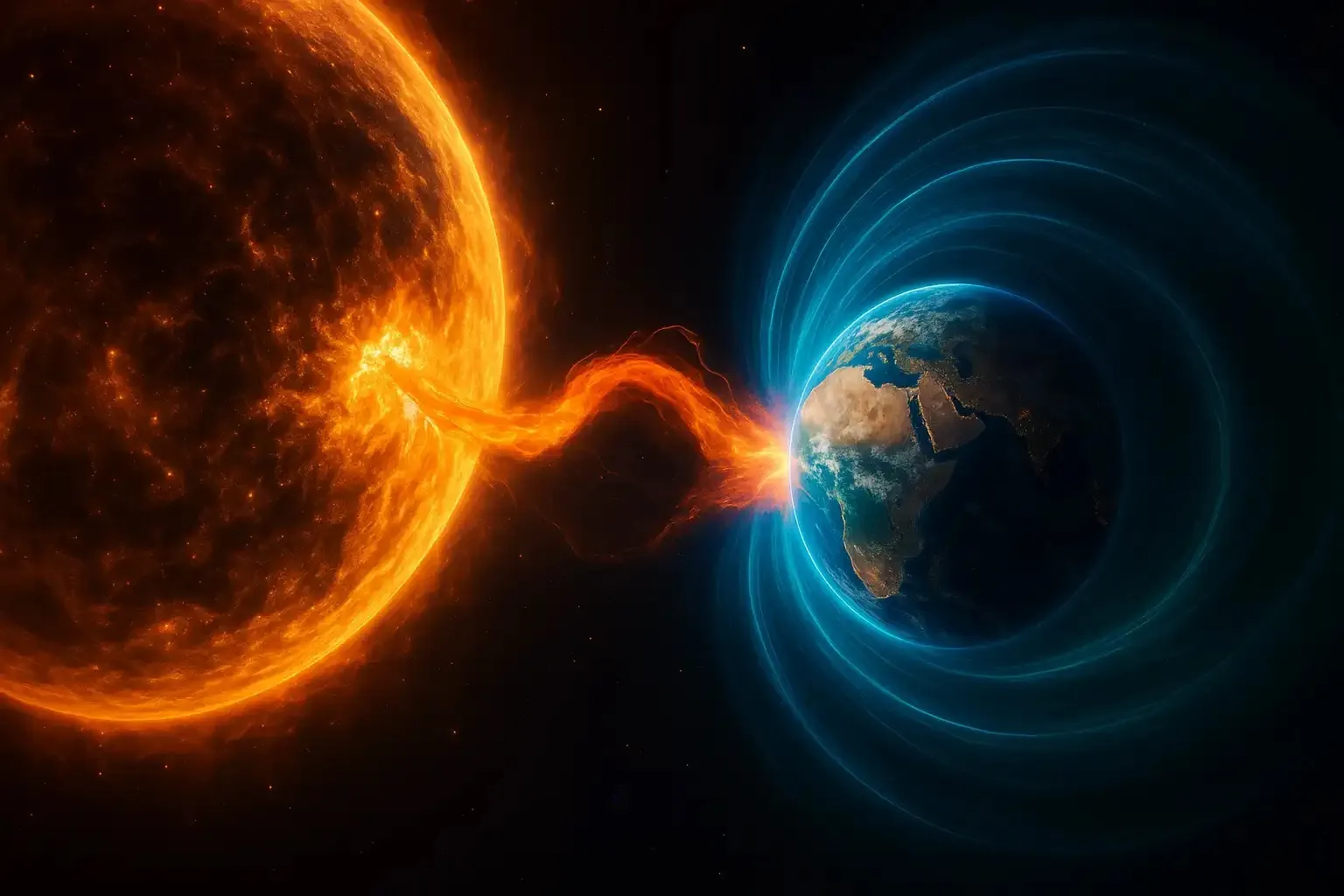
Solar activity is picking up again following a powerful M9-class flare. The source of this eruption was a unique active region—sunspot number 4455. The main feature of this sunspot is that it literally violates Hale’s law (the law of sunspot polarity). The magnetic field in this region has an anomalous reverse polarity.
Such physical instability makes the sunspot extremely active, unpredictable, and literally “explosive.” Despite the fact that our star is gradually moving toward the minimum of its current 11-year cycle and overall activity should be decreasing, such anomalous zones demonstrate that complete calm is still far off.
At the moment of the aforementioned M9 flare, a powerful coronal mass ejection occurred. A cloud of charged plasma particles shot into space at tremendous speed, heading directly toward our planet. According to experts’ calculations, this stream will reach the planet’s magnetosphere on Friday, June 5. The interaction of solar plasma with Earth’s magnetic shield will inevitably trigger significant geomagnetic disturbances.
Magnetic storms result from the interaction of streams of charged particles from the Sun with Earth’s geomagnetic field and can last from several hours to several days. Such space phenomena can cause serious disruptions in satellite communications, navigation systems, and radio equipment, as well as directly affect people’s well-being. The most vulnerable to magnetic field fluctuations are the elderly, people with chronic cardiovascular diseases, and those sensitive to weather changes. During a storm, they may experience severe headaches, dizziness, bouts of nausea, insomnia, unusual fatigue, and joint pain.
This is reported by the space weather tracking website SpaceWeather.
Read also:
Magnetic Storm Calendar for June 2026: How to Prepare for Geomagnetic Fluctuations.
Astronomers have discovered a strange planetary system that is changing before our eyes
Meteorologists predict the formation of the El Niño climate phenomenon as early as May, and by the end of 2026, it could become the strongest in the last decade.


