
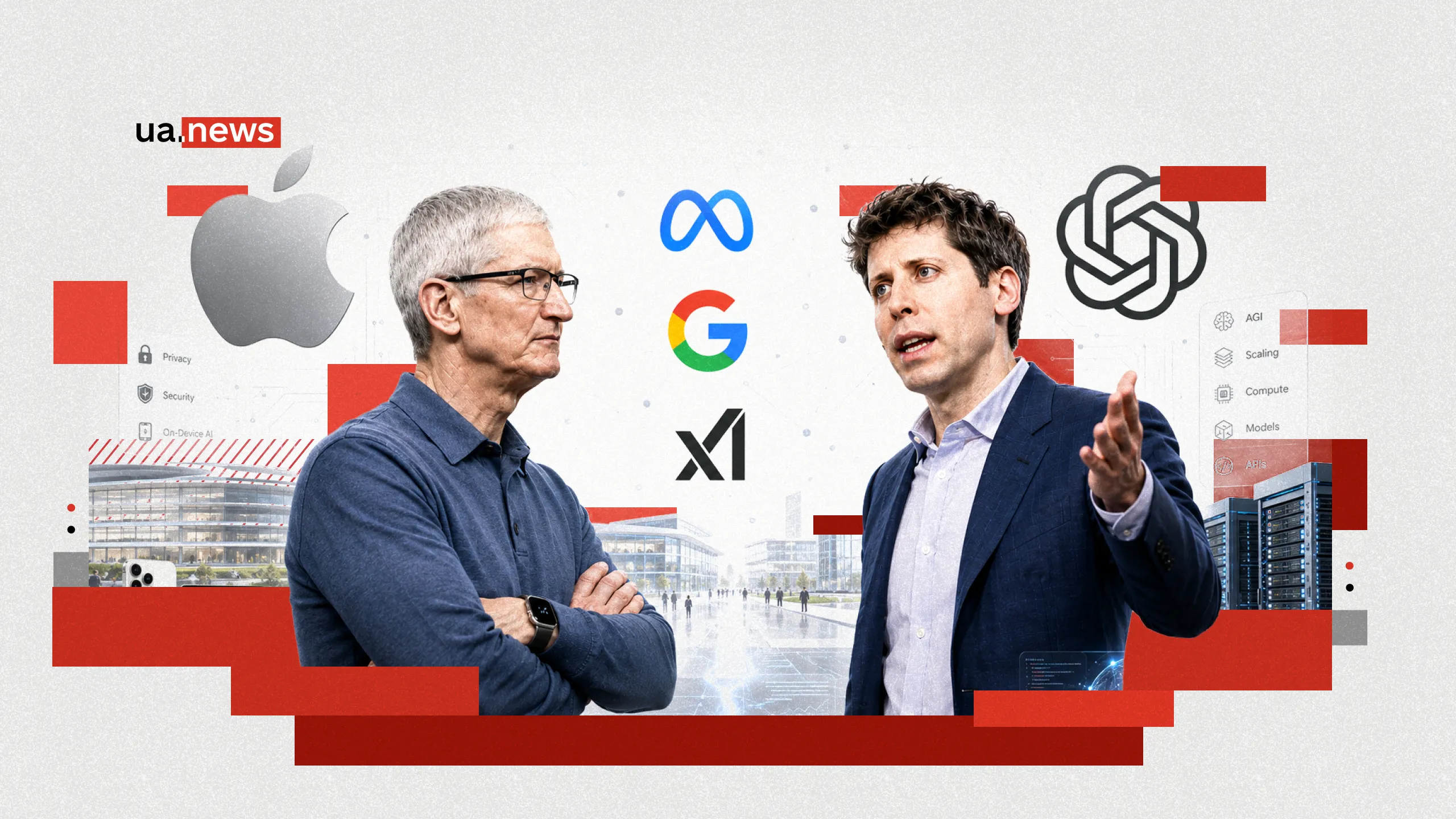
Silicon Valley's Cold War: Why Apple, OpenAI, and Meta Have Started Hunting People Down
14 July 2026 11:50Just a few years ago, the world's largest tech companies competed primarily through their products. Apple released new iPhones, Google improved its search engine, Microsoft developed cloud services, and Meta tried to maintain its lead in social media. Today, the rules of the game have changed. The main weapon is no longer smartphones, processors, or software code, but people capable of creating the next breakthrough in the field of artificial intelligence.
That is why Apple's lawsuit against OpenAI, filed last week in a U.S. federal court, has become much more than just another corporate conflict. Tim Cook's company accuses OpenAI and two of its former employees of misappropriation of trade secrets related to the development of future devices.
According to Apple, confidential information may have been used to accelerate the creation of OpenAI's own hardware product. OpenAI itself rejects these allegations, stating it is not interested in using others' trade secrets.
UA.News explored why Silicon Valley is increasingly resembling an arena for the fight over human capital, how the rules of competition between tech giants have changed, and why a leading AI engineer is sometimes worth more to a company than the launch of a new product.
Why engineers have become the primary asset for tech companies
Historically, Silicon Valley has always thrived on competition for talent. However, the emergence of generative artificial intelligence has fundamentally changed the scale of this battle.
While ten years ago a company's success largely depended on the number of engineers, today the quality of a small group of people capable of creating fundamental AI models is becoming increasingly important. There are few such specialists in the world. They are the ones who develop new model architectures, optimize neural network training, work on hardware, and determine what technology will look like in a few years.

Because of this, companies increasingly do not wait for competitors to introduce a new product. They try to acquire the most valuable thing even sooner — the team that is creating that product.
It is telling that today, the subject of competition is not just individual engineers. Tech giants are buying entire startups, laboratories, and research teams, even if they have not yet managed to release a single commercial product. In many cases, the main value of such a deal is the people, not their developments.
It is in this context that the current conflict between Apple and OpenAI should be viewed. This is no longer a battle between two companies over a specific technology. This is a battle for the people who can define what the next era of personal devices will be.
Apple vs. OpenAI: How allies turned into rivals
Until recently, it might have seemed that Apple and OpenAI were moving in the same direction. In 2025, the companies agreed to integrate ChatGPT into the Apple Intelligence ecosystem, which looked like a mutually beneficial partnership.
Apple received one of the most popular AI services for its users, and OpenAI received access to hundreds of millions of iPhone owners worldwide.
However, completely different processes were unfolding behind the scenes of the tech industry.
In July 2026, Apple filed a lawsuit in a California federal court, accusing OpenAI and two of its former employees — Tan Tan (Ruoming Pang) and Chan Liu (Chaoyang Liu) — of misappropriating trade secrets.
As reported by Reuters, Apple claims that before leaving, one of the employees allegedly copied a large volume of internal documentation related to the development of the company's future products.
According to Apple, after moving to OpenAI, these materials could have been used during the creation of a new generation of AI devices. The company believes that this was not an accidental leak of information, but a conscious use of confidential developments.
At the same time, OpenAI categorically rejected the allegations. The company stated that its developments are created independently, and the use of other companies' trade secrets contradicts OpenAI's internal rules.
The final judgment on these arguments must now be made by a court. However, regardless of the result, this process has already become one of the loudest tech conflicts of the year.
It's not just about two engineers
In reality, it is unlikely that this lawsuit appeared solely due to the departure of two employees.
Over the last few years, OpenAI has gradually transformed from a research laboratory into one of the most influential technology companies in the world. While it was previously associated primarily with ChatGPT, it is now actively investing in its own hardware solutions, robotics, and personal AI devices.
That is why OpenAI began actively recruiting specialists who had spent years working on Apple's most successful products.
The most high-profile story was about the legendary designer Jony Ive — the person who, along with Steve Jobs, created the design for the iMac, iPod, iPhone, iPad, and Apple Watch. After leaving Apple, he founded his own company, io, which was acquired by OpenAI in 2025.
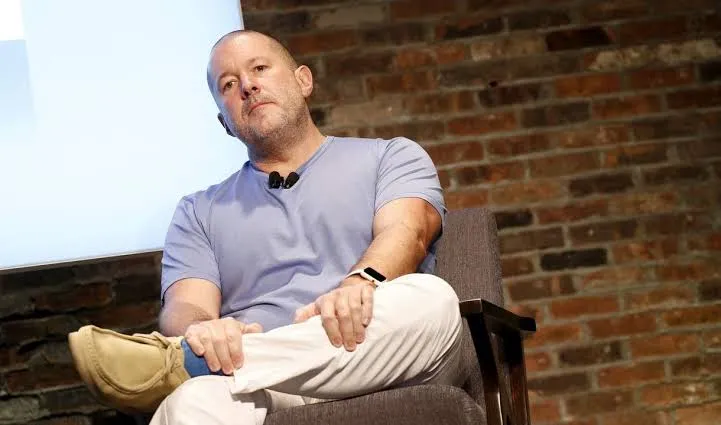
Along with the company, an entire team of engineers and designers who had spent decades working on iconic Apple products moved to OpenAI. In effect, OpenAI did not just get a new startup, but a collective of people who know how to create market-changing devices.
Many analysts call this the turning point. If Apple and OpenAI could previously be partners and competitors at the same time, their interests began to overlap more and more after OpenAI entered the hardware market.
And the lawsuit filed this summer only confirmed what had been discussed in Silicon Valley for a long time: the battle between these companies is not just about users or profits. It is increasingly turning into a battle for the people capable of creating the next iPhone or the next ChatGPT.
Hunting for brains: How Meta, Google, OpenAI, and xAI began the fight for the world's best engineers
If the story of Apple and OpenAI seems like an exception, that is only at first glance. In reality, it has become part of a much larger process that has already been dubbed the new talent war in Silicon Valley.
Ten years ago, tech companies primarily competed for users, advertisers, or market share. Today, the situation has changed drastically. The scarcest resource has become the people capable of creating advanced artificial intelligence models.
There are not thousands or even hundreds of thousands of them. According to industry analysts, we are talking about a relatively small group of researchers, engineers, and scientists working on fundamental AI models. That is why every move of such a specialist to a competitor turns into world-scale news.
Meta opened the season of record salaries
One of the most aggressive players in recent years has been Meta.
After Mark Zuckerberg's company lost its lead in generative artificial intelligence, it launched a massive hunt for top AI researchers from OpenAI, Google DeepMind, and Anthropic.
The scale of this campaign was first openly discussed by OpenAI CEO Sam Altman. In an interview with Reuters, he stated that Meta was offering individual OpenAI employees signing bonuses of up to $100 million, and total compensation packages could be even higher.
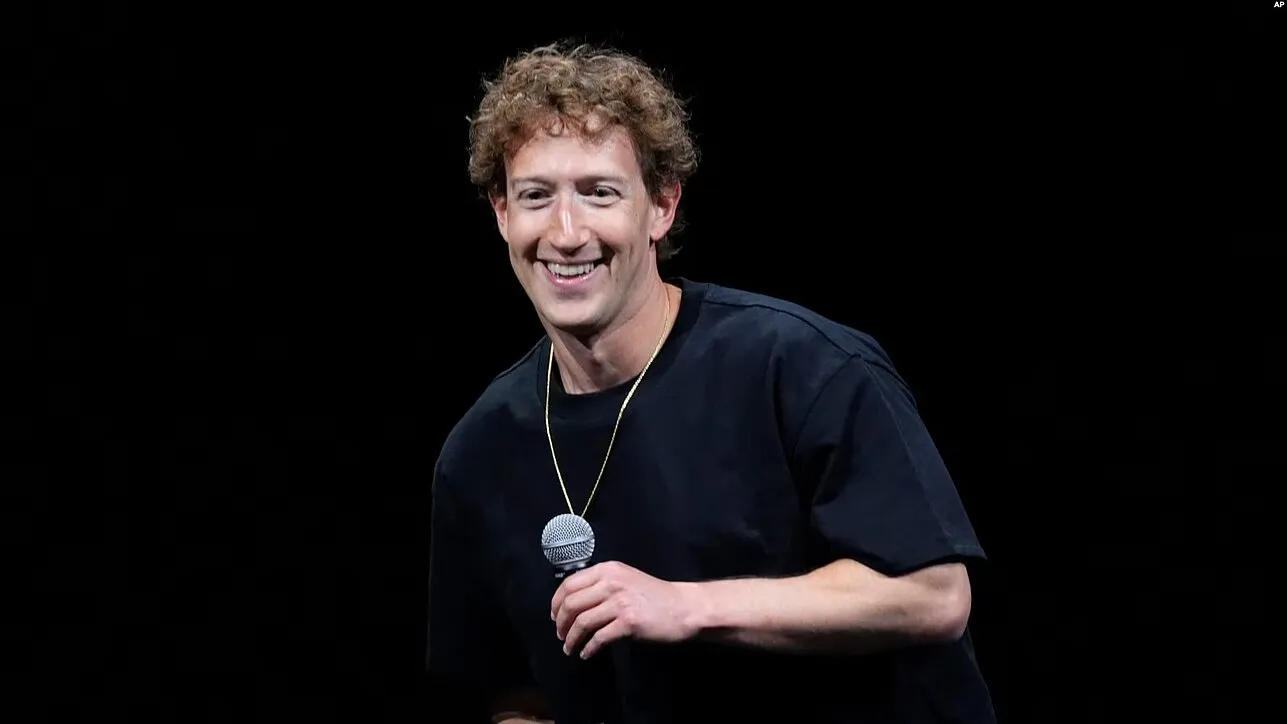
Meta did not publicly confirm these specific amounts, but it did not hide the fact that it was actively forming new teams to develop its own Superintelligence division. Later, the Reuters agency reported that the company did indeed poach several top researchers from OpenAI's Zurich office.
Engineers are more expensive than startups
A few years ago, large corporations bought promising companies for their technologies or finished products.
Now, deals are increasingly being made for a completely different reason — to acquire a specific team.
That is precisely why OpenAI acquired the company io, created by legendary Apple designer Jony Ive. Most experts view this deal not just as an investment in a future AI product, but as a way to get people who have already proven they can create world-class products.
Other tech giants use a similar strategy. Instead of spending years growing their own teams, they increasingly buy small companies along with their engineers, researchers, and designers.
In Silicon Valley, there is even a specific term for this — "acqui-hire." This is a situation where a company is bought not for its business model or profit, but almost exclusively for the people who work there.
From OpenAI to Anthropic: engineers no longer stay at one company
Another feature of the modern AI industry is that the most famous labs are no longer closed ecosystems.
For example, Anthropic was founded by former OpenAI employees led by Dario Amodei. They decided to create their own company that would place greater emphasis on the safety of artificial intelligence.
A similar story happened with one of the most famous OpenAI researchers, Ilya Sutskever. After leaving the company, he announced the creation of his own startup, Safe Superintelligence, which attracted huge attention from investors right from the start.
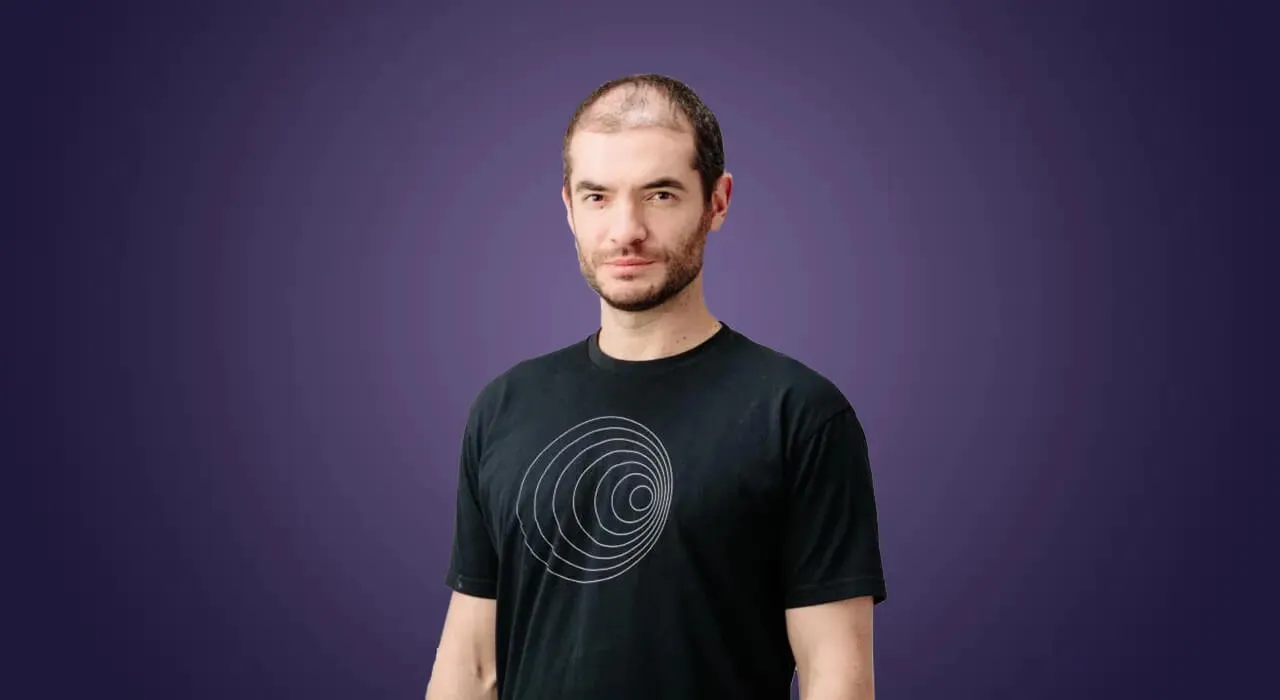
Elon Musk didn't stay on the sidelines either. By founding xAI, he also began to form a team of specialists who had previously worked at OpenAI, Google DeepMind, Tesla, and other leading tech companies.
All of this points to a single trend: today, the battle is no longer between the logos of large corporations. In reality, small groups of people are competing as they move from company to company, create new labs, launch startups, and effectively determine who will become the leader of the next stage of artificial intelligence development.
And that is why every new appointment, resignation, or lawsuit surrounding AI engineers today attracts no less attention than the presentation of a new smartphone or the next version of ChatGPT.
Why one AI engineer can be worth more than a multibillion-dollar startup
It might seem strange that tech corporations are willing to spend tens or sometimes hundreds of millions of dollars to recruit one specialist. However, in the field of artificial intelligence, this logic is becoming the norm.
The reason is simple: modern large language models are not created by thousands of engineers at once. Relatively small teams work on their architecture, learning algorithms, and optimization.
Within these teams, there are even fewer people who make key technical decisions. They are the ones who determine whether a new model will be faster, cheaper, safer, or smarter than the competition.
In other words, one leading researcher can influence the development of a product into which the company has invested tens of billions of dollars.
That is why the battle for such specialists increasingly resembles the transfer market in professional sports. Only, while a football club buys one striker, a tech company tries to get a person on whom its place in the global AI market for the next five or even ten years might depend.
The war is not just about salaries
At the same time, the money itself has long ceased to be the only argument.
Most top AI researchers already have financial independence. Therefore, companies increasingly compete not only on the size of compensation but also on the opportunity to work on the most ambitious projects, gain access to the most powerful computing resources, and influence the development of future products.
For example, training a modern large language model requires tens of thousands of graphics processors and huge data centers. Only a few companies in the world can afford such resources. That is why for many researchers, the deciding factor is not the size of the salary, but the opportunity to work where there is access to the most modern infrastructure.
Furthermore, large corporations increasingly offer top engineers not only base salaries but also company shares, long-term bonus programs, the freedom to form their own teams, and the opportunity to head new labs.
In fact, this is no longer about the classic hiring of an employee, but a battle for the future leaders of the tech industry.
Poaching an engineer is cheaper than falling behind competitors
At first glance, tens of millions of dollars for one specialist looks like an excessive expense. But large technology companies assess the situation differently.
If a competitor is the first to create a model that becomes the new market standard, the consequences can be measured not in millions, but in hundreds of billions of dollars in market capitalization.
This is exactly what happened after the rapid success of ChatGPT. Its launch forced virtually all major players to rethink their own AI strategies. Google accelerated the development of Gemini, Microsoft integrated even more closely with OpenAI, Meta sharply increased investments in its own Llama models, and Amazon and Apple also began to build up their own AI teams.
In fact, the entire industry has moved into a mode of constant racing, where every lag can cost a company not just profit, but its place among tech leaders.
The new Silicon Valley: competition for people instead of competition for products
Apple's lawsuit against OpenAI is unlikely to be the last such conflict.
On the contrary, it shows that the rules of the game in Silicon Valley have already changed. If companies previously hid their developments for years until the day of a new product launch, today the main intrigue is increasingly about personnel moves.
News that a leading researcher has left one lab and moved to another often causes no less resonance than the launch of a new smartphone or the next artificial intelligence model.

And this is quite natural. After all, it is these people who will tomorrow decide which AI will become the most popular, which device will replace the smartphone, and who will control the next generation of digital services.
In Silicon Valley, there is less and less talk about who will release the next smartphone or chatbot. Instead, more and more attention is being paid to who will work on these products.
That is why today a leading AI engineer has become one of the most valuable resources in the global economy. And as long as the competition between Apple, OpenAI, Meta, Google, Microsoft, Anthropic, and xAI continues to intensify, the "hunt for brains" is unlikely to end anytime soon.
Quite the opposite — we are just at the beginning of a new technological era in which the main weapon is no longer factories, patents, or even algorithms themselves, but the people capable of creating the technologies that will define our future.




