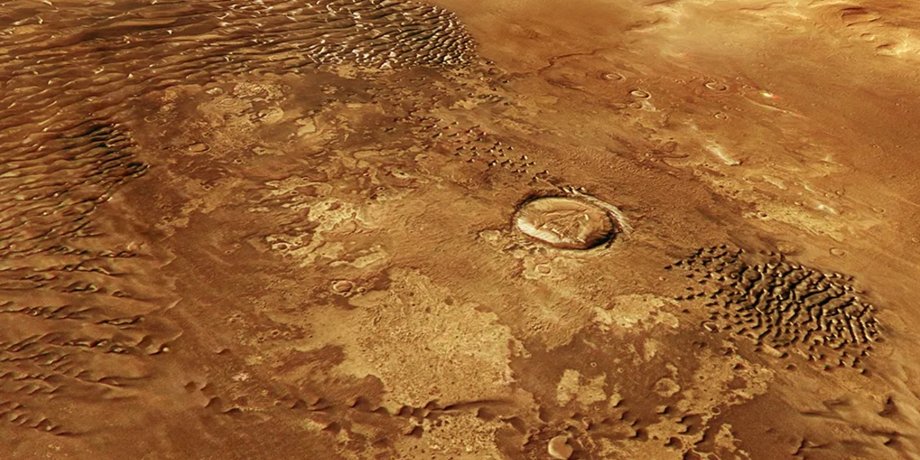
Mars Express captured clear images of 100-meter-high waves in a crater on Mars
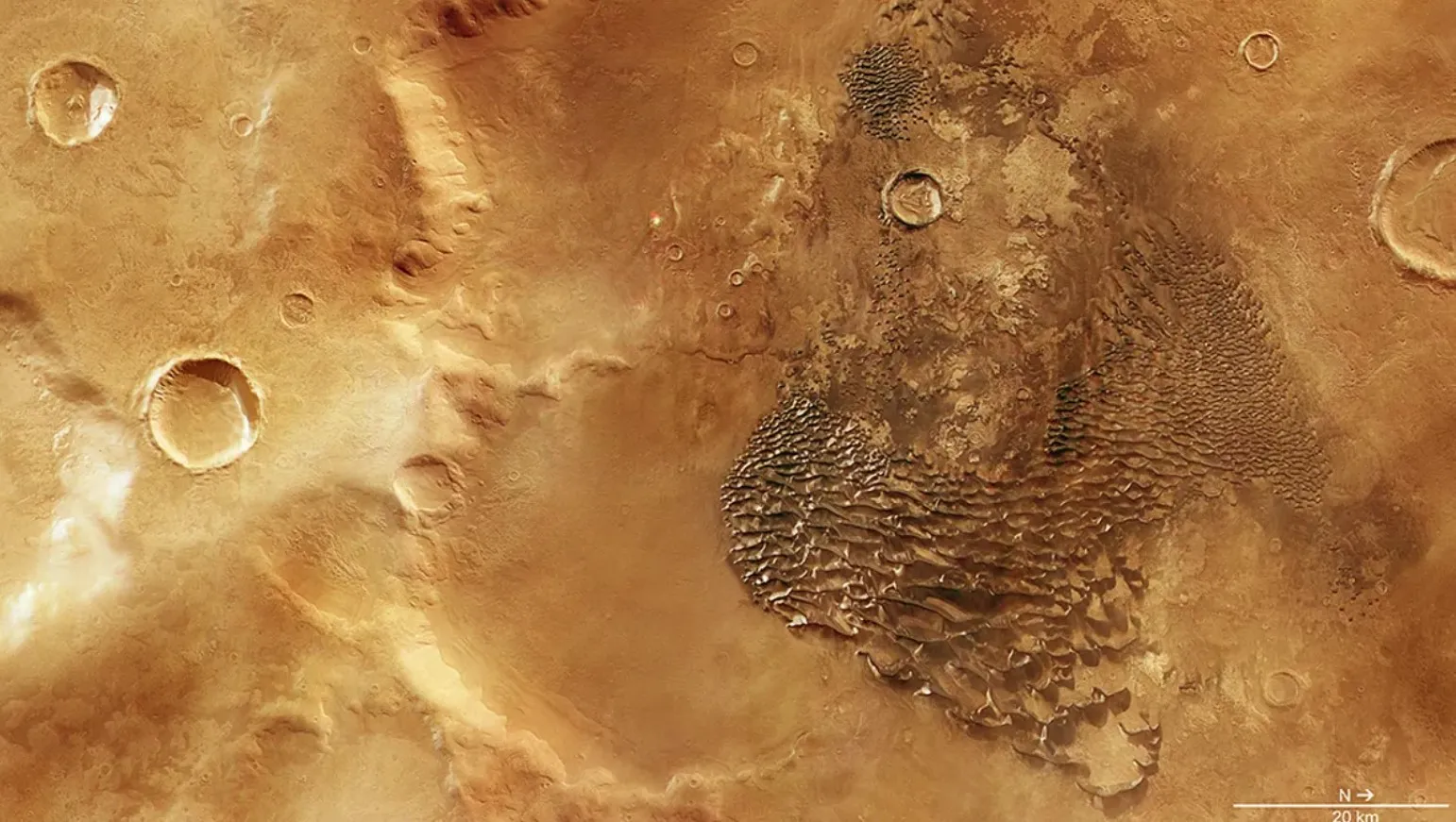
The European Space Agency’s (ESA) Mars Express orbiter has sent back new photographs of the Martian surface showing “metallic” waves inside the massive Kaiser Crater.
This crater, with a diameter of about 180 kilometers, is located in the southern hemisphere of the Red Planet, and its floor features ancient crescent-shaped sand dunes (barchans) formed by Martian winds.
The wave-like structures rise 100 meters above the surrounding terrain. Most of the crater floor is covered with dark, almost shiny waves that look as if they were carved out of metal. Scientists attribute this appearance to the fact that the sand dunes are covered with a layer of frost that strongly reflects sunlight. In addition, the spacecraft detected signs of ancient water activity in the area—light-colored clay rocks that formed in the presence of water in the distant past.
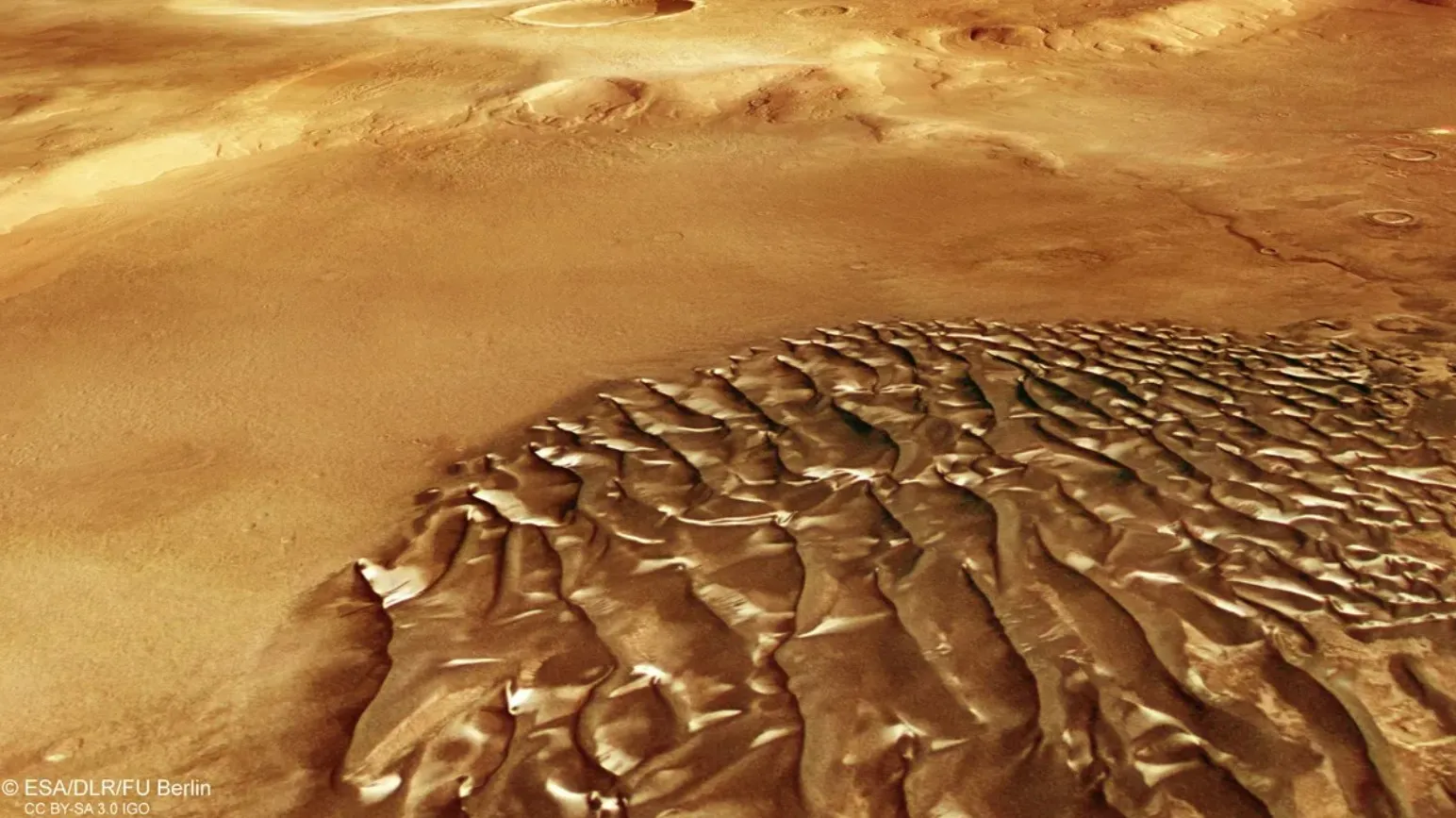
Source: IFLScience
Previously, scientists noted that our planet differs from others in the Solar System. And this applies not only to the gas giants but also to the rocky celestial bodies near us. For example, just like on Earth, solar eclipses occur on Mars.
And a team of scientists from the University of Warwick, in collaboration with the European Space Agency (ESA), the Georgia Institute of Technology, and the Microgravity Center in Germany, has achieved a breakthrough in the creation of light-driven energy, which could be the key to the future colonization of Mars.
By the end of the decade, NASA plans to establish a lunar outpost on Mars. This must be accomplished before humans begin exploring the planet.