
A new lunar mineral has been discovered in China that could revolutionize lighting technology
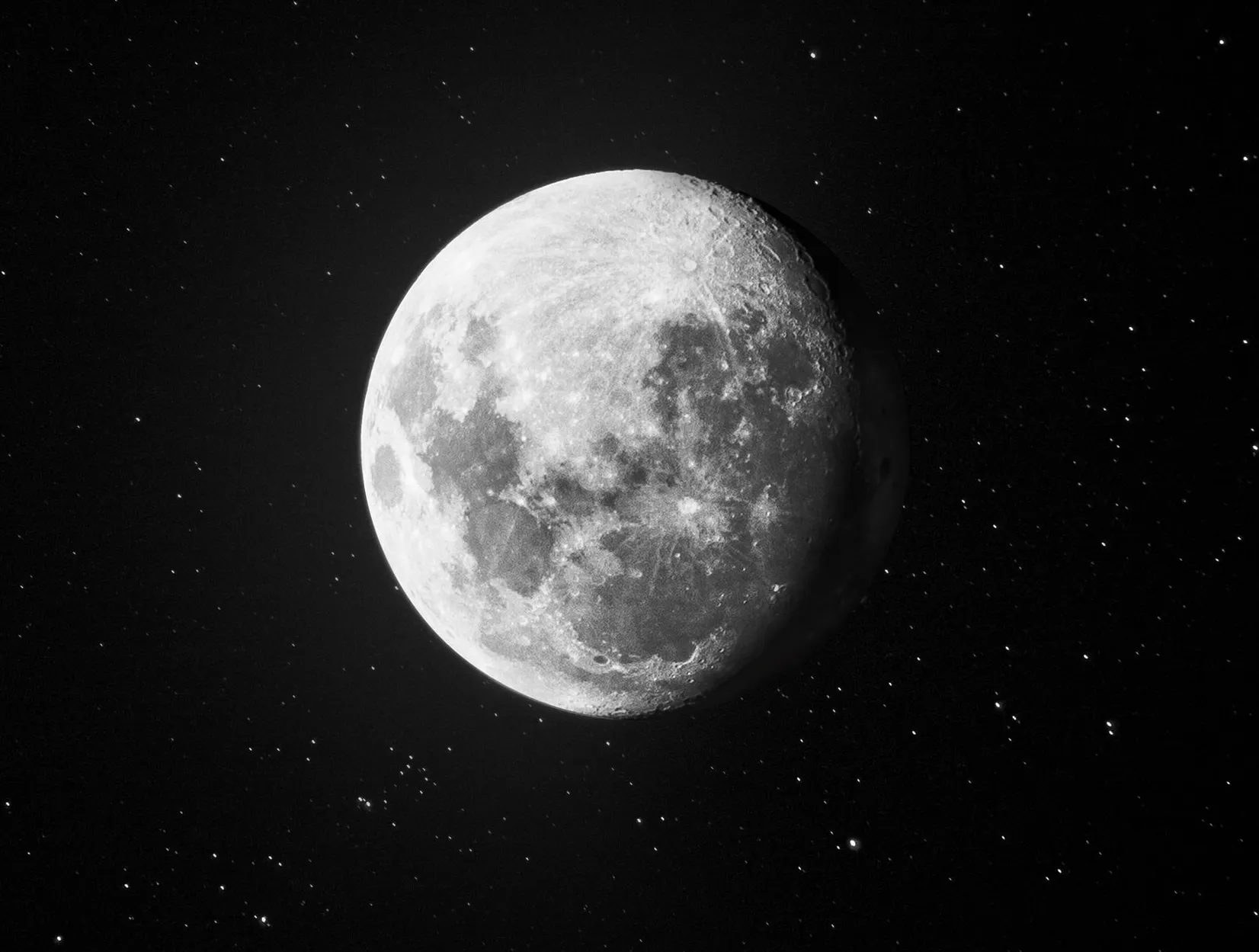
Chinese scientists have discovered a new lunar mineral—the 11th of its kind—while studying a meteorite.
This is reported by Interesting Engineering.
The new mineral has been named “cerium-magnesium chengeite.” Its particles range in size from 3 to 25 micrometers—smaller than the thickness of a human hair. The substance is transparent, brittle, and has a glass-like structure.
The mineral was isolated from the first lunar meteorite found in China—a spherical rock weighing 44 grams with a dark, melted crust.
Scientists note that the material is colorless and easily crumbles, yet despite its microscopic size, it may have practical applications.
Its key feature is bright fluorescence. This is precisely what could make the mineral useful for creating more efficient and brighter LED lamps. Fluorescent materials determine the brightness, color, and energy consumption of LEDs, so the new compound has the potential to improve these characteristics.
The research also provides a better understanding of the Moon’s geology, as each new mineral reveals the conditions under which it formed.
According to researcher Che Xiaochao, this mineral is unique because it formed under the influence of a combination of different temperatures, pressures, and chemical compositions.
He added that the discovery of such substances in space indicates the existence of conditions that did not exist on Earth. If similar materials are found on our planet, it could mean that similar processes occurred here in the past.
The discovery is linked to research from China’s lunar program. Specifically, in 2022, the Chang’e-5 mission already identified another new mineral—chengsite-(Y) phosphate—with an unusual composition.
Scientists emphasize that lunar materials often possess unique chemical and optical properties due to the extreme conditions of their formation.
In the future, such materials could find applications not only in lighting but also in electronics, energy, and manufacturing. However, these are still just hypotheses, as resource extraction in space remains complex and expensive.
Currently, researchers are working on replicating the mineral’s properties in a laboratory setting, which is a necessary step before its practical application.
We also reported that NASA launched Artemis II: the first crewed flight to the Moon in 50 years.
NASA congratulated the Artemis II crew on their successful return following their historic mission.
