
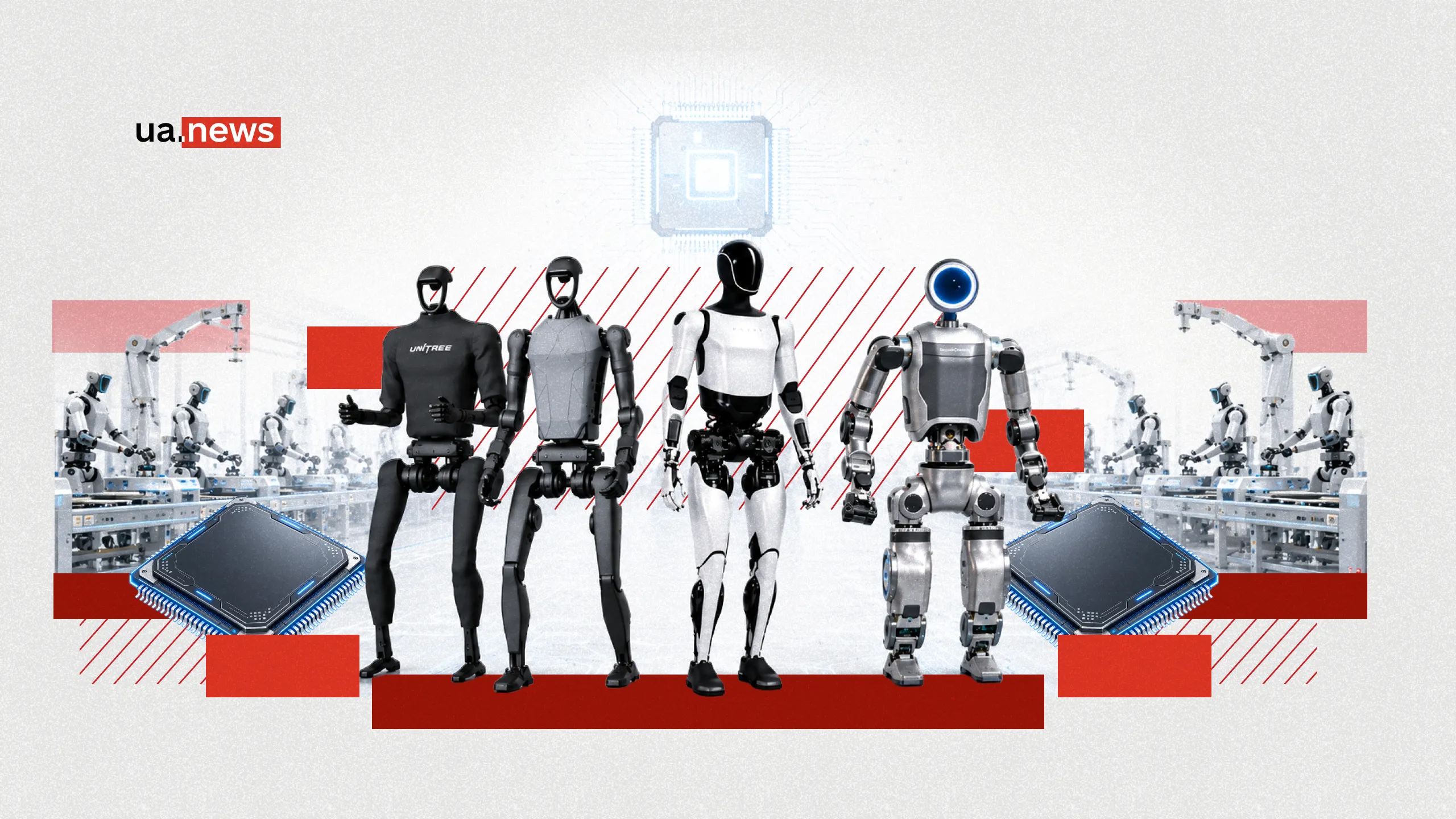
Unitree, Tesla, and Figure: Who Will Create the First Mass-Market Home Robot?
20 August 2026 14:15Just a few years ago, humanoid robots were still mostly the stars of technology exhibitions. They walked, carried boxes, danced, or performed tricks, but were rarely ready for real work. In 2026, humanoid robots began moving into factories, warehouses, logistics, and the service sector.
China has become one of the main hubs in this race.
On August 19, the Chinese robot manufacturer Unitree Robotics made its debut on the Shanghai Stock Exchange. At the start of trading, the company’s shares opened approximately 629% above the IPO price—at 1,100 yuan, compared to 150.8 yuan during the offering. By the end of the day, the growth had slowed somewhat, but Unitree’s market capitalization still stood at around $50 billion.
Meanwhile, the World Robot Conference 2026 is taking place in Beijing. More than 300 companies have brought over 2,000 robotic innovations and more than 150 new products. And from August 22–26, the Chinese capital will host the World Humanoid Robot Games—a sort of Olympics for humanoids.
UA.News explains why China has made robotics one of its technological priorities, who competes with Unitree, how much humanoids currently cost, where they can realistically replace humans, and when robotic assistants might appear in ordinary homes.
Unitree: How a Robot Manufacturer Became a $50 Billion Company
Unitree was founded in Hangzhou in 2016. The company first gained fame for its four-legged, dog-like robots and later began actively developing humanoid models.
Its robots regularly appear in viral videos on social media: they run, dance, perform somersaults, and demonstrate martial arts moves. Ahead of its IPO, the company even unveiled a high-speed robot that, according to its specifications, can reach a speed of 12.66 meters per second.
According to the company, as of July 2026, it had shipped approximately 18,000 bipedal robots of various models. Its investors include Tencent and Alibaba. Prior to its IPO, DeepSeek also invested in the company, contributing approximately $20.8 million.
This is a significant partnership. Modern robotics is increasingly moving toward what is known as “embodied AI”—“artificial intelligence with a physical body.”
While a language model can explain how to perform a specific task, a robot must physically see an object, understand how to approach it, grasp it correctly, and perform the action. In other words, artificial intelligence must move from the screen into the real world.
Investors clearly believe in this scenario. During its IPO, Unitree raised about $900 million, and demand from retail investors exceeded the supply available to them by more than 8,000 times.
At the same time, such a valuation may be a sign of overheating. Reuters Breakingviews calculated that at its peak on the first day, Unitree was valued at approximately 857 times its projected annual earnings. In other words, investors today are paying primarily for expectations of future market growth.
A Major Robot Show Is Taking Place in Beijing
Parallel to Unitree’s IPO, the World Robot Conference is taking place in Beijing. The scale of the exhibition clearly demonstrates how rapidly the Chinese industry is developing: over 300 companies, more than 2,000 exhibits, and over 150 new products.
Moreover, this year manufacturers are increasingly showcasing practical applications rather than spectacular stunts.
Robotera is demonstrating a parcel-sorting system. A company representative told Reuters that such robots can operate continuously for 900–1,000 hours and achieve approximately 85% of human efficiency in the relevant scenario.
DexForce is showcasing humanoids that pack cell phones into boxes. UBTech is showcasing robots capable of working in the fields of education and customer service.
This is where the industry’s main challenge lies. The question is no longer whether a robot can move gracefully, but whether it can consistently perform useful work more cheaply or more efficiently than a human.
Robot Olympics: Why Do They Need Sports?
The World Humanoid Robot Games—a large-scale international competition for humanoid robots that the organizers position as a testing ground for the entire industry—are scheduled to take place in Beijing on August 22–26. Last year, these games attracted attention because the robots ran, played soccer and table tennis, and performed various coordination tasks—all while regularly falling over, losing their balance, or colliding with one another.
In 2026, the organizers decided to make the program even more closely aligned with the practical applications of humanoids. According to Reuters, in addition to sports disciplines, the robots will undergo tests modeled on real-world industrial and domestic scenarios.
These include packaging goods, warehouse logistics, industrial assembly, material handling, working with tools, connecting cables, charging electric vehicles, as well as tasks in stores, offices, hotels, and households.
This is the main purpose of such competitions. For a humanoid robot, running a distance or kicking a ball isn’t just a spectacular stunt. These tasks test balance, reaction time, coordination, sensor performance, and the ability to make decisions on the fly. These same skills are then required for work in a factory or warehouse, where people are moving nearby, the arrangement of objects changes, and some operations cannot be programmed down to the centimeter in advance.
Practical tasks are even more complex. For example, to pack a product, a robot must correctly identify the shape and position of the object, calculate the appropriate gripping force, pick it up without damaging it, move it, and place it in the correct location. When connecting a cable, much greater precision is required: the machine must locate the connector, correctly orient the plug, and perform the operation without human assistance.
Such competitions are also important for the manufacturers themselves. They allow for comparing different platforms under identical conditions and identifying not only strengths but also weaknesses—ranging from insufficient battery life to computer vision errors or unstable movement. For companies, this is essentially a large open testing ground where technologies can be tested not in their own laboratories, but side by side with competitors.
That is precisely why the World Humanoid Robot Games are gradually evolving from an unusual “Robot Olympics” into a kind of litmus test of the industry’s readiness for mass adoption.
Why China Is Investing So Heavily in Humanoids
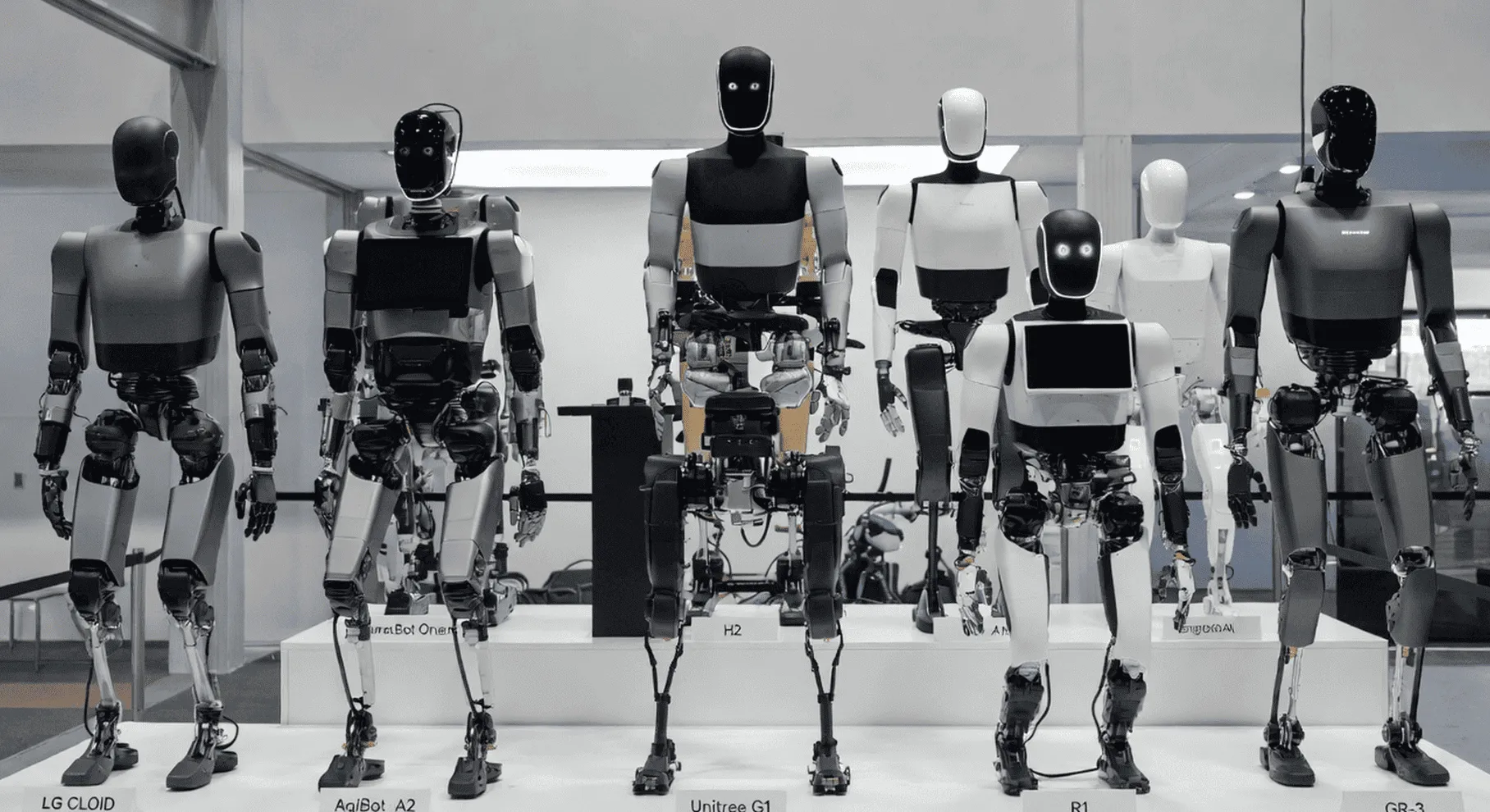
For Beijing, robotics is no longer just a promising sector. In China’s new five-year plan for 2026–2030, artificial intelligence and humanoid robots are included among the strategic technology priorities.
One reason is demographics. China’s population is aging, and the number of people of working age is gradually declining. For a country whose economy has relied on a massive manufacturing sector for decades, this is a long-term challenge. Robots can partially offset the shortage of workers in factories, warehouses, and logistics.
The second reason is technological competition with the U.S. China has already demonstrated that it can scale up new technologies for mass production—as was the case with solar panels, batteries, and electric vehicles. The logic is similar with humanoids: support dozens of manufacturers, create a large domestic market, localize components, and drive down prices through economies of scale.
Reuters estimated that since 2024, the Chinese government has allocated at least $20 billion to support the development of robotics. According to Smart Analytics Global, global shipments of humanoid robots nearly quadrupled in the first half of 2026—reaching approximately 19,100 units.
China has another advantage—component manufacturing
A humanoid robot requires electric motors, batteries, gearboxes, sensors, cameras, electronics, and actuators. China already mass-produces a significant portion of these components for electric vehicles, drones, and industrial equipment.
Bank of America Securities analyst Min Xun Li estimates the average cost of humanoid components at approximately $35,000. By 2030, if primarily Chinese parts are used, this cost could potentially drop to about $17,000.
Therefore, the key question in this race is not only who will create the smartest robot, but also who will be the first to learn how to mass-produce them cheaply in the tens and hundreds of thousands.
How much does a humanoid robot cost today?
Prices have already begun to drop significantly. On Unitree’s official website, the compact R1 is priced starting at $4,900, the G1 at $13,500, the H2 at approximately $29,900, and the H2 Plus at around $100,000.
However, the price of the robot itself does not mean that a company can simply buy it and replace an employee the very next day. Software, configuration, maintenance, security systems, and integration are required.
Guotai Securities has calculated that to break even within two years, the robot, including maintenance, would need to cost about $23,000 when compared to an employee earning $12,000 a year.
In other words, the industry still needs to significantly reduce costs before robots begin to replace human labor on a massive scale.
Tesla, Figure, and Boston Dynamics: Who’s Competing with Unitree
China isn’t the only player in the race.
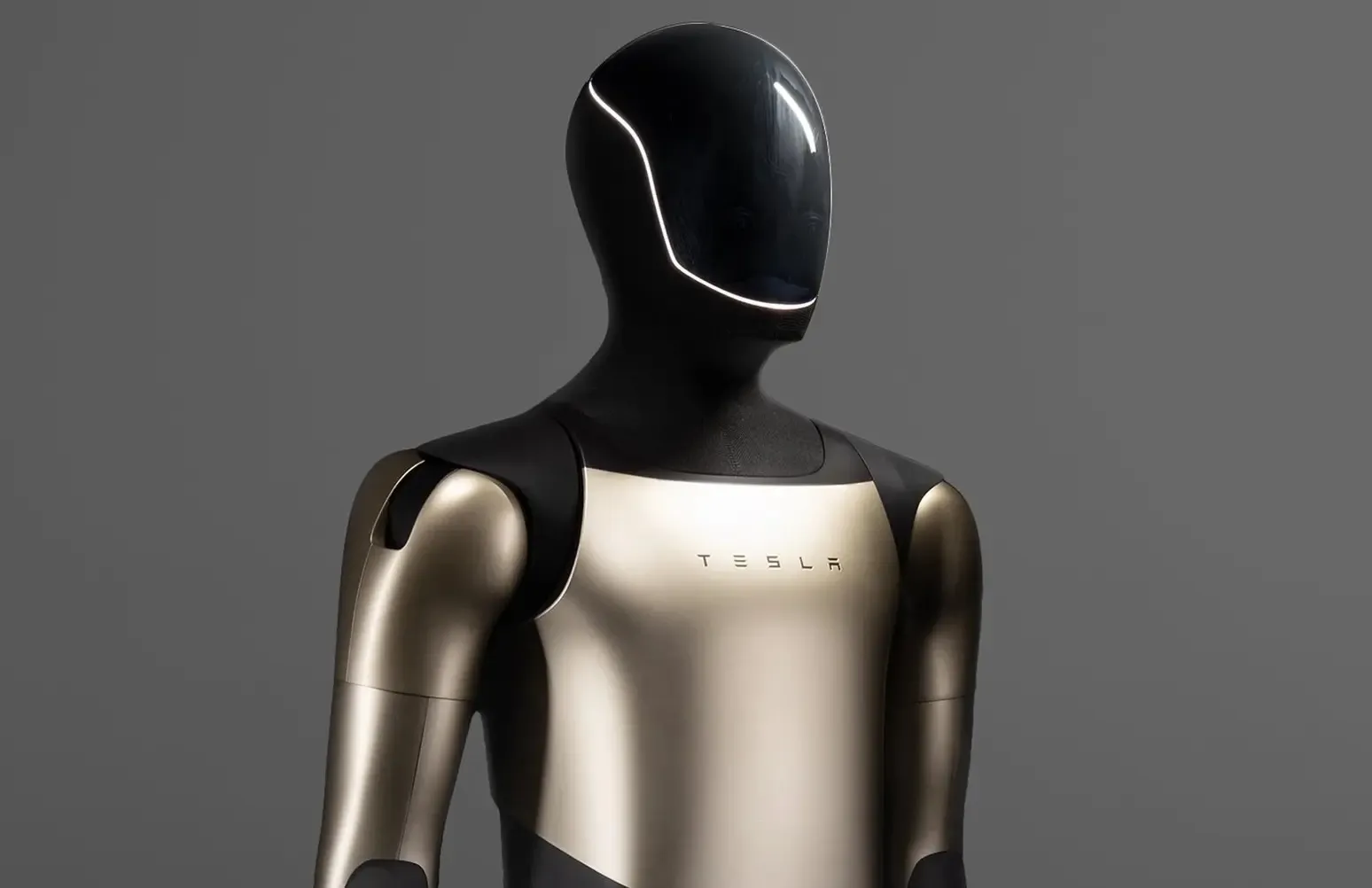
One of the best-known American projects is Tesla Optimus. Tesla positions it as a versatile, autonomous bipedal robot designed for dangerous, repetitive, and monotonous tasks.
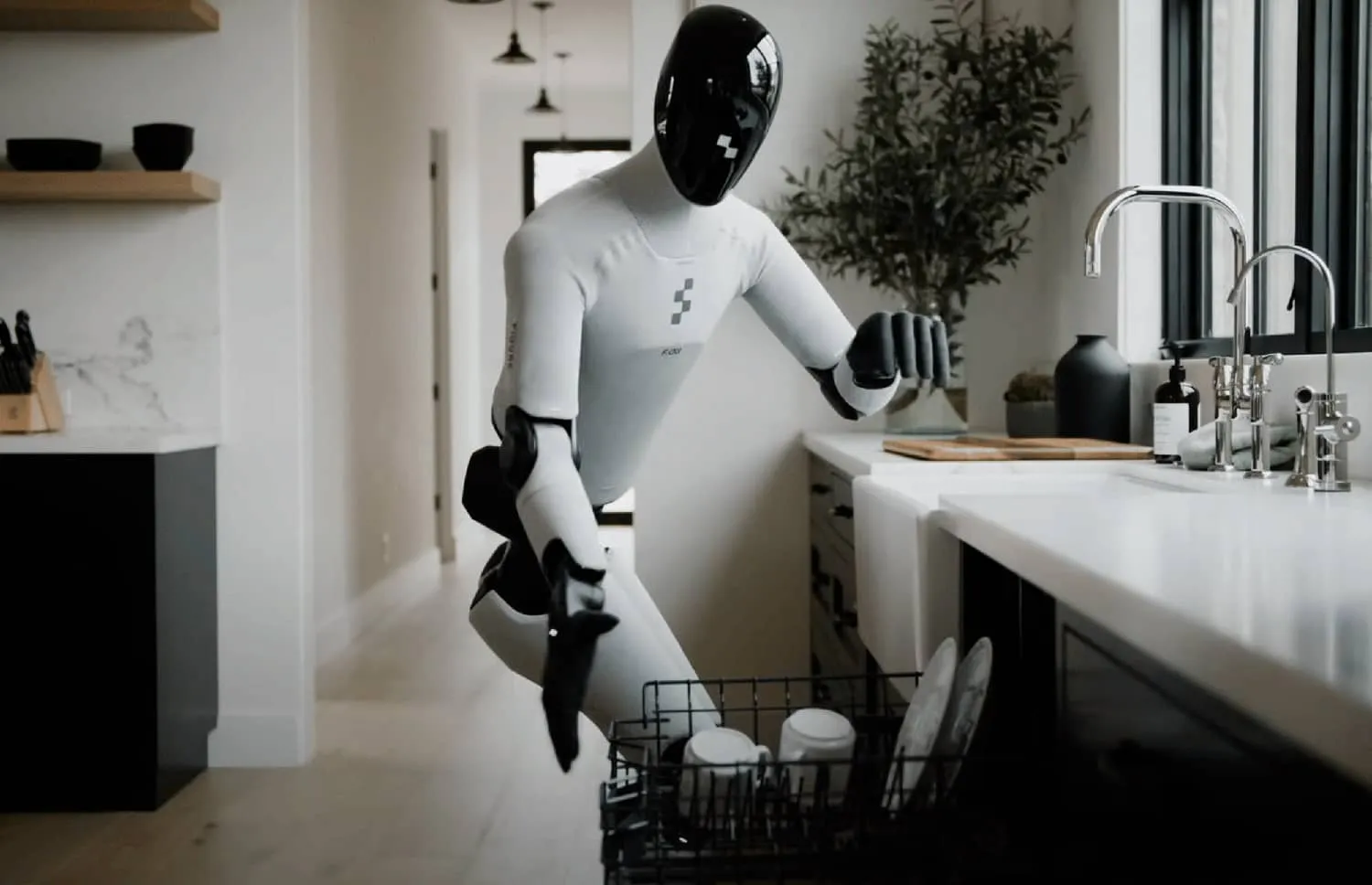
Another major player is Figure AI. Its Figure 03 robot is already being tested in industrial settings. The company demonstrated it at a BMW plant, where the humanoid handled parts and performed logistics tasks. According to the company, the previous model, Figure 02, worked at BMW for over 1,250 hours and participated in the production of more than 30,000 X3 vehicles.
There is also Agility Robotics with its Digit robot. The company reports that its machines are used in logistics and manufacturing at clients such as GXO and Toyota.
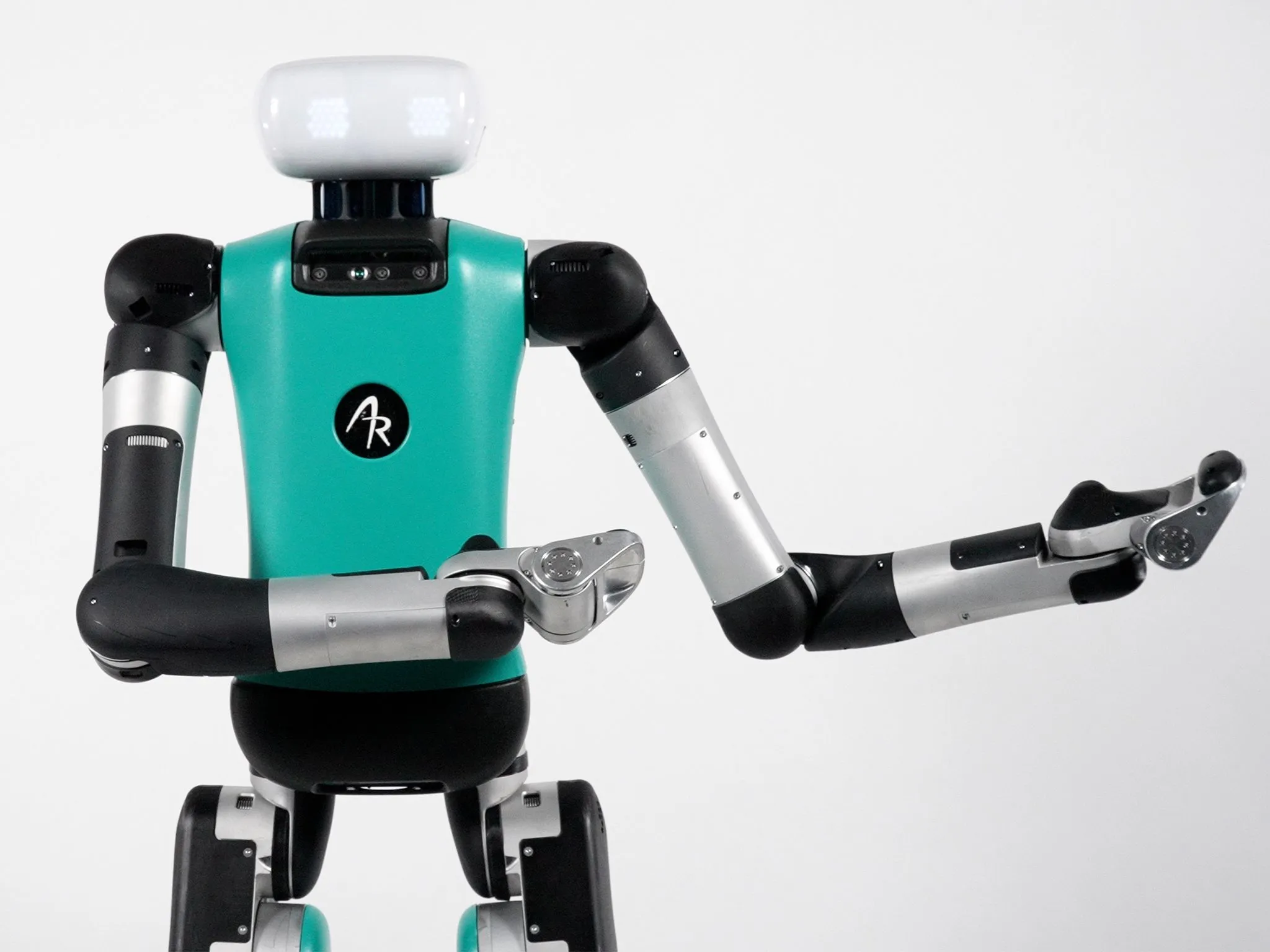
Boston Dynamics, owned by Hyundai, is also preparing for the commercial deployment of Atlas. Hyundai plans to use the humanoid robot at its Georgia plant starting in 2028.
Added to this are the Chinese companies UBTech, AgiBot, Robotera, AiMOGA, and dozens of others.
Why even make a robot that looks like a human?
At first glance, a humanoid form doesn’t seem very efficient. In a factory, a stationary manipulator often works faster. In a warehouse, it’s better to transport boxes using wheeled platforms. It’s more convenient to clean the floor with a specialized robot.
But almost the entire world around us is already built to accommodate the human body. Stairs, doors, handles, elevators, shelves, tools, workbenches—everything is designed for a person with two arms and two legs.
If a robot has roughly the same proportions, a company theoretically wouldn’t need to rebuild its entire infrastructure. A humanoid robot could take a person’s place at work and use the same tools.
That is why manufacturing, warehouses, and logistics are becoming the first major markets for such machines.
Where Robots Can Replace Humans First
The most promising tasks are those that are repetitive, physical, and performed in a controlled environment. These include sorting goods, moving boxes, feeding parts onto a conveyor belt, packing, loading, and simple manufacturing operations.
Next in line could be hotels, stores, service centers, and some public services.
China’s AiMOGA, the robotics division of Chery, has already delivered more than 3,000 robots to over 60 countries and regions. The company also reports that humanoid robots are being used in Chinese cities to assist with navigation, traffic management, and public information services.
Analyst Georg Stiler estimates that approximately 50–70% of humanoid robots produced in 2026 could be used in so-called “data factories.”
There, the robots do not replace humans but rather collect data to train future models. A human remotely controls the humanoid, for example, by moving objects. At that moment, the machine records joint positions, arm movements, camera footage, grip strength, and other parameters.
After thousands of repetitions, the AI model attempts to perform the same task on its own. This is precisely why the partnership between Unitree and DeepSeek is so intriguing: one company has the mechanical engineering and physical data, while the other has the expertise in building large-scale AI models.
When might humanoids appear in every home?
There is no exact date yet.
Zhang Guibin, CEO of AiMOGA Robotics, believes that the humanoid industry may need about ten years before the technology matures enough for truly rapid mass adoption.
This doesn’t mean there won’t be home robots by the mid-2030s. The first models will appear sooner, but for a long time they will likely remain expensive and have a limited set of functions.
For a robot to become as commonplace as a washing machine or a robot vacuum, it must simultaneously become cheaper, safer, and significantly smarter.
That is precisely why China is trying to do with humanoid robotics what it has already done with electric vehicles: develop dozens of manufacturers, create a large domestic market, localize components, scale up production, and drive prices down as much as possible.
But the risk is also obvious. When hundreds of companies and billions of dollars pour into a promising industry at once, a technological revolution can easily turn into an investment bubble.
Currently, most humanoid robots are still learning to do what humans do automatically. A significant portion of these machines is used for data collection, and industrial robots are often still too expensive to compete with humans on a mass scale.
However, if manufacturers manage to simultaneously solve the three main problems—intelligence, reliability, and price—in ten years the question may no longer be “Why does a person need a home robot?” but rather “Why don’t you have one yet?”




