
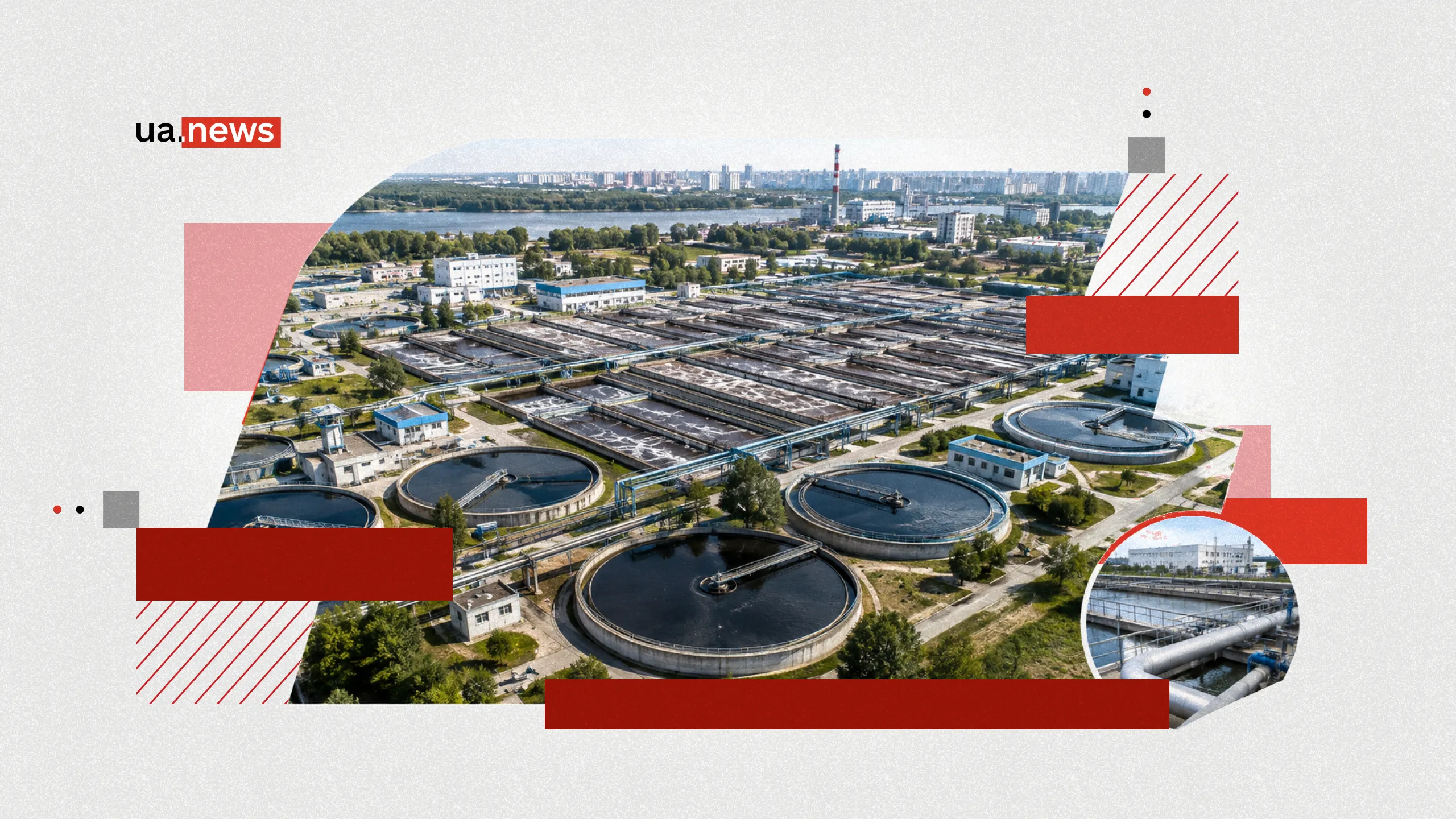
Recently, reports that Russian troops allegedly struck the Bortnytska aeration station during yet another rocket attack on Kyiv caused a stir in the media. This is the capital’s only facility that provides centralized wastewater collection and treatment for the entire volume of wastewater generated by the metropolis of 3.5 million people. Subsequently, the General Staff denied reports of a direct hit.
However, the very fact that such reports emerged—coupled with previous massive and regular attacks on critical infrastructure—compels us to treat this potential threat with the utmost seriousness. This raises a logical question: What exactly is this facility, why is its normal operation a matter of national security, and could an enemy destroy it? UA.News, together with experts, investigated the issue.
A Concrete Monster: Why the Plant Cannot Be Destroyed by a Direct Strike
The Bortnytsia Aeration Station (BAS) is not just a wastewater treatment plant in the usual, everyday sense. It is a colossal underground and aboveground mechanism, a massive complex—the Ukrainian capital’s “lungs,” so to speak—without which the vital functions of this vast city would cease, not metaphorically, but quite literally.
The history of the BSA dates back to the 1960s, when the old sewer system began to literally fall apart due to Kyiv’s rapid expansion. The construction of this giant was a necessary step, and it was specifically located on the left bank of the Dnipro in Bortnychi to take advantage of the natural terrain for gravity-fed wastewater transport. From the moment it was commissioned until today, it has been the only facility that receives and filters the entire volume of Kyiv’s sewage. There are no backup facilities in the capital.
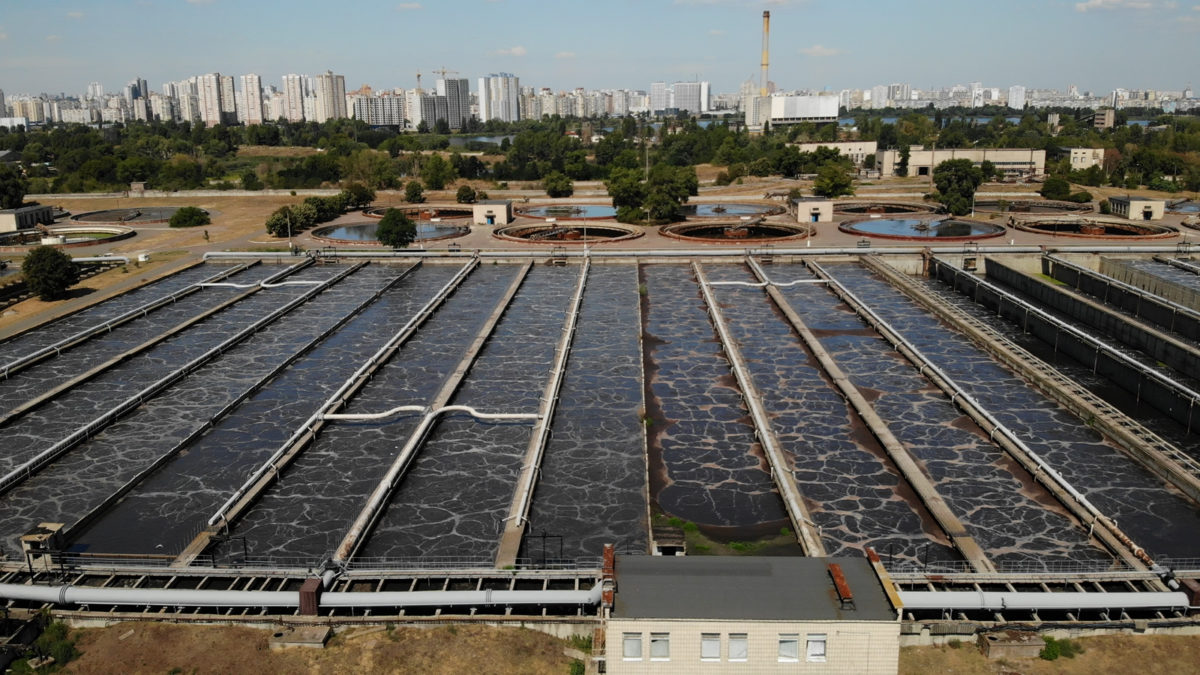
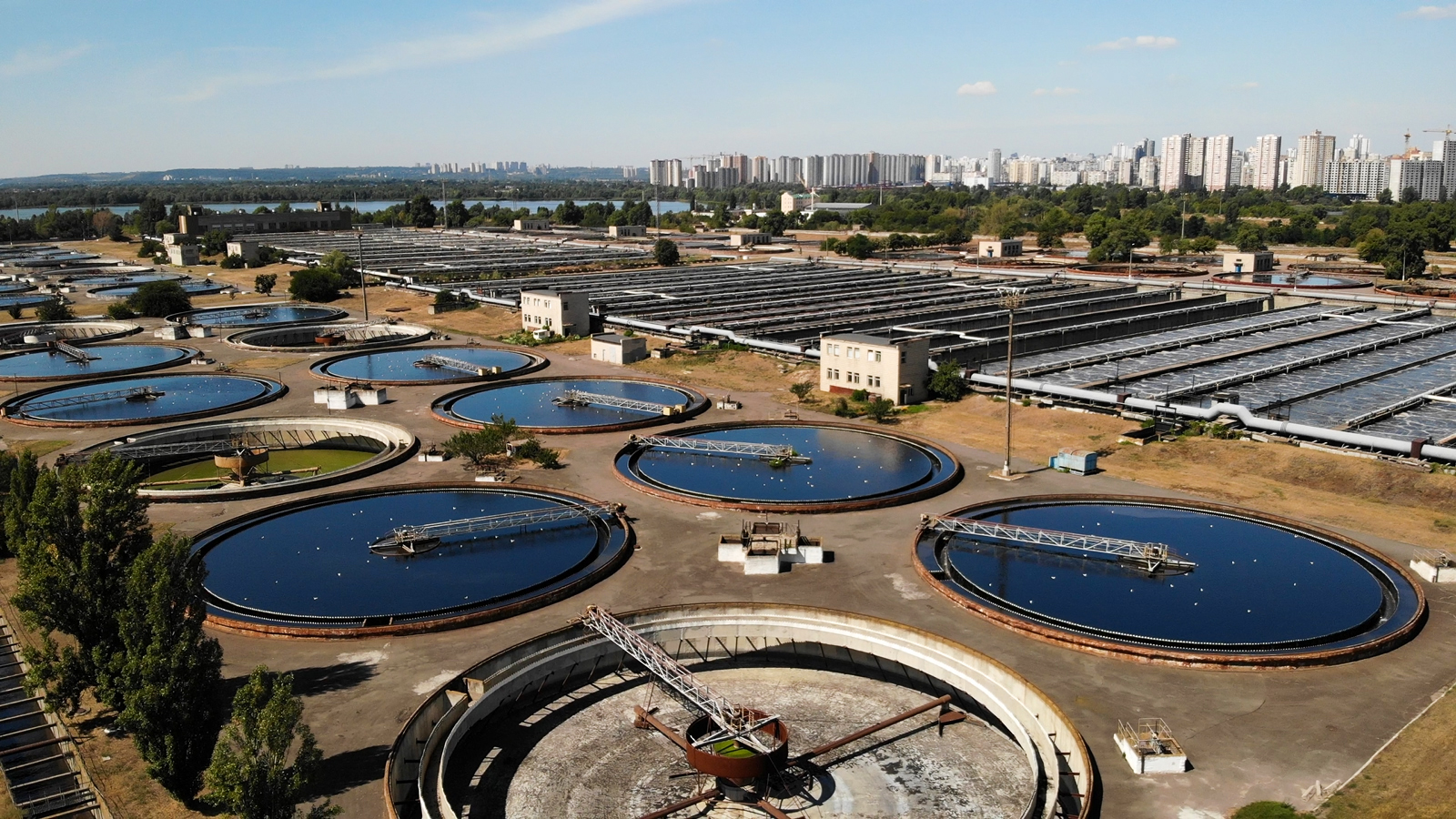
The Bortnychi Aeration Plant is neither a lightweight hangar-style structure nor a brick building. It is a veritable labyrinth of reinforced concrete, where the main operational processes take place in massive monolithic tanks—aeration tanks, settling tanks, and methane tanks. A significant portion of the engineering components is buried underground or constructed from such a thick layer of reinforced concrete that their mechanical destruction would require not just rockets, but rather specialized, high-powered concrete-piercing munitions, deployed with surgical precision against key structural components. To simply “destroy” this fortress, reducing it to a pile of rubble—as is often the case with industrial buildings—an aggressor would need a massive quantity of high-precision weapons.
However, the real danger lies deeper—not in the walls, but in the processes they protect.

What
Is the Main Vulnerability of the Bortnytsia Aeration Station?
The critical importance of the Bortnytsia Aeration Station extends far beyond mere municipal services. This isn’t a matter of inconvenience when water doesn’t flow from the tap. It’s a matter of the city’s survival as a biological organism, as well as the environmental safety of no less than half (!) of Ukraine.
The plant’s main vulnerability lies in its electricity supply and microorganisms. Wastewater treatment facilities are not merely mechanical filters. The “heart” of the plant is what’s known as activated sludge: a complex ecosystem of bacteria and protozoa that consume organic pollutants. This process requires a continuous supply of oxygen to the effluent via powerful compressor stations. That is precisely why the most formidable weapon against the BSA is not Russian missiles, but a simple power outage. If the plant is left without power for even a few days, the air supply will stop. Aerobic bacteria will die from lack of oxygen, and the activated sludge will turn into dead, rotting biomass. The biological treatment process will simply grind to a halt. Recovery from such an event isn’t simply a matter of flipping a switch, but rather long weeks of painstaking work to build up new biomass, during which the plant will remain completely inoperable. What will happen to the capital is a rhetorical question.
If, however, we imagine that Russia succeeds in its attack on the plant’s energy infrastructure, the chain of events will be catastrophic on three levels at once. The first level is a local collapse in Kyiv itself. The capital’s sewer system operates largely on the principle of gravity flow. As soon as the BSA stops accepting wastewater, water will begin to accumulate in the pipes, creating enormous pressure in the sewers. Unfortunately, you can’t cheat physics: sewage will flow back. Massive amounts of human waste will begin spilling out of sewer manholes onto the streets—but the main “impact” will be felt in the basements of residential buildings, on the lower floors of hospitals, maternity wards, schools, and so on. Kyiv will literally begin to drown in its own waste, making a safe water supply impossible due to the mixing of water with sewage.
The second stage will turn a local disaster into a region-wide one. Unable to reach treatment plants, untreated sewage will begin to be discharged directly into the Dnipro River. The scale of this discharge is hard to imagine: it will be a river of waste from a metropolis of 3.5 million people. The Dnipro is the main waterway and source of water supply for Cherkasy, Kremenchuk, Dnipro, Zaporizhzhia, Kherson, and a significant part of the Donetsk and Kharkiv regions via a system of canals. The wastewater treatment facilities in these cities are not technologically designed to handle water with such extremely high levels of organic and bacterial contamination. A shutdown of the BSA would instantly turn the Dnipro into a sewage ditch, directly threatening the safety of millions of people downstream.
The third level is epidemiological, and it is the most insidious. A massive discharge of untreated sewage will inevitably cause an outbreak of intestinal infections. These include hepatitis A, dysentery, typhoid fever, cholera, and salmonellosis. Such an outbreak would be a nightmare for the healthcare system, which would most likely be unable to cope with it.
A separate environmental threat that is often overlooked is the massive sludge fields surrounding the plant. For decades, sludge separated from wastewater has been dumped there. It is a mixture of heavy metals, chemicals, drug residues, and other toxic filth accumulated over years of operation. These fields are, in and of themselves, an environmental “time bomb.” A direct missile strike on this area, the destruction of the dams, or the disturbance of the sludge layers would release such high concentrations of toxins into the atmosphere and groundwater that no environmental scientist would dare to estimate the consequences. This is a contamination zone with completely unpredictable patterns of toxin spread, which could render the surrounding areas simply uninhabitable.
Expert
Opinions
Oleg Popenko, chairman of the Union of Utility Consumers and an expert in housing, utilities, and energy, believes that the issue of protecting the Bortnytsia aeration station is complex. We have no idea how well it’s actually protected, since it’s a restricted-access facility—a massive piece of critical infrastructure—so there’s no access to it.
“But whether the Russians can destroy it with missiles—that’s an interesting question. To understand the scale: the Bortnytsia Aeration Station covers 300 hectares. Of those, 280 hectares are sludge fields. The rest consists of basins, sewage pumping stations, substations, and so on. It’s a massive facility comprising a complex of various buildings of different types and designs. Destroying it just like that is physically extremely difficult, because, as I said, there are a huge number of structures there. To destroy all of this, the enemy would have to methodically strike it for months on end, with absolutely no response from Ukrainian air defense. It sounds far-fetched. But partially disabling the BSA—that is entirely possible.
What makes this significant? The fact that the station serves not only Kyiv but also many surrounding cities. Whether the Russians can cut off the station’s power is an open question. The Kyiv City State Administration has allocated 500 million hryvnias for backup power. I don’t know what portion of those funds will go toward the BSA—that’s a secret. But the station could indeed be partially left without power as a result of strikes. Let me emphasize: partially. Completely cutting off its power, again, is extremely difficult due to the backup power supply. The plant will be able to operate on generators for some time. But in the event of a complete blackout—after 3–5 days, the city of Kyiv will come to a complete standstill. For obvious reasons, it would be physically impossible to live in the city without a sewage system. But there’s no need to panic: the Bortnytsia Aeration Station is the kind of facility that’s very difficult to destroy or completely put out of commission,” Oleg Popenko is convinced.
Political scientist and director of the “Third Sector” Center, Andriy Zolotaryov, notes: The Bortnytska Aeration Plant is indeed a vulnerable point in Kyiv’s public utilities and residential infrastructure. It serves not only Kyiv but also the capital’s satellite cities. In fact, it serves millions of people, so its destruction or damage could lead to a large-scale humanitarian disaster, the expert emphasizes.
“Until recently, there were virtually no attempts to target the Bortnytsia Aeration Station. However, we are now witnessing a serious escalation of the conflict, and the red lines that (perhaps) existed regarding certain types of civilian infrastructure are being eroded step by step. Therefore, the likelihood of such a development is quite high. That is precisely why we must be prepared for this scenario; it is essential to have a three-day supply of technical and drinking water at home. Because a missile strike or a “suicide drone” hitting the pumping equipment at the Bortnytsia Aeration Station could lead to very serious problems. We need to consider providing air defense coverage for this facility. This issue, of course, falls primarily to our military—but Kyiv’s city authorities must also consider how to protect such a vital facility. The vulnerability of the capital and its satellite cities lies in the fact that the Bortnytsia Aeration Station effectively holds a monopoly. And that is a point of vulnerability. When the last ‘red lines’ are crossed, the enemy is tempted to strike such a point,” concluded Andriy Zolotaryov.

In
summary, the Bortnytsia Aeration Plant is not just a large municipal facility on the outskirts of Kyiv. It is a critical point for all of central Ukraine and just as much a matter of national security as bridges or nuclear power plants. Indeed, its concrete structures are extremely difficult to completely destroy using conventional weapons. It will not explode or shatter into pieces upon impact. However, we can expect Russia to make targeted attempts to disrupt its operations by any means necessary.
The main threat is not total destruction, but the destruction of the transformer substations, compressor rooms, and control systems that power the facility. Therefore, protecting the BSA must be a priority for authorities today, both at the local and national levels. This primarily involves diversifying power sources, protecting substations around Kyiv, creating mobile power generation reserves, and establishing clear protocols for the emergency restoration of the biological wastewater treatment system in the event of a crisis. Errors or underestimation of the situation must be ruled out from the outset, because what is at stake is the lives and health of millions of people.




