
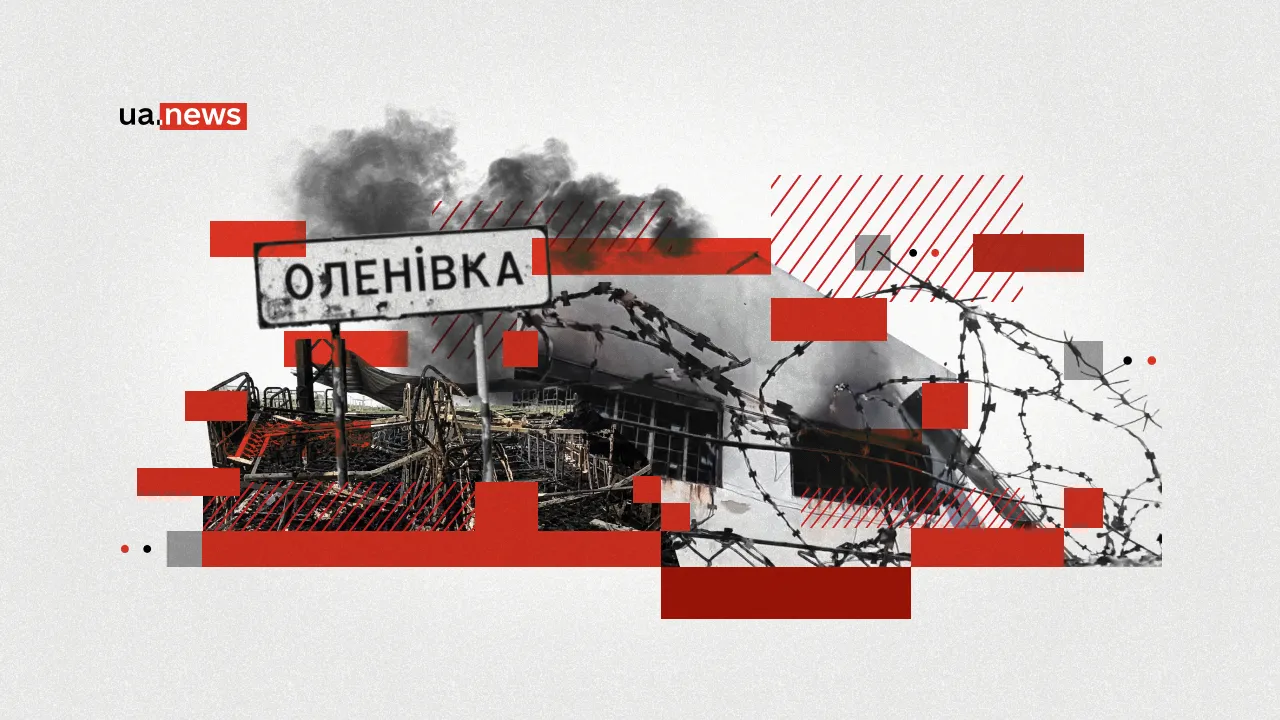
Today, Tuesday, July 28, marks exactly four years since that night when the world was shaken by the news of the mass deaths of Ukrainian prisoners of war at “Correctional Colony No. 120” in occupied Olenivka. This date is forever etched in black in the history of the Russian-Ukrainian war.
On the night of July 29, 2022, the lives of at least 53 defenders of Mariupol were cut short in a barracks at the filtration camp. Between 73 and 130+ fighters sustained injuries of varying severity. The exact number of victims remains unknown to this day, as international experts have never been granted access to the site of the tragedy.
Four years have passed, yet the veil of secrecy surrounding this crime remains nearly impenetrable. The theories put forward from the very beginning sometimes contradict one another, and the world has yet to see a full, independent, and transparent investigation.
How is it that the defenders of Azovstal, who survived the hell of the battles in Mariupol, died behind enemy lines while under the enemy’s complete control as prisoners of war—who were supposed to be protected by the Geneva Conventions? What were the circumstances of the tragedy, and has there been any investigation into it at all? Read more in this UA.News article.
The Road to the “Death Barracks”
To fully grasp the horror of the situation, it’s worth taking a brief look back at the past. Olenivka is a small village in the Donetsk region, in the Volnovakha district, which fell under the control of pro-Russian separatists back in 2014. It was there, on the grounds of a former correctional facility, that the occupying administration, with the support of the Russian Federation, set up a filtration camp.
After the full-scale invasion began in 2022, this facility became one of the main centers for holding prisoners of war who had been taken from the already-captured city of Mariupol. In May of that year, after months of defending the city, Ukrainian servicemen—including fighters from the Azov Regiment—withdrew from Azovstal in accordance with orders from the high command. They were promised their lives and a subsequent prisoner exchange, but the reality turned out to be far worse. Instead of the expected exchange, hundreds of defenders found themselves in Olenivka.
The conditions of detention there were extremely harsh—though to say that is an understatement. According to the testimonies of the few who were released during subsequent prisoner exchanges, as well as data from international human rights organizations, the prisoners were systematically subjected to torture. In particular, they were beaten (including with electric shocks), starved, subjected to all manner of humiliation, and so on. The occupiers tried to break the spirit of the Ukrainian defenders, extract confessions from them regarding some obscure “crimes,” and use them for their own propaganda purposes. It was precisely this atmosphere of impunity and brutality that set the stage for the events that unfolded on the night of July 29.

The
Night of the Tragedy: How It Happened
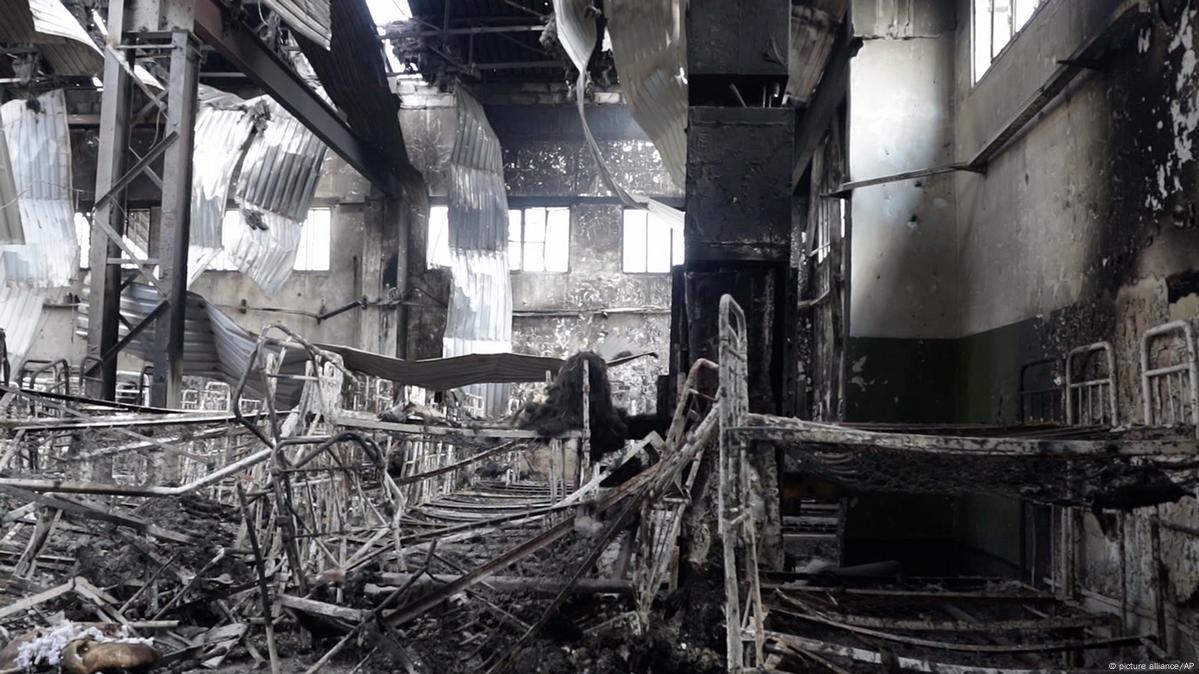
The tragedy itself occurred either late in the evening of July 28 or in the early hours of the morning on July 29, 2022. In one of the barracks in the colony’s industrial zone, where mainly “Azov” fighters were being held, powerful explosions rang out, causing a massive fire and leading to the collapse of the structures.
This very moment is the key sticking point in the entire story. The official positions of Russia and the “DPR” were announced immediately, almost simultaneously. The Kremlin claimed that Ukrainian troops allegedly deliberately struck the prison camp with a HIMARS multiple launch rocket system to eliminate prisoners who “had begun testifying against the Kyiv regime.” This version was intended for domestic propaganda from the very beginning, but it does not stand up to even the slightest scrutiny.
First, no debris from a HIMARS rocket was found at the scene, and satellite images released later showed that the damage was consistent with an internal explosion rather than an external strike. The building’s walls did not have any characteristic bullet holes; instead, the roof was blown off by a blast wave from within. Second, Ukrainian and international experts cited compelling evidence of the use of a thermobaric charge or planted explosives that detonated inside the barracks. The Ukrainian side rejects the accusations, calling the tragedy a deliberate terrorist attack carried out by the Russians (although it would be more accurate to call it a war crime).
The prevailing view among most experts is that the prisoners were deliberately killed by the occupying forces themselves. There were several motives here, and they sort of built upon one another.
First and foremost, there was the prisoners’ appalling condition. Due to repeated torture and a lack of medical care, many of them quite possibly would not have survived long enough to be included in a potential prisoner exchange. A second reason cited is the attempt to conceal evidence of widespread torture, which had become systematic. The bodies of the dead, with burned limbs and injuries incompatible with life—which were shown in propaganda footage—eloquently testified to the horrors taking place in the camp. By blowing up the barracks, the occupiers were literally trying to cover their tracks.
However, one cannot rule out a purely terrorist motive—namely, the desire to demoralize Ukrainian society and create yet another pretext to accuse Ukraine of “crimes against its own people.” It is very telling that the Russian side has done everything in its power to block—and continues to block—access by international missions (including the Red Cross) to the site of the tragedy. The Russians also quickly cleared away the rubble, making it impossible to conduct independent forensic examinations “while the evidence was still fresh.”
An
Investigation Without Access to the Truth
At this point—four years after the tragedy—we still do not have a final legal verdict. Ukraine immediately classified the incident as a terrorist attack and a mass murder. The Office of the Prosecutor General entered the case into the Unified Register of Pre-trial Investigations under Article 438 of the Criminal Code of Ukraine (violation of the laws and customs of war). Ukrainian investigators interviewed dozens of witnesses released from captivity, who provided detailed testimony about the conditions of their detention and the circumstances of the explosion. Numerous expert analyses were conducted, including based on open-source materials and satellite imagery.
The data obtained clearly indicate that the attack was staged to appear as if it came from outside, while an explosive device was actually used inside. Most likely, the Russians first blew up the barracks from the inside and then, to simulate shelling, fired artillery rounds at the ruins.
However, the key problem remains the same: the colony’s territory is still under occupation. Without physical access to the crime scene and without the ability to recover any remnants of explosives (which, in all likelihood, are long gone), conduct a full forensic medical examination of all the bodies, and question the camp staff (who are quite likely accomplices to the crime), the investigation will not be able to reach its final stage.
The international reaction to the tragedy has also been harsh, primarily due to the inability to see everything with one’s own eyes. Representatives of the UN and the International Committee of the Red Cross have repeatedly called on Russia to grant unimpeded access to the detention sites for prisoners of war, but these calls have been deliberately ignored. It is precisely the inaction of international monitoring missions—which were never able to secure access to Olenivka—that leaves a huge gap in the official recognition of the fact of mass intentional murder.
This creates a bitter reality in which justice, unfortunately, is postponed indefinitely. A full-scale investigation, including all necessary investigative measures, will only be possible after the territory is de-occupied. When that will happen—or if it will happen at all—is difficult to say today. But one thing is certain: only when Ukrainian law enforcement officials and international forensic experts are able to set foot on the soil of the former colony will we be able to count on the final establishment of all the circumstances surrounding the tragedy.
Memory That Compels Us to Seek Justice
In summary, it is worth emphasizing: Olenivka is not just one of thousands of bloody episodes of war, instances of utterly senseless violence for violence’s sake. It resembles a deliberate war crime, an act of state terrorism that has once again laid bare the true nature of the aggressor.
The theory about Ukrainian HIMARS has long since fallen apart under the weight of basic logic and technical evidence, yet it remains firmly entrenched in the minds of those who consume Russian propaganda. But in this situation, it is worth remembering something else: the soldiers who found themselves in the “Olenivka hell” had laid down their arms on the orders of their own state, trusting the guarantees of another state—even if it was an enemy. As a result, they were used as bargaining chips and then simply destroyed, in utter disregard for any laws or customs of warfare, the Geneva Conventions, and other relevant norms of international law.
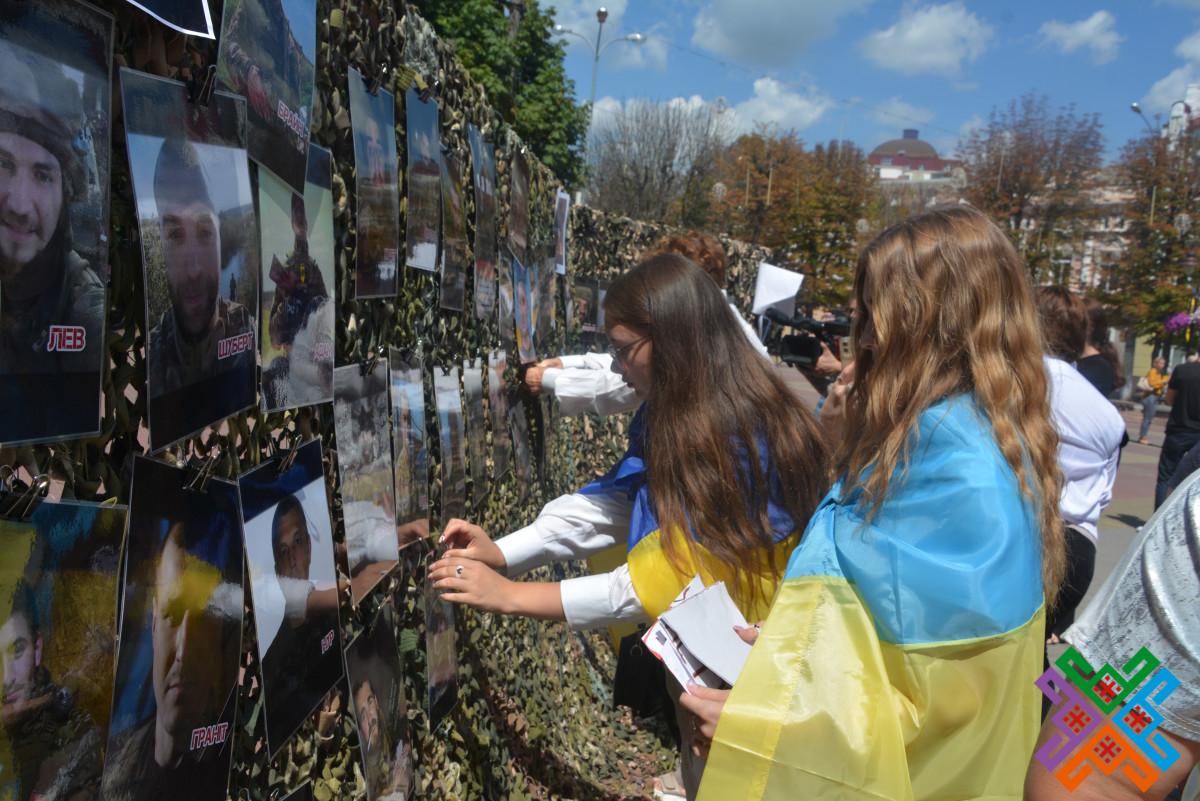
Therefore, the fourth anniversary of the tragedy is not just a day of mourning—of which, unfortunately, there are far too many in Ukraine today. It is also a reminder to society and the authorities that the investigation cannot be put on hold, nor can the memory be forgotten. Justice will inevitably be served sooner or later, for impunity for such crimes is impossible. Perhaps this justice and retribution will not be exclusively legal in nature—but the fact that they are inevitable is beyond dispute.


