

On August 28, in the village of Mila in the Kyiv region, located 20 km from Vyshneve, ammunition depots near residential buildings exploded following a Russian attack. Powerful explosions and fires resulted in numerous civilian casualties and destroyed hundreds of homes.
“A horrific situation, horrific negligence… After what happened in Vyshneve, another crime like this is absolutely unacceptable,” President Volodymyr Zelenskyy said in response to the tragedy in the Kyiv region, calling for an impartial investigation.
Given that the ammunition detonation in Mila is already being called the “second Vyshneve,” the recurrence and scale of the casualties go beyond a mere investigation into official negligence. Perhaps there are more strategic lessons and consequences at stake. According to Ukrainian military analysts, the main mistake made by those in charge was the illusion that locating weapons depots near civilian facilities would deter the enemy from launching attacks.
Instead, the Russian military launched a campaign of massive shelling, which proved far more dangerous than previous attacks. Russian attacks on defense facilities near civilian areas pose not only military but also political risks for Kyiv. The Kremlin is attempting to heighten social tensions and accuse Ukraine of violating international conventions that prohibit the placement of military facilities near residential areas.
UA.News examines the possible causes and circumstances of the tragedy in the village of Mila, the likelihood of an audit and relocation of the BK warehouses, and what military experts think about this.
Russian Drone
Strike and Detonation
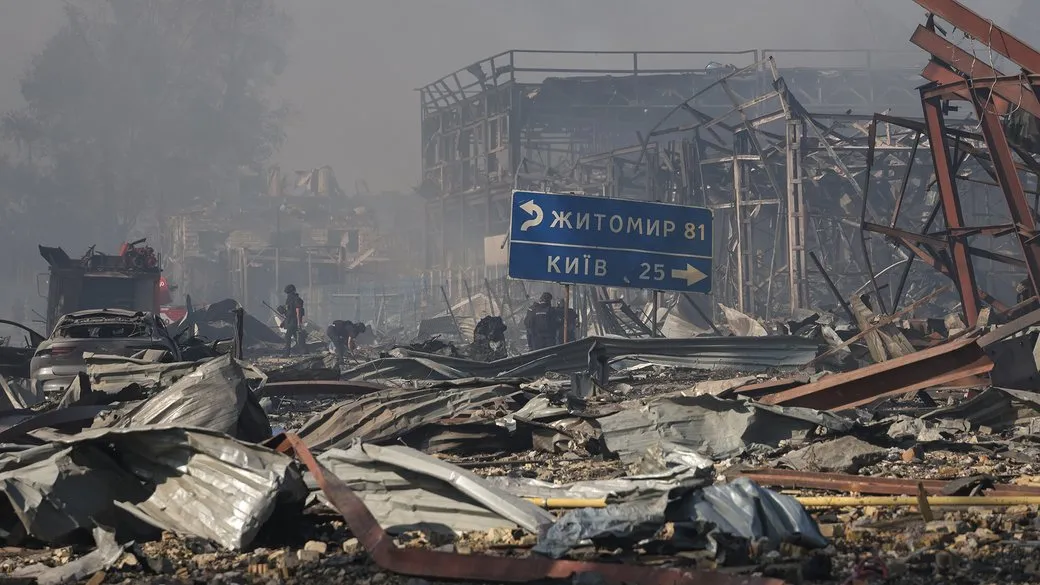
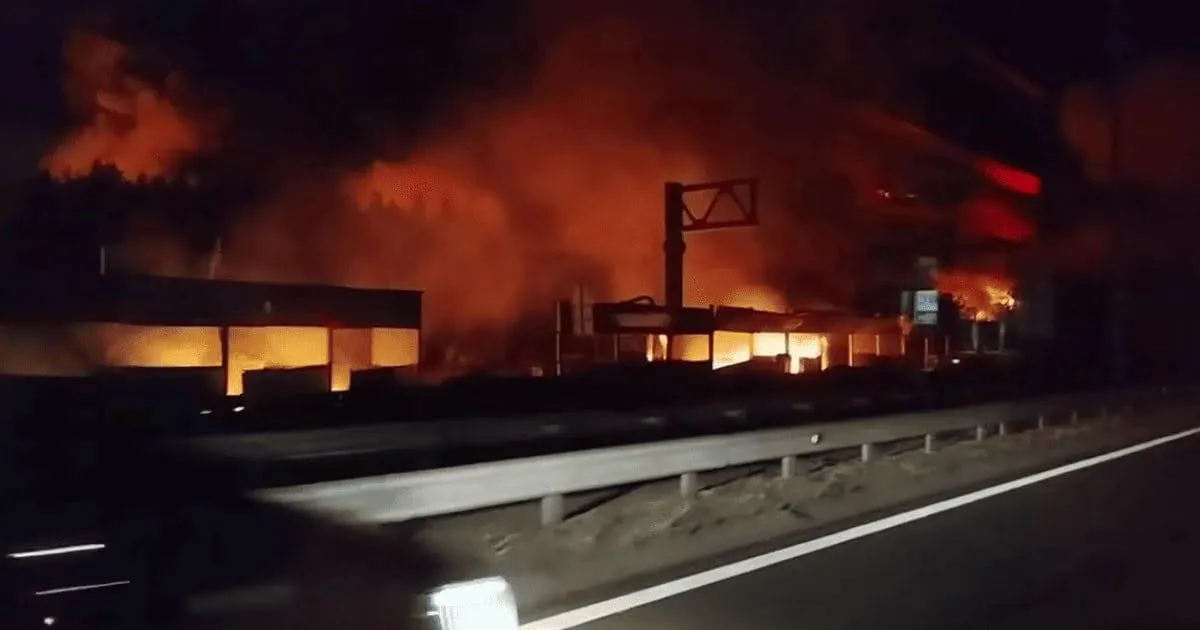
On the evening of August 28, a Russian drone struck the premises of a facility in the village of Mila in the Bucha District of the Kyiv region. The strike triggered a secondary detonation at the ammunition depots. The explosions and fires were so intense that a section of the M-06 “Kyiv–Chop” highway had to be temporarily closed between the 15th and 32nd kilometers.
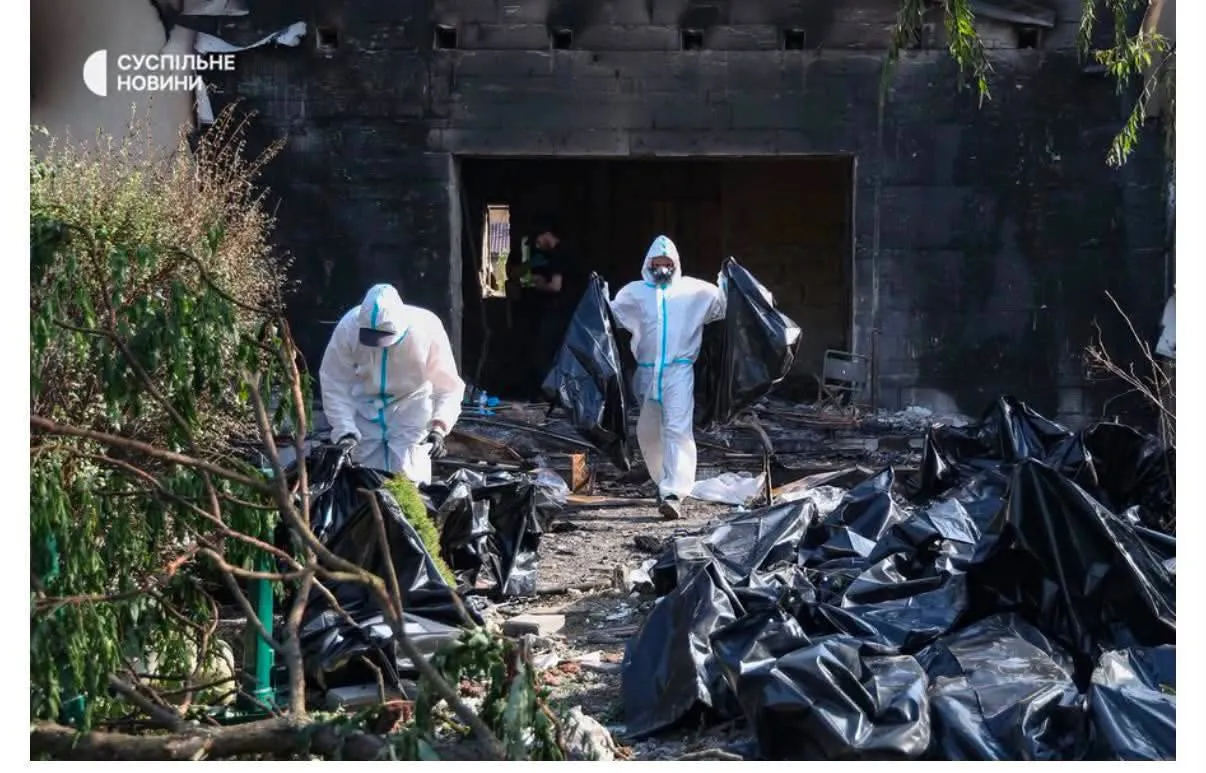
Thirty-eight people were killed in the village, and another fifty were injured. The highest number of casualties occurred at the “Dobryi Dim” private retirement home, which was located across the street from the ammunition depots. Everyone who was in the retirement home at the time—its residents and staff—perished in the fire. Among those killed in the explosion was Taras Didych, the head of the Dmytrivka community, who had arrived at the scene to organize aid for the victims.
“At half past eight, the explosions began—those three hours felt like three days. There were constant small explosions. We had to go out of the basement to check if the house was on fire. There were big explosions every 10 minutes,” local resident Pavlo told reporters.
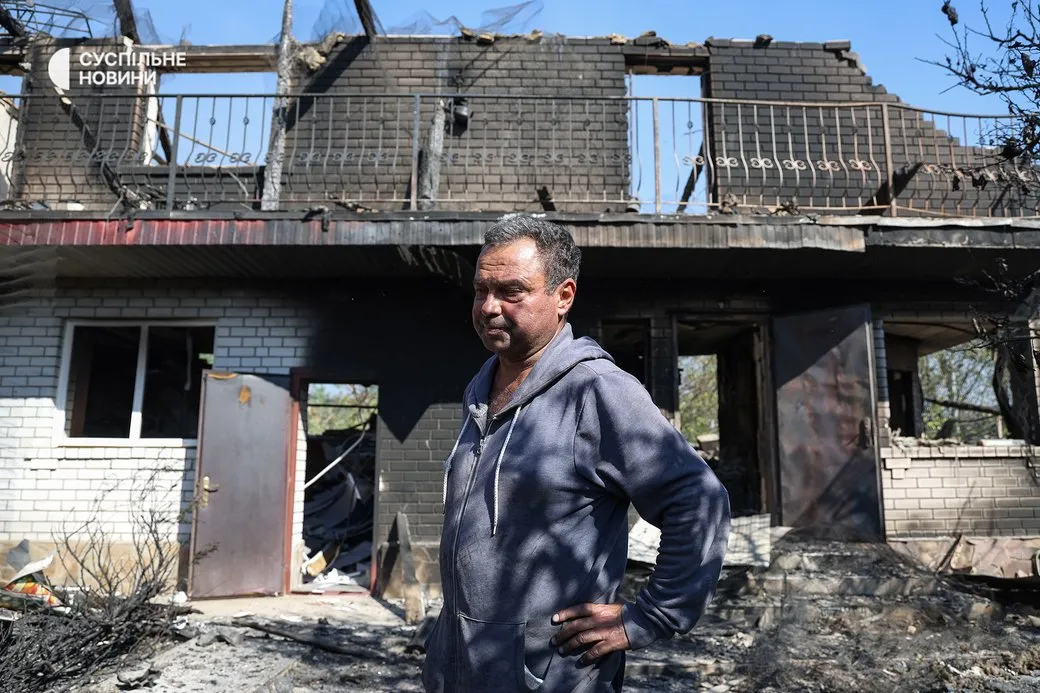
Another victim, Ruslan, recalls how he and his family fled during the shelling: “When the first explosions began, we went inside the house and couldn’t get out because the shells were whistling nonstop. It’s a good thing we didn’t go to the basement, because once the shells set the house on fire, we had no choice but to run out and flee. The children were running across the asphalt, and fragments of artillery shells were whizzing past them.”
Opinions differed on
whether locals knew that ammunition was being stored in the village. Some admitted that they had guessed the facility’s purpose. They described how military personnel would come there, unloading and loading wooden crates. Others denied it, saying they only knew it was a civilian enterprise.
“All we knew was that these were warehouses with drinking water and a bottling plant for that drinking water. No one told anyone what was stored here; no one knew anything… the nearby ‘strikes’ in Vyshneve and Kapitanivka should have taught us. Unfortunately, there were no conclusions, no training…,” one of the victims told reporters.
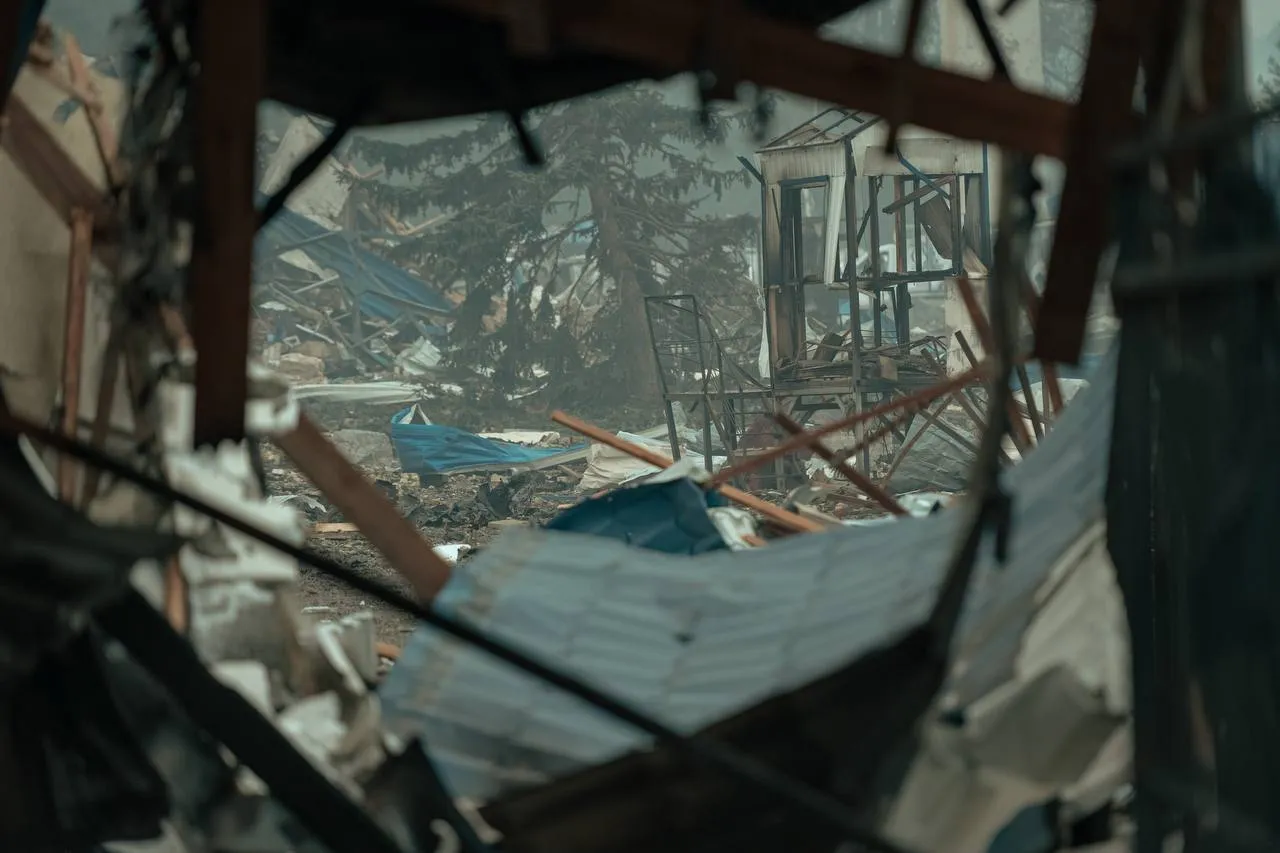
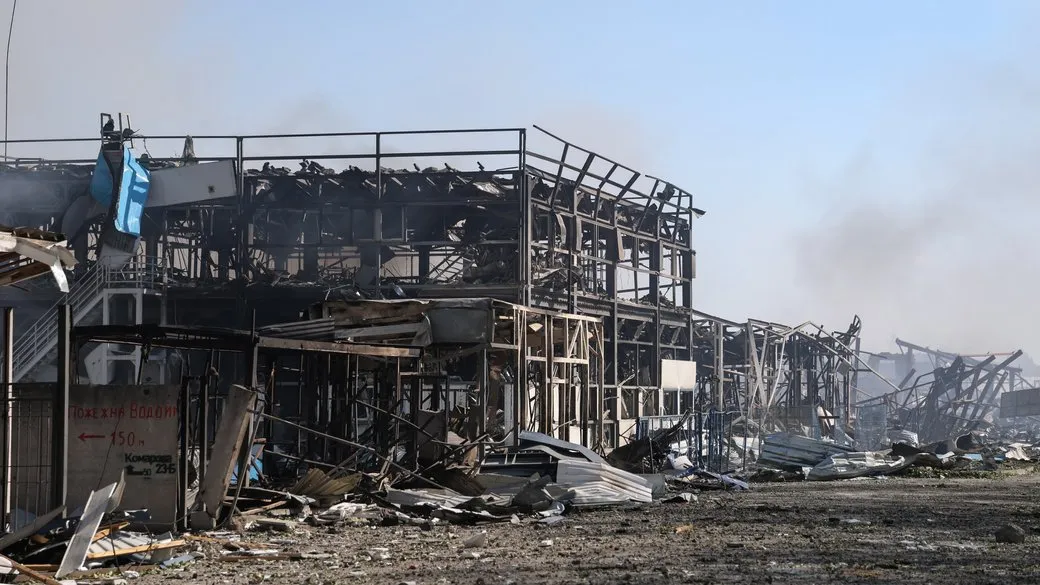
Later, the Kyiv Regional State Administration reported that 366 structures had been damaged in the village of Mila and surrounding settlements, more than 200 of which were private homes and 14 were high-rise buildings.
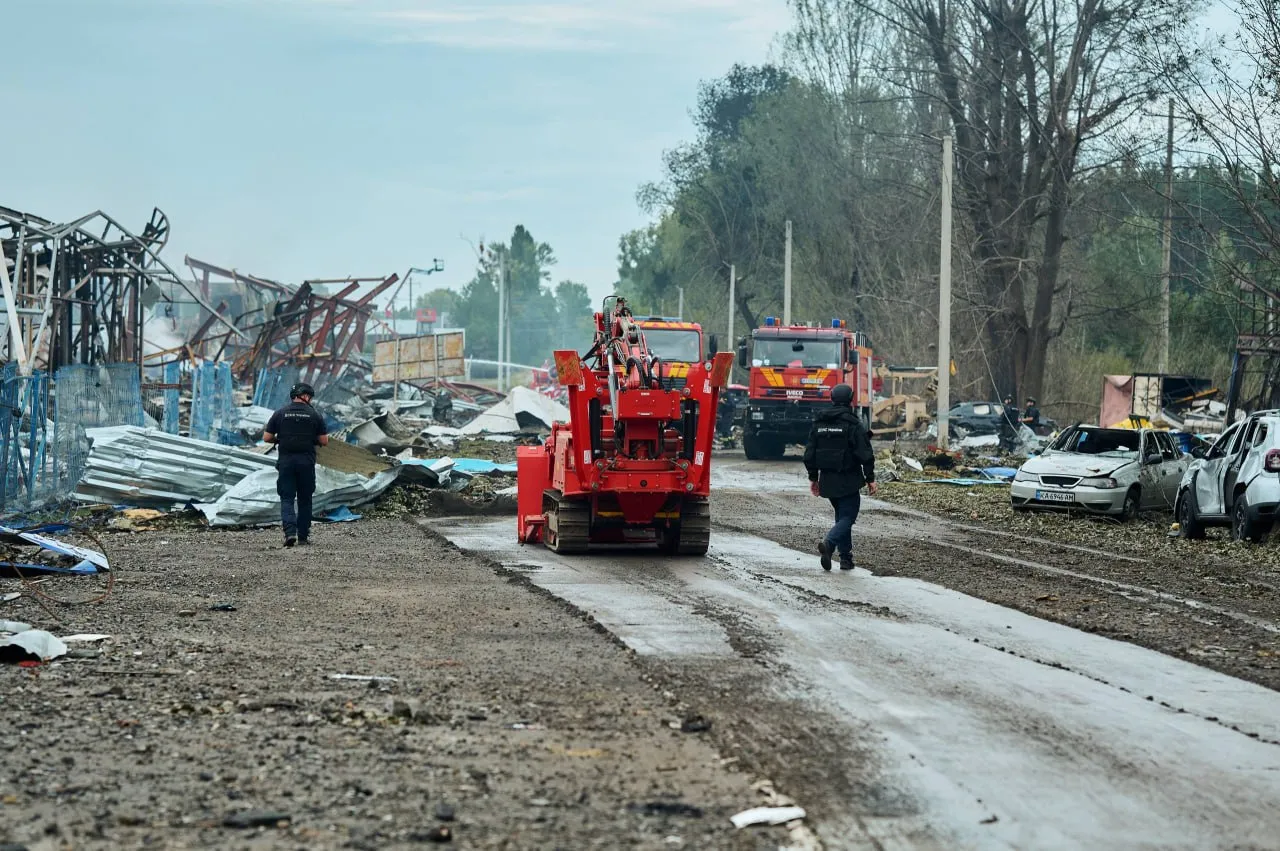
As of September 1—the fourth consecutive day—rescue operations and demining were still underway at the site of the explosion. Nearly 288 hectares of territory have been preliminarily identified as contaminated with explosive ordnance. Of this area, bomb disposal experts have surveyed more than 116 hectares. State Emergency Service units from four regions have been deployed to address the aftermath.
Investigation and Accountability
Referring to the tragedy in the village of Mila, the president said in his evening address that he had spoken with the prosecutor general, the heads of law enforcement agencies, and the commander-in-chief of the army. Zelenskyy assured that they have “everything necessary for the investigation.” Investigators are currently determining why the ammunition depots in the Bucha district were located near residential buildings.
As in Vyshneve, the Security Service of Ukraine has opened a criminal case regarding the Russian strike on the depots, as well as the subsequent detonation. The SBU is conducting an investigation under the article on official negligence.
The military command has issued official statements. The General Staff emphasized that the Armed Forces of Ukraine strictly prohibit the placement of weapons depots, ammunition depots, and other similar facilities near civilian buildings. All depots near residential buildings are controlled by weapons manufacturers, regardless of their form of ownership.
The Ministry of Defense called on ammunition and weapons manufacturers to relocate depots that pose a threat to the civilian population.
“All responsible leaders of the Security and Defense Forces and the domestic defense industry must conduct a full audit of the locations where weapons and ammunition are stored. Such facilities must not be located near residential buildings,” the defense ministry said in a statement.
Who was supposed to oversee the placement of these depots and whether corruption was involved—these questions have become the subject of debate at the political level. The response to this inquiry was that responsibility for such facilities is “blurred.” Moreover, the rules governing distances from residential areas were established for peacetime.
“There is responsibility, of course, and there must be, but today it is unclear. And it is unclear between the facility’s owner, the military unit, the command, and, accordingly, the local authorities and regulatory bodies. Because, as a former military officer, before occupying any facility, I submit proposals to my superior and, accordingly, coordinate with local administrations. Believe me, there’s quite a lengthy approval process involved,” explained retired Ukrainian Armed Forces Colonel Dmytro Kashchenko on Radio Liberty.
“It’s actually very difficult and complicated to find a single compromise solution that will satisfy everyone and save lives as well. Because we’re not just talking about Kyiv and the Kyiv region, but in fact all of Ukraine, which the Defense Forces use for various specific tasks. On the one hand, there are cases where it is truly the state’s fault—negligence and so on. On the other hand, there are Ukrainians who are deliberately revealing to the enemy the locations where military personnel and ammunition are concentrated,” stated Member of Parliament Solomiya Bobrovska.
The “Fire Point”
Warehouses
Theory
Although the massive explosion in Mila is being compared to the one in Vyshneve, the media and civil society activists point out a key difference: the authorities have not officially disclosed which manufacturer owned the stockpiles of weapons that were struck.
At the same time, the Russian Ministry of Defense reported that a Fire Point ammunition depot in the village of Mila had allegedly been hit. According to the report, the facility stored components and launch accelerators for FP-1 and FP-2 drones.
Ultimately, suspicions that the depots likely belonged to a company close to the president—Fire Point—surfaced in a public spat on social media.
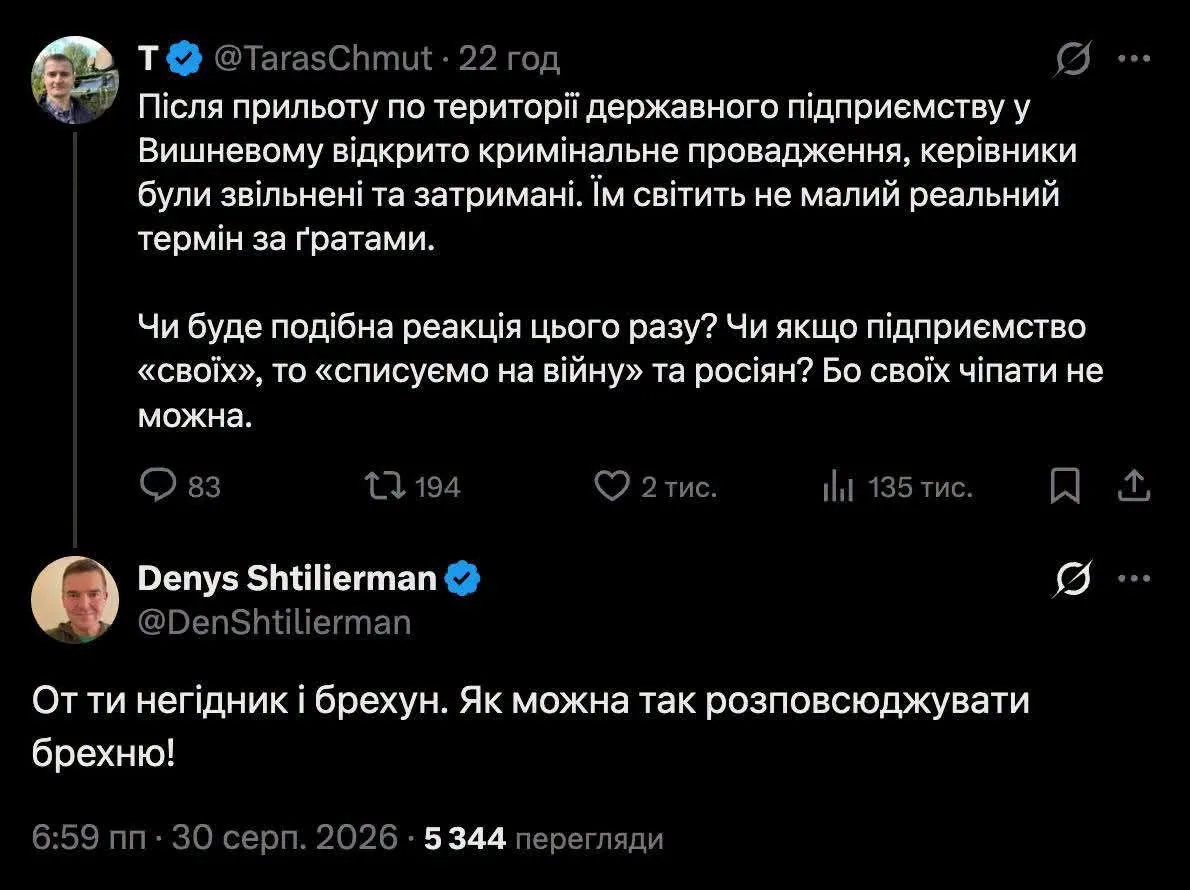
Taras Chmut, head of the “Come Back Alive” charitable foundation, recalled the events in Vyshneve, where, following a strike on artillery depots, the heads of state-owned enterprises were dismissed and detained. At the same time, he alluded to an investigation into violations of ammunition storage regulations near residential buildings in Mila.
“Will there be a similar reaction this time? Or if the company is ‘one of our own,’ will we just ‘blame it on the war’ and the Russians? Because we can’t touch our own,” wrote Taras Chmut, though he did not directly name either Denis Shtilerman or the company Fire Point.
Fire Point co-owner Denis Shilerman immediately reacted sharply to this post. “You’re a scoundrel and a liar. How can you spread such lies!” he wrote.

Dmytro Snegirev: The Answer Is Obvious
The explosion of ammunition depots in the village of Mila is already the third such incident following similar events in Vyshneve and in the Dnipropetrovsk region. This sequence of events points to systematic activity by Russian intelligence services, their high level of intelligence, and, unfortunately, the low level of counterintelligence activity in Ukraine, according to military analyst Dmytro Snegirev, who studied the circumstances of explosions at ammunition depots during the ATO.
“The Security Service of Ukraine is responsible for ensuring counterintelligence measures and preventing such scenarios. Its role is to identify potential sources of information leaks among both military personnel and civilians who may be collaborating with the enemy.
Three incidents are too many. Moreover, after Vyshneve—where there was a particularly egregious case: there had been prior UAV attacks, but no action was taken to relocate the depots in response. And only then did what happened occur—namely, the destruction of the depot.
Given that the SBU has a staff of over 40,000 (which is significantly larger than the intelligence services of many European countries, such as the United Kingdom, where just over 6,000 people are employed), serious questions arise regarding the effectiveness of its operations.
The enemy’s successful strikes should not be attributed solely to satellite or technical intelligence—the role of human intelligence must also be taken into account and investigated. “Investigations must cover both state-owned enterprises (particularly those under the jurisdiction of ‘Ukroboronprom’) and private entities,” emphasizes Dmytro Snegirev.
He also points to an artificial shift in focus in the public’s attempts to raise the question: “Who authorized it, and why were the warehouses located near residential areas?” The answer is obvious: the placement of such facilities is impossible without a decision by the military-civilian administration.
“Attempts to shift the blame onto warehouse managers or other minor figures are an artificial shift in focus. The head of the Kyiv Regional Military Administration bears primary responsibility for the region’s security and defense readiness. If the warehouse belongs to a private entity (in particular, the media mentions Fire Point), this raises questions about the so-called ‘telephone orders,’ where local administrations are instructed to locate facilities in violation of safety standards and current legislation,” says the military analyst.
According to him, storing a wide range of ammunition—from machine-gun rounds to anti-ballistic defense systems—in a single location contradicts instructions requiring the dispersal of storage facilities. Moreover, such facilities should have been inspected long ago.
“Statements about the need for an audit and possible relocation are not being made without reason; they may indicate certain corruption schemes within both the Ministry of Defense and Ukroboronprom. But the relevant authorities must provide an answer. Unfortunately, there are grounds for such theories. The number of warehouses that exploded in Ukraine even during the ATO indicates that corrupt deals took place. There were also attempts to openly profit from the warehouse explosions. “And then—this is the cynicism of the situation—to profit from the reconstruction of damaged civilian infrastructure,” the analyst explains, emphasizing that attention should be paid to financial flows and the companies that will receive contracts for reconstruction.
Snegirev also notes that during the Soviet era, every defense enterprise had a so-called “First Department”—a highly classified unit that oversaw the acceptance of products, ensured information security, and conducted counterintelligence. This raises questions about the effectiveness of such special units, as well as the very methodology for locating military depots.
“If this is already the third depot to explode near residential areas, it means they were counting on the ‘Muscovites’ not to target the civilian population. The thinking was that if we placed a depot near residential areas, it would serve as a safeguard against the Russians destroying it. Let’s call a spade a spade,” says Snegirev, emphasizing, “This turned out to be a mistake that the Russians exploited. “That’s why we need to change the methodology itself. In other words, we must stop assuming that the Russians won’t target civilians. They do target them—and they do so deliberately. Therefore, the placement of military facilities—especially depots—must be approached differently.”




