

On February 10, during a briefing, the heads of NABU and SAP spoke about pressure on anti-corruption agencies, attempts at illegal surveillance of detectives, corruption in the defense sector, and the direct link between embezzlement and losses on the front line. NABU Director Semen Kryvonos and Specialized Anti-Corruption Prosecutor Oleksandr Klymenko presented a report on their work for the second half of 2025.
The main focus was on corruption, multimillion-dollar schemes in the defense and energy sectors, and attempts by other law enforcement agencies to exert pressure on anti-corruption bodies. According to the heads of NABU and SAP, the intensity of these attacks increased at the end of 2025—precisely when investigations reached “sensitive” levels for influential groups.
Pressure on detectives
One of the loudest statements came from Semen Kryvonos: an attempt was made to illegally install eavesdropping equipment in the office of the head of a NABU unit. This unit handles cases involving manipulations in UAV procurement, and the head is part of the group of detectives in the “Midas” case.
Kryvonos stated that members of another law enforcement agency were involved.
“This is part of broader pressure on anti-corruption bodies, which has intensified in recent weeks. We have information about the structures behind this, and even specific names,” he emphasized.
According to the Bureau director, outsiders acted without any court order.
The “Midas” case
NABU is currently cooperating with about ten foreign jurisdictions, including EU countries and Israel, to obtain data on financial transactions, accounts, and property of the suspects. Kryvonos emphasized that the investigation is in an active phase, but details are not being disclosed for procedural reasons: evidence collection, expert examinations, and awaiting responses to requests for international legal assistance are ongoing.
“We expect new details, and we will communicate with the Ukrainian public. We are simply trying to communicate carefully at this stage, which is connected to certain aspects of collecting the evidentiary base, conducting relevant expert examinations, obtaining responses from international jurisdictions, and communicating with international partners,” explained the NABU director.
At the same time, he stressed: “This is definitely not the end” of the case. Regarding the extradition of the main suspect in the case, Tymur Mindich, who is currently in Israel—the relevant procedures are ongoing, but it is a complex and lengthy process.
Work has improved, but it could be better
Another sensitive topic is cooperation with the State Financial Monitoring Service. NABU’s director acknowledged that after public disclosure of the story about the blocking of anti-corruption agencies’ requests, the monitoring service began to respond faster. Thanks to this, a significant amount of funds intended as bail in the “Midas” case was blocked, and one of the suspects remains in custody.
“Financial Monitoring blocked this amount of funds because it noticed signs of legalization, so one of the suspects remains in custody (the former advisor to the Minister of Energy, Ihor Myroniuk, for whom the court set bail at UAH 126 million — editor’s note). They also provided information on where funds were deposited for other suspects, and detectives and prosecutors are already processing it,” said Kryvonos.
At the same time, SAP head Oleksandr Klymenko was far more critical: in his opinion, the potential of the monitoring service is not fully utilized, and the agency could be much more active in tracking the movement of funds and informing the investigation.
Where are the verdicts?
The heads of NABU and SAP also responded to criticism about the lack of verdicts in high-profile cases. Kryvonos and Klymenko emphasized that the problem is systemic. These are multi-volume cases with many suspects, financial examinations, and international elements, as well as the overload of the High Anti-Corruption Court. Klymenko cited a telling example in which the court took a year and a half to consider a procedural issue that the law allows ten days to resolve. At the same time, both heads stressed that issuing verdicts is the exclusive competence of the court, not detectives or prosecutors.
“Neither prosecutors nor detectives issue verdicts. Our task is to collect evidence and transfer the case to court. The final decision is entirely within the competence of the HACC,” Kryvonos emphasized.
Statistics of NABU and SAP work for H2 2025
- 367 new criminal investigations
- 103 individuals received the status of suspect
- 55 indictments submitted to court
- 126 accused
- 70 convicted
- Economic effect — over UAH 4.9 billion
Overall, in 2025, courts issued 108 guilty verdicts in NABU and SAP cases. Among the convicted were not only “minor executors” but also the former head of the State Tax Service, the head of the State Judicial Administration, and current Members of Parliament. Currently, 41 serving MPs have suspicions of corruption crimes, which, according to anti-corruption officials, is an unprecedented figure for the Ukrainian legal system.
And yet, this statistics contains one telling absence. Soon it will be two years since the opening of the criminal case regarding illegal enrichment of the former Deputy Prosecutor General of Ukraine, Dmytro Verbytsky. During this time, the case has not moved into a publicly noticeable procedural phase: assets cited in journalistic investigations and NAPC findings have not been seized, no suspicion has been announced, and no preventive measures have been taken.
The case exists, but no actions
On May 13, 2024, NABU opened a criminal case under Article 368-5 of the Criminal Code of Ukraine (illegal enrichment). However, almost two years later, no suspicion has been announced, no searches conducted, and no asset seizures made.
Verbytsky resigned following media reports about his wealth. Formally — at his own request. In practice — after a full verification of the official’s declarations. The NAPC found signs of illegal enrichment totaling over UAH 30 million and false information amounting to another UAH 2.38 million. However, his resignation has not affected his standard of living in any way.
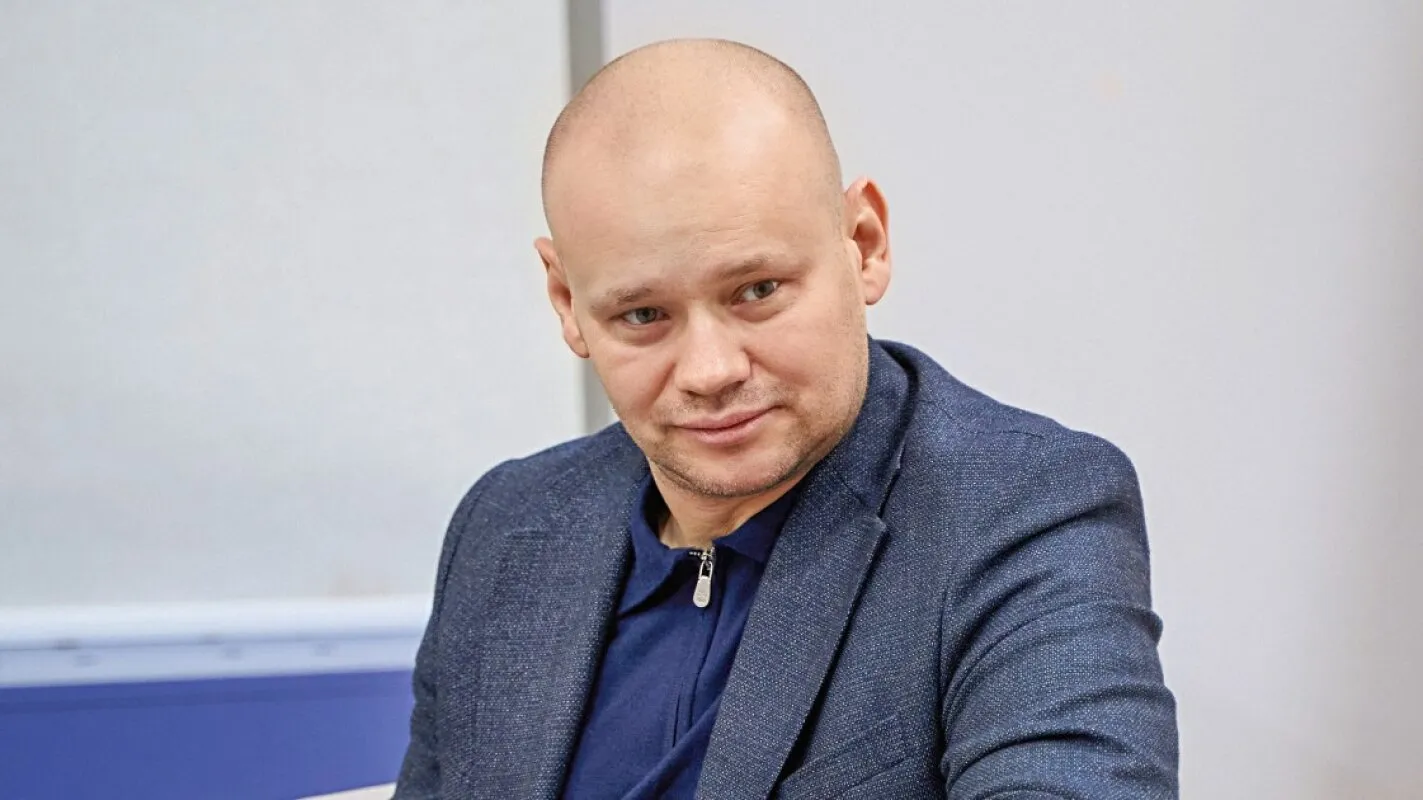
While the criminal case remains in a prolonged pause, the former Deputy Prosecutor General has managed to enter politics, lead a party branch, engage in charitable activities, and, according to sources and investigators, maintain influence over certain business processes in Odesa, including port logistics. Publicly, Verbytsky appears completely comfortable: he leads an active social life, regularly attends events, and even writes blogs for nationwide news sites.
Verbytsky is a living reminder to anti-corruption agencies that despite their demonstrative efficiency, they have cases without logical resolution.
Earlier, the head of the Temporary Special Commission on the investigation of corruption in judicial and law enforcement bodies, Serhiy Vlasenko, drew attention to the public “collusion” of anti-corruption agencies.
“NABU, SAP, and HACC: with all due respect to these organizations, I do not understand why their leaders always appear together. The key task of SAP is to supervise NABU. That is, one controls the other. Trainings, press conferences, working trips — there were cases when judges of HACC joined them. A detective investigating a case, the prosecutor supervising it, and the judge hearing the case cannot be in the same room. In civilized Europe, such an alliance is considered a violation of ethics rules. Notice how Magomedrasulov, while in court, said: ‘Say hello to all of ours — NABU, SAP, and HACC.’ If they are ‘all ours,’ how can they control each other?” Vlasenko said.


