
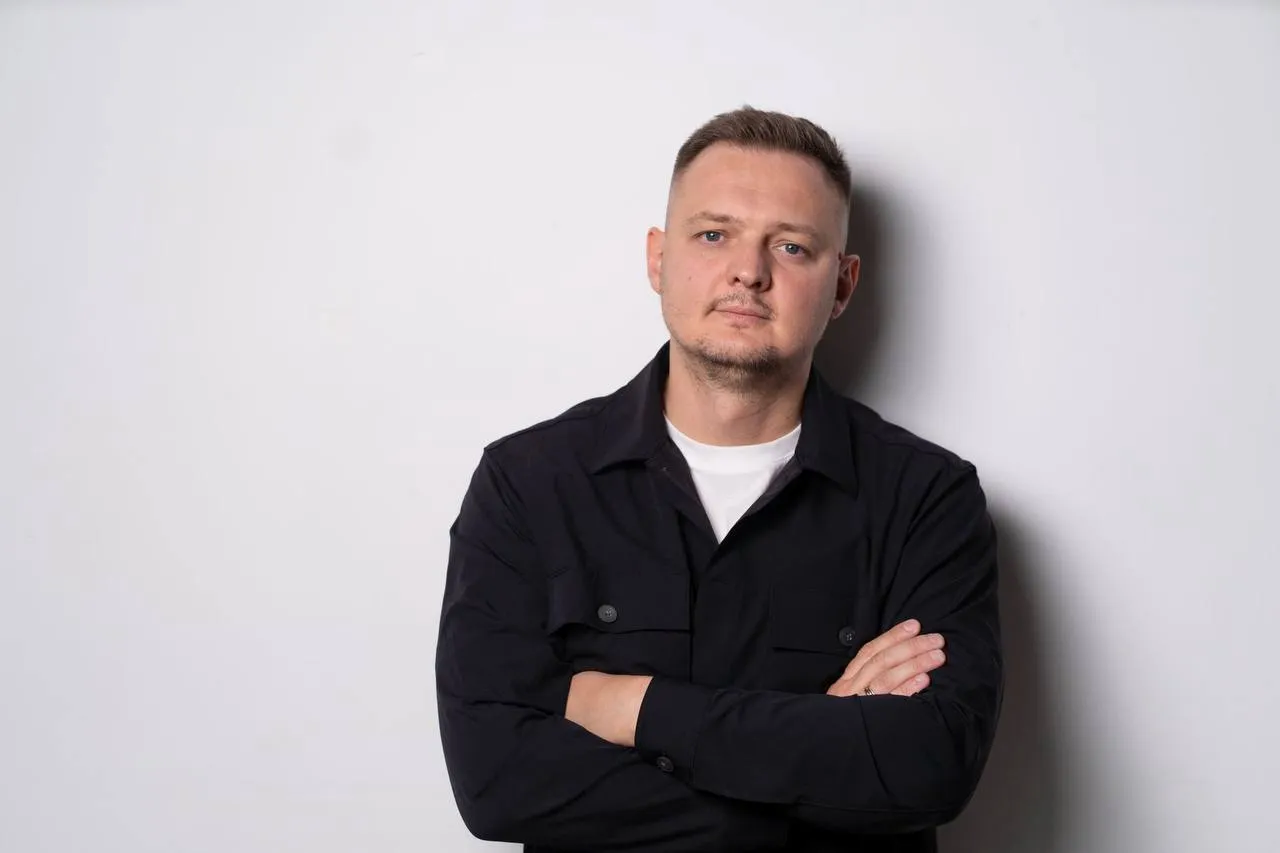
He manages the daily operations of Ukraine’s largest Telegram media group with an audience of over 8.7 million subscribers. He personally hands over apartment keys to families who lost their homes to the war — properties he purchased using profits from the channels. Together with his team, he volunteers, supports civilians in difficult life circumstances, and assists more than 30 units of the Armed Forces of Ukraine.
We spoke with Maksym Lavrynenko, founder and owner of the “Trukha Ukraine” media group — about support, responsibility, hard work, and hope in challenging times.
From a Kharkiv public page to Ukraine’s No. 1 Channel
— Maksym, “Trukha” began in 2019 as a local Kharkiv news channel. For those hearing about it for the first time, what was the original idea behind the project and why did you create it?
The idea was very simple: to deliver news people actually need. Short, prompt, and informative updates about life in Kharkiv and what was happening around the city. I’ve always been a news enthusiast — that format genuinely interested me.
We started with a single public page called “Tru Kha”, meaning “True Kharkiv”. We provided information people were looking for — convenient, concise, and covering the most important stories in one place. Today, the “Trukha Ukraine” media group channels have more than 8.7 million subscribers.
— What changed in your perception of “Trukha’s” mission and direction after 24 February 2022?
Before the full-scale invasion, we were growing as an information resource and, of course, aimed to compete and expand our audience. That still matters, as it does for any media outlet. But I’m not exaggerating when I say that 24 February changed everything — from our approach and pace to purely technical aspects of our work.
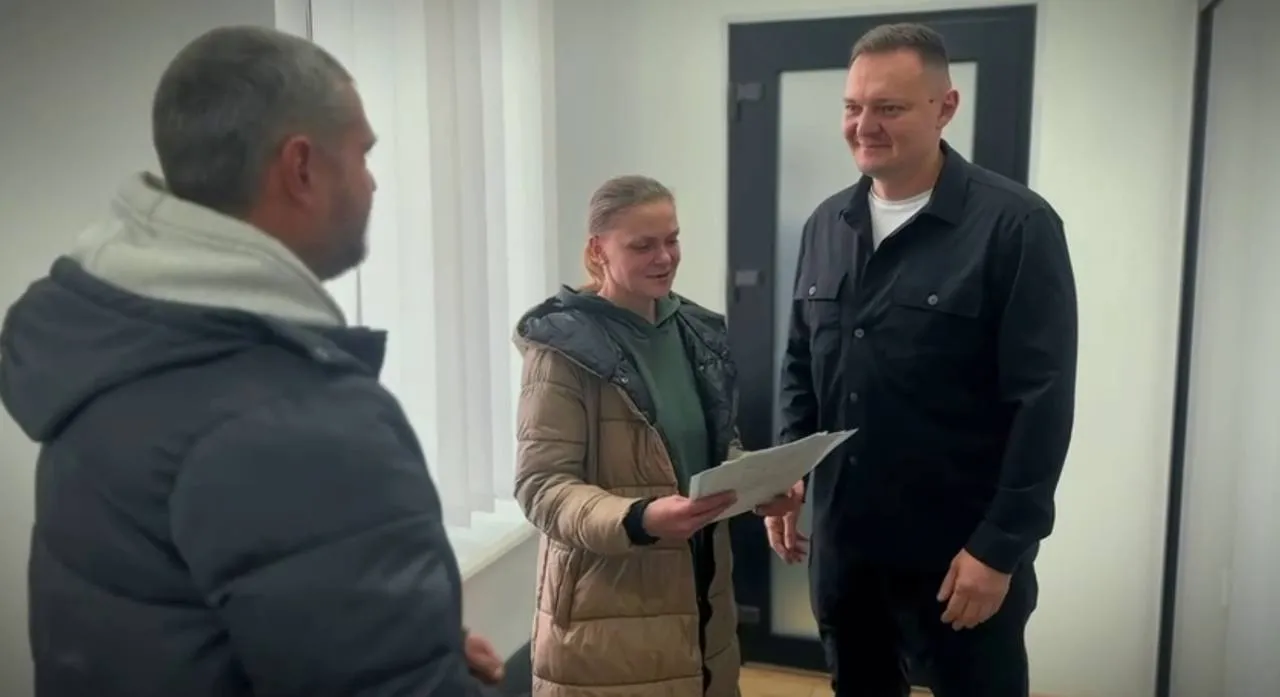
From the very morning of the invasion, we were flooded with messages: “What should we do?”, “Where should we go?”, “Where is it safe?”, “Is this true?” In moments like that, you don’t think about content plans, advertising integrations, or subscriber numbers. Everyone needed information just to hold on.
It all began. I forgot about sleep and published up to 750 posts a day. At that time, only one person was helping me. We kept our finger on the pulse, warning about dangers and sharing everything people needed to know. People began to trust us and subscribe. Our audience grew rapidly — tripling within two to three months. The team expanded as well.
In 2022, “Trukha” stopped being just media. We became part of a national information and, to some extent, survival system. That’s a huge responsibility — and it has only grown over time.
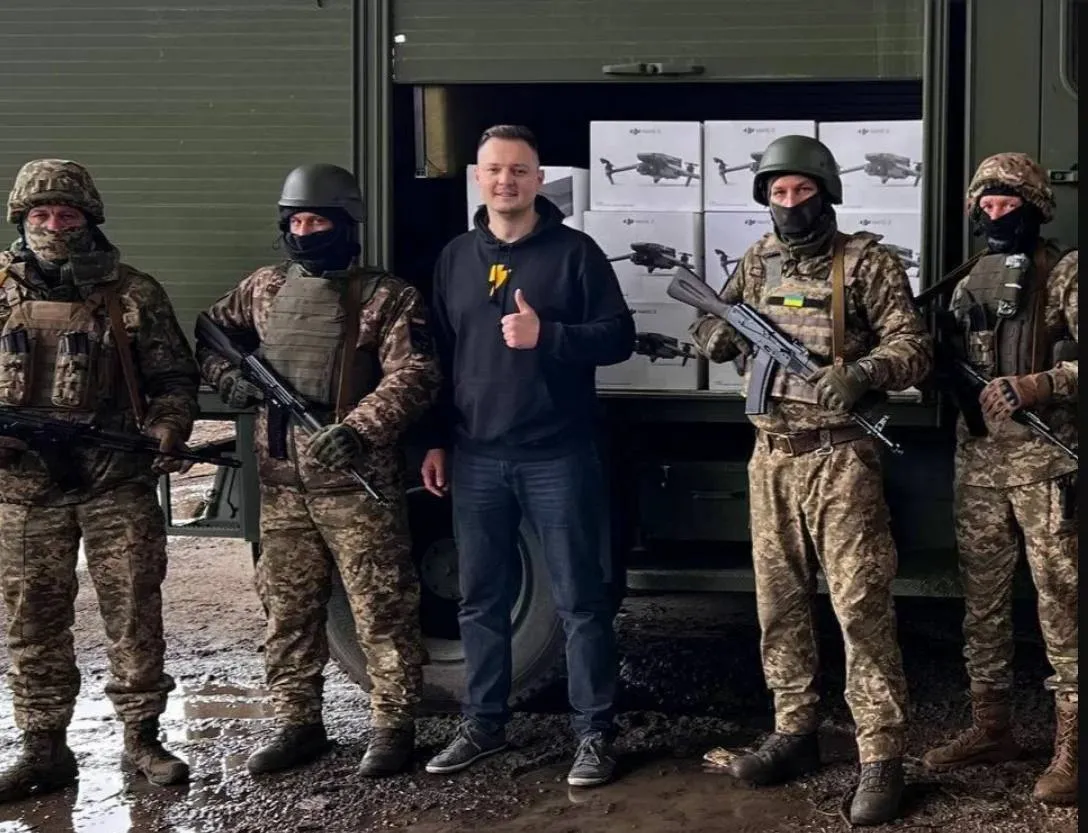
— The “Trukha Ukraine” Charitable Foundation has been systematically supporting more than 30 brigades and units of the Armed Forces for almost four years. What is more difficult: raising funds quickly or building a system people can trust?
Definitely building the system. People started donating from day one. Trust in “Trukha” was enormous. When you see huge sums coming into your account within a week, you understand that one wrong step could destroy that trust forever.
We had to learn to document everything — every hryvnia, every purchase, every delivery — and report publicly, clearly, and accurately. We verify recipients: are they really from that brigade? Do they truly need this support? We ensure proper storage and delivery to the front line.
It turned out to be far more serious and responsible than simply raising money. But that’s the right way to do it. People must see where their contributions go.
“Trukha Gives Homes”: Helping those who lost everything
— In the project “Trukha Gives Homes”, you personally use profits from the channels to purchase housing for people who lost theirs due to the war. We’ve seen the videos — people cry with relief when you hand them the keys. How did this project begin and how does it work?
This is now our key project. It started in 2024 when we gave homes to two families from Kharkiv who had lost their apartments due to Russian shelling at the beginning of the full-scale invasion. In one case, once the family had a home again, the mother and children were able to return from abroad and reunite with the father. That inspired us greatly.
In 2025, we focused on other types of assistance, but toward the end of the year we decided to scale up the housing project. Before Christmas, we bought an apartment for a displaced family who had suffered severe injuries, endured occupation in the Kharkiv region, lost an unborn child, and were left homeless — searching for shelter across the country while raising their young daughter. Now they have their own home with a garden, where they dream of planting fruit trees. I truly hope everything will be good for them.
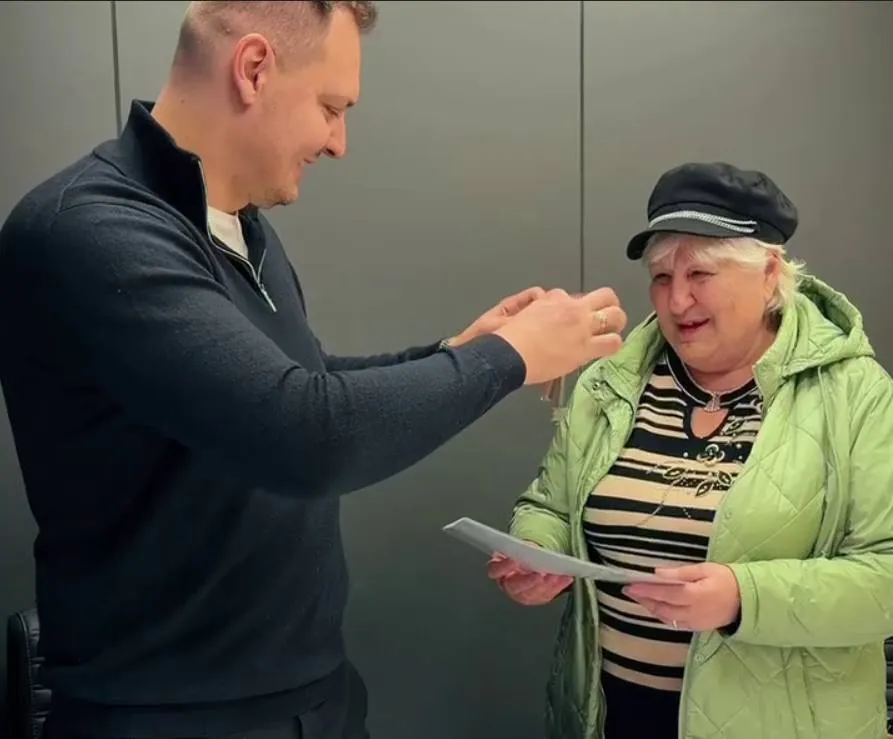
At the beginning of 2026, we purchased an apartment for a grandmother with a disability and her orphaned grandson, whom she is raising alone. They are displaced from the Bakhmut district of Donetsk region. Every small amount of money they had went toward rent and survival. Recently, I handed them the keys to a home where they can finally feel safe and start building their future. The child no longer has to move from place to place or change schools and friends.
— What are you working on now?
We are currently finalising a deal for another family. The mother has a disability due to severe complications from diabetes. The father is a war veteran, twice displaced, and a combat veteran. They have two children and live in a 12-square-metre room in a former monastery. Their apartment in Lysychansk was destroyed by a Russian missile. I truly want this family to find relief and peace in their own home. It doesn’t solve every problem, but it becomes a foundation — a reliable rear support in today’s realities.
Our plans are ambitious. This year we will definitely purchase several more apartments. Each story is complex and unpredictable. It requires coordinated work from the “Trukha Ukraine” team, lawyers, notaries, and the families themselves. Much depends on the real estate market, the families’ preferences, and sellers. Sometimes deals fall through at the last moment. That’s life. We don’t give up — we keep searching and moving forward.
— How do you learn about people in need and choose who will receive a home? Clearly, it’s impossible to help everyone.
Information about the “Trukha Gives Homes” project is posted across all our channels, and I personally share stories of families we are currently helping. Each post includes a Google form where people can tell their story and provide supporting documents. Everything is confidential.
Choosing is incredibly difficult. We sympathise with everyone, but prioritise those in the most critical situations: large families, single parents, families with people with disabilities, families of fallen or missing defenders. Sometimes there’s a combination of tragic circumstances.
Our team reviews all applications — and I personally look through each one. Once selected, we verify documents, communicate with the family, work with estate agents, assess neighbourhoods and property conditions. It’s important that it’s not just a roof over their heads, but a dignified place to live. The final decision is always up to the family.
After the purchase, I hand over the keys personally and stay in touch. It’s especially heart-warming when they invite me to a housewarming — seeing how their mood changes, how hope and inspiration return.
Personal motivation and support
— What motivates you to continue this work every day?
When someone who has endured horror can finally look toward the future again — when children are happy to have their own little corner — and we have the honour of being part of that change, that is the greatest motivation.
My family and my team support me immensely. Without them, none of this would exist. I always remember that and live with deep gratitude.
Charity has always existed in Ukraine, but during the war it has grown to incredible levels. We are part of this ecosystem of Ukrainians helping Ukrainians. If our example inspires someone to do good, that’s the best reward.
— If you could go back to 2019, when you first created “Trukha”, what would you tell yourself?
I would say: “There’s a lot of work ahead. Many challenges, criticism, provocations. A lot of gratitude, support, and kindness. You will have the chance to do something truly important. Don’t miss it. You can’t even imagine how much your life will change.”
— Thank you for the conversation, Maksym. We wish you and your team success.
Thank you for the invitation and the thoughtful questions. And thank you to everyone who trusts us, contributes to helping others, or simply shares information. Together, we are stronger.


