
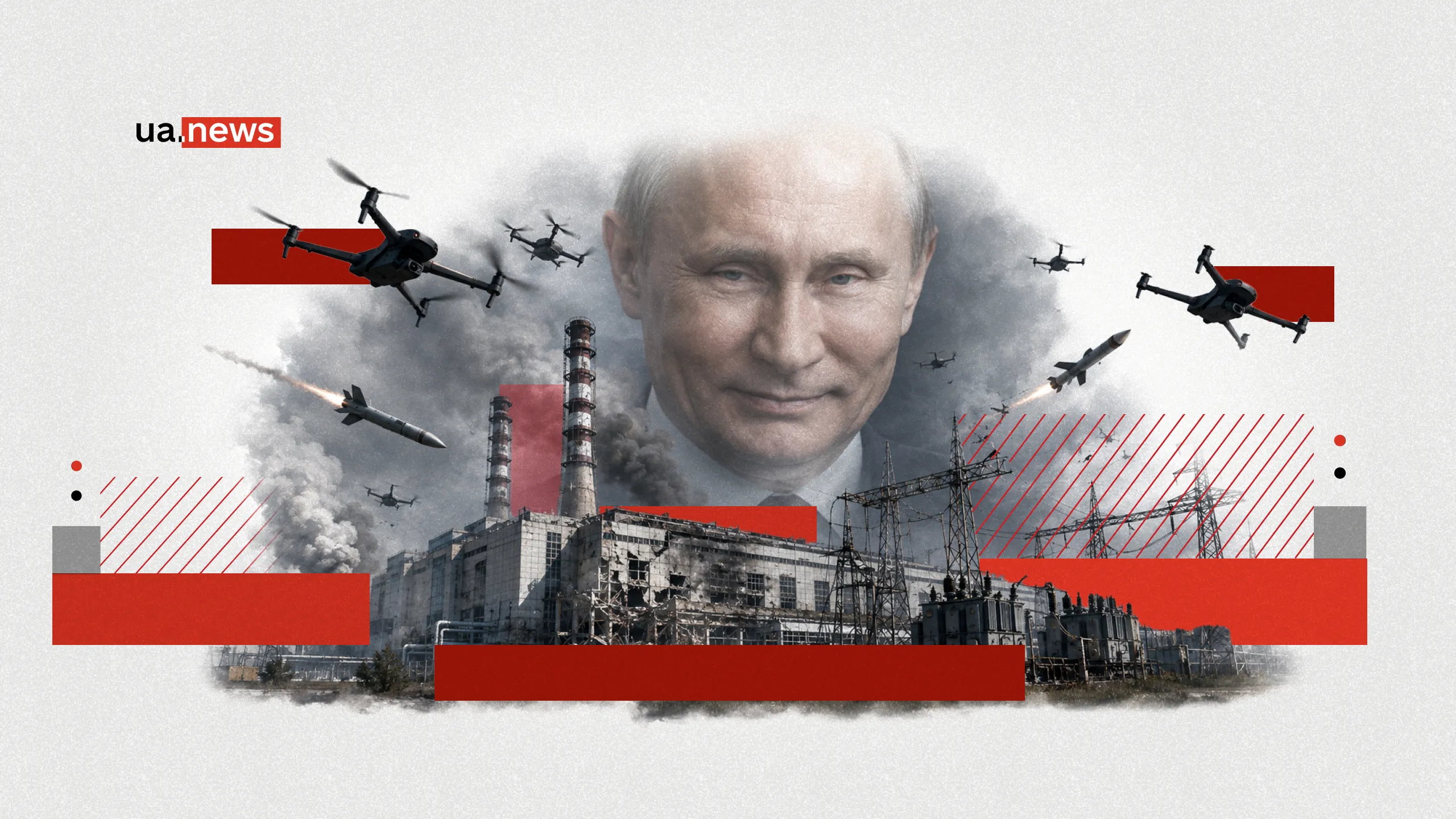
“If they strike our oil refineries, they will face a response”: This is the cynical way in which Russian dictator Vladimir Putin announced a new campaign of attacks on Ukraine’s energy sector on August 30. Separately, the Russian leader made it clear that the Russian military had already received the relevant orders. According to intelligence reports and military analysts, these strikes are already taking place, though they are not yet widespread.
It’s September 4. The summer heat, which allowed people to go without power outages for a long time, is coming to an end. Damp autumn nights and winter frosts lie ahead. And you don’t need to be a military expert to understand that a new “season” of massive strikes on the power grid isn’t a possibility—it’s only a matter of time.
Everyone also fully understands another painful reality: the shortage of air defense systems—and especially the missiles for them—in Ukraine has not gone away. Interception rates are getting worse; top officials say there are insufficient means to counter enemy attacks, while the Russians, meanwhile, are only increasing their firepower.
And so, once again, Ukrainians are faced with the question: What will happen to our electricity, and what should we prepare for? What threats does the domestic energy sector face in the near future? Unfortunately, the situation is bleak. UA.News political analyst Mykyta Trachuk, together with experts, examined the issue.
Reconnaissance by Combat: How the Kremlin Is Preparing a “Perfect Storm” for the Energy Sector
The final weeks of summer have been a period of active “reconnaissance by combat” for the Russian army. What is currently happening in Ukrainian airspace and at energy facilities is not chaotic shelling, but methodical preparation for a major campaign. Military social media accounts, including the well-known “Nikolaevsky Vanyok,” which tracks the dynamics of the strikes, are noting an alarming trend: systematic attacks on energy infrastructure effectively resumed as early as August, though they have not yet been as widespread as we’ve come to expect.
The statistics speak for themselves: in the first week of August alone, 38 strikes were recorded; in the second, 20; in the third, 29; and in the last week of the month, 43. In total, there were about 130 attacks, and that does not include strikes on gas infrastructure, which is also being targeted. The geographical scope is also broad: from the frontline regions of Kherson and Donetsk to Kyiv, Poltava, Chernihiv, and beyond. The enemy is using its entire arsenal: from cheap FPV drones and improvised explosive devices (IEDs), which are wreaking havoc on frontline substations, to ballistic missiles and rocket-propelled “suicide drones” in the rear.
But that’s not even the main point. The main thing is that active reconnaissance is underway. Over the past few weeks, Russian forces have been conducting reconnaissance of energy facilities throughout the country. They are searching for vulnerabilities, mapping out routes, and assessing the effectiveness of defenses. It resembles the behavior of a bird of prey circling its prey before the decisive strike.
And this strike, according to forecasts, will, unfortunately, be powerful and devastating. According to U.S. intelligence, Ukraine faces up to eight waves of massive strikes. The campaign is projected to begin in the last ten days of September and/or early October. In other words, the countdown is now measured in weeks, not months.
The most alarming aspect of this forecast, however, is the number: up to 90 missiles of various types at a time during the first three largest waves. It’s obvious to everyone how the air defense system will cope with this if ballistic missiles are involved. According to various estimates, such attacks will result in power outages lasting up to 16 hours a day (or even longer). Essentially, this means living in a mode where “there is electricity for only a few hours at night and in the morning.” According to U.S. intelligence forecasts, the main targets will be Kyiv and its region, as well as the Odesa, Dnipro, Cherkasy, Vinnytsia, and Western Ukraine regions.

Anatomy of the Strike: Where and How the Russians
Will Target
Undoubtedly, thermal power plants (TPPs) and combined-cycle power plants (CCPPs), which provide flexible power generation and heat to cities, remain priority targets. The same goes for hydroelectric power plants (HPPs), damage to which would have catastrophic consequences for the water supply and the environment of entire regions, as well as gas infrastructure, which is already under constant attack.
Another major threat looms over the distribution networks of nuclear power plants. Of course, the Russians are unlikely to dare to strike directly at the reactors of nuclear power plants—no matter how cold-blooded they may be, but there’s a limit to everything. And, after all, why fire at the plant itself and at the reactor’s “armor”—which no ballistic missile can penetrate—when the nuclear power plant can be “shut down” in another, far simpler and more sophisticated way?
The “Achilles’ heel” of Ukrainian nuclear power plants is the open switchgear and the nodes that connect the plant to the main power grid. In general, a nuclear power plant is an extremely inert system. It cannot simply “slow down” like a car or quickly reduce power at the push of a button. If the transformers and lines that carry electricity from the nuclear power plant to consumers are destroyed or damaged, the plant will lose its ability to generate power. It simply has nowhere to send the electricity it generates. In such a case, the reactor must be shut down or reduced to minimum power output, which for the power grid is equivalent to the loss of several gigawatts (!) of generation. The Russians understand this perfectly well.
We mustn’t forget about critical infrastructure facilities that rely on that same power supply. Attacks on water supply systems and sewage pumping stations are also entirely to be expected. Even if homes have electricity from a generator or charging station, but there is no water or sewage disposal, life in the city will quickly become physically impossible.
Another aspect of the problem is the preparedness of the authorities: both central and, above all, local. This cold season will be a moment of truth for many management teams. Some have recently managed to assemble and install cogeneration units, distribute power generation, move critical equipment underground, and protect substations with gabions and mesh—at least to some extent, even if only partially. Others, unfortunately, have been preoccupied only with political infighting, personal enrichment, and reports on “preparations for winter.” Very soon, we will see through concrete examples who worked toward results and who merely pretended to be busy.

Investing in survival: what to do right now, before it’s too late
Let’s move on to the key question: “What should we do?” The simplest—and at the same time the most difficult to implement—option is to simply leave the country, at least for a few months. But it’s clear that, unfortunately, not everyone has this option—especially the millions of men of draft age. So for the vast majority of Ukrainians who remain at home, you must rely first and foremost on yourselves and your own resources. The state won’t help anyone in any way—a fact that officials and experts are essentially stating outright.
It’s worth starting with what’s critically important—energy self-sufficiency. High-capacity power banks, portable charging stations, generators (if conditions and budget allow), flashlights with high-capacity batteries, and uninterruptible power supplies—these are the bare essentials that will help you survive prolonged power outages. Now, at the start of fall, is the ideal time to make these purchases. Demand for these items is still relatively low, so they’re cheaper. As soon as the cold weather sets in and power outages become a harsh reality, prices for these very products are guaranteed to skyrocket. There may also be shortages, as Russia is systematically destroying warehouses—including those containing household appliances. So there simply won’t be a better time than now to invest in your own energy security.
The second important area is home insulation. Every little detail matters here: windows, front and balcony doors, the roof, the attic, and the walls. The less heat that escapes from your apartment or house, the longer you’ll be able to maintain a more or less comfortable temperature during central heating outages.
Finally, the third point is that you should seriously consider an autonomous heating system in advance. Depending on your financial and technical capabilities, this could be a solid-fuel boiler, a safe standalone gas heating system, or a combination of a powerful generator with electric heaters and heat accumulators. If you live in a high-rise building where it’s physically impossible to install a boiler, you should at least have one compact and safe independent heat source, such as a portable gas heater (strictly adhering to safety and ventilation rules!) and a supply of gas cylinders for it.
In addition, if there is even a theoretical possibility, you should consider temporarily relocating to a small town or village farther away from major cities. There, it is generally easier to set up self-sufficient living arrangements and have your own stove or solid-fuel boiler. And this offers another significant advantage: attacks on energy infrastructure and industrial facilities in remote rural areas will be either significantly fewer or nonexistent.

Expert
Opinions
Oleg Popenko, an energy expert and head of the Union of Utility Consumers, believes that full-scale blackouts are not expected at this time. However, fairly long power outages are quite likely.
“A blackout is when either a particular region is simply disconnected from Ukraine’s overall power grid, or when the entire system goes down. But prolonged power outages—those are possible. In fact, they’re happening right now in the Kherson region, Zaporizhzhia, and Sumy. Residents of Kherson have already been directly advised to leave the city because there will be no electricity there. So all of this is already happening. We must expect the situation to worsen, no matter how well we prepare. Yes, some facilities will be shut down, and large power plants and substations have their own defenses—but not all facilities can be physically protected. So we must prepare for an extremely difficult situation with power outages. That’s what we need to focus on right now. Everyone must prepare in their own way. First and foremost, the government must help citizens get through this heating season. So that people can, for example, use a zero-interest loan to buy power banks, generators, power stations, or inverters. Businesses must maximize their own power capacity as much as possible. Because outages could last 16–20 hours, and some regions may suffer from constant, permanent outages,” predicts Oleg Popenko.
Senior engineer Serhiy T., who is currently working on restoring one of the capital’s thermal power plants damaged by the enemy, also views the situation with considerable skepticism.
“I’m not sure they’ll manage to destroy everything to the point of a blackout. But prolonged power outages, just like last winter—that will be a reality even without attacks. And with attacks, no one can predict anything at all. The only thing that’s clear is that they will happen, and they will be large-scale. And right now, we literally have nothing to shoot down these missiles with… It’s hard for me to say how well Ukraine is prepared for these strikes. The capital is only so-so prepared, in my opinion. But in a sense, it’s impossible to be 100 percent prepared for them. From what I can say: work at our facility is still far from complete, even though it was supposed to be finished before summer. Meanwhile, the attacks haven’t stopped. There’s a kind of melancholic atmosphere at the station overall: people are saying, “What’s the point of doing all this if everything will be destroyed in the fall and winter anyway?” That’s a bad attitude, an unconstructive one… In some places, preparations are better; in others, they’re much worse. But it’s going to be tough for everyone this winter,” our source noted.
In summary, the Ukrainian power grid is entering yet another very difficult period. There are no illusions about the enemy’s “humanity.” Putin has explicitly stated that he will target the energy sector, and the coming weeks and months will reveal just how robust and comprehensive our preparations have been. The forecasts, however, are still bleak: if eight waves of massive attacks do indeed become a reality, Ukrainians will once again have to forget for a long time about such basic benefits of civilization—stable electricity and heat—that are taken for granted around the world.


