
A press conference held by the U.S.-based network Armada Network on March 19 at Ukrinform marked what is effectively the conclusion of the first phase of a large-scale international study of Ukraine’s justice system.
The event in Kyiv, following the report’s presentation in Brussels on February 5, signaled an important shift: the era of unquestioned trust by Western institutions in civil society representatives and the so-called “shadow reports” they produce is coming to an end.
The process of stripping a narrow circle of NGOs of their de facto monopoly on the “ultimate truth” appears irreversible. What was once an internal debate among legal professionals has now evolved into an issue of national security and future international support for Ukraine.
For years, European institutions operated with a simplified understanding of judicial reform in Ukraine. Criticism of official bodies — such as the National Bar Association of Ukraine — was often perceived as the “voice of civil society,” and therefore treated as inherently credible. However, Armada Network’s presentation at the European Parliament has begun to change that perception.
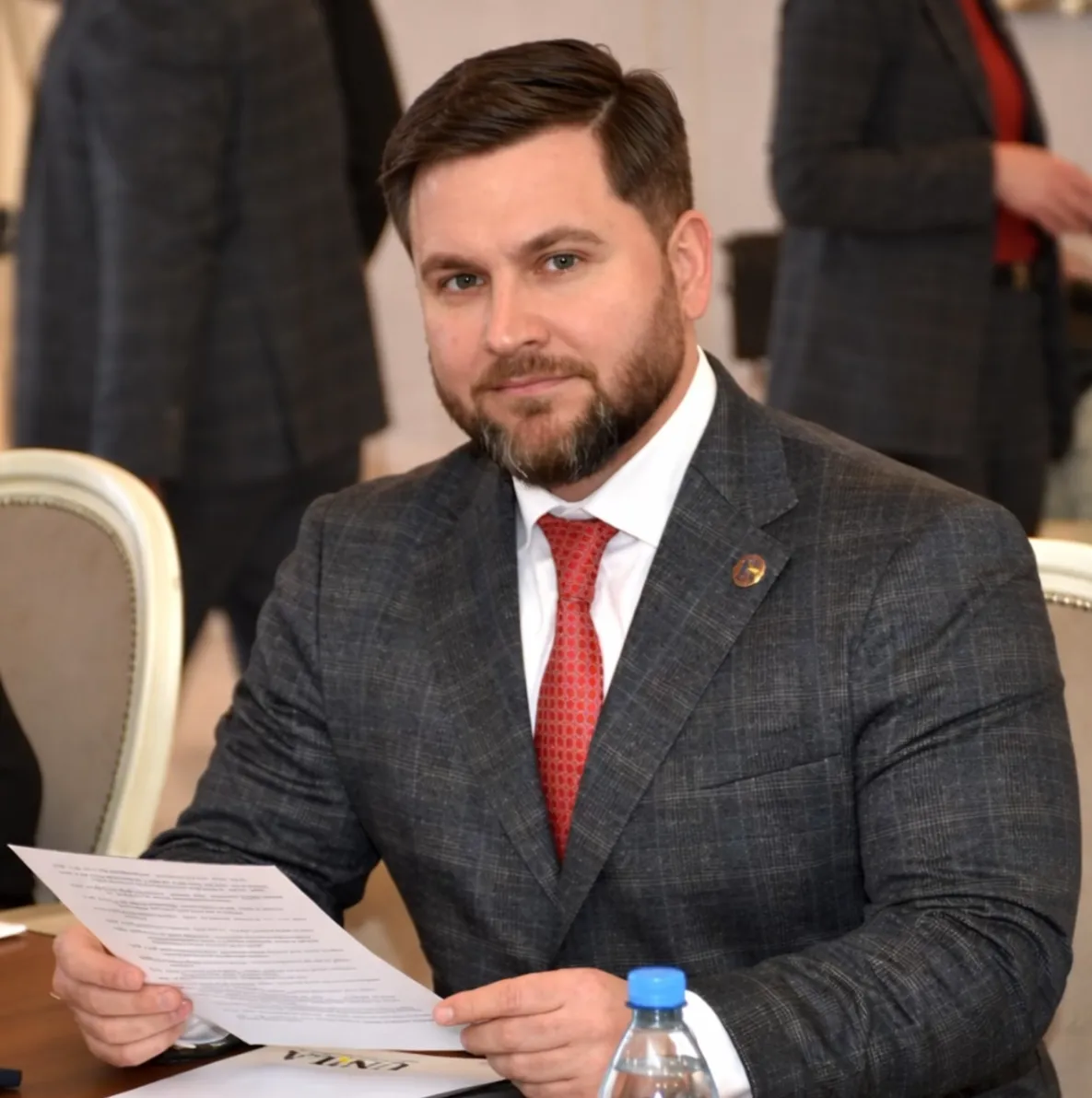
Dale Armstrong, founder and head of Armada Network, noted that European policymakers were surprised to learn that they had been advocating for a so-called “European model” of the legal profession as a mandatory requirement for Ukraine’s EU integration — despite the fact that no single unified model exists, either in the EU or elsewhere. Each EU member state has its own unique structure of legal self-governance.
The Armada report argues that the EU’s “roadmap” is a framework document, not a mandate to dismantle functioning national institutions.
Brussels has begun to recognize that behind the façade of “European standards,” there were often private institutional agendas of specific interest groups. This realization has undermined the foundation of what the author describes as a monopoly of grant-funded activists over reform narratives.
One of the most striking elements of the report and the Kyiv press conference was its critique of technical assistance projects, particularly the EU’s “Pravo-Justice” initiative. Armstrong used a pointed analogy: when a family counselor tries to replace one of the spouses instead of offering advice, assistance turns into interference driven by self-interest.
The very methodology of such projects is now being questioned. When technical assistance begins drafting laws, shaping institutional frameworks, and defining the autonomy of constitutionally independent professions, it exceeds any reasonable mandate.
The report emphasizes that the position of a technical project does not constitute the official stance of the European Union, and that Ukraine retains the right to pursue its own path within broader standards.
This framing directly challenges the system of externally driven reform, in which foreign donors relied on a limited circle of “trusted” actors while overlooking the views of a 70,000-strong professional legal community.
At the Kyiv press conference, Armstrong introduced the term “market of problems” to describe the current situation. In Ukraine, a distinct segment has emerged where institutional challenges — real or exaggerated — become assets.
The mechanism operates as follows: NGOs produce shadow reports, cite themselves in the media to create an illusion of expert consensus, and then secure additional funding to “address” the same issues. This closed loop has little incentive to resolve problems, as doing so would eliminate the basis for funding.
What was once considered independent monitoring is now increasingly described as “lawfare” — the use of legal arguments, information campaigns, and even blacklists to achieve institutional outcomes.
Armada Network plans to take the discussion beyond Brussels and Kyiv, with the next step being a presentation of the report to U.S. senators and members of Congress.
Given ongoing debates in Washington over the effectiveness of aid to Ukraine, the findings could prove consequential. If U.S. lawmakers conclude that resources intended to strengthen democracy are being used for internal political struggles or to weaken institutions during wartime, it could impact future support.
Armstrong stressed that weakening the legal profession — a key guarantor of human rights in wartime courts — is a matter of national security.
The U.S. Congress tends to rely on data and empirical evidence rather than emotional narratives, and the Armada report seeks to provide exactly that.
In conclusion, the process of demonopolization of the expert landscape in Ukraine has begun. The Kyiv press conference demonstrated that the legal professional community is not a marginal actor. It is increasingly asserting its role not as an object of reform, but as a subject — grounded in its institutional capacity and European principles of independence.
The key message for the grant-funded sector is clear: the right to define “truth” is no longer an automatic extension of grant agreements. Each claim and each shadow report will now be scrutinized for factual accuracy, legal validity, and alignment with the state’s real interests.
In this evolving landscape, the ultimate arbiters are no longer activist narratives, but institutional positions and the objective assessments of high-level international partners.
Yaroslav Kuts, lawyer, Deputy Head of the Ukrainian National Bar Association Committee on Information Policy and Media Relations.