
More than 1,500 drones, dozens of missiles, strikes from west to east across Ukraine, and destroyed residential buildings in Kyiv. Russia has launched its most massive combined attack since the start of the full-scale invasion, attempting to overwhelm Ukraine’s air defense and intensify political pressure on Ukraine and the West.
UA.News reports on the Russians’ new tactics, the numerous casualties of this attack, and what Ukrainian military experts think about the possibility of such massive strikes recurring in the near future.
The attack lasted nearly two days
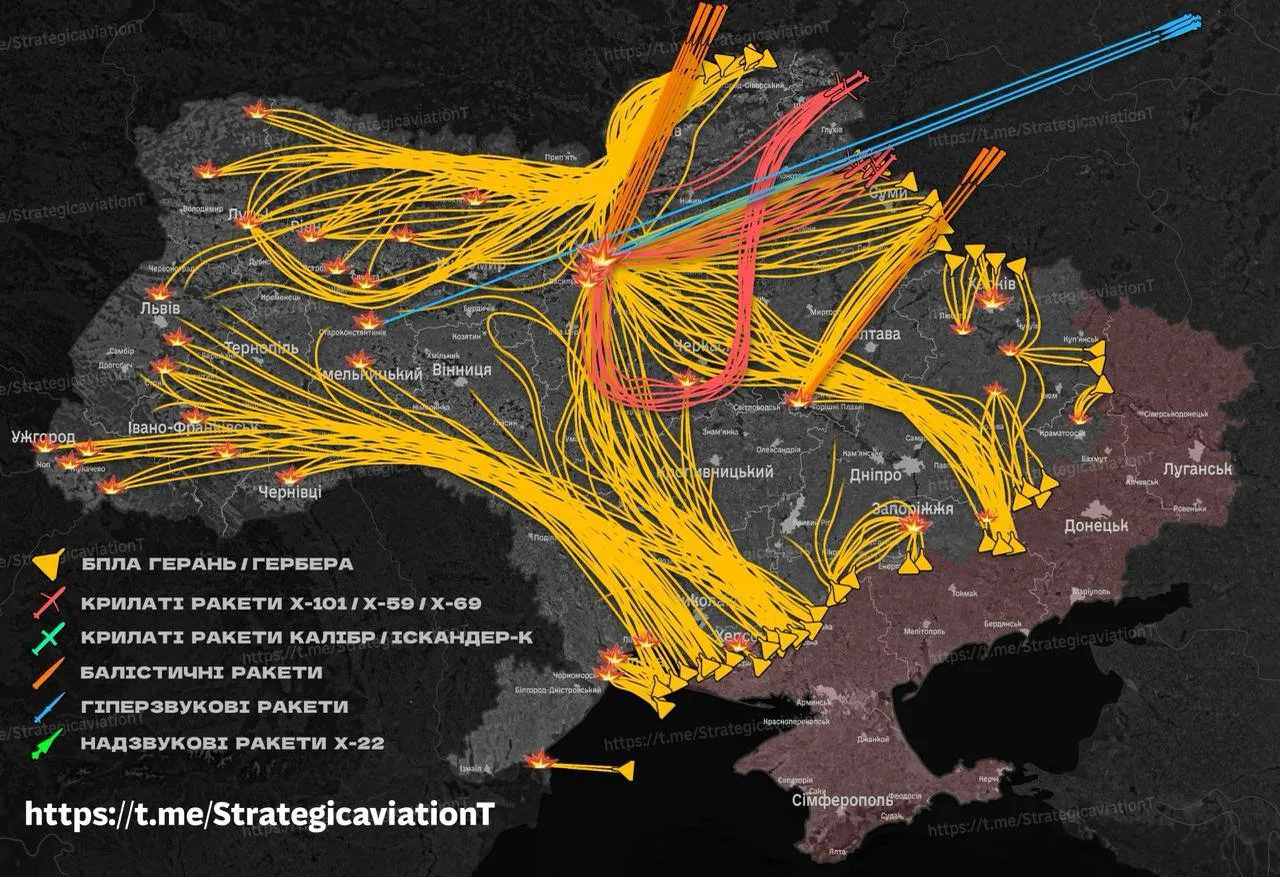
The Russians began attacking Ukraine with drones on the morning of May 13 and continued launching UAVs until the morning of the following day. The first wave of drones flew mainly in a westerly direction. Explosions were reported in Khmelnytskyi, Chernivtsi, Zhytomyr, Volyn, Ivano-Frankivsk, Zakarpattia, and other regions.
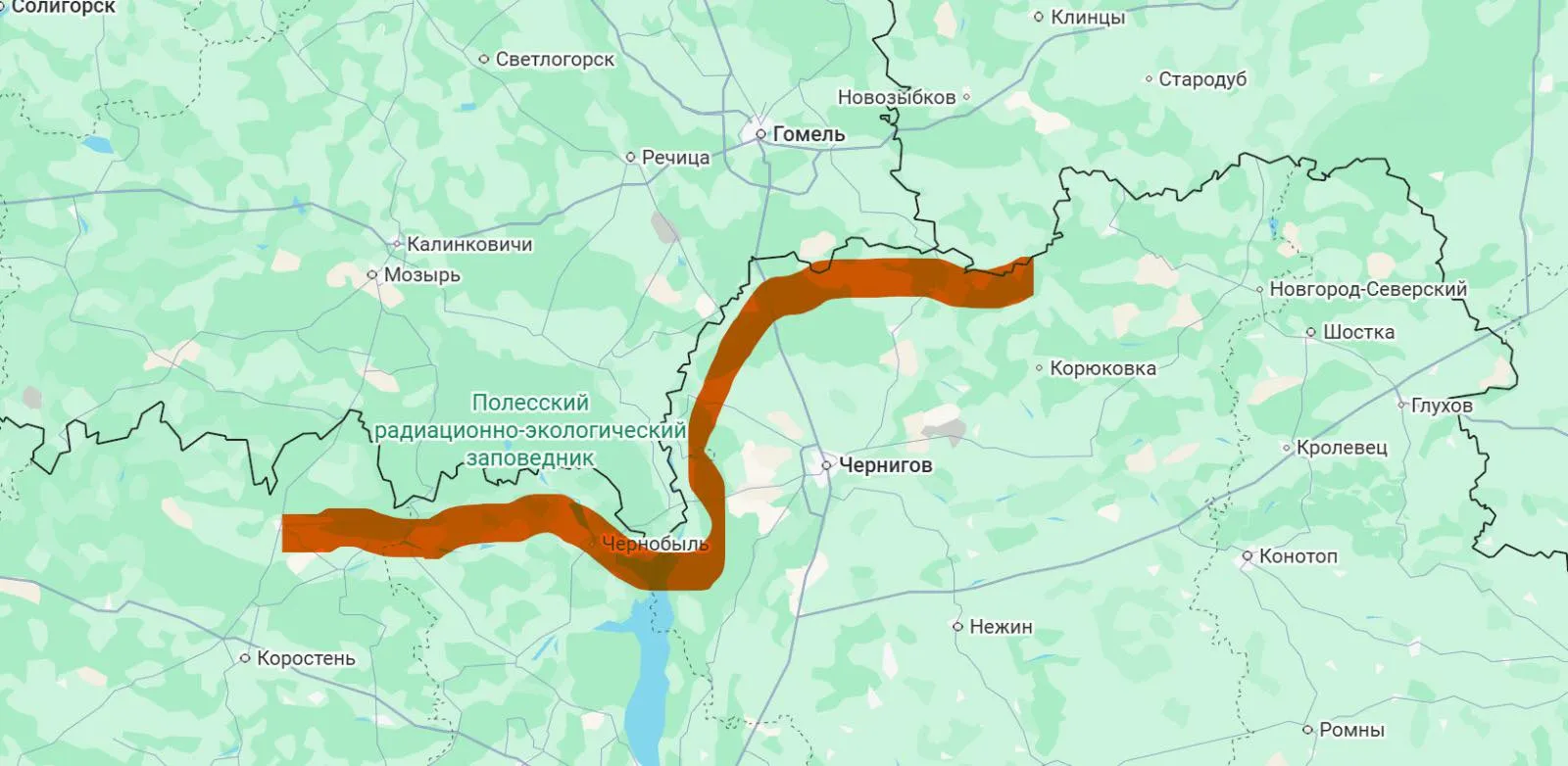
This time, the Russians updated their tactics and routed the “suicide drones” along the Belarusian border. Hundreds of drones moved one after another at a distance of 5–10 km. In this way, the enemy planned to overload our air defense system and study its deployment to break through deep into the country’s western regions.
The occupiers continued their attacks in the evening and at night, focusing on Kyiv, Kremenchuk, and certain districts of the central regions.
In the evening, they launched “Kinzhal” missiles toward Starokostiantyniv in the Khmelnytskyi region.
After midnight, ballistic missiles were launched at Kremenchuk, and closer to 5 a.m., about 40 strike UAVs attacked the metropolitan area.
Until 3 a.m., groups of attack and decoy drones attacked Kyiv and its suburbs. The assault was intensified with ballistic missiles from Bryansk and Kursk. In total, at least 10 ballistic missiles were fired at the capital. Around 4 a.m., X-101 cruise missiles struck, followed by another fifty drones.
Bila Tserkva, Chornomorsk, Kharkiv, and Sumy were also targeted that night.
On May 13–14, the occupiers deployed nearly every type of airborne weapon: a record 1,500 drones, as well as 56 missiles. The attack lasted nearly two days and was the largest in the years of full-scale war.
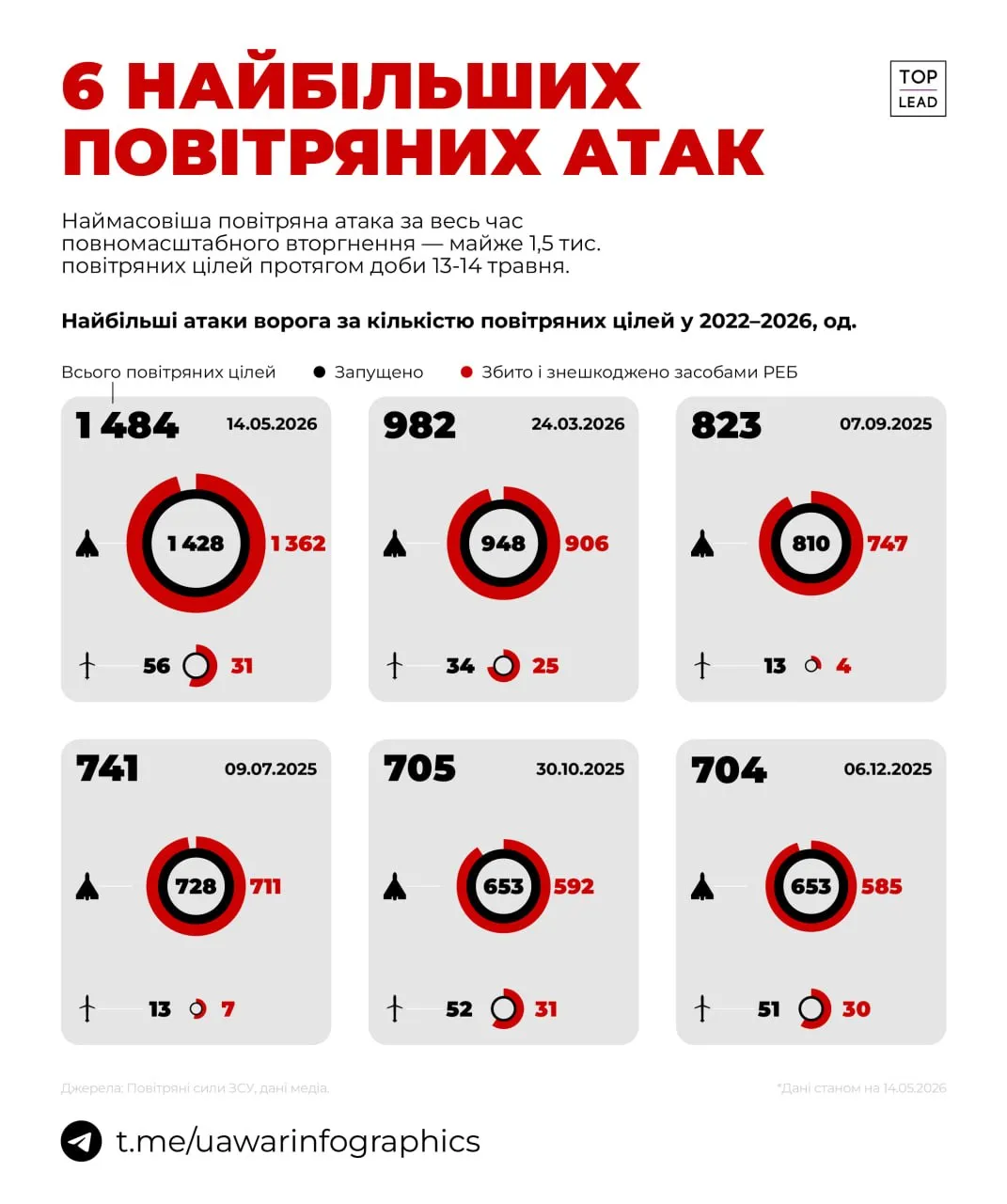
On the morning of May 14, the Air Force reported repelling the nighttime attack, stating that they had shot down or disabled: 652 out of 675 strike, decoy, and reconnaissance UAVs; 12 out of 18 9M723 ballistic missiles from the Iskander-M / KN-23 system; 29 out of 35 Kh-101 / Kh-55 cruise missiles.
In total, the Defense Forces neutralized 97% of UAVs and 73% of missile weapons.
What is known about the consequences of the massive attack
During the massive attack on May 13, strikes on residential buildings and civilian infrastructure were recorded in western regions, with at least 32 people injured:
In Rivne Oblast—three dead, six wounded.
In Ivano-Frankivsk—10 people were injured, including two teenagers.
In Volyn—5 people sought medical assistance.
In Khmelnytskyi region—3 people were hospitalized with moderate injuries.
In Zhytomyr region — two women were injured and taken to the hospital.
Additionally, on May 13, 23 strikes on Ukrainian railway facilities were recorded as a result of the Russian attack.
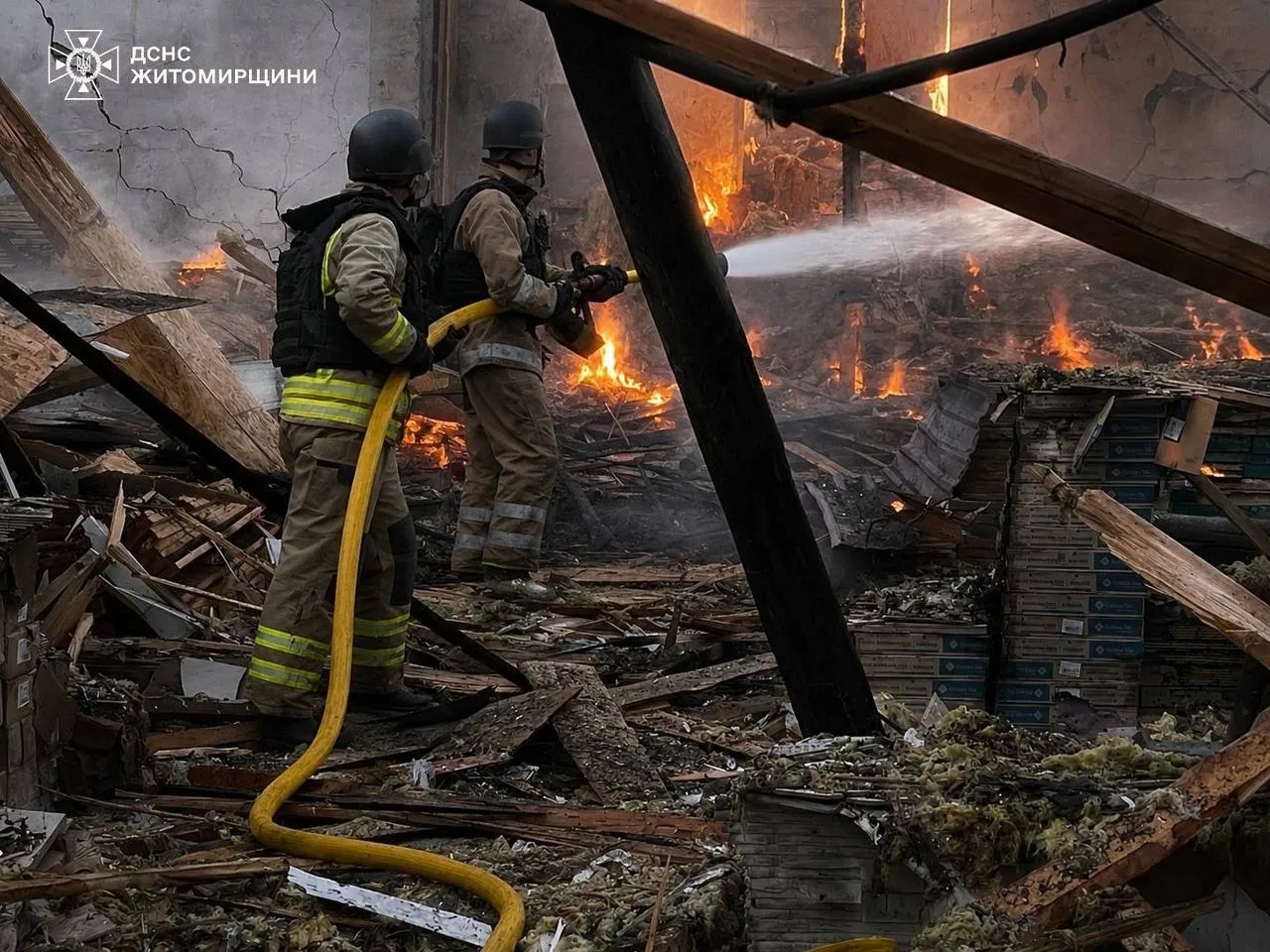
On the night of May 14, Kyiv became the main target of Russian terror. As a result of the strike, part of a high-rise building in the Darnytskyi district of the capital collapsed—people were trapped under the rubble.
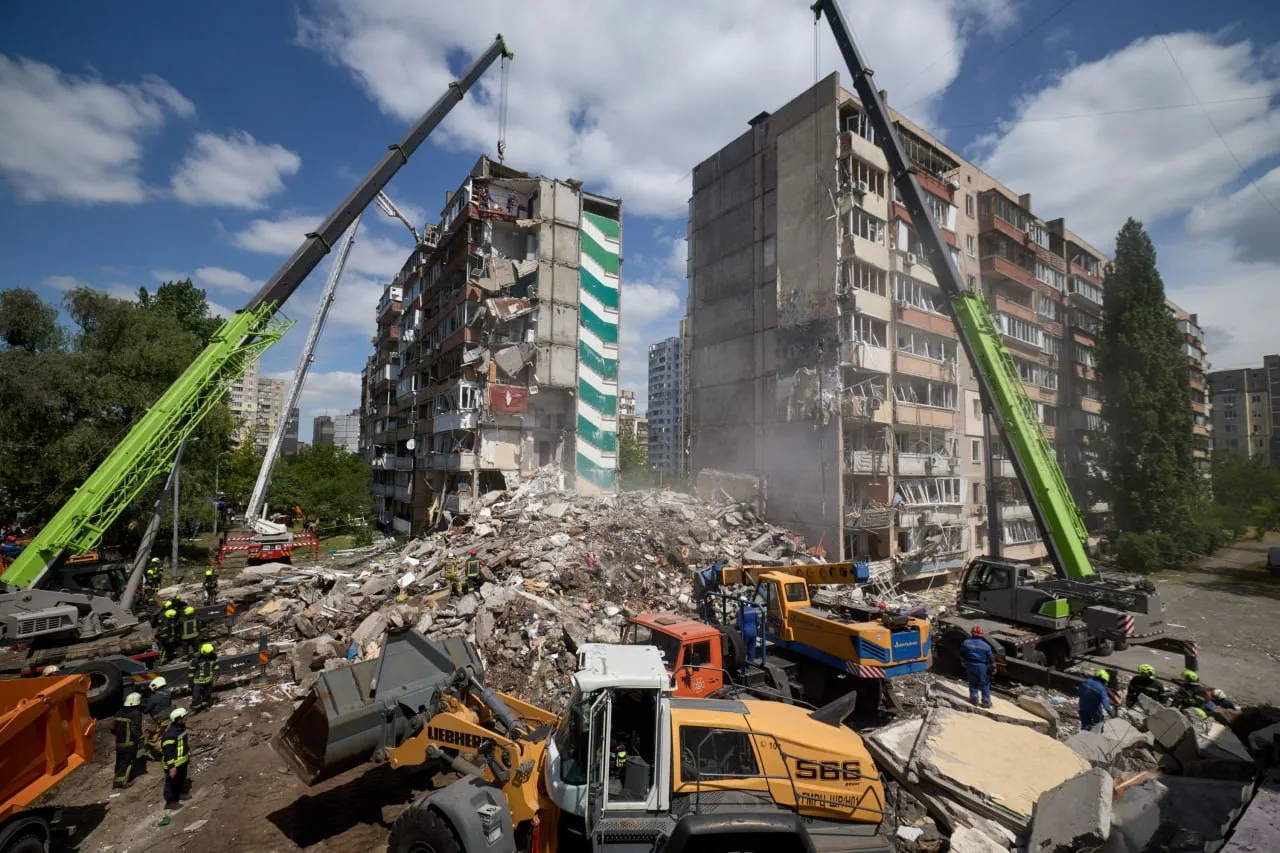
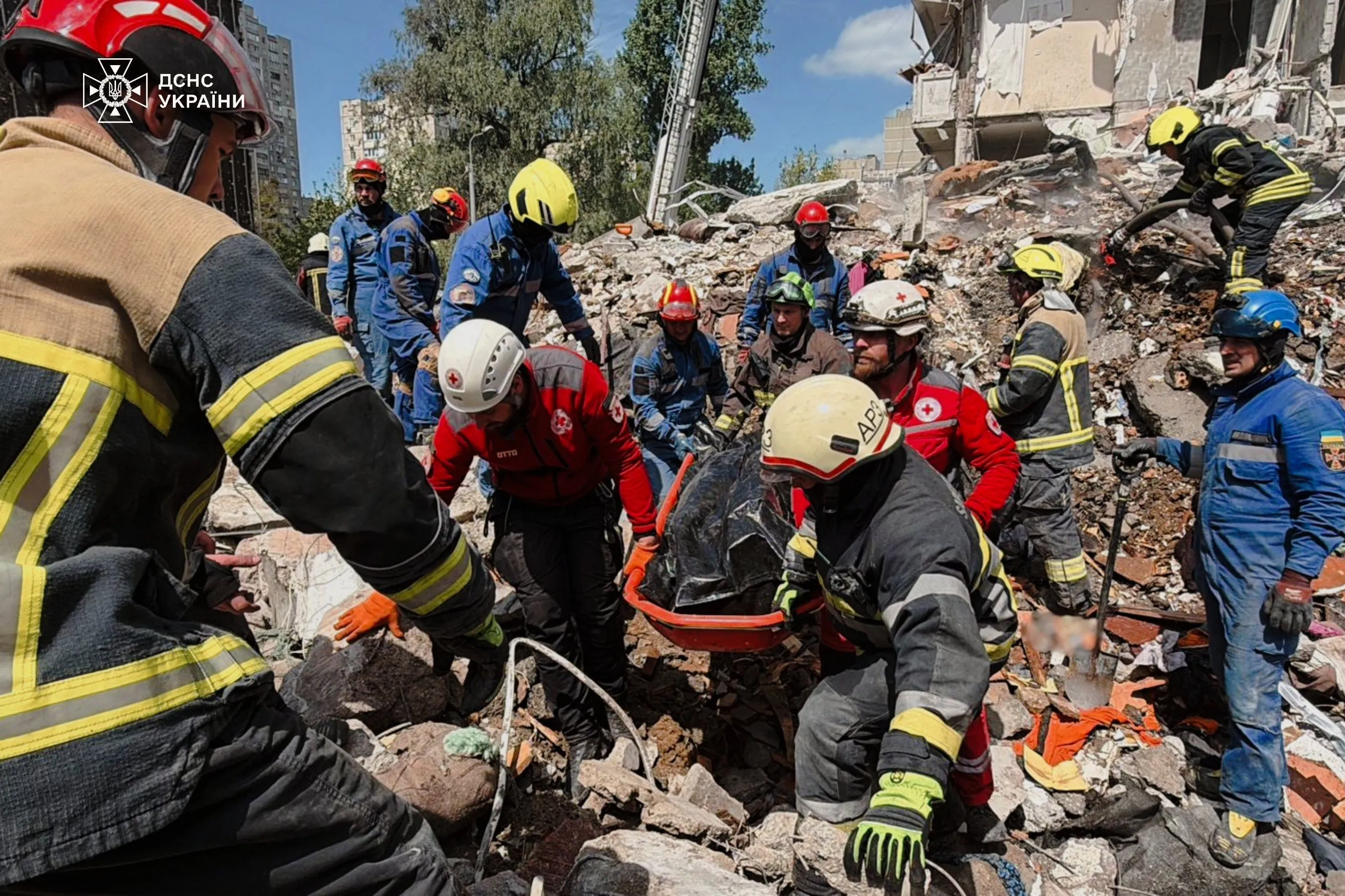
As of 3:00 p.m., the State Emergency Service reported seven fatalities, including a 12-year-old girl, as well as 40 injured, among whom is a one-month-old infant who suffered carbon monoxide poisoning. At least 20 people are considered missing. Rescuers continue their search at the site of the strike.
Another 7 people were reported injured in the Kyiv region, 28 in Kharkiv, and two in the Odesa region.
A total of 180 structures have been damaged across the country, including more than 50 residential buildings.
More than 750 employees of the State Emergency Service of Ukraine and nearly 750 police officers have been mobilized to address the aftermath of the shelling across the country.

Oleksandr Kovalenko: The Russians were stockpiling ammunition
After the ceasefire ended, such a massive combined strike was to be expected, emphasizes Oleksandr Kovalenko, a military-political analyst with the “Information Resistance” group. He points out an important aspect: the Russians had been stockpiling weapons since the last massive missile and drone strike on April 25. Since then, there have been mostly limited attacks, intense raids, and concentrated strikes.
“There has not yet been a massive combined strike involving over 500 drones and more than fifty missiles of various types. By the time the ceasefire ended on May 11, the Russians had already stockpiled more than 1,800 Shahed-136, BM-35 “Italmas,” “Gerbera,” and “Parody” drones since April 25. That is, specifically this combined arsenal,” explains Oleksandr Kovalenko. “Russia is not abandoning its terror campaign against the civilian population and will continue systematic strikes. But such large-scale, round-the-clock raids cannot be carried out daily.
Although Russia has stockpiled a massive arsenal, deploying it is a challenge—there is a shortage of launch sites. The Russians do not have enough launchers to deploy 300–400 Shaheds in a single night. Therefore, they effectively began this operation on the night of May 13 and continued it from morning until evening on May 13 and beyond. In other words, they launched these drones non-stop for over 24 hours. Again, I emphasize: the Russians are not capable of sustaining this intensity constantly.
First, they have a limited supply of munitions. And after some time, they will return to their usual pattern—launching approximately 150–200 drones per day with massive attacks once a week. Second, until they increase the number of launch platforms, it will simply be impossible to scale up the launches over time.”

Dmytro Snegirev: The Political Context of a Massive Attack
In the days leading up to May 9, Russia repeatedly warned that it might attack Ukraine in the event of strikes on Moscow during the so-called Victory Day parade. At the time, this statement sparked a storm of criticism within Russia itself. Russian authorities were criticized for the fact that the pretext for strikes on Kyiv is only sacred dates or a military parade, rather than actual events of the past five years. Specifically—Ukrainian Armed Forces operations in the Kursk region or strikes on oil refineries. Military analyst Dmytro Snegirev highlights these and other preconditions for Russia’s massive attack:
“To ease tensions within Russian society, the Russian military carried out this most massive attack on Ukraine. To show that they strike not only on so-called sacred dates. As it were, this is just business as usual for them.
First and foremost, this is a signal from the Kremlin to its domestic audience that the capabilities—and seemingly the political will—to strike Ukraine exist. It is no coincidence that they struck across the entire territory of Ukraine without exception: from the western to the eastern borders.
What else sets this attack apart? First and foremost, its informational and political component.
Once again, the international factor played a role—the meeting between Donald Trump and Xi Jinping. Paradoxical as it may seem. I am convinced: this meeting was one of the reasons for the Russian Federation’s large-scale attack.
Previous statements by the American and Chinese sides indicated that the Russian Federation is not viewed as an equal partner. In fact, those statements confirmed the Russian Federation’s loss of agency. Moreover, it was expected that Trump would discuss ending the war in Ukraine by leveraging China’s position to potentially pressure the Russian dictator.
In the Russian dictator’s view, a combined attack on Ukrainian territory was intended to enhance the occupying country’s standing in negotiations to end the war.
Another reason is the informational pressure this attack would exert directly on Ukraine’s political leadership.
On the eve of the meeting, the Russian side stated that ending the war is possible only if Ukrainian troops withdraw from the Donetsk region. At the same time, they are well aware that they have no ability to establish control over those territories in the Donetsk region that are currently under the control of the Ukrainian Armed Forces.
It is important for Putin to show the Russian people at least some kind of symbolic victory, especially against the backdrop of pressure from Trump. To do this, he needs to demonstrate, for example, interim success in the struggle for control over the Donetsk region. Since Putin has been unable to shift the front lines by military means, he has resorted to terror against the civilian population.”


