

Following statements by Russian dictator Putin about stepping up pressure on Kyiv to “achieve the set goals,” Russian forces began launching particularly devastating strikes on the Ukrainian capital. The number of casualties and injuries following each such attack runs into the dozens.
Since May, on average once every 10 days, the capital has endured large-scale combined attacks involving strike drones, “Kalibr” cruise missiles, and X-101 missiles, with a focus on ballistic missiles and hypersonic “Zircon” missiles. The intervals between these strikes depended on Russia’s accumulation of weapons stockpiles.
However, in recent days, the intensity of the strikes has increased. On the night of July 6, Kyiv and the surrounding region endured yet another “hellish” night under fire—just three days after the previous combined attack on July 2.
UA.News explains why Russia is breaking the pattern of its shelling, why Kyiv’s calls to its allies to replenish its stockpiles of interceptor missiles may not work, and what military experts think about this.
What is known about the July 6 attack and its consequences
The combined attack on Kyiv lasted 4 hours. Preparations for it began as early as the evening of July 5—the enemy started launching various types of drones from several directions: Shahed, “Gerbera,” “Italmas,” and “Parodia” decoy drones. The UAVs were intended to distract air defenses and pinpoint the locations of our anti-aircraft systems.
After midnight on July 6, “Kalibr” cruise missiles were launched at Kyiv and the Kyiv region simultaneously with strikes by hypersonic “Zircon” missiles from Kursk and ballistic missiles from Bryansk.
Closer to 3:00 a.m., Kyiv was attacked in two waves by X-101/9m727 cruise missiles.
In total, during the combined attack, the occupiers launched several types of missiles:
· 6 “Zircon”/“Onyx” anti-ship missiles (launched from the Kursk region);
· 23 “Iskander-M”/S-400 ballistic missiles (launched from the Bryansk, Oryol, and Kursk regions);
· 33 Kh-101 cruise missiles (launched from the Vologda region);
· 6 “Kalibr” cruise missiles (launched from Novorossiysk).
The Air Force reported that the enemy focused on wearing down air defense systems and striking with hypersonic missiles, deploying 419 air attack assets: 68 missiles and 351 drones. This is slightly fewer than on July 2, when the Russians used 496 drones and 74 missiles—launched from the air, land, and sea.
On July 6, the Defense Forces destroyed or neutralized 363 targets: 37 missiles and 326 drones of various types. In particular, they shot down 31 Kh-101 cruise missiles and 6 “Kalibr” missiles.
At the same time, 29 ballistic missiles—including anti-ship missiles—and 18 attack drones were recorded as having struck their targets.
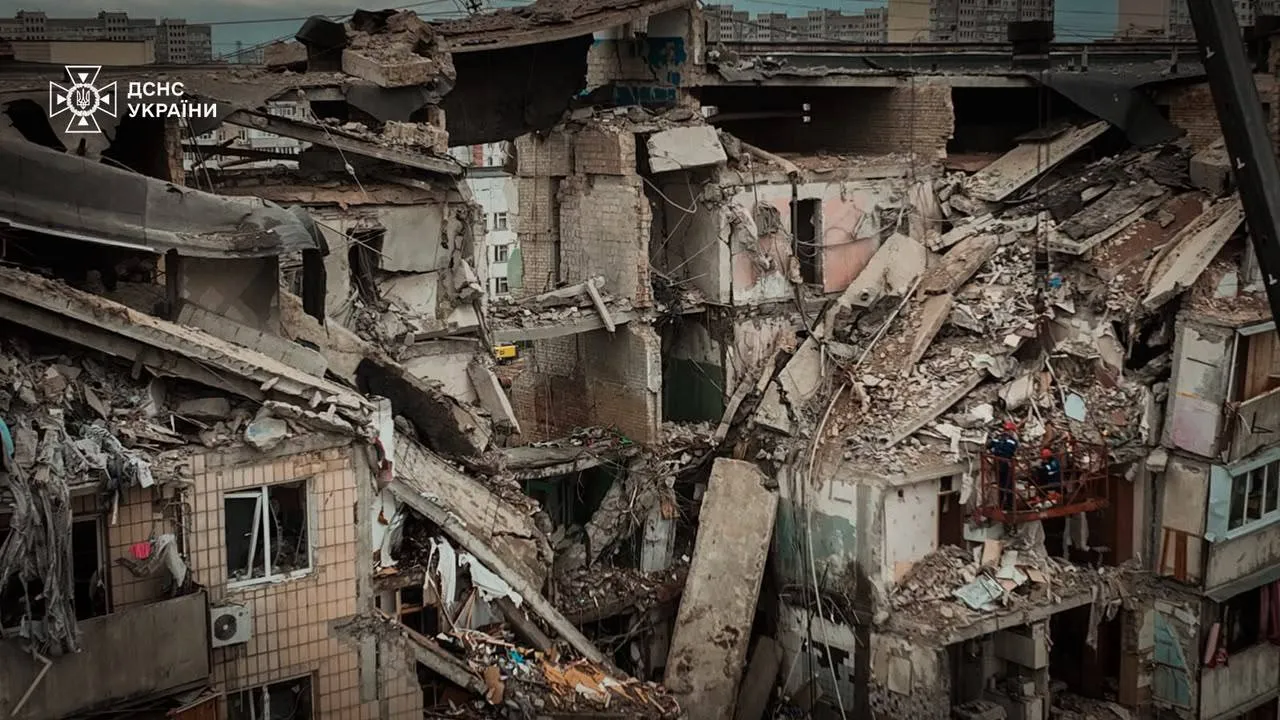
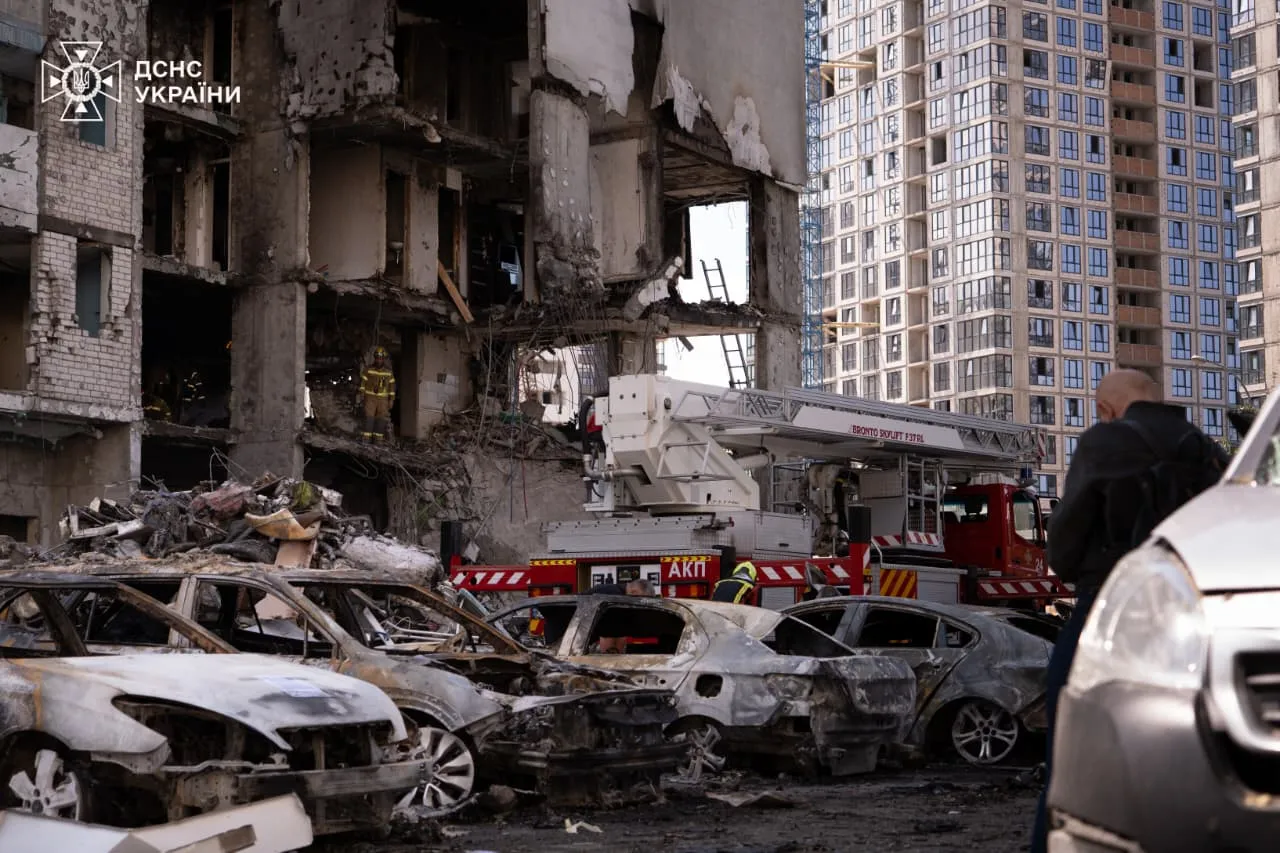
In Kyiv, about 30 residential buildings were damaged during the nighttime attack. In the Podilskyi district, a missile strike destroyed part of a building’s entrance. In the Darnytskyi district, a missile struck a courtyard between high-rise buildings. Buildings were damaged in the Obolonskyi and Holosiivskyi districts.
In the Kyiv region, in the town of Vyshneve, five streets—comprising dozens of buildings—were destroyed as a result of the strikes. Due to the risk of secondary explosions, more than 500 residents were temporarily evacuated from the danger zone.
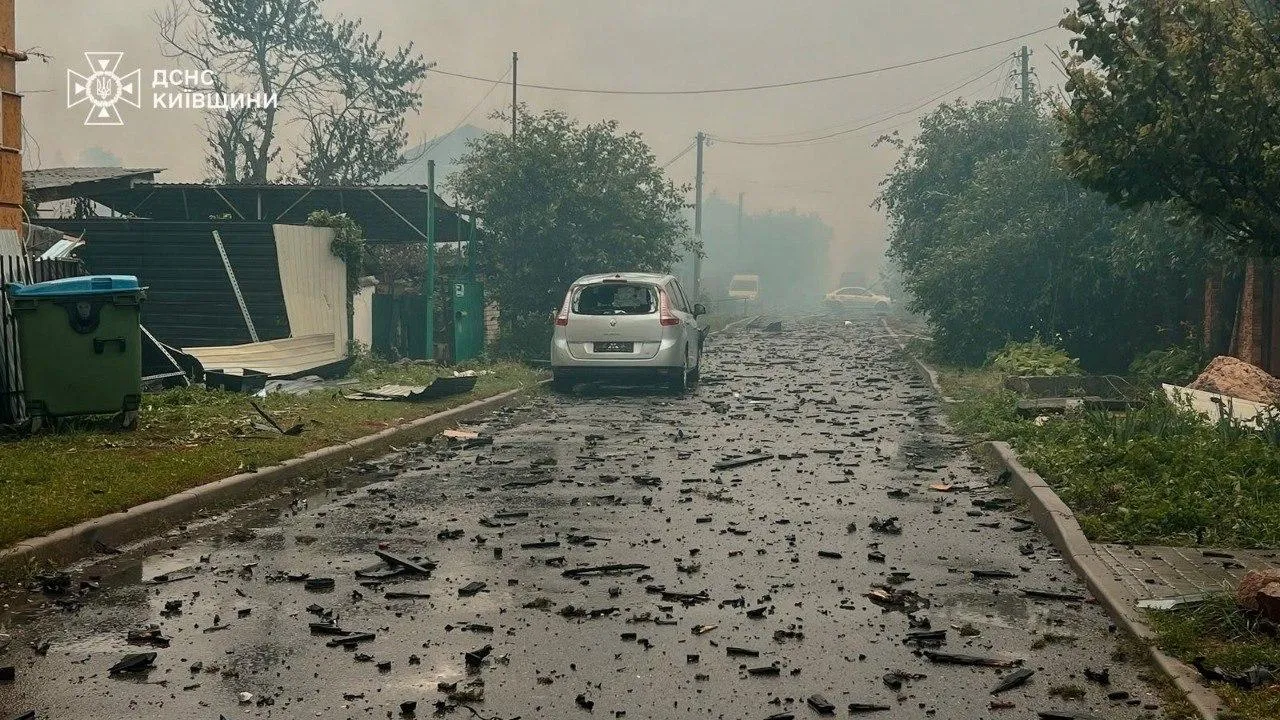
In total, the Russian strike on Kyiv and the surrounding region claimed the lives of 14 people. The identification of the victims is ongoing. Nearly 60 more residents were injured, including 5 children.
Shortage of Interceptor Missiles
A more detailed analysis of the air defense operations revealed that on the night of July 6, Ukrainian air defense forces were unable to intercept any of the 29 ballistic missiles launched by the Russians. Air Force spokesperson Colonel Yuriy Ignat explained that the reason was a shortage of missiles for the Patriot air defense systems, which are capable of shooting down ballistic targets.
“The success rate is low, to put it mildly. To shoot down ballistic missiles, you need the right munitions. We have enough systems; what we need is a steady supply of missiles. The Russians are exploiting the fact that there is a serious shortage of PAC-2 and PAC-3 interceptor missiles in Ukraine—and indeed worldwide—so they are focusing more on ballistic missile strikes,” Ignat commented.
The Air Force spokesperson also did not rule out the possibility that Russia could launch a new massive barrage in the near future, as the enemy has significantly shortened the intervals between attacks.
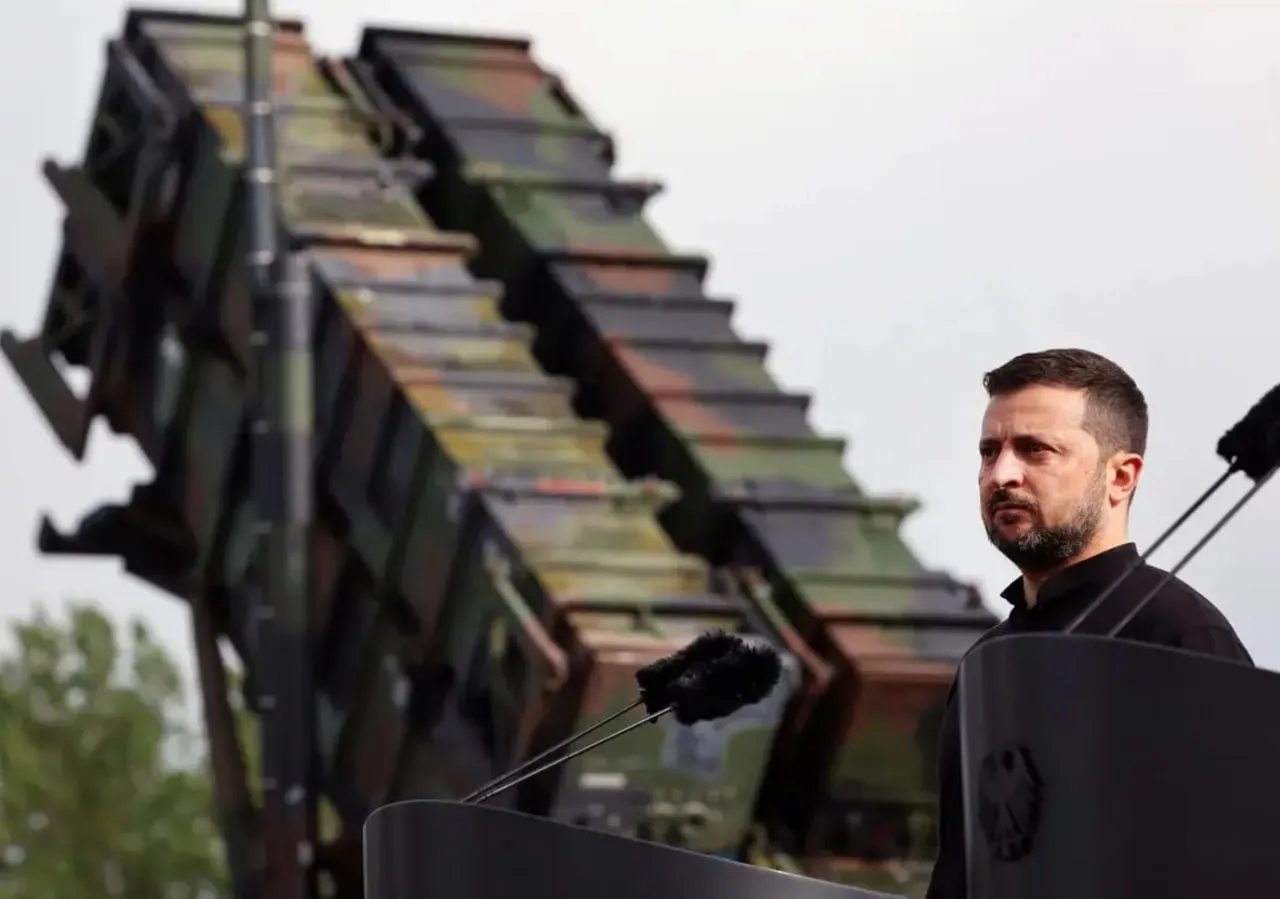
President Volodymyr Zelenskyy has repeatedly spoken about the shortage of interceptor missiles. Following the attack on July 6, he noted that Ukrainian troops had shown “good results in shooting down drones and cruise missiles, but, unfortunately, not against Russian ballistic missiles.” According to the head of state, the reason was insufficient supplies of interceptor missiles. On the eve of the NATO summit, which will take place on July 7–8 in Ankara, he called on allies to take decisive action.
“It is very important that the world—first and foremost the United States and our European partners—emerge from the NATO summit in Ankara with strong decisions to support our air defense and, consequently, the protection of ordinary people’s lives. As long as the missiles for the ‘Patriots’ remain in the allies’ warehouses, this only encourages Russia to continue ‘targeting’ residential buildings. The U.S. and Europe have enough power to stop this terror,” Zelenskyy stated.
Ukrainian Foreign Minister Andriy Sibiga echoed these statements. He emphasized that “the most significant outcome of the Ankara summit is the expansion of Ukraine’s capabilities to protect our children from Russian ballistic terror.”
What Experts Are Saying

Oleksandr Kovalenko: The Russians were in a hurry to demonstrate their ability to launch one strike after another
It was a standard, massive, combined attack: involving drone raids and missile strikes using a variety of missile systems, notes Oleksandr Kovalenko, a military and political analyst with the “Information Resistance” group. At the same time, commenting on the Russian strikes on July 6, he points to certain changes.
“The preparation for this strike was very rapid, with no follow-up reconnaissance. A relatively short period of time had passed since the July 2 strike for the Russians to thoroughly analyze everything: the effectiveness of the strikes, conduct the necessary reconnaissance and follow-up reconnaissance activities, and set new coordinates and flight missions. This was done either to deliver a more precise strike against targets that had not been completely destroyed or to carry out strikes against new targets, taking into account those that had already been destroyed. All of this had to be coordinated with the post-flight maintenance process for the aircraft.
In my opinion, the Russians did not perform any post-flight maintenance on the Tu-95MS aircraft at all. They simply took them out very quickly, repeatedly, without any downtime, and deployed them for combat sorties. Most likely, they were in a hurry to demonstrate their ability to launch one strike after another within a span of nearly three to four days, rather than a week and a half.
Because the strike on July 2 followed a pause that began on June 15—more than two weeks. On average, the Russians carry out such strikes every week to a week and a half. That is enough time to prepare the necessary amount of ammunition, coordinate new targets, conduct reconnaissance, and so on.”
The main objectives of this aerial terror for Russian forces remain unchanged, according to Oleksandr Kovalenko.
“In addition to facilities of particular interest—notably those in the military-industrial complex—they also target storage facilities, warehouses, and logistics hubs. At the same time, this also amounts to terror against the civilian population. In other words, the classic terror against civilians continues unabated.
Every such strike involves the deliberate coordination of airstrikes on residential buildings and civilian infrastructure to increase the moral and psychological pressure on the population. Such terror is intended to instill panic. This Russian strategy has remained unchanged for years. And they are unlikely to change it. They will continue to adhere to it.”

Dmytro Snegirev: We must destroy Russian missile production facilities and launchers
“In my opinion, the statements that the Defense Forces have problems with interceptor missiles were misplaced. We have effectively provoked a scenario of intensified strikes, primarily on the capital of Ukraine,” emphasizes military analyst Dmytro Snegirev. According to his assessment, the intensity of future massive attacks will depend on the Defense Forces’ actions to eliminate the Russian Federation’s ability to launch strikes.
“This involves a comprehensive strike against Russian territory, specifically targeting defense industry facilities involved in the production of cruise, ballistic, and hypersonic missiles. First and foremost, this includes the Votkinsk plant. And, accordingly, the destruction of the launchers themselves. We have the capabilities for both. We need to fundamentally change our tactics and strategy for striking the territory of the Russian Federation. We shouldn’t be clamoring for interceptor missiles; instead, we should destroy Russia’s strike capabilities.
Here’s what I mean. The most recent massive strike on Ukrainian territory involved 75 missiles. It takes at least two missiles to intercept each one. It can even be as many as three. If we assume two interceptor missiles per target, then 75 multiplied by 2 equals 150 missiles.
We must take into account that these massive strikes occur once every two weeks. That means in two weeks there will be another strike involving 70 missiles. And once again, we’ll need 150 interceptor missiles. Thus, in total, we need to receive 300 interceptor missiles from our partners each month. To put this in perspective, the price of a single missile is $4 million. This means that each month, our partners would have to provide us with interceptor missiles worth $1.2–1.5 billion free of charge. That is too much even for our partners.
It’s also worth noting that production capacity for Patriot PAC-3 interceptor missiles is limited to 500 units per year. Consequently, all calls for “Give us interceptor missiles!” fall on deaf ears. Both our partners and the General Staff of the Ukrainian Armed Forces fully understand that it is impossible to provide us with 500 missiles per year.
This production is intended to meet the needs of the U.S. military, the needs of the U.S.’s strategic partners outside the NATO alliance—primarily Israel—and, consequently, the Ukrainian front. In other words, the current production volume does not meet external challenges. Yes, the United States has currently funded an increase in production to 1,500 per year. But that won’t happen until 2027.
This raises the question: Should we wait until 2027, or should we take preemptive action against the Russian Federation to prevent it from having any remaining capacity to produce missiles? Why do we need to intercept every missile when it’s better and cheaper to destroy their stockpiles? And the Ukrainian side has the capability to do so.
We’re launching 400 drones a day into Russian territory. If we direct all 400 of those drones at a single target, Russian air defense won’t be able to hold out. We’ll destroy a missile production plant in one or two days, at most.
And if we consider the possibility of a combined strike—that is, a first wave of decoy drones to cripple the air defense systems. Then, accordingly, aircraft-type drones and, in parallel, FP-5 (“Flamingo”) cruise missiles. Why hasn’t this been done over the past six months?” In order for our allies to provide us with interceptors, we also have to do something. First and foremost, we must neutralize the capabilities of the Russian Federation’s military-industrial complex.
But the main question is: why aren’t we striking the launchers? We have more than enough time to gather intelligence. The United States provides us with intelligence 24/7. Thanks to innovative American technologies, intelligence processing has been reduced to 15 minutes. In other words, we can make real-time decisions to strike Russian territory precisely as launchers are being deployed. This is a given. Therefore, we should be targeting launchers and launch sites, rather than chasing after every individual missile.
Furthermore, when such appeals are made to our allies, it is worth recalling that at the time of the Soviet Union’s collapse, Ukraine had the most layered air defense system—we had nine air defense brigades. In other words, Ukraine had more than 250 air defense systems in service. But they were sold off during the tenure of Defense Minister Anatoliy Hrytsenko (2005–2007), who has still not been charged with undermining the country’s defense capabilities. In other words, on the one hand, we sold off everything we had for a song, and now we’re asking our allies, “Give us missiles for free so we can defend ourselves.” That’s not how it works.”
Dmytro Snegirev also draws attention to another aspect related to obtaining licenses for the latest interceptor missiles.
“As I understand it, all these statements are aimed at obtaining a license from the U.S. to manufacture interceptor missiles. Moreover, the emphasis is placed on the fact that only Patriot air defense systems can shoot down Russian ballistic missiles. That’s not true. The Franco-Italian-made SAMP/T air defense systems can also shoot them down. Why aren’t we appealing to France for licenses to produce interceptor missiles?
The war has been going on for five years, but only now has the issue of needing a license come up. Let’s be realistic—the United States will not grant us a license. They understand perfectly well that information will leak to the Russian Federation. Take, for example, the events of 2014—the battles near Debaltseve. At that time, the latest U.S.-made counter-battery radars—top-secret technology—were seized by Russian intelligence agencies while still in working order and unopened. There was a massive scandal over this. So, given that incident, the Americans are well aware that classified information could leak to the occupiers.”




