
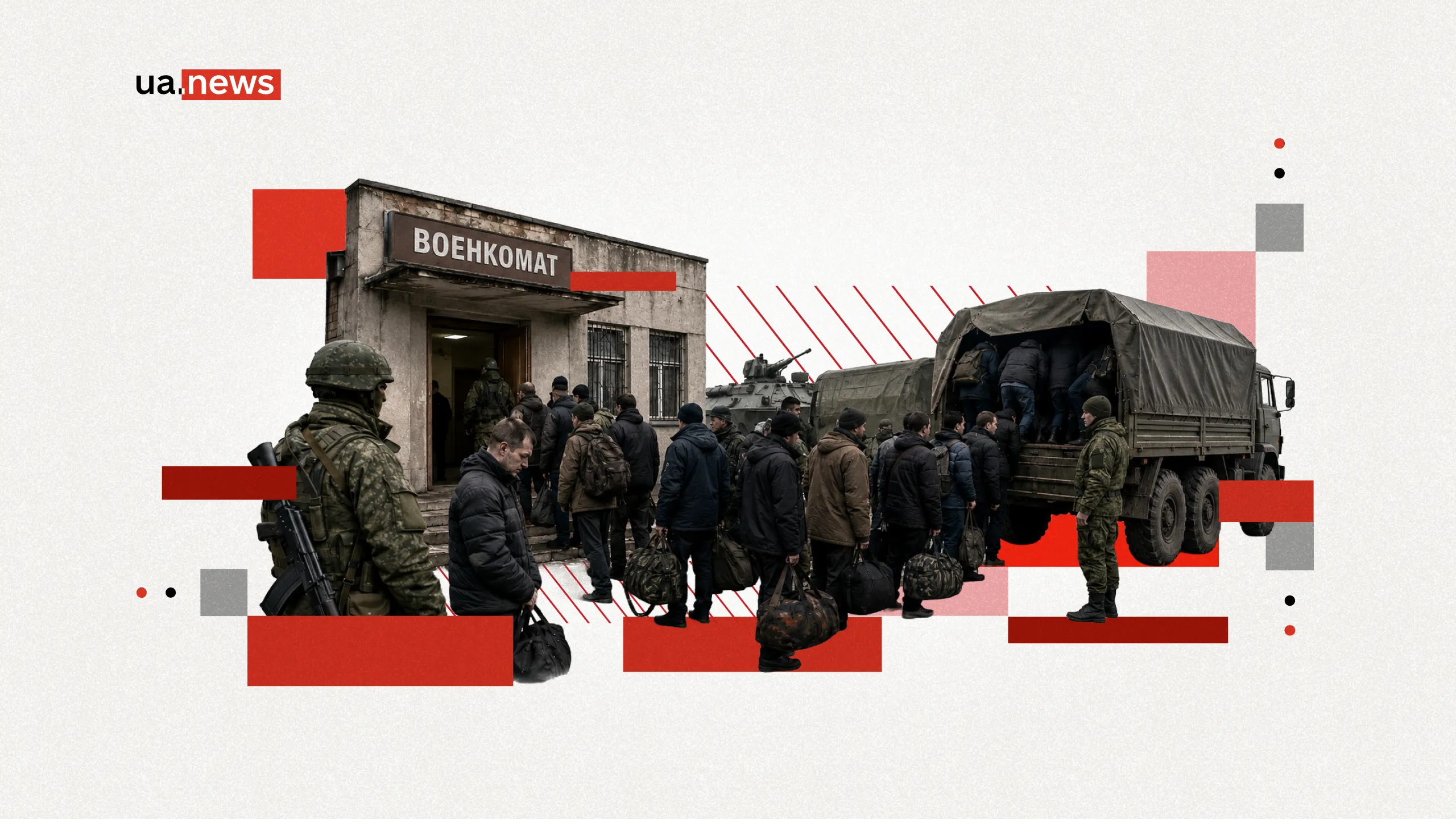
Recently, there has been renewed talk in the Ukrainian media about a potential Russian mobilization. Such statements are being made at the highest levels, including by the president. It is expected that after the State Duma elections, Putin will be ready to announce another wave of military conscription.
Reactions to this news in Ukraine are mixed. On the one hand, there are those who take the prospect of a Russian mobilization very seriously and therefore propose immediately and preemptively “tightening the screws” on Ukrainian mobilization—allegedly because we have so far been operating under a “spa-resort-style” conscription regime. On the other hand, a dangerous bravado can be observed on the home front: the argument goes that Putin fears his own people more than NATO, so a second mobilization would be political suicide for the Kremlin and a bluff that will never be carried out. The truth, as is often the case, lies somewhere in the middle.
So, will Russia proceed with mobilization in the fall of 2026? What should we expect in this context, and why is this dangerous for both Ukraine and the Russian regime itself? UA.News political analyst Mykyta Trachuk, together with experts, examined the issue.
There Will Be No Collapse of the Front
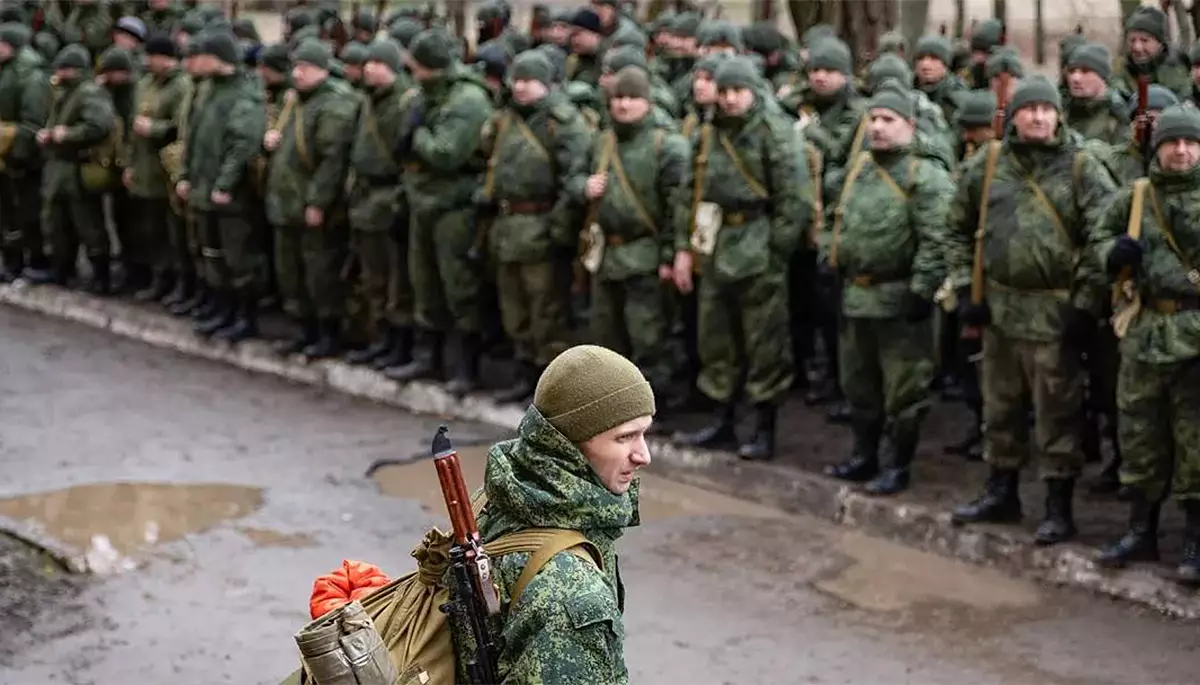
Public opinion in Ukraine, especially influenced by the emotions of a protracted war, tends toward binary oppositions in its perception of events. If Russia announces a mobilization this fall, some people imagine scenes from *The Lord of the Rings*: a horde of millions crossing the border, while the line of defense crumbles under the pressure of the countless masses. However, this is an illusion: there will be no sudden collapse of the front line if mobilization is declared in Russia, and here’s why.
The Kremlin didn’t suspend the active phase of conscription back in 2022 for no reason. Despite years of propaganda, there is no genuine consensus on the war within Russian society. A significant portion of the population is willing to passively support the “special military operation” only until it knocks on their doors with a draft notice.
The fall of 2022 showed that society reacts to conscription attempts with a mass exodus and deep anxiety. So, in the event of a new wave, the strain on the system will increase enormously. It is entirely possible that Russians will start fighting back against military draft officers on the streets, just as Ukrainians do.
Such a situation places enormous stress on any system. Announcing mobilization is, in essence, an official acknowledgment that the Kremlin is failing and that there are no more volunteer contract soldiers. It is an admission that the current troop force—estimated at over 700,000 occupiers—is incapable of fulfilling its strategic objectives. To put this in perspective: 700,000 is roughly half the combined strength of the armed forces of all EU countries put together.
After all, the mobilized troops won’t end up on the front lines immediately, in numbers running into the hundreds of thousands. They’ll need months for training, combat coordination, logistics, and so on. Nothing on a large scale in this war happens all at once.
That is precisely why the decision on mobilization has most likely not yet been finalized. The enemy is caught in a trap of its own contradictions: manpower is desperately needed, but the strain on internal stability caused by conscripting hundreds of thousands or even a million unmotivated, poorly equipped men could outweigh the benefits of their presence in the trenches. Not to mention how difficult this would be for the economy.
The
Russian mobilization should not be underestimated
If the first mistake is panic over an “immediate apocalypse,” then the second—perhaps even more fatal—is the complacent belief that “Putin won’t dare.” We must take a sober look at the legal and political reality. The reality is that the mechanism for launching a new mobilization in Russia is a matter of a single day. Putin’s mobilization decree, signed back in September 2022, has not been revoked to this day. It has not lost its legal force but remains in a state of politically motivated “hibernation.” Legally, Putin does not need to reinvent anything; he does not need any new approvals from the Federation Council. All it takes is a secret order—and the death machine will instantly shift into overdrive.
If such a decision is made, sooner or later the front lines will be flooded with a massive number of conscripts. Analysts estimate the range to be between 500,000 and one million people. These aren’t just numbers. Even if we imagine the worst-case scenario for the enemy—poorly trained, demotivated “cannon fodder”—the law of large numbers still holds true.
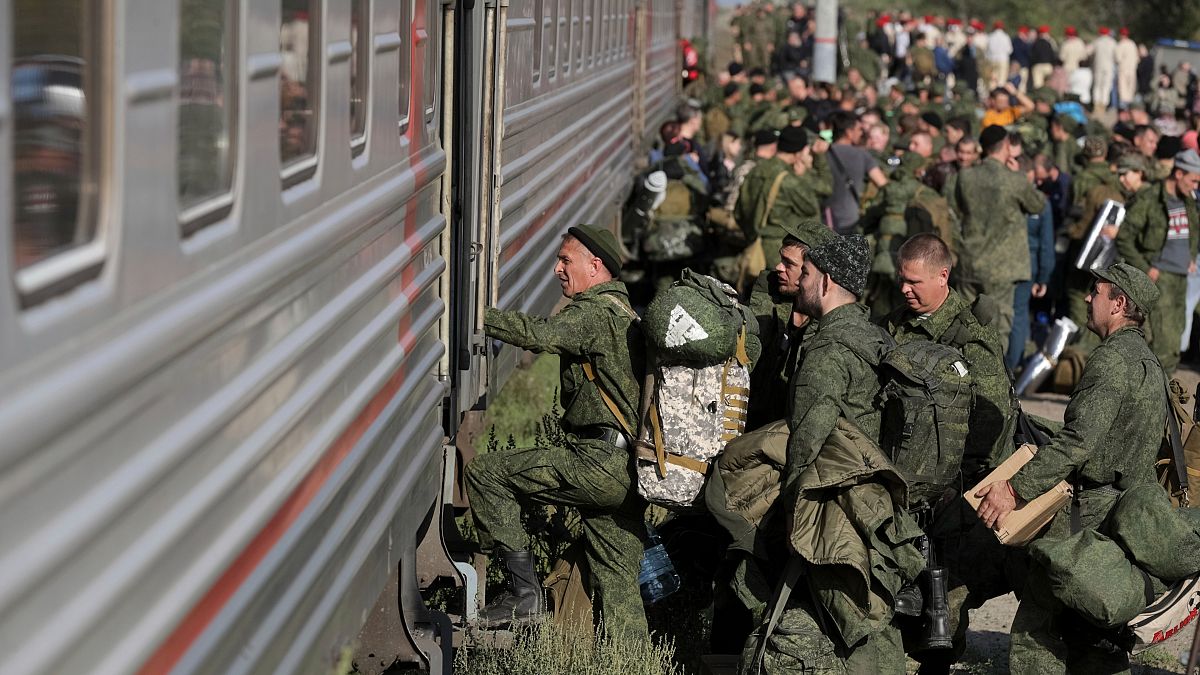
Of course, they won’t all arrive in Ukraine in the fall of 2026 immediately after the elections. That’s physically impossible. The process of mobilizing, assembling, training, and logistically deploying such a massive number of people will take months, perhaps half a year. A realistic forecast: if mobilization begins in October, the systematic reinforcement of the front lines with fresh troops will not begin until spring 2027 at the earliest. And that is precisely when Ukraine will face an extremely difficult period.
The key issue here is not simply the number of fighters, but the geography of their deployment. With such massive reinforcements, the Russian General Staff will be able to afford what it cannot afford now—a major escalation across the fronts. Currently tied down by heavy fighting in the Donbas, the Russians lack the spare capacity to open a full-scale new operational front. But with hundreds of thousands of additional soldiers, the situation will change radically. An attempt at a new offensive in the north—particularly in the Chernihiv direction—or even a repeat of the advance on Kyiv would become quite likely. New fronts mean hundreds of kilometers of new defense lines, which Ukraine would have to man with its own, already limited, resources.
And this brings us to the most painful issue for Ukraine—the mirror response. The country’s mobilization system has long been operating at the limits of its human, administrative, and bureaucratic capacity; it is constantly accompanied by violence and a never-ending stream of scandals, often escalating to bloodshed and murder. When we hear calls from certain speakers to “further intensify mobilization,” a reasonable question arises: to what extent exactly? Society is in the throes of a profound demographic crisis, the barely functioning economy is in desperate need of workers, and Ukraine’s population is not infinite.
However, if the enemy’s numerical superiority reaches a multiple of our forces by the spring of 2027, Kyiv’s defense strategy will face unprecedented pressure. Even if these are poorly trained recruits, their sheer numbers create a problem of “saturation.” Ignoring this prospect is a path to strategic defeat. Moscow is quite capable of waging war through sheer numbers; history has proven this time and again. In such a scenario, Ukraine will face a tough time: it will have to seek new asymmetric responses, technological breakthroughs, and a new dimension of warfare, since competing head-on with Russia’s mobilization potential is a path to the complete annihilation of Ukrainians as a people.
Preparedness and Adaptation Instead of Hysteria
So what do we have in the end? On the one hand, the decision in the Kremlin has most likely not yet been finalized, and it remains an all-or-nothing gamble with unpredictable domestic consequences for Russia itself. Internal tensions, economic decline, and fear of “turmoil” are not just talking points of Ukrainian propaganda, but also a real deterrent for Putin. He remembers how men fled in 2022, and he hardly wants a repeat of that humiliating experience for the Kremlin. Mobilization represents a tectonic shift within the Russian regime, and it is by no means certain that the regime will weather it without difficulty.
On the other hand, we have no right to hope that Putin’s fear of his own people will prove stronger than his fear of defeat in Ukraine. If he is faced with the choice of “losing face” and freezing the war or risking internal stability for the sake of a new offensive on the front lines—we know which option he will most likely choose. Putin almost always chooses escalation. Therefore, talk that “Russia is on the verge of economic collapse, so there’s no need to worry” is criminally reckless.
The true “middle ground” lies in calm preparation. The reaction to news of the fall mobilization in Russia must be free of both hysteria and euphoria. The enemy’s information campaign in preparation for this move is already underway, and the goal of this campaign is to demoralize Ukrainian society even before the first newly mobilized person registers. We must not succumb to this crude blackmail.
Second, calls for a “total escalation” of mobilization in Ukraine specifically as a reaction to the enemy’s actions also represent flawed logic. We need qualitative, not quantitative, symmetry. The goal for 2026–2027 is not to catch up with Russia in terms of the number of fighters, which is impossible a priori due to the vast difference in demographic potential. The goal is to create a system of firepower, logistical attrition, and technological dominance in which any number of enemy recruits will amount to nothing more than casualty statistics. This means not simply “rounding up random people on the streets,” as is currently being done, but ultimately building a comprehensive recruitment system specifically for those who are needed: electronic warfare operators, drone operators, engineers, and so on.
Ultimately, the best-case scenario would be the resumption of peace talks and a ceasefire—or the achievement of an energy or air truce—or any other form of de-escalation. If the war could be brought to an end, the mobilization problem would resolve itself. Unfortunately, all of this sounds like science fiction today, but diplomatic efforts must be made to bring this science fiction at least a little closer to reality.
Expert
Opinion
Andriy Zolotaryov, a political scientist and director of the “Third Sector” Center, notes that there are several aspects to the question of the possibility of mobilization in Russia.
“First and foremost is the military aspect. The Russian Federation’s strategy since the summer of 2022 has been a war of attrition, and the Russian military leadership is adhering to this strategy; overall, they are managing it well. Although the number of people willing to enlist for the war in Russia is gradually decreasing, the Russian Armed Forces do not face a critical shortage of manpower. But when it comes to a change in strategy—this is what a segment of Russian society is demanding, the so-called ‘turbo-patriots,’ who, having fallen into the trap of their own propaganda, believe that this has been dragging on for five years now, and on top of that, Ukraine is still launching strikes against oil refineries, Wildberries, and so on. So, if we consider a change in strategy as a sort of game-changer, it would indeed pose a very serious challenge for Ukraine. Because, for the General Staff of the Russian Federation, the only remaining options to “accelerate” the war are either nuclear weapons or mobilization. And that possibility isn’t being ruled out at all. Although, from a political standpoint, Russia has State Duma elections coming up in September. And it is the Russian opposition—most of whom are in exile— is actively spreading the message that Putin will resort to mobilization—bearing in mind how Russians reacted to the mobilization in 2002, when one and a half million people left the country,” says Zolotaryov.
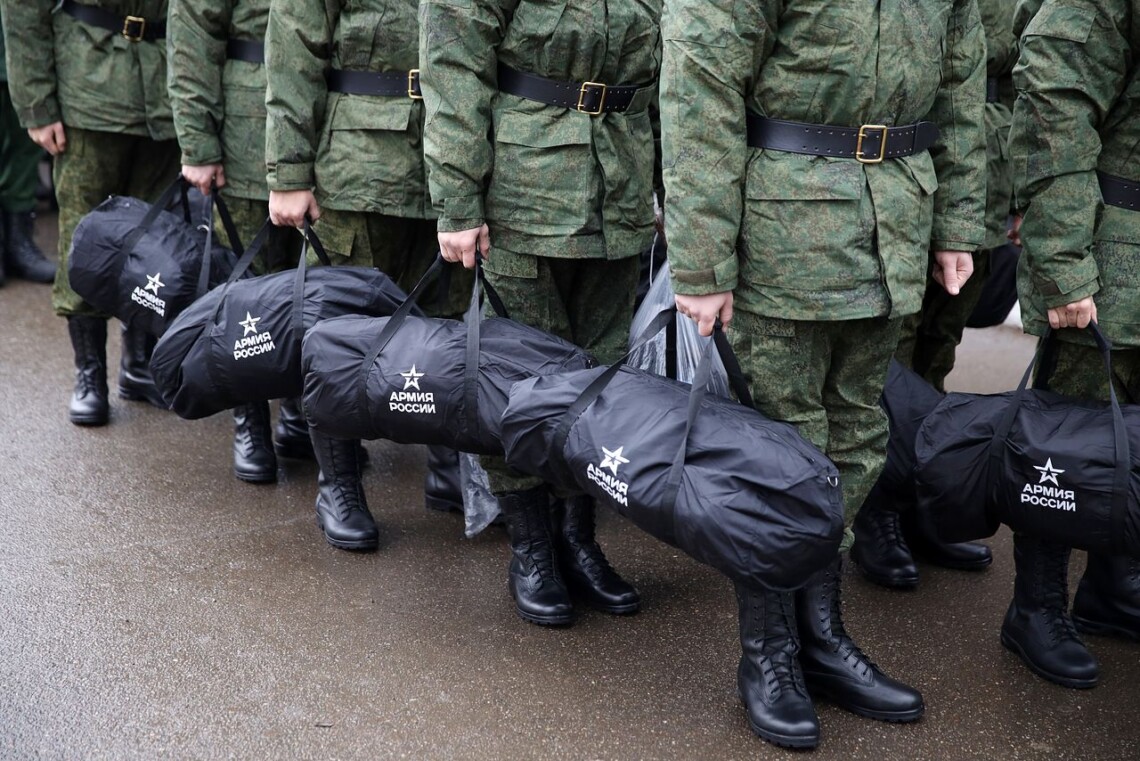
The political analyst notes: “If we look at this objectively, we understand that in the event of a mobilization of half a million Russians, those half a million would have to be sent through training centers, provide them with at least 2–3 months of training, find uniforms and equipment for them, and only then send them to the front.
“Russia has drawn conclusions from the grim experience of 2022. Therefore, such a mobilization, if it takes place at all, will be planned only with the 2027 spring-summer campaign in mind. This will require Ukraine to mobilize at least another 250,000–300,000 people in order to counter it in some way. That is precisely why this is an extremely undesirable scenario for Ukraine… Three things are needed to continue the war: money, weapons, and people. We have serious problems with money and manpower. And that is precisely why we still need to make changes in the Armed Forces of Ukraine, because we have 150,000–200,000 active “front-line troops”—no more—sitting in trenches on the front lines, while 800,000 are just hanging around in the rear. These are, as they once said, “freeloaders”: people who wear military uniforms but hardly ever see combat. A huge number of people never make it from training centers to the brigades—even Ombudsman Lubinets has acknowledged this. Available human resources must be used more rationally and optimally. Therefore, we must hope for the best but prepare for the worst. The same applies to the issue of Russian mobilization. “We must distinguish between military expediency and the political speculation surrounding it,” Andriy Zolotaryov asserts.

In
summary, the prospect of a new wave of mobilization in Russia is very real, and it poses a direct threat to Ukraine. The emotional swings between “they’re flooding us with bodies” and “Putin will get scared and won’t start conscription” are destructive and dangerous. The Kremlin is indeed hesitating, but if the choice comes down to a bad scenario and a very bad one, Moscow will clearly choose the worst.
The key takeaway is that time is on the side of whoever prepares better. Ukraine must not repeat the enemy’s mistakes by throwing unprepared and unmotivated civilians into the furnace of war in an attempt to match the enemy numerically. The focus must be on technology and fortifications so that hundreds of thousands of potential Russian recruits are crushed by Ukrainian defenses, just as happened at the start of the full-scale invasion. If the fall of 2026 brings news of a mobilization in Russia, this should be a signal not for panic, but for cool, methodical work to correct mistakes. Not hysteria, but a cool head and calm, comprehensive preparation—that is what will save Ukraine.




