$ 44.68 € 52.26 zł 12.11
+22° Kyiv +18° Warsaw +20° Washington

Dozens of ancient graves were found beneath a road in the Lviv region
UA.NEWS 20 August 2026 21:25
Dozens of ancient graves were found beneath a road in the Lviv region

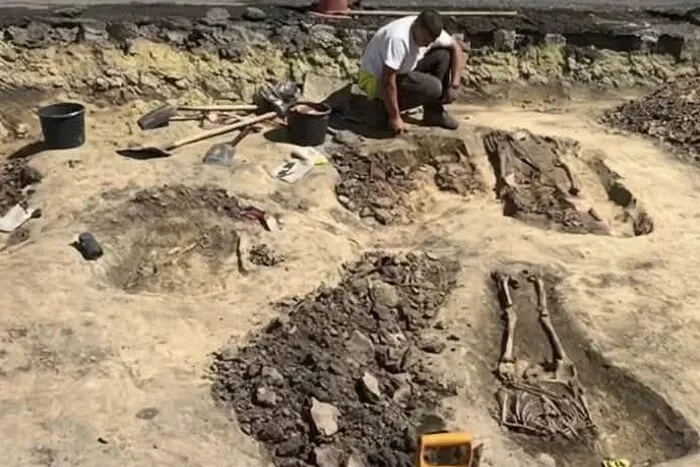
In Kulykiv, in the Lviv region, archaeologists discovered 25 human burials during excavations near St. Nicholas Church. Preliminary findings suggest that most of the graves may date back to the 18th–19th centuries, and a 15th-century coin was found in one of the graves. The excavations will continue, after which the remains are scheduled to be exhumed and reburied at the local cemetery.
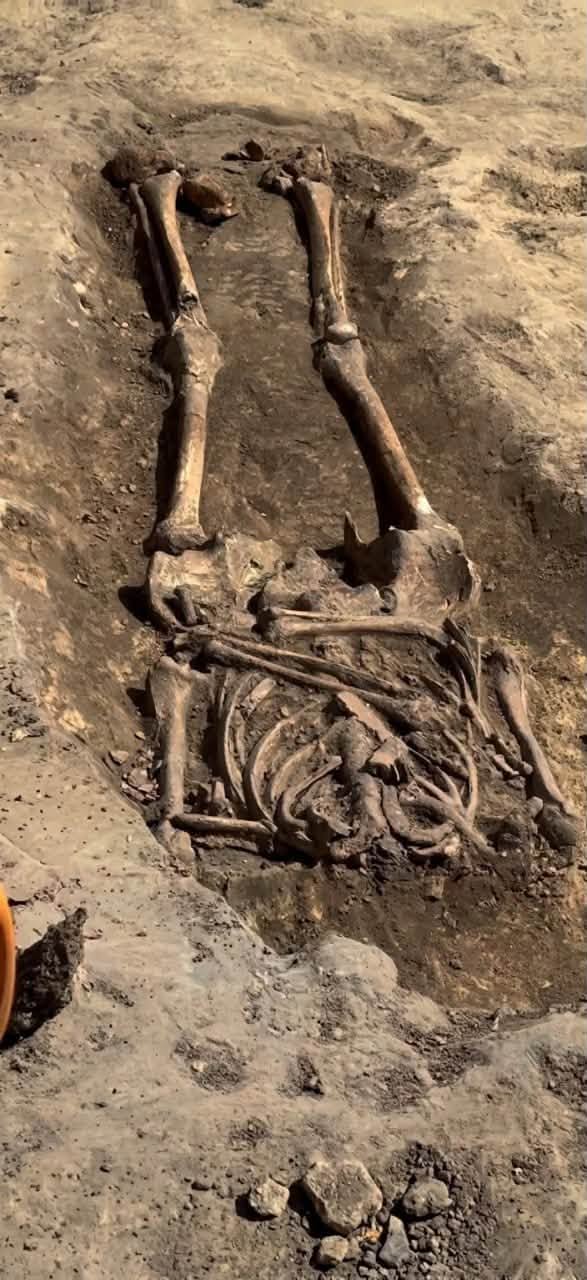
 

The graves were discovered in Kulykiv during an investigation of the area near St. Nicholas Church. In total, experts found 25 human graves. According to preliminary estimates, they may be approximately 200–300 years old. The remains found include those of children. According to Ihor Zinkevych, a member of the Lviv City Council and a volunteer, at least one-fifth of the graves belong to children.

This means that this is not a single isolated grave, but a much larger burial site. Archaeologists speculate that a church cemetery, where local residents were buried, may have once been located here.

A particularly interesting find was a 15th-century coin discovered in one of the graves. It may predate the graves themselves, so for now it cannot automatically be considered proof that this specific grave dates back to the 15th century. Archaeologists will be able to draw final conclusions after a detailed examination of the find and the entire site.

Are the Burials Linked to Executions?

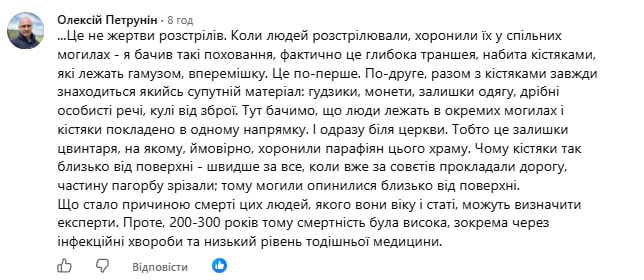
The discovery of human remains during construction work immediately raised questions about their origin. In particular, people speculated that the graves might be linked to mass executions. However, Oleksiy Petrunin, a research associate at the Lviv Historical Museum, considers this theory unlikely. According to him, the nature of the graves themselves is more similar to that of an ordinary old cemetery. “Here we see that people are buried in separate graves and the skeletons are laid out in the same direction. And right next to the church,” the historian explained.

He pointed out that during executions, people were usually buried in mass graves. In Kulykiv, however, archaeologists have found individual graves located next to one another. Furthermore, no characteristic items were found near the remains that might indicate a mass burial of execution victims. Such items might include buttons, remnants of clothing, bullets, or personal belongings.

According to Petrunin, the most logical explanation is that these are the remains of an old cemetery attached to the church. It is likely that parishioners of the church and residents of the surrounding area were buried here at one time.

Why the graves ended up so close to the surface

There is also an explanation for why the old graves were found beneath the modern road and at a relatively shallow depth. The historian speculates that this may have occurred due to road construction during the Soviet era. At that time, part of the hill may have been cut away during the work. Along with the soil, the top layer covering the old graves was effectively removed.

Поховання, виявлені під час робіт у Куликові


As a result, the graves, which were originally buried deeper, eventually ended up closer to the surface. This is precisely why the construction work may have disturbed the ancient burial site and drawn the attention of archaeologists. However, this is only a preliminary theory for now. Further archaeological research and analysis of the remains themselves should help establish the exact history of this area.

What the Remains Can Tell Us

The skeletons found can provide researchers with more information about the lives of the people who lived in Kulykiv several centuries ago. Experts will determine the approximate age of the individuals, their gender, and, to the extent possible, the causes of death. Such research may reveal what living conditions were like for local residents in the 18th and 19th centuries. The condition of the bones can sometimes indicate signs of injuries, hard physical labor, or certain diseases.

Historian Oleksiy Petrunin noted that 200–300 years ago, the mortality rate was significantly higher than it is today. One of the reasons was infectious diseases, which at that time often could not be effectively treated. Modern medicine did not yet have many of the drugs and methods that seem commonplace today.

Під дорогою на Львівщині знайдено давні поховання (фото) фото 1


Child remains may also be particularly important for researchers. The fact that at least one-fifth of the burials found belong to children may help provide a better understanding of the infant mortality rate and the living conditions of the community at that time.

The excavations will continue for several more weeks

Archaeologists have not yet completed their work at the site. According to Igor Zinkevich, the excavations may last up to a month and a half. Experts need to survey the area, document all the graves, and collect materials that can help determine their age and origin. Once the research is complete, the remains are scheduled to be exhumed.

They are to be reburied at the local cemetery. However, there are no plans to reroute the road due to the archaeological discovery. “The excavations may continue for up to one and a half months. The road will not be rerouted: the remains will be exhumed and reburied at the local cemetery, after which the section will be repaved,” Zinkevich said.

Thus, the discovery is not expected to halt construction work for long. At the same time, archaeologists have been given the opportunity to study a part of Kulikov’s history that has remained hidden underground for decades. The exact age of the burials, the gender of the individuals, the causes of their deaths, and the significance of the 15th-century coin are to be determined following further research. This was reported by Ihor Zinkevych, a member of the Lviv City Council and a volunteer, on Facebook.


Read us on Telegram and Sends

Download our app

