
“Ukrainian practices will become one of the most important contributions to global research on mental health and the restoration of human capital after the war,” says Anastasia Stepula, CEO of HealthyMind—a Ukrainian platform for automated digital psychological assessment.
Anastasia Stepula is also the director of the “Take Care of Yourself” Charitable Foundation and the founder of the “Happy Today” nonprofit organization. For many years, she has focused on raising awareness about autism and supporting families of children with autism spectrum disorder (ASD). Anastasia has worked to adapt public spaces for people with mental disabilities and published a book for children and adults titled “A World Without Borders,” which explains tolerance, equality, and inclusion in an accessible way. She is also raising her son, Petrik, who has been diagnosed with autism.
Anastasia Stepula discussed what unites all these projects, as well as her professional and personal experiences, in an interview with UA.News. She shared her thoughts on how attitudes toward people with autism have changed, why effective psychological support is impossible without objective measurement of mental health, and why, after the war, human capital will need to be rebuilt first and foremost.

Since 2017, you’ve been involved in autism awareness and have been helping families of children with ASD. How far has modern autism research come in recent years?
Anastasia Stepula: Ten years ago, discussions about autism often centered on finding “causes” or even “cures.”
I am not aware of any systematic research on ASD in Ukraine. Current international research has made significant progress in understanding that autism is not the same for everyone. That is why more and more attention is being paid to early detection, individualized support, communication development, environmental adaptation, and family support. Today, there is much more discussion about evidence-based support methods, the need for early intervention, inclusive education, and respect for neurodiversity.
At the same time, it’s important to be honest and acknowledge that there is still a significant gap between scientific knowledge and the reality of life for Ukrainian families. We know much more than we did ten years ago, but access to quality diagnostics, effective services, and professional support remains uneven. However, unlike 10 years ago, accurate information is now available to everyone, and families can find the most suitable strategies for supporting their children.
You point out that autism is not a tragedy; the tragedy lies in society’s attitude and the lack of systemic support for such families. Has anything changed in this regard, given that the state and society are currently in the midst of a brutal war? Does the war prevent society from seeing and supporting these children and their parents?
Anastasia Stepula: I would say that the war has had two opposing effects.
On the one hand, it has undoubtedly diverted a huge amount of state and societal resources. Many families were forced to evacuate and lost access to their usual services, specialists, rehabilitation, and inclusive education. For children with autism, any sudden change in environment is an additional challenge, so many families went through an extremely difficult period.
But on the other hand, the war has profoundly changed Ukrainian society. We have begun to talk much more about accessibility, inclusivity, and respect for human dignity. Because of the war, hundreds of thousands of people have been injured, have become disabled, or have gained firsthand experience living alongside people who need support. This has significantly changed society’s view of disability.
Despite the war, the deinstitutionalization reform has also been relaunched. Its main idea is that a child should grow up in a family and within the community, rather than in the residential care system. This applies to children with autism as well. Families should not be left to face these challenges alone. They should receive support where they live: early intervention, inclusive education, social services, psychological support, and respite care for parents.
What advice would you give today to parents of children with ASD? What should be their priority during these difficult times?
Anastasia Stepula: In my personal opinion—which, of course, is backed by thorough research on the subject—the most important thing for a child with ASD is socialization. That’s why I would advise doing everything possible to introduce the child to the world around them. And, of course, to balance all the uncertainty of the present with their own consistency and acceptance.
Tell us about the HealthyMind platform and other projects that are important to you. What kind of ecosystem is forming around them? Who might find them useful?
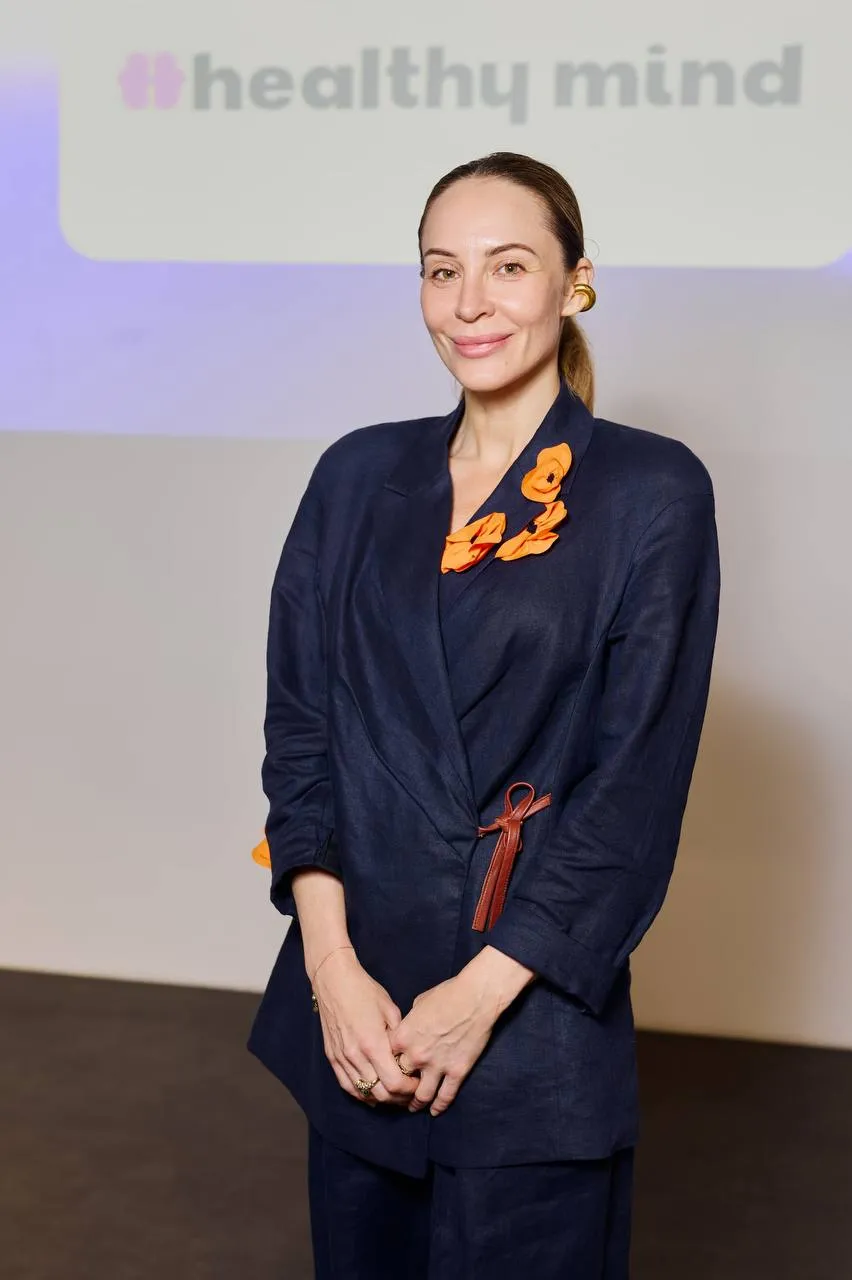
Anastasia Stepula: HealthyMind is a Ukrainian HealthTech platform that automates psychodiagnostics and was created in response to the shortage of specialists and the incredibly high demand for mental health support. We’ve combined 55 internationally validated psychodiagnostic scales into a single digital tool that allows for a comprehensive assessment of a person’s psycho-emotional state in 8–15 minutes. Our innovation is trigger technology, which significantly reduces the time required for psychodiagnostics without compromising its scientific validity.
Today, an ecosystem of partners is forming around HealthyMind—including businesses, healthcare facilities, civil society organizations, communities, and government institutions—all working to foster a culture of mental health care. This is particularly important to me, as rebuilding human capital after the war will be one of the key challenges for Ukraine, and high-quality solutions must be based on modern technologies and evidence-based data.
Speaking more broadly about my experience, all the projects I’ve been involved in over the past few years—from advocating for the rights of people with disabilities and accessibility, to deinstitutionalization reform, to leading HealthyMind—are united by a single idea.
The number of Ukrainians with symptoms of anxiety disorders and PTSD has increased significantly. To what extent is the Ukrainian healthcare system prepared to deal with such consequences of war? Is there any relevant international experience we could draw upon?
Anastasia Stepula: First of all, it’s worth noting that the situation in Ukraine is, in many ways, unprecedented. The world has experience dealing with the consequences of war—from Israel and the Balkan countries to U.S. veterans returning from Iraq and Afghanistan. But Ukraine is experiencing a full-scale war in the context of a modern digital society. We live in an era when war crimes, shelling, and human tragedies are documented and disseminated practically in real time. Added to this are years of air raid alerts, mass displacement, the experience of occupation, the loss of loved ones, and constant uncertainty. Humanity has not yet truly studied this combination of factors.
That is precisely why Ukraine today is not so much adopting international experience as it is shaping its own, which it will share with the world. I am convinced that in the coming years, Ukrainian research, Ukrainian data, and Ukrainian practices will become one of the most important contributions to global science on mental health and the restoration of human capital after war.
As the head of HealthyMind, I see another important challenge. We talk a lot about psychological support, but much less about measuring mental health. It is impossible to effectively manage what has not been objectively measured.
Mental health has already become one of the government’s priorities. More than 25,000 primary care physicians have been trained under the World Health Organization’s mhGAP program, a network of Mental Health Centers is being developed, and Resilience Centers are integrating psychosocial support into community life.
Is the system ready for the long-term consequences of the war? I think the honest answer is: not yet. The scale of the needs is unprecedented, and many years of work lie ahead. But it is extremely important that Ukraine is already moving from reacting to the crisis to building systemic solutions. Today, mental health is a matter of the economy, labor productivity, education, national defense, and the restoration of the country’s human capital.
What psychological traumas are most common today, and can we already speak of the emergence of a “war generation”?
Anastasia Stepula: In my opinion, it is a mistake today to reduce the psychological consequences of war solely to post-traumatic stress disorder. The data collected by HealthyMind shows that people are much more likely to experience chronic anxiety, emotional exhaustion, sleep disturbances, depressive symptoms, difficulty concentrating, and a sense of constant uncertainty.
When we’re talking about millions of people, the government, employers, and communities need objective data that allows them to understand the scale of the problem, identify at-risk groups, evaluate the effectiveness of support programs, and make decisions based on evidence rather than assumptions. This is precisely where I see one of the key roles of digital mental health assessment tools. It is especially important to understand that psychological trauma today is not merely the result of direct participation in combat. It also stems from living under constant air raid alerts, forced displacement, separation from loved ones, the loss of a home or job, the experience of occupation, uncertainty about the future, and a constant barrage of information. The war affects virtually every Ukrainian, although the effects manifest in different ways. Can we already speak of a “war generation”? In my opinion, we should be talking about several generations since 2014. This isn’t just about children growing up to the sound of sirens. It’s a generation of people whose coming of age, professional development, parenthood, education, and career-building are taking place amid war. Undoubtedly, this experience will have a long-term impact on Ukrainian society. At the same time, I wouldn’t want the term “war generation” to be associated solely with trauma. The human psyche has enormous potential for recovery, and we must make the most of it. Anastasia Stepula: I don’t separate psychological recovery and justice at all. It’s very difficult for a person to feel that life is returning to normal if they see that evil goes unpunished. [blockquote_with_author name="From a psychological perspective, what we mean by the concept of ‘justice’ does not in itself heal trauma. But it restores the sense that the world is becoming predictable again, that there are rules that work, and that a person’s life has value. This is one of the foundations of psychological safety.
You have said more than once that justice is an important component of psychological recovery. Why is it impossible to speak of the full healing of Ukrainian society without the punishment of war criminals?
At HealthyMind, we talk a lot about the importance of measuring mental health, but it’s important to remember: numbers don’t exist in a vacuum. People’s psychological well-being is influenced not only by access to therapy or medication and a sense of safety, but also by faith in the future; and, of course, a sense of justice is extremely important for our “recovery.”
Can we say that psychological recovery will become just as strategic a priority as postwar economic or infrastructure recovery?
Anastasia Stepula: I wouldn’t even put psychological recovery on the same level as economic or infrastructure recovery. In fact, it’s not a separate area of reconstruction—it’s the foundation of it.
I believe Ukraine has a chance to become the first country to integrate mental health assessments into its system of governance—not only in healthcare, but also in the work of government institutions, communities, educational institutions, and businesses. This will allow us not only to respond to crises but also to anticipate risks, evaluate the effectiveness of support programs, and invest resources where they will yield the greatest results.
What feelings or emotions are important to you right now? Do you allow yourself to enjoy life? And what brings you joy?
Anastasia Stepula: I’m not putting my life on hold; I believe that under the current circumstances—when Ukrainians are fighting for their right to live freely every day, both on the front lines and at home—denying myself the joys of life would be a waste. As always, joy comes from simple things. Time with loved ones and friends, an interesting book, an exhibition or a play, new ideas and like-minded people—I also have plants and a garden :) Lately, I’ve also been very happy to hear news about Russian oil refineries. Glory to our heroes!


