
Intelligence agencies in Ukraine and its partners have information about Russia's plans to attack EU countries
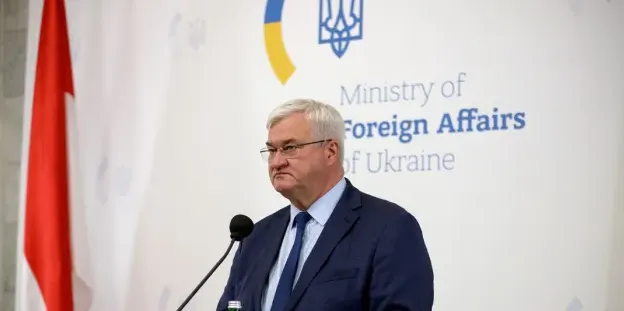
Ukrainian and European intelligence agencies have information about Russia’s plans to attack certain EU countries. Ukrainian Foreign Minister Andriy Sibiga made this statement, adding that Europe needs to prepare for such scenarios and, most importantly, prevent them from happening.
Ukrainian Foreign Minister Andriy Sibiga stated that Ukrainian and European intelligence agencies have information about Russia’s plans for possible attacks on European Union countries. According to Sibiga, these are not merely general assumptions. He asserts that intelligence agencies have data on specific, detailed plans and potential targets. “Both European intelligence agencies and we have information about Russia’s plans. There are clearly defined plans targeting one European country or another. They exist. And intelligence agencies are aware of this. We must prepare for this. The most important thing is to prevent it,” the foreign minister said.
At the same time, Sibiga linked these actions by Russia to its attempts to influence support for Ukraine. In his view, Moscow is putting additional pressure on European countries to reduce their assistance to Kyiv. “I believe that no matter how much Europe tries to reassure itself, it is already at war with Russia. Russia sees it that way,” the minister said.
Sibiga also stated that the recent operations on the territory of European countries, which are linked to Russia, should no longer, in his view, be described merely as hybrid actions. “And these operations, which are being carried out on the territory of European countries, are no longer hybrid operations. They are now acts of sabotage and subversion,” the Ukrainian foreign minister noted.
However, he did not name specific countries that might be targets of such plans, nor did he disclose exactly which operations or scenarios he was referring to. Therefore, it is currently impossible to publicly assess the details of the alleged intelligence reports.
The topic of Russian actions in Europe has recently been coming up more and more frequently at the NATO level as well. NATO Secretary General Mark Rutte stated that NATO countries have various options for responding to hybrid attacks. At the same time, some of these responses may remain classified. “You won’t always see them publicly. They aren’t always symmetrical. They aren’t always a mirror image,” Rutte said, commenting on the Alliance’s possible reaction to such actions.
Earlier, Rutte also emphasized that NATO is preparing for potential threats and must defend the territory of its member states. At the same time, he urged that Russian hybrid actions not be allowed to divert attention from supporting Ukraine. Other Alliance representatives also spoke about the changing nature of threats to Europe. In particular, NATO’s Deputy Secretary General stated in August that there had been cases of airspace violations, sabotage attempts, arson, cyberattacks, and other actions that pose additional risks to European security.
Thus, Sibiga’s statement refers to information that, according to him, is already available to Ukrainian and European intelligence agencies. The minister did not name specific countries, possible targets, or details of these plans. He emphasized that the main priority now should not be waiting for possible attacks, but preventing them. He made these remarks during a conversation with journalists.
Ukraine hopes to resolve the dispute with South Korea in the near future, which arose after reports emerged that two prisoners of war from North Korea had been handed over to Seoul. Foreign Minister Andriy Sibiga called the situation a diplomatic misunderstanding and stated that he speaks personally with his South Korean counterpart every day.




