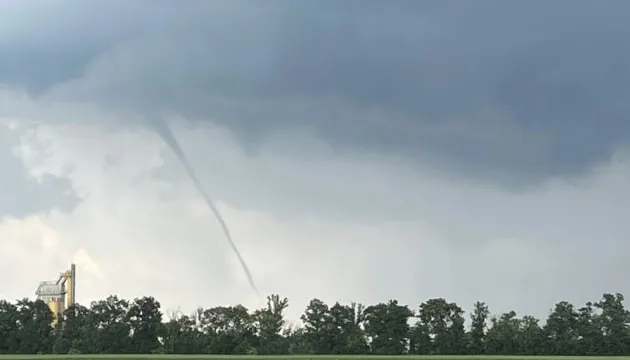
Ukrainian meteorologists have explained why tornadoes have been occurring more frequently in Ukraine in recent years. At the same time, they note that such phenomena are usually much weaker and more localized than tornadoes in the U.S. and most often occur during the summer.
“Tornadoes do occur in Ukraine, but they are much weaker and more localized than tornadoes in the United States. They are most often observed in the summer—near river valleys, in steppe and coastal regions, particularly in the Kherson, Mykolaiv, and Odesa regions—when high temperatures, humidity, and atmospheric instability converge. They can cause localized damage, but not on the scale seen in North America,” the Ukrainian Hydrometeorological Center stated.
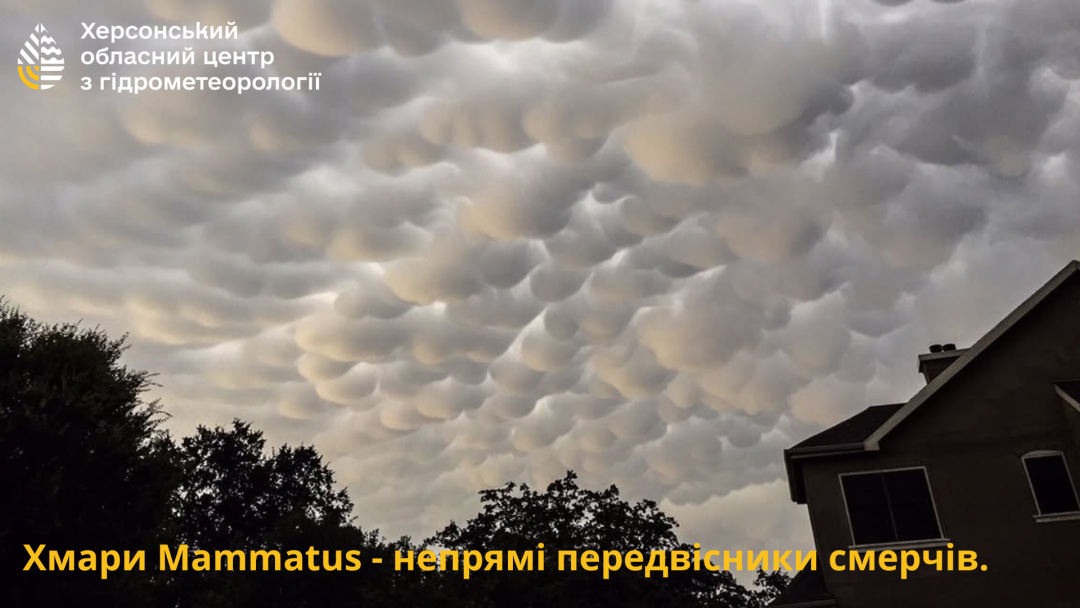
It is noted that due to global warming, conditions for tornado formation in Ukraine are becoming increasingly favorable. Their formation is facilitated by a sharp temperature contrast: when, after a prolonged heatwave (30°C and above), cold atmospheric air breaks through into Ukrainian territory, powerful convection occurs, and supercell clouds (including Mammatus) form, which trigger the rotation of mesocyclones. As a result, the geographic range of tornadoes is expanding—in recent years, they have been spotted with increasing frequency in the Kyiv, Rivne, Ternopil, and Lviv regions.
According to meteorologists, Mammatus clouds are not direct indicators of tornadoes, but they signal extremely strong atmospheric instability and serve as an indirect warning of the potential for dangerous atmospheric processes to develop.
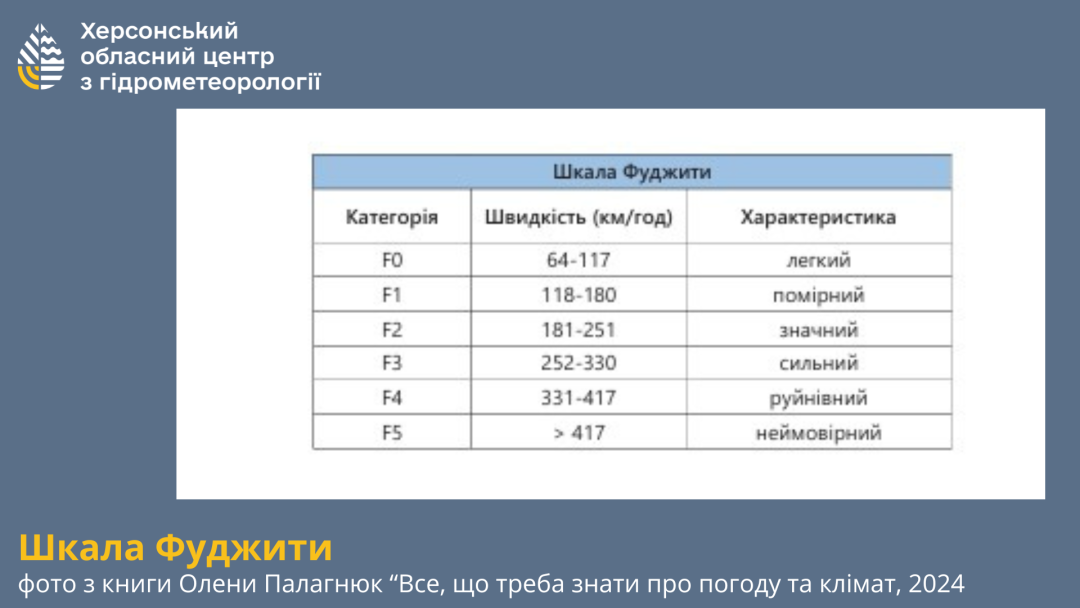
In Ukraine, tornadoes are short-lived (lasting from a few minutes to half an hour), their area of impact is small, and they are mostly weak or moderate, rarely exceeding F1–F2 on the Fujita scale. They can damage small buildings, trees, and power lines, but do not cause large-scale disasters.
According to the Ukrainian Hydrometeorological Center, 90% of tornadoes in Ukraine go unnoticed and are not officially recorded. They sweep through sparsely populated areas, forests, or fields, leaving behind only fallen trees, which are later detected by satellites.
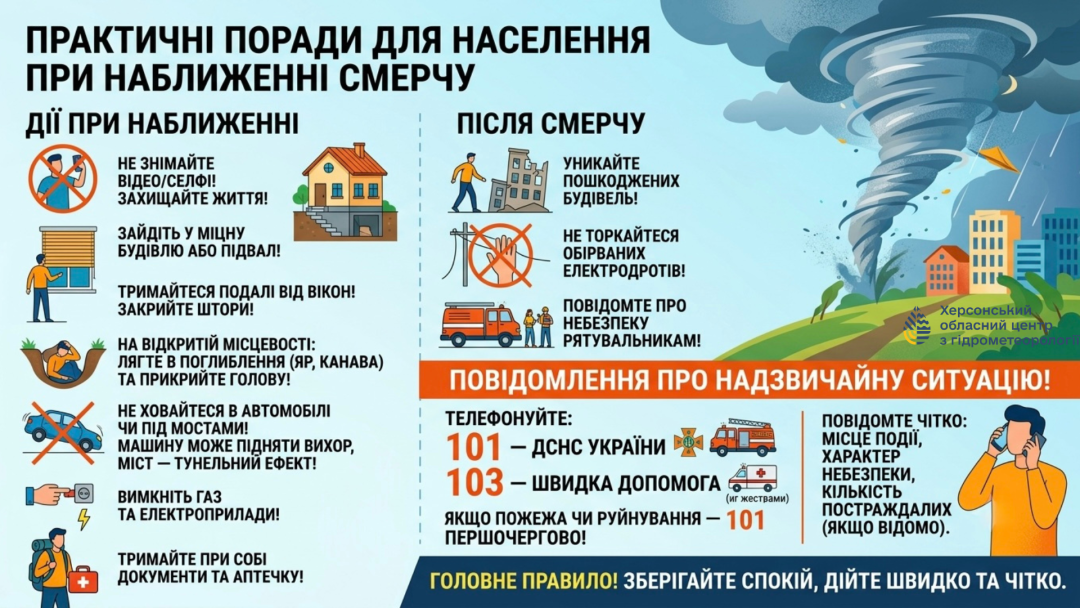
At the same time, experts have provided recommendations on how to act when a tornado is approaching. In particular, you should take shelter in a sturdy building or basement and avoid lightweight structures, sheds, garages, and buildings with large roof areas; stay away from windows; close curtains or blinds to avoid injuries from broken glass; and turn off the gas and electrical appliances.
If you are in an open area, lie down in a depression (ravine, ditch) and cover your head with your hands or clothing. Do not take shelter in a car or under bridges (a car can be lifted by a whirlwind, and a bridge creates a dangerous tunnel effect).
Keep your identification and first-aid kit with you.
After the tornado, avoid damaged buildings, do not touch downed power lines, and report the danger to emergency responders by calling 101.
Meteorologists note that powerful tornadoes occur on every continent except Antarctica. Globally, 75% of tornadoes occur in the United States, particularly in the region known as “Tornado Alley.”
Tornadoes even occur on other planets; for example, sand whirlwinds have been recorded on Mars.
The weather in Ukraine on July 22 will be warm and dry, while a storm is expected in the Odesa region.
As a reminder, Belgium has recorded a sharp rise in mortality amid a severe heat wave. According to the Sciensano Institute of Public Health, the excess mortality rate reached 47%—the highest figure since records began in 2000.
Earlier, average nuclear power generation in France fell below 33 GW, the lowest level in the past nine months, due to the need to limit output at nuclear power plants. The reduction was caused by a critical rise in the temperature of the water in the rivers used to cool the reactors.