
In Chernivtsi, a vape brand was advertised to children using a gorilla
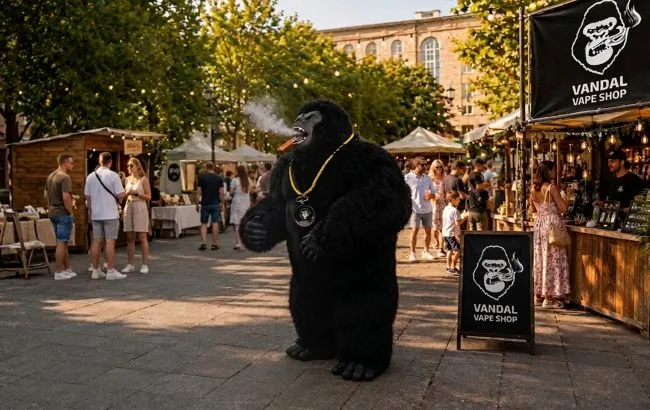
At a food festival in Chernivtsi, the branded mascot of the Vandal vape shop chain—a large gorilla—actively interacted with children. Children took photos with the character, hugged him, and danced alongside him, even though the brand is associated with the sale of e-cigarettes and other vaping products.
The festival in Chernivtsi featured food courts, a music stage, and children’s entertainment. Cotton candy and other treats were sold to young visitors, and many children of various ages attended the event with their parents. Among the guests was the Vandal chain’s large mascot—a person in a gorilla costume. The character walked around the festival grounds and interacted with visitors.
Children eagerly approached the gorilla. They took photos with it, hugged the mascot, and danced alongside it. At first glance, this might have seemed like ordinary entertainment for children. The issue is that the character was branded and represented a chain of stores that sells vapes and related products.
In other words, children could remember the gorilla’s vivid image and associate it with positive emotions, even if they do not yet understand what exactly this brand sells. Journalists from “Antyrating” drew attention to this very situation. In their report, they asked representatives of the event and Vandal why a branded vape shop mascot was interacting with minors. “Antyrating” report
“They don’t even know what Vandal is”
When asked by a journalist whether the Vandal representative saw a problem with children taking photos with the vape shop’s brand mascot, the response was:
“They don’t even know what Vandal is.”
This very phrase became one of the key points of the story. The logic here is quite simple. A child may indeed not know that Vandal is a chain of e-cigarette stores. But to remember the brand, it’s not necessary to understand what products it sells.
A colorful character, a photograph, dancing, music, and positive emotions can create a pleasant association with the brand name. Later on, a person may learn what exactly lies behind that name. That is precisely why advertising for products related to tobacco and nicotine is subject to special restrictions.
Festival representatives shifted the blame onto parents
Vandal representatives did not provide journalists with a clear answer as to why the branded mascot was interacting with children. The point-of-sale manager declined to comment further. A festival representative, for her part, stated that parents bear primary responsibility for their children.
However, the situation goes beyond the issue of parental supervision. It also raises questions about how companies promote their brands at events attended by minors. In this case, it’s not just about a neutral character or an entertainer. The mascot was associated with a specific brand that sells vaping products.
What the Law Says About Vape Advertising
In Ukraine, advertising of e-cigarettes, e-liquids, and related products is subject to significant legal restrictions. Therefore, the issue goes beyond the fact that children were photographed with a gorilla. It is also important to determine whether the presence of a branded mascot can be considered a form of advertising for the product or brand, and whether such activity complied with legal requirements.
Only the competent authorities can make a final assessment of this. The mere fact that the mascot was present at the festival does not automatically constitute a violation of the law; therefore, it would be incorrect to draw a definitive conclusion without a proper investigation. At the same time, the situation itself is drawing attention because a brand associated with vaping came into direct contact with a large number of children.
What Is Known About Vandal
Vandal is a chain of stores specializing in the sale of vapes and related products. According to publicly available information, the chain’s stores operate primarily in the western regions of Ukraine, as well as in the Zhytomyr and Vinnytsia regions. In Lviv, according to the data cited in the article, there are eight Vandal stores. In total, the chain has several dozen retail locations in various regions.
The chain is affiliated with Vinlight Group LLC. Marina Pivovar is named as the company’s founder and ultimate beneficial owner. She is also said to have ties to other companies and the online store “Vape Hub,” which operate in the retail sector of tobacco products and e-cigarette products.
What is known about the Economic Security Bureau’s allegations
Since February 2026, the activities of entities associated with the network have been under scrutiny by the Bureau of Economic Security. According to the investigators’ version of events, as cited by the authors of the article, some of the transactions in the stores may have been processed through individual entrepreneurs who did not have the necessary licenses to retail e-cigarette liquids.
Investigators are also verifying information that nicotine-containing products may have been listed as “gifts” accompanying purchased goods. However, these allegations represent the investigators’ version of events and are not facts established by a court. The final legal assessment of the actions of the companies and their associates must be provided by law enforcement agencies and the court.
Why the story about the mascot raised questions
In this situation, what draws the most attention is not the gorilla itself, but the brand it represented and the people it interacted with. At a family festival, a child might have perceived the character simply as a fun figure. The child could have taken a photo with it, danced a bit, and moved on, without even realizing that the name on the costume was linked to the sale of vapes.
It is precisely this form of promotion that sparks debate about the line between ordinary entertainment and advertising. This issue is particularly acute for nicotine products, since children and teenagers are the audience that the law is meant to protect from their promotion. Therefore, the incident at the festival in Chernivtsi could serve not only as a catalyst for discussion on social media but also as a reason to investigate whether such promotional activity complied with Ukrainian law. This information comes from a report on the YouTube channel “Antirating.”


