
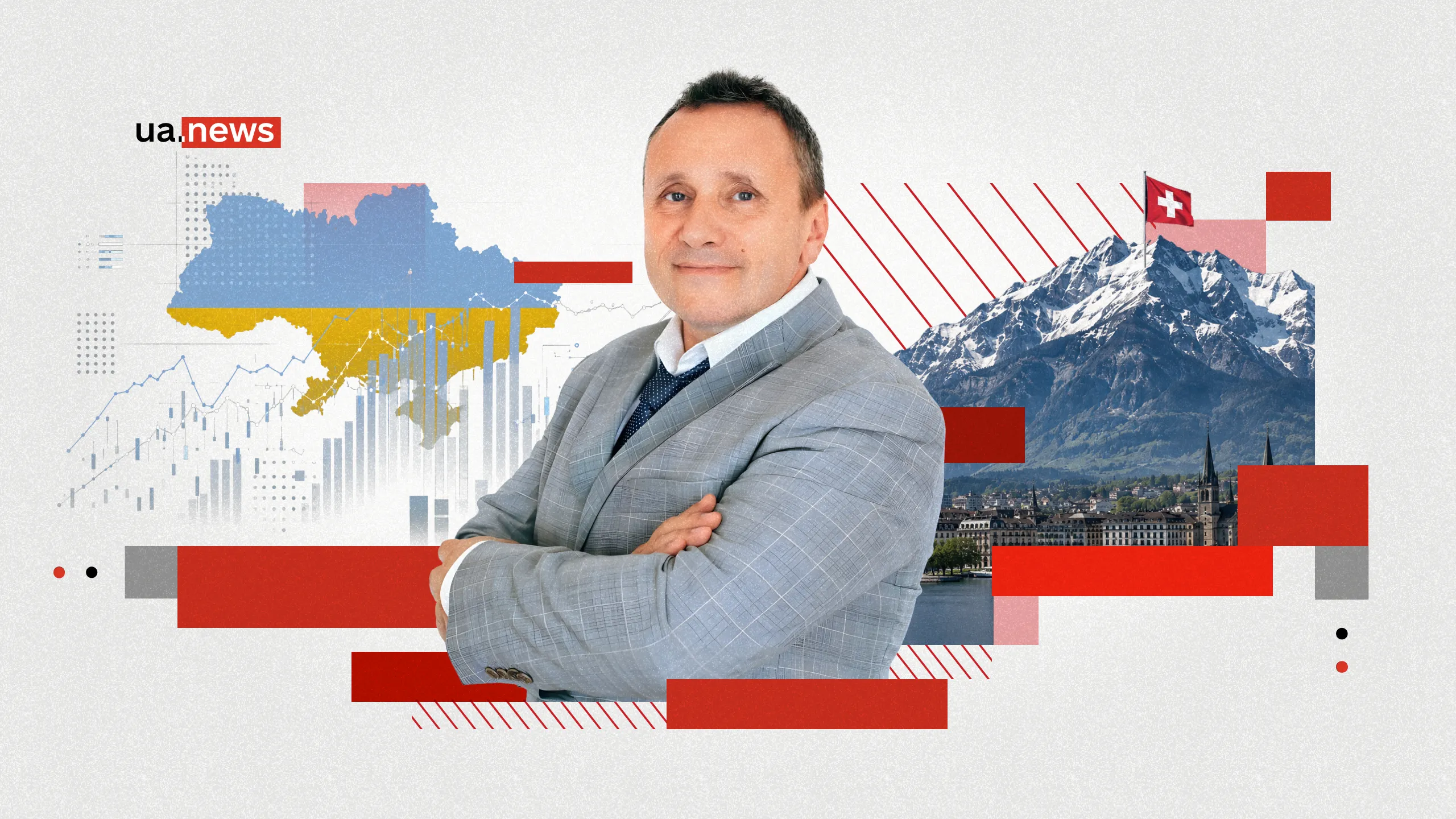
Millions of Ukrainians have left the country, mobilization is sparking more and more controversy, and foreign investors are still asking whether they need to wear body armor when visiting Ukraine. At the same time, the country continues to function, fight, and seek resources for future recovery. Will Ukraine have enough people, money, and time for a fresh start after the war?
“Everything will be fine. The only question is—when.”
It is with this very phrase that Vyacheslav Kredisov—a distinguished economist of Ukraine, an investor, and, in 2005–2006, Deputy Minister of Defense under Anatoliy Hrytsenko for economic and construction issues—summarizes his vision for Ukraine’s future.
A representative of the All-Ukrainian Charitable Association of Entrepreneurs “Nova Formatsiya” and the Swiss-Ukrainian Cooperation Chamber of Commerce and Industry (SU-CCC), registered in Geneva, explained in an interview why he does not consider mobilization to be purely a military issue, how many people the Ukrainian economy might be short of after the war, whether Ukraine will need to attract migrant workers when large investments flow into the country, and what role Switzerland could play in this.
On Mobilization and Social Conflict
Mobilization remains one of the most painful topics for Ukrainian society. It is worth acknowledging honestly: the war has presented the state with a very difficult choice.
Before the full-scale invasion began, Ukraine was outnumbered by Russia in terms of both population and military resources. War requires a constant replenishment of personnel, and if the state relies exclusively on volunteers, the risks to its defense capabilities will be extremely high.
At the same time, I categorically do not support any illegal methods of mobilization or human rights violations. If such cases occur, they must be subject to legal review, and those responsible must be held accountable in accordance with the law.
The issue is far more complex than it seems at first glance. For many people, the decision to serve is not merely a legal obligation but a difficult personal choice involving a risk to their lives. That is precisely why society reacts so strongly to this issue.
At the same time, we must not forget those who are already fulfilling their duty on the front lines and defending the country. It is thanks to them that Ukraine continues to exist. Therefore, finding a fair balance between the needs of the military, the rights of citizens, and national security remains one of the main challenges of wartime.
On the Initial Decisions in the First Days of the War
Looking back at the events of February 2022 from today’s perspective, it is easy to say what should have been done differently. But we must remember: at the outset of the full-scale invasion, only a very limited circle of people had complete information about the true scale of the threat.
That is precisely why I would not speak of any major systemic failures. There were isolated miscalculations and individual decisions that historians and experts will continue to analyze for a long time to come. But the key fact is this: Ukraine stood its ground.
We stood up to an enemy that vastly outmatched us in both military resources and financial capabilities. In the first days of the war, hundreds of thousands of people stepped up to defend the country, effectively starting from scratch. Many took up arms without any military experience, but with the most important thing—a willingness to defend their country.
It is easy today to evaluate the decisions made back then. But in the midst of war, the country’s leadership receives a massive amount of conflicting information every day, making it very difficult to separate truth from disinformation. History will ultimately pass judgment on those decisions. Personally, I can only thank everyone who took responsibility at that moment and prevented the collapse of the state.
Ukraine’s Role on the International Stage
Ukraine’s invitation to participate in the G7 summit is an important signal to the entire world. While a few years ago many viewed Ukraine as a peripheral state, today we have become a full-fledged participant in the international dialogue. We are taken seriously, listened to, and invited to discuss global issues of security and development.
At the same time, we must assess the situation realistically. The very fact that such talks are taking place indicates that the issue of war remains one of the key items on the international agenda. Unfortunately, this means that a swift end to hostilities is not yet in sight.
That is precisely why Ukraine must tackle two tasks simultaneously: continue the fight for its security and begin building a model for post-war development right now. Our partners are demonstrating their readiness to support Ukraine, but the country’s future also depends on our ability to make effective use of that support.
On Human Potential During War
The war has shown just how diverse the ways of serving one’s country can be. There are people who are ready to take up arms and defend the country on the front lines. There are those who help the army as volunteers, medical personnel, logisticians, or entrepreneurs who create jobs and pay taxes.
In my opinion, a modern state must take these differences into account. Not everyone is equally prepared for military service from a psychological standpoint. This does not mean that they are not patriots or do not want to help their country.
Global practice has long demonstrated the effectiveness of various forms of civic engagement. The key is for every person to be able to contribute as much as possible in areas where their knowledge, skills, and intrinsic motivation will be most effective. During wartime, a country needs not only soldiers, but also doctors, engineers, volunteers, teachers, farmers, and entrepreneurs.
The Postwar Demographic Challenge
One of the most serious problems for Ukraine is not only the destruction of infrastructure or economic losses, but also the demographic situation. Over the years of the war, millions of Ukrainians have left the country, and some of them are gradually integrating into new societies.
Children and young people are adapting particularly quickly. They are attending local schools and universities, forming new social connections, and planning their futures in other countries. This is a natural process, but it poses serious challenges for Ukraine.
We are already seeing a labor shortage in many sectors—from construction and industry to the agricultural sector. Once the war ends, this problem is only likely to worsen, as the country will simultaneously need a large number of people for reconstruction and development.
That is precisely why the issue of bringing Ukrainians home must become one of the government’s key priorities. People return to places where they see prospects, safety, and the opportunity to fulfill their potential. And the sooner we create such conditions, the better our chances will be to restore our human capital and ensure long-term economic growth.
Labor Shortage and Future Migration
This issue should be viewed first and foremost from an economic perspective. Once the war ends, Ukraine will face an acute labor shortage. We are already seeing a shortage of workers in many sectors, and this problem will only intensify during large-scale reconstruction.
I am not in favor of dividing people by nationality, origin, or skin color. The world has long been accustomed to labor migration, and Ukraine will be no exception. In many countries in Asia and Africa, income levels are significantly lower than what Ukraine could potentially offer after the war. Therefore, it is only natural that some people will be willing to come here to work.
It is also important to understand the scale of the challenge. The war has set us back significantly economically. There is a well-known rule: if a country has been at war for five years, it may take at least another five years of large-scale investment and reconstruction to return even to its pre-war level of development. That is precisely why attracting external resources—both financial and human—will be one of the key factors in future economic growth.
On Swiss Investments and New Opportunities for Ukraine
Switzerland has traditionally adhered to a policy of neutrality. It does not finance military operations nor does it participate in arms supplies. At the same time, the Swiss side has demonstrated a serious commitment to supporting the recovery of the Ukrainian economy.
This involves a large-scale program under which approximately five billion Swiss francs are earmarked over the next twelve years to support Swiss companies willing to operate in Ukraine, establish businesses, and create new jobs. These funds are not intended for military projects. Their purpose is to develop the civilian economy, manufacturing, infrastructure, and long-term business initiatives.
However, there is a serious problem between the availability of funds and the actual launch of projects. For most foreign investors, Ukraine remains a high-risk territory. We have grown accustomed to sirens and air raid alerts; we have learned to live under these conditions. But for European businesses, the situation looks entirely different.
When a company wants to send one of its specialists to Ukraine, questions immediately arise regarding insurance, safety, and legal liability. Insurance premiums often become extremely expensive, and sometimes corporations outright prohibit their employees from traveling to a country where a war is ongoing. That is why the main challenge today lies not so much in finding funding as in creating mechanisms that will allow these funds to be used effectively in Ukraine.
To address this challenge, we are working to develop the Swiss-Ukrainian Chamber of Commerce and Industry (SU-CCC). Its goal is to serve as a bridge between Swiss investors, Ukrainian businesses, local authorities, and communities. We help identify partners, establish communication channels, support projects, and reduce the barriers that currently hinder investment.
Another area of our work focuses on Ukrainians living in Switzerland. Tens of thousands of our citizens currently reside there, and for many of them, the issues of adaptation and employment remain pressing.
The Swiss system differs significantly from the Ukrainian one. Vocational education is highly valued there. Most young people choose skilled trades, which provide a stable income and high social status. At the same time, many Ukrainians arrive with degrees, management experience, or academic training and seek to continue their careers in these very fields. This creates additional challenges related to language, verification of qualifications, and competition in the job market.
Therefore, one of our organization’s goals is to help Ukrainians find legal opportunities for employment and integration. While ensuring people’s safety was the top priority at the start of the war, today their full adaptation, professional fulfillment, and building a future under new conditions are becoming increasingly important.
I am convinced that cooperation between Ukraine and Switzerland has significant potential. And this is not just about funding or investments. It’s about a long-term partnership that can help Ukraine recover more quickly, create new jobs, and open up additional opportunities for both businesses and ordinary people.
About Grants and Projects for Ukraine’s Reconstruction
Today, the greatest support goes to projects that contribute to Ukraine’s development and recovery. A significant portion of these programs operate on a grant basis.
This primarily involves the medical sector—specifically treatment, diagnostics, and rehabilitation—as well as energy solutions that enable communities to remain resilient amid the war, the agro-industrial sector, the production of construction materials, and other areas that create added value and help strengthen the Ukrainian economy.
At the same time, it is important to understand that the Swiss side operates according to its own funding model. As a rule, grants are not provided directly to Ukrainian companies. Funds are allocated to Swiss organizations or corporations that implement specific projects in Ukraine and are responsible for their execution.
To participate in such programs, applicants must have a transparent financial history, proven work experience, proper tax compliance, and their own contribution to the project. These are typically large-scale initiatives with budgets ranging from several to several dozen million Swiss francs.
That is why high-quality documentation, professional support, and the presence of reliable international partners often become key conditions for successfully securing such funding.
Tangible Results of Swiss-Ukrainian Cooperation
We already have successful examples of cooperation between Swiss and Ukrainian partners. This includes not only grant programs but also charitable and social projects that yield tangible results for communities.
In particular, our team has participated in projects to provide hospitals with alternative energy sources. This includes installing solar panels, modernizing energy infrastructure, and increasing the self-sufficiency of medical facilities.
In the context of war, such solutions are particularly important. They allow hospitals to continue operating even during power outages, ensure uninterrupted patient care, and keep critical equipment running.
At the same time, the international support system is quite complex and requires professional guidance. That is why our team includes specialists with practical experience in implementing Swiss-Ukrainian projects who understand how to effectively coordinate cooperation between international donors, the private sector, and local communities.
Prospects for the Ukrainian Economy
During wartime, any long-term forecasts remain highly uncertain. Dozens of factors influence how events unfold—from the situation on the front lines to the decisions of international partners. Ukraine relies heavily on support from Western countries, which help finance the budget, social programs, defense, and other critical areas.
At the same time, I do not share the pessimistic forecasts regarding the future of the Ukrainian economy. On the contrary, once the war ends, Ukraine will have significant potential for rapid recovery and development.
Large-scale reconstruction programs are already being discussed in Europe and around the world, and they are often compared to the Marshall Plan. If we look at the historical experience of other countries, particularly Poland, we can see just how quickly an economy can transform with investment, stability, and consistent government policy.
Just a few decades ago, Poles were traveling to Ukraine to work, but now the situation is radically different. That is precisely why I am convinced that once the war ends, Ukraine has every chance of charting its own path toward rapid economic transformation. The main prerequisite for this remains the achievement of stable and lasting peace.
Ukraine’s Place in the World After the War
Ukraine is often compared to Israel, and there is a certain logic to this. Israel has lived for many years amid constant security challenges, yet it remains a successful nation with a developed economy, advanced technology, and innovation.
For Ukraine, the main lesson is that even in the face of constant threats, we must continue to live, work, and build a future. We cannot afford to wait for ideal circumstances.
At the same time, Ukraine has its own unique path. We are significantly larger in terms of territory and population, have a different geopolitical position, and share a direct border with the European Union. This creates additional opportunities for development, investment, and international partnership.
In my view, Ukraine is already becoming a vital component of the European security system. Over the years of war, our country has gained invaluable experience, built a robust defense-industrial base, and demonstrated its ability to defend not only its own independence but also broader European values.
That is precisely why I am convinced that Ukraine will be an integral part of the European community. Despite all the challenges, Ukrainians are demonstrating extraordinary resilience: they are working, starting businesses, raising children, and continuing to develop the country even in the most difficult times. That is why I look to the future with optimism and believe that Ukraine has all the prerequisites not only for recovery but also for strong development once the war ends.
On the Strength of Ukrainian Business
Ukrainian businesses are facing challenges unlike any others in the world. Operating amid war, expensive loans, logistical disruptions, and constant security risks is an extraordinarily difficult task. And that is precisely why our Western partners hold Ukrainian entrepreneurs in such high regard.
In many European countries, businesses have access to low-cost loans, grant programs, consulting support, and stable rules of the game. In Ukraine, entrepreneurs are often forced to rely first and foremost on their own resilience, flexibility, and ability to find solutions quickly.
It seems to me that Ukrainians, in general, are very enterprising people. They are constantly looking for new opportunities, adapting to change, and ready to take responsibility. Of course, not everyone has a true entrepreneurial spirit—according to various estimates, such people make up only a few percent of the population. But it is precisely these people who create businesses, generate jobs, and drive the economy forward even when circumstances are not in their favor.
That is precisely why European partners see Ukrainian entrepreneurs as strong and resilient people who have proven their ability to work and achieve results under extremely difficult conditions.
International Business Interest in Ukraine
International business’s interest in Ukraine has not waned. On the contrary, it remains very high. I regularly participate in international forums and conferences dedicated to Ukraine’s reconstruction, and I see this with my own eyes.
The main message we receive from our foreign partners is quite simple: they believe in Ukraine’s future. They view our country as part of the European space and understand its strategic importance for the region.
Ukraine remains a large market with tens of millions of consumers, a robust agricultural sector, a favorable geographic location, and significant human potential. For many international companies, these are very compelling arguments for future investments.
Therefore, the question today is not whether Ukraine is of interest to global business. The question is when investors will be ready to enter the market on a larger scale.
The Main Barrier to Investment
The main reason for private investors’ reluctance is the war. Businesses are not afraid of Ukraine itself. They are afraid of risks.
An entrepreneur may invest millions of euros in a manufacturing facility, a logistics center, or an infrastructure project, but at present, no one can guarantee that this facility won’t be hit by a missile tomorrow. That is precisely why many companies are adopting a wait-and-see approach.
An additional problem is the lack of comprehensive mechanisms for insuring against war risks. For many investors, this is a critical factor in their decision-making.
At the same time, I am convinced that interest in Ukraine has not disappeared. Often, the problem lies in how our country is perceived abroad. For many Europeans, Ukraine is still associated exclusively with images of war on television.
I recall how an Italian businessman, whom I had invited to a conference in Kalush, asked me in all seriousness whether he needed to buy a bulletproof vest and a helmet for the trip. To us, this sounds strange, because we see that despite the war, the country is living, working, studying, hosting international events, and developing business. But for someone who observes Ukraine only through the news, the picture looks completely different.
That is precisely why it is especially important not only to attract funding but also to show the world the real Ukraine—a country that continues to work, create opportunities, and prepare for a major reconstruction.
The Future of the Ukrainian-Swiss Partnership
I am convinced that Ukrainian-Swiss cooperation has very promising prospects. That is why we are working to create a new platform for collaboration and are opening a representative office in Switzerland. Our goal is to build an effective bridge between Ukraine and Europe that will help bring together investors, entrepreneurs, experts, civil society organizations, and everyone interested in developing joint projects.
We are already seeing interest from our European partners. At the same time, the success of any collaboration depends not only on the availability of funds or good intentions, but also on the ability to find the right people, build trust, and forge long-term relationships.
I believe in Ukraine. I believe in its people and in our country’s ability to recover and emerge stronger after all these trials. We have repeatedly proven that we can persevere even when many doubted our chances.
There’s a very simple principle: do what you can, wherever you can be of use. That’s exactly what we’re doing—creating new opportunities, helping people find partners, mobilize resources, and build the future right now.
The question isn’t whether recovery will happen. The question is simply when it will reach its full potential. And no one knows the answer to that today. But we need to move forward right now.


