
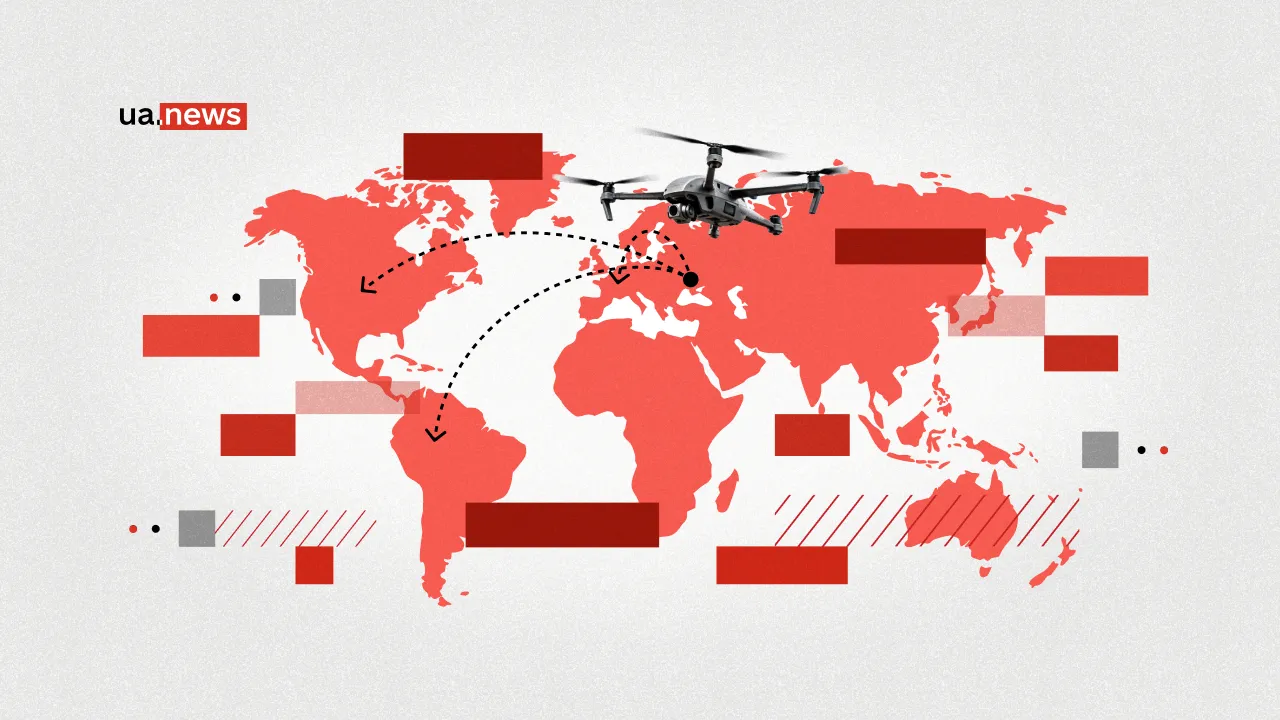
Just a few years ago, FPV drones were associated primarily with video filming or as a hobby. In Ukraine, they have become one of the main tools of modern warfare. Now, the consequences of this revolution are beginning to be felt far beyond the Ukrainian front lines.
U.S. intelligence is concerned that Latin American drug cartels are adopting the drone technologies and tactics that were developed during the Russia-Ukraine war. According to The Washington Post, criminal groups are particularly interested in people who fought directly in Ukraine and are returning to Latin America with combat experience.
UA.News explains why the experience gained there is already being studied by the U.S. and European militaries, how sought-after Ukrainian drone operators, engineers, and veterans might become after the war—and why this raises concerns about the spread of military technology into entirely undesirable areas.
Cartels Are Already Learning Lessons from the War in Ukraine

The story, as reported by The Washington Post, begins far from Ukraine—in Mexico and Colombia. According to the publication, U.S. officials have received an internal government assessment warning that drug cartels are rapidly expanding their capabilities in the field of drones. Moreover, this goes beyond mere commercial quadcopters used for surveillance.
Organized crime groups are interested in larger drones capable of staying airborne for long periods and carrying cargo and explosives. They are also studying ways to circumvent electronic jamming systems—in particular, frequency hopping and other techniques well known on the Ukrainian front lines.
Foreigners who fought in Ukraine are a particular cause for concern among U.S. and Mexican officials. The Washington Post writes primarily about Colombian citizens. Upon returning home, some of them may receive offers to work as instructors or to train drone operators for criminal organizations. According to the newspaper’s sources, some cartels are even attempting to send their associates to the Russia-Ukraine war so they can gain combat experience.
The Ukrainian side emphasizes that foreigners undergo vetting, and people with obvious criminal intentions should not be allowed into the units. At the same time, it is practically impossible to fully predict how a person will use the skills they’ve acquired several years down the line.
The reason for the cartels’ interest is clear. One can learn to fly a drone through civilian courses. It is much more difficult to learn to do so in an environment where the enemy actively employs electronic warfare, hunts down operators, changes frequencies, uses its own FPV systems, and where equipment and tactics can become obsolete in just a few months.
This is precisely the kind of experience being gained in Ukraine today. The statistics from Colombia are telling. According to ACLED data cited by the Washington Post, 38 incidents of violence involving armed drones were recorded there in 2024, in 2025—there were already 149, and in less than nine months of 2026, the number exceeded 200.
In Ukraine, drones have already been considered as a potential tool for targeting businesses
For Ukraine, the issue of using drones outside the traditional battlefield is also ceasing to be purely theoretical. On August 14, 2026, Russian drones attacked the estate of farmer and philanthropist Anatoliy Kovtunenko in Stepanivka, Sumy Oblast. All the strikes were concentrated on a single location. Olga Kovtunenko, 29, and her nine-year-old son were killed, and several other people were injured.
In an in-depth investigation, UA.News reconstructed the chronology of the attack in detail: according to eyewitnesses, the first drone struck the house, the second hit the yard, and the third struck the central part of the house, which was already on fire. The case was referred to the Security Service of Ukraine (SBU). Investigators confirmed that among the working theories being examined is the possibility of course correction or targeted guidance, although there is no official conclusion regarding the presence of a spotter or whether the attack was commissioned.
In contrast, another Ukrainian case was investigated from the outset as an assassination attempt. In 2025, in the village of Sokilnyky in the Lviv region, around 4:00 a.m., a drone carrying explosives struck the Kovals’ home. It pierced the roof and damaged the facade. There was no air raid alert in the region at the time, and no one in the house was injured.
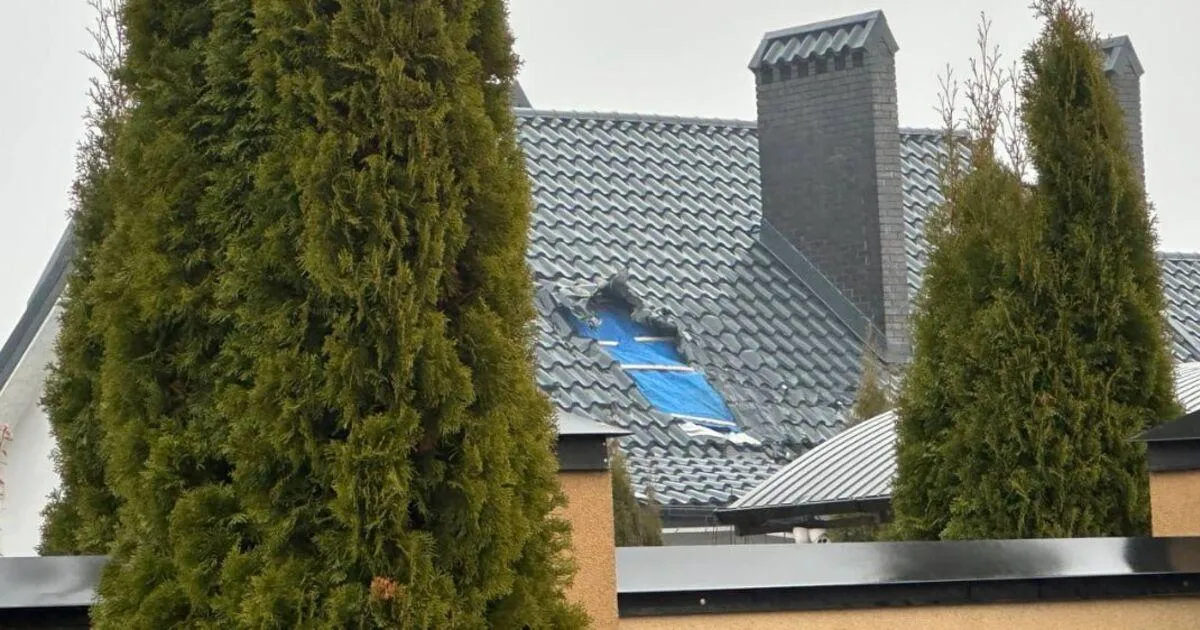
The owner of the house was Natalia Koval—a co-founder of a farming enterprise and landowner. The police opened a case under articles related to attempted murder.
Europe has already seen that drones can be tools not only of war
One of the most telling European cases occurred in Belgium in the fall of 2025. Belgian police detained three people as part of an investigation into the alleged planning of a terrorist attack against politicians. According to the federal prosecutor’s office, among the scenarios examined by the investigation was the use of a drone capable of carrying an explosive charge.
During searches, law enforcement officers found a homemade device, metal balls, and a 3D printer, which, according to investigators, could have been used to manufacture drone components. Belgian Prime Minister Bart De Wever was named in media reports as one of the potential targets. The case was investigated under charges of attempted terrorist murder and participation in a terrorist organization.
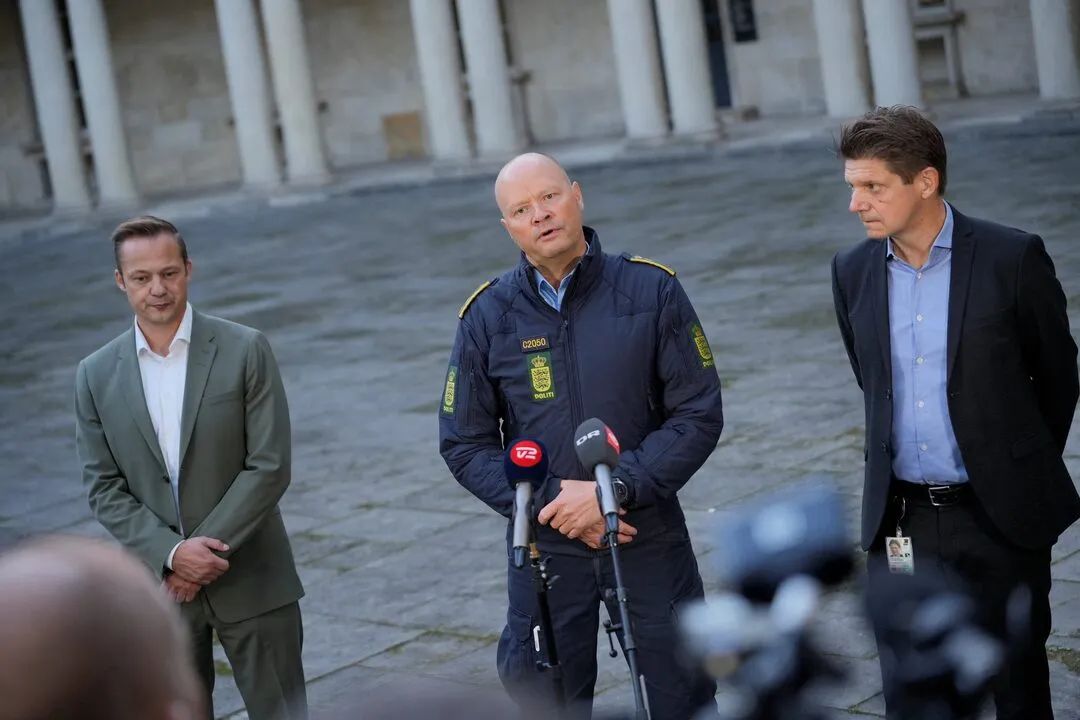
It is fundamentally important that the attack was successfully prevented. But the very fact that such a scenario appeared in the materials of a real counterterrorism investigation shows how quickly a drone can transform from a military tool into a potential instrument of terror.
And sometimes, you don’t even need to blow anything up to create a problem. In September 2025, Copenhagen Airport, the largest in Scandinavia, suspended flight arrivals and departures for nearly four hours following reports of large, unidentified drones near the airport. Dozens of flights had to be rerouted to other airports.
Nine months later, Danish police closed the investigation, stating that they were unable to prove that the unidentified objects were actually drones, nor were they able to identify the perpetrators. This incident clearly illustrates another problem of the new era: infrastructure can be paralyzed even by the mere suspicion of a drone’s presence.
In May 2026, a similar situation occurred in Munich. After two pilots reported a possible drone, flights were suspended for about an hour, and more than 20 planes were diverted to other airports. The police searched for the drone, including with the help of a helicopter, but found nothing.
Europe is already adapting its infrastructure to address the new drone threat
In February 2026, the European Commission presented a separate Action Plan on Drone and Counter-Drone Security. This is no longer exclusively a military program. The European Commission explicitly lists hostile flights, airspace violations, airport disruptions, and risks to critical infrastructure, external borders, and public spaces among the problems.
The plan calls for the development of drone detection systems, the use of artificial intelligence and 5G networks to track them, increased production of countermeasures, the creation of a European center of excellence, and regular large-scale exercises.
Separately, the EU is planning a Counter-Drone Deployment Initiative to protect critical infrastructure and external borders. €250 million has been allocated for some of the land and maritime border surveillance programs. The creation of mobile teams that could be quickly deployed to areas where a drone threat arises is also being considered.
Ukraine is directly involved in this program. The European Commission is planning an EU Drone Alliance with Ukraine—a collaboration intended to combine Ukraine’s practical experience with the EU’s manufacturing capabilities. A separate defense-industrial partnership between the EU and Ukraine calls for, among other things, scaling up joint production of drones and counter-drone systems.
But the changes are even more evident not in documents, but in concrete. Lithuania is building the strategic Gizai power substation near the Kaliningrad region and the Suwalki Corridor. Its design takes into account the possibility of sabotage and drone attacks from the very beginning.
As Reuters reported on September 22, key equipment is planned to be protected by special reinforced concrete structures. The facility will also feature reinforced fencing, intrusion detection sensors, and redundant systems so that the substation can continue to operate even if part of the equipment is damaged. These additional security measures have increased the project’s cost by at least €48 million.
In other words, the experience of the war in Ukraine is gradually changing even the way ordinary energy facilities are designed in Europe. A similar logic applies to borders as well. In September, Poland began further fortifying border crossings near Ukraine: building protective structures out of containers filled with sand or gravel, and setting up observation and security posts. These decisions were made against the backdrop of Russian strikes near the Polish border and the risk of the drone threat spreading to Polish territory.
Europe is, in essence, beginning to adopt the same principle that Ukraine arrived at much earlier: a cheap drone can pose a threat to a facility worth hundreds of millions of euros.
Ukraine has become one of the main battlegrounds for the development of drone warfare
Ukraine’s technological development in this area is not driven by experimentation, but by the need to survive a major war. But from a purely technological standpoint, a unique system has indeed emerged in Ukraine: a new solution is created, tested, handed over to the military, feedback is received from the front lines, the design is modified—and it is sent back into battle.
Sometimes the entire cycle takes months, not years. Moreover, the Ukrainian government is already effectively offering this mechanism to foreign developers. The Brave1 platform has created a separate section called “Test in Ukraine,” which explicitly focuses on testing technologies in real or near-combat conditions, with direct feedback from the military.

Areas of focus include UAVs, ground robots, anti-drone systems, communications, navigation, artificial intelligence, electronic warfare, missiles, and other defense technologies. Ukrainian interceptor drones are an example of the speed at which such a system operates.
In June, Brave1 reported on MaXon Systems’ technology, which automates approximately 95% of the Shahed interception process—from launch to targeting. The solution underwent combat testing in the Kharkiv region, and the journey from prototype to combat deployment took about a year.
In April, the cluster also conducted field tests of a new generation of FPV drones. Eight Ukrainian manufacturers tested the drones at ranges of up to 25 kilometers, including under conditions of electronic warfare (EW) operations.
The scale has long since moved beyond the experimental stage. According to the National Security and Defense Council, the capacity of the Ukrainian defense industry as of 2026 will allow for the production of over 8 million FPV drones per year, and more than 160 companies of various sizes are operating in this segment.
At the same time, there is no point at which one can say, “FPV drones have already been invented; now we just need to produce them.” Frequencies are changing. Fiber optics are emerging. Automatic target recognition is advancing. Interceptor drones are becoming more widespread. Russia is developing new electronic warfare capabilities—Ukrainian manufacturers are looking for ways around them. Then the enemy responds to the solutions Ukraine has already developed.
It’s a never-ending technological race. Even NATO acknowledges that drones have fundamentally changed the nature of modern warfare. In July, NATO Secretary General Mark Rutte announced NATO Drone Edge and the allies’ plans to invest over $40 billion in counter-drone capabilities over five years, and they plan to increase the number of trained drone operators in Alliance forces fivefold by the end of 2027.
And a significant portion of the practical lessons for this new force comes from Ukraine.
Americans are already training with the Ukrainian military
The best answer to the question of whether Ukrainian military experience will be needed after the war is provided by what is happening right now. In September, about a dozen Ukrainian military personnel arrived at the U.S. Saber Junction exercise in Germany and worked directly alongside U.S. Army units.
As reported by the Associated Press, the Ukrainians assisted the Americans with unmanned systems, electronic warfare, and the application of tactics developed during the war. Conversely, some U.S. service members had previously been sent to Ukraine to study this experience firsthand.
During the exercises, the U.S. side deployed approximately 1,900 drones. What’s interesting isn’t the number itself, but the shift in roles. In the early years of the major war, Ukraine was learning to use Western weapons. Now, Western armies are inviting Ukrainians themselves to explain how to fight in conditions where dozens of drones are constantly hovering over the battlefield.
Reuters also noted this month that the war is forcing NATO to rethink its own concepts of modern combat. Ukrainian experience has demonstrated just how significant the role of inexpensive drone systems can be and how rapidly technology and tactics must evolve.
To systematize these lessons, NATO and Ukraine have established a dedicated Joint Analysis, Training, and Education Center (JATEC). As early as September 17, the center announced a three-week training exercise in Poland, during which Ukrainian military personnel shared their experience with Polish and German officers in the use of unmanned systems, electronic warfare, reconnaissance, and modern unit command procedures.
In other words, the export of Ukrainian military expertise has, in fact, already begun. And it’s not just about knowing how to fly an FPV drone. The value of Ukraine’s expertise lies in understanding the entire system: how to locate a target, how to transmit coordinates, how to operate under electronic warfare conditions, how to protect one’s own operator, how to quickly repair equipment, how to change frequencies, how to organize the mass deployment of low-cost systems, and how to adapt tactics in response to the enemy’s latest moves.
This is precisely what is much more difficult to achieve at a conventional training range.
After the war, Ukrainian drone operators and engineers could tap into a huge international market

This raises the following question: what will become of the people who have gained this experience? The most obvious path is that of military instructors.
If NATO plans to radically increase the number of drone operators, and the U.S. Army is already involving Ukrainians in its own training exercises, the demand for people with real combat experience seems only natural.
But the market is much broader. Ukrainian specialists may be needed to train units in countering drones, train operators, implement electronic warfare, and build defense systems for military bases and critical infrastructure.
The second major area is the defense industry. An engineer who spent five years developing drones and revised the design dozens of times based on feedback from the front lines possesses experience that cannot be quickly replicated, even with a massive budget.
That is precisely why cooperation is gradually shifting from the transfer of finished weapons to Ukraine to joint production. In March, following talks with Dutch Prime Minister Rob Jetten, Volodymyr Zelenskyy spoke about expanding joint weapons production and leveraging Ukraine’s experience in countering drones. At that time, there was also discussion of Ukraine’s readiness to export interceptor drones and send instructors to assist its partners.
The third area is civil defense. Airports, power plants, oil refineries, ports, large industrial facilities, and mass gatherings will increasingly require systems to detect and neutralize drones.
Moreover, it is not just the anti-drone systems themselves that are needed here. What is needed are people who understand operator behavior, flight paths, methods of circumventing electronic warfare, and the vulnerabilities of defense systems.
In this sense, a former Ukrainian military operator may be of interest not only to the army. However, it would be an exaggeration to say that “any veteran from Ukraine will become an extremely valuable specialist.”
Specific skills will be of the greatest value: UAV operators with extensive practical experience, electronic warfare specialists, engineers, developers of autonomous systems, intelligence and analytics specialists, commanders of unmanned units, instructors, and people capable of translating combat experience into a comprehensible training system.
And it is already clear that international demand for such expertise is emerging.
By way of comparison: just ten years ago, a major Western defense contractor might have taken years to bring a new system to mass production. The Ukrainian environment has taught some companies to work differently—to create a prototype, hand it over to a unit, gather feedback, and release a new version within a few weeks. This approach may prove to be no less valuable an export product than a specific drone model.
The main problem is that Ukrainian expertise is needed not only by allies
And here, the Washington Post story brings the discussion back to the unpleasant side of technological progress. Knowledge cannot be exported the same way a rocket can. A rocket might not be sold. A drone might not be delivered. Military technology can be subject to export controls.
But a person who knows how to bypass electronic warfare, organize an FPV team, or convert a civilian drone into a strike drone takes that knowledge with them. That is precisely why the spread of Ukrainian combat experience could become a problem far beyond Europe’s borders.
Washington already sees this risk in Latin America. Cartels don’t need to replicate four years of technological evolution on the Ukrainian front on their own. All they need to do is hire someone who has gone through that evolution.
And this doesn’t apply only to cartels. Drones are making what was once the domain of expensive, high-precision weapons much more accessible. To launch an attack, it is no longer necessary to have a combat aircraft or a sophisticated missile program. That is precisely why, alongside the development of drones, there is a global boom in countermeasures against them.
Ukraine is on both sides of this race. Here, new ways of using UAVs are being developed—and right here, the means to intercept them are also being created. Ukraine has become more than just a country that has learned to use drones on a massive scale. It finds itself in the midst of a continuous cycle, where one technology gives rise to a countermeasure, which in turn spawns a new technology, and that, in turn, leads to a new method of defense.
It is precisely this ability to operate within this cycle that could become one of Ukraine’s most valuable assets after the war.
Therefore, the question will most likely not be whether the world will need Ukrainian specialists.
The question will be who exactly will gain access to their knowledge—the armies of allies, the legitimate defense industry, and systems for protecting civilian infrastructure, or entities that will attempt to use those same technologies for entirely different purposes.


