
Budanov explained why Russia is building a digital wall
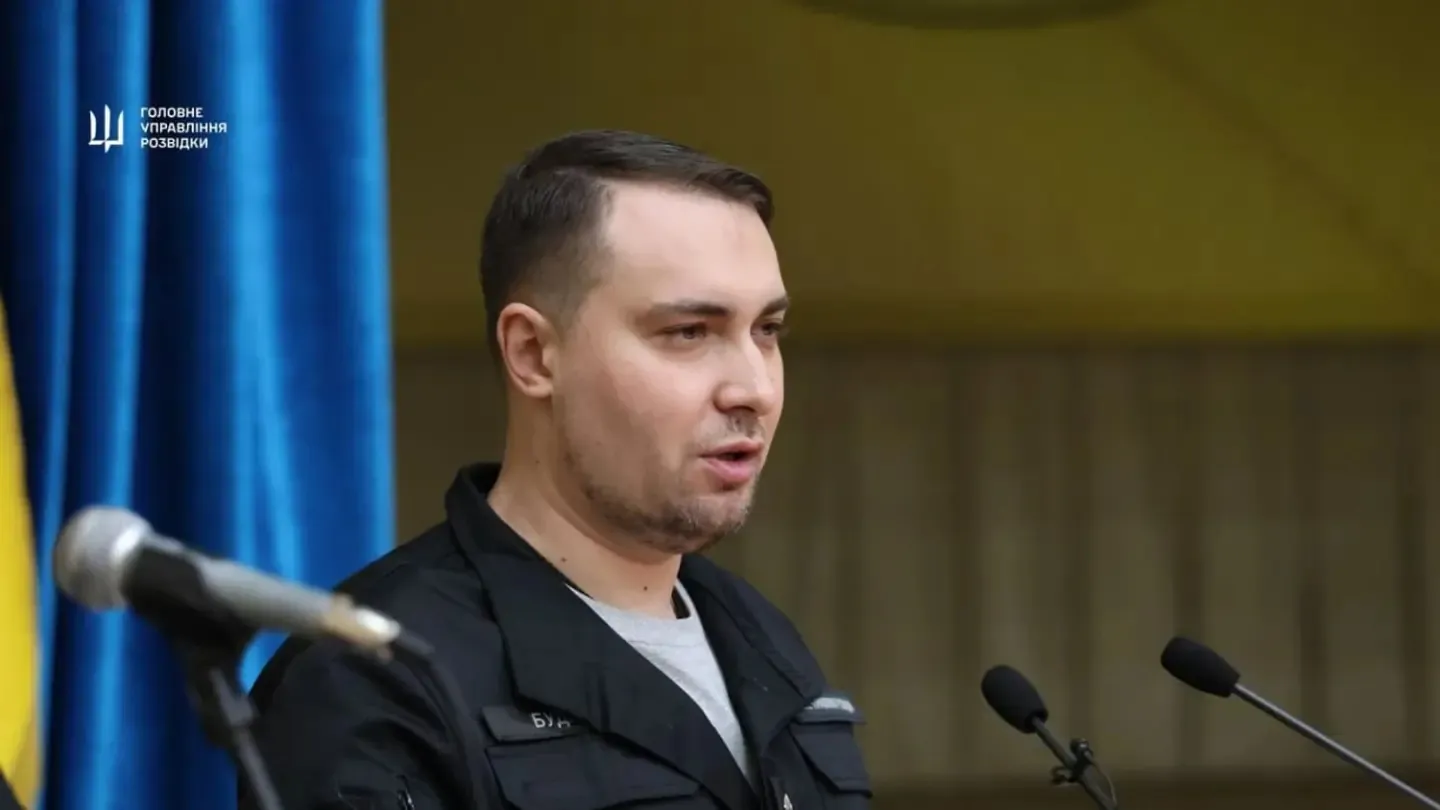
Kirill Budanov stated that Russia is gradually building a closed information system within the country, restricting the internet and access to foreign services, and explained that this is in preparation for implementing unpopular decisions.
According to him, this is not merely about technical blocking, but about creating a controlled information environment where society is left with only one official version of reality. Such processes, according to Budanov, increasingly resemble the isolation model that North Korea has been using for decades. This was stated by the Head of the President’s Office, Kirill Budanov, at the Kyiv Stratcom Forum 2026.
The Kremlin’s attempts to build a so-called “digital ghetto” within Russia, where foreign messaging apps and access to the open internet are gradually being restricted, are part of a broader strategy to control society ahead of future political and social decisions that may be unpopular.
This was stated by the Head of the Office of the President of Ukraine, Kirill Budanov, during his speech at the Kyiv Stratcom Forum 2026, emphasizing that Russia has significant experience in the field of information and psychological operations and systemic influence on the public consciousness. “The enemy has vast historical experience in the field of information and psychological operations and the distortion of meanings,” Budanov noted, explaining that modern cognitive warfare requires substantial resources, professional personnel, and long-term influence on society.
He also emphasized that in the temporarily occupied territories of Ukraine, Russia is employing methods he termed “engineering of human consciousness,” attempting to systematically reshape people’s perceptions through the constant imposition of identical narratives.
According to Budanov, scientific research shows that repeating the same informational message for approximately 40 days can significantly influence a person’s thinking, and it is precisely these techniques, in his view, that the enemy is using to supplant Ukrainian identity in the occupied territories.
He also noted that restricting internet access and blocking alternative sources of information within Russia is a step toward completely isolating the population from information. “Russia is following North Korea’s example and building a completely isolated country,” Budanov stated, adding that the goal of such actions is to ensure the dominance of state propaganda alone and control over public perception of reality.
At the same time, he emphasized that the war on the front lines is gradually dismantling the Kremlin’s propaganda narratives, as claims of a swift conquest of Ukraine and subsequent “victories” are being replaced by increasingly narrow and limited objectives, indicating a disconnect between plans and reality.
Budanov also noted that Ukraine must work more actively in the information sphere, especially in the occupied territories, where the struggle to preserve identity and historical memory continues—a struggle that, in his words, has become one of the main fronts of the modern war.
On the night of May 20–21, fighters from the Special Operations Forces (SSO) and Unmanned Systems Forces (USB) of the Armed Forces of Ukraine delivered a precision strike on the Syzran Oil Refinery in the Samara Region of the Russian Federation.
In Russia, following the drone attack, fires broke out at the Lukoil-Nizhegorodnefteorgsintez oil refinery in the city of Kstovo, Nizhny Novgorod Oblast, and on the grounds of the Azot chemical plant in Nevinnomyssk, Stavropol Krai.
On the night of May 20, a series of explosions rocked the Stavropol Krai in Russia, followed by reports that the Nevinnomyssk Azot plant had been hit. The plant is one of the largest producers of ammonia and ammonium nitrate in Russia. Details regarding the extent of the damage and the consequences of the attack are still being clarified.


