
Flash explained the radiation risks posed by debris from Russian drones and missiles
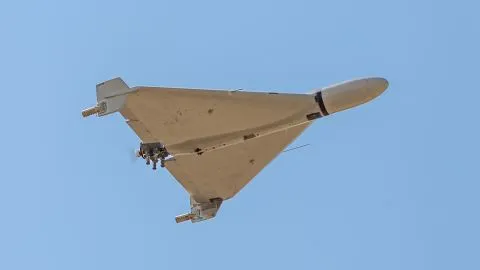
Experts are warning of the potential danger posed by debris from Russian drones and missiles containing depleted uranium components. Radiation technology specialist Serhiy (Flash) Beskrestnov explained in a comment to UNIAN that such components can pose a risk in the event of direct contact or destruction, but the level of danger depends on the conditions of their use and the condition of the debris after the explosion.
He noted that the Russians generally use a missile mounted on the “Shahed.” According to their plan, this missile is intended to shoot down Ukrainian helicopters.
“This is a very old Soviet missile, and it uses special depleted uranium rods as its warhead. They are very dangerous,” the expert said.
He emphasized that when such debris is found, the rods must be removed by specialists, as radiation is detected.
Speaking about today’s information from the Security Service of Ukraine, “Flash” reported that the warhead of the Soviet R-60 missile consists of special depleted uranium rods, which are very strong in order to be capable of attacking aircraft. “This warhead emits radiation,” he added.
When asked how dangerous this is for the environment and for people, Beskrestnov noted that it could only be dangerous for specialists working with these debris. At the same time, he urged civilians not to approach the debris or do anything with it, but to contact specialists.
Additionally, according to the expert, the soil and water are not contaminated by these rods, as they are contained within the warhead. “It’s intact; it doesn’t break apart or scatter, as far as we’ve found,” the expert said.
When asked how many times they had found something similar, “Flash” said it had happened many times and had been recorded since winter.
“We probably find one such missile every week. The Russians are trying to target our helicopters,” he noted.
In addition, the expert noted that Russia uses this technology “not intentionally; there is no combat radioactive charge inside.”
“It’s just that this technology was used in Soviet times for manufacturing warheads. This is a Soviet R-60 missile designed to strike, for example, interceptors. And its nose cone has to be very hard. And there is nothing harder than depleted uranium rods. And in Soviet times, they were installed there as a means of destruction. But now we see that they emit radiation,” explained Beskrestnov.
As a reminder: A massive forest fire broke out in the Chernihiv region following shelling by the Russian Federation.
Over the past 24 hours, the Russian army carried out 41 strikes on border areas of the Chernihiv region, primarily using FPV drones.
Additionally, in the Dnipropetrovsk region, a Russian FPV drone struck a utility vehicle carrying power company workers who were on their way to perform restoration work.




