
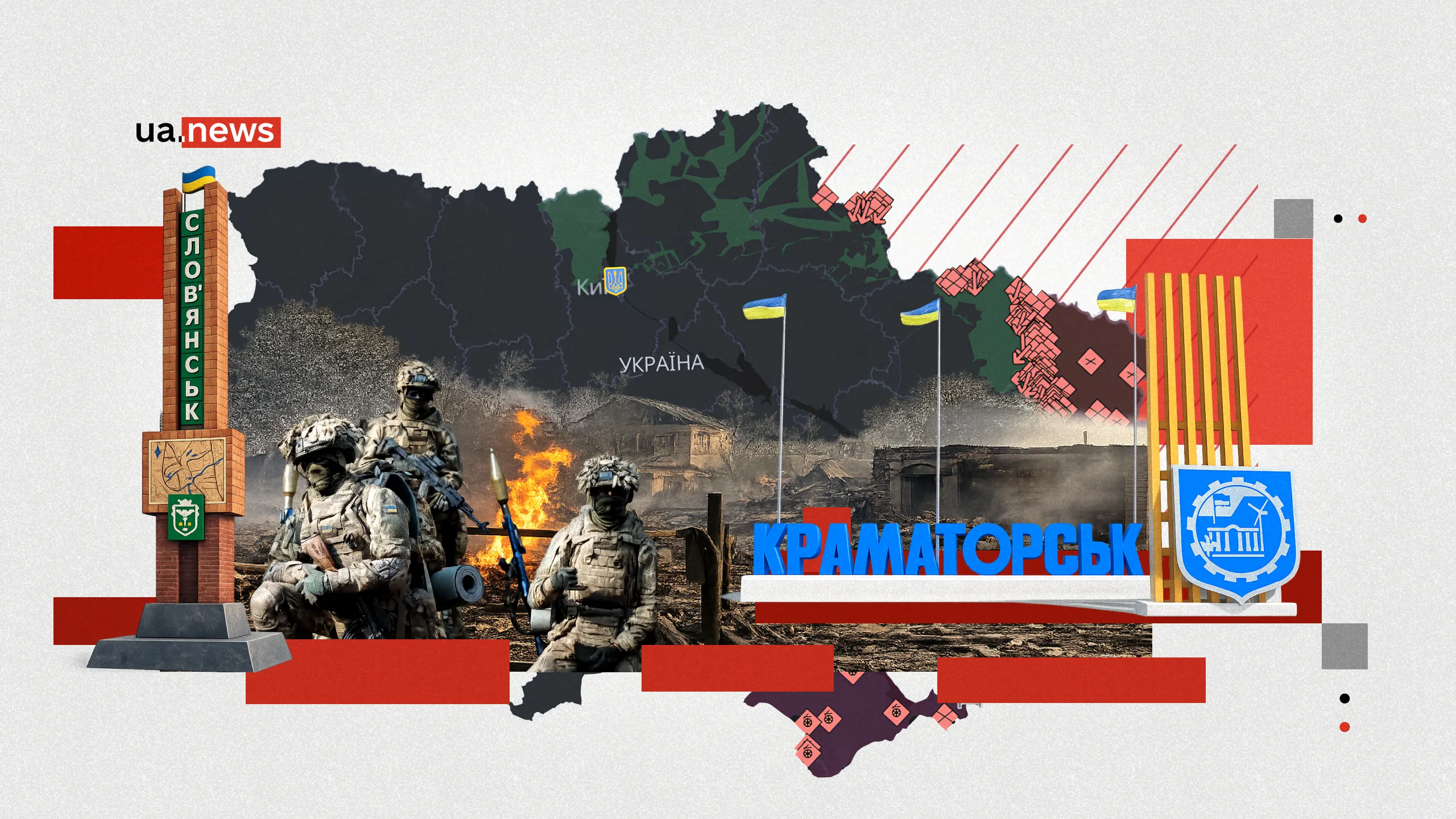
Defense Belt: What’s Happening Around the Sloviansk-Kramatorsk Urban Area
16 April 2026 15:30With the arrival of spring warmth, the occupiers have stepped up their offensive operations along nearly the entire front line, which stretches for about 1,200 km. According to Commander-in-Chief of the Armed Forces of Ukraine Oleksandr Syrskyi, the situation has become particularly tense over the past month in the Oleksandrivka, Pokrovsk, Kostiantynivka, and Lyman sectors.
However, the military expects a large-scale intensification of hostilities specifically in late spring and early summer, when the forest belts become overgrown with greenery.
The Russian Federation’s strategic objective at this stage is the complete occupation of the Donetsk region. The enemy is intensifying combined attacks on the largest fortress cities of the Donbas: Sloviansk, Kramatorsk, Kostiantynivka, and Druzhkivka. This is a large industrial urban area—a fortified defensive hub that is difficult for the Russians to capture. That is precisely why the Kremlin is pressing in negotiations for Ukraine to surrender this line of defense without a fight.
UA.News reports on what is currently happening on the front lines around the Sloviansk-Kramatorsk metropolitan area and what Ukrainian military experts are saying about the prospects for defending these cities.
Massive airstrikes
Russian aircraft regularly strike Sloviansk and Kramatorsk, leveling entire residential neighborhoods. One such strike occurred at dawn on April 15, when the Russians dropped a FAB-1500 high-explosive aerial bomb on the center of Sloviansk. The strike completely destroyed a children’s sports facility and a government building, and damaged at least 39 high-rise buildings and 15 vehicles.
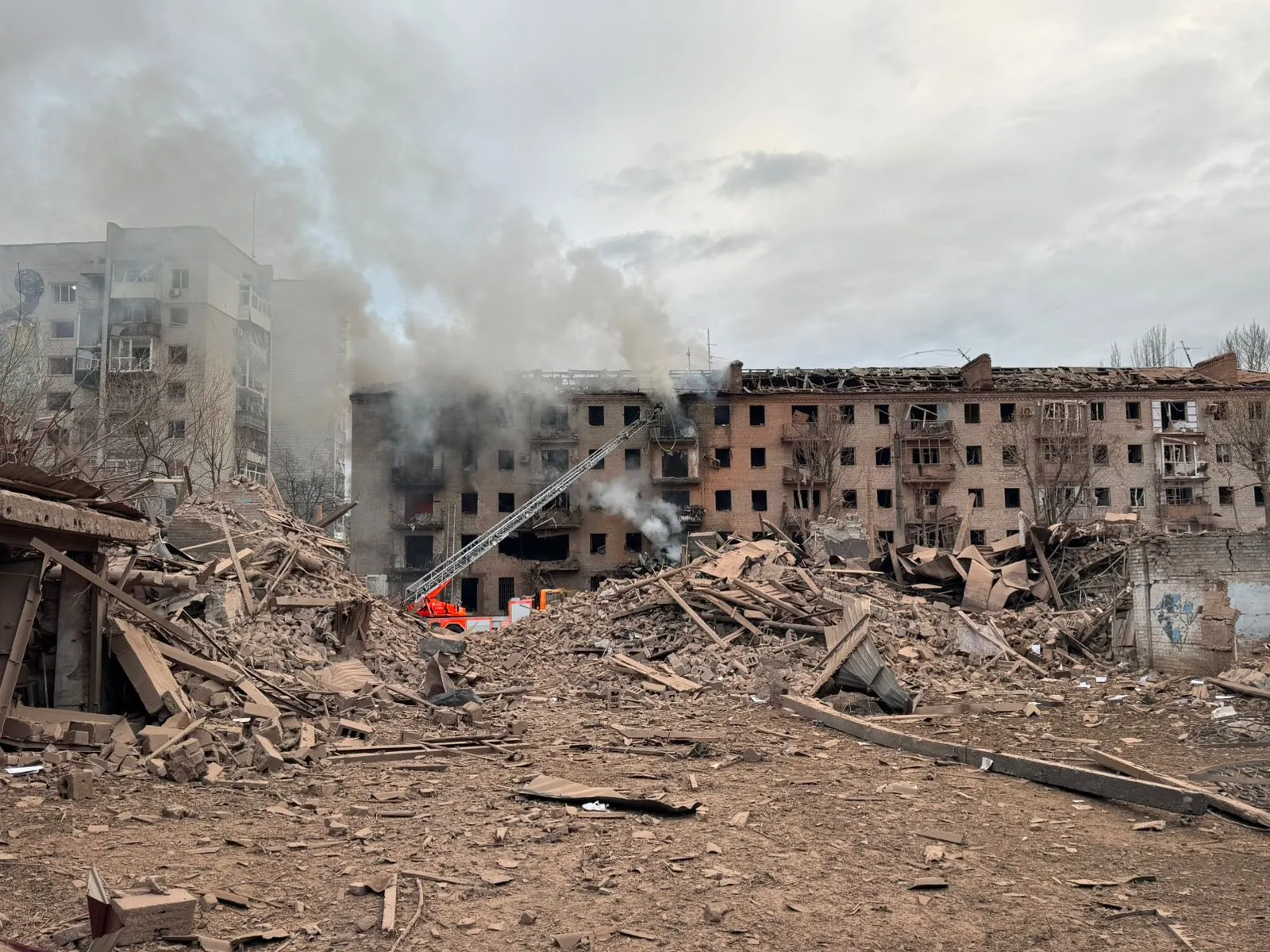
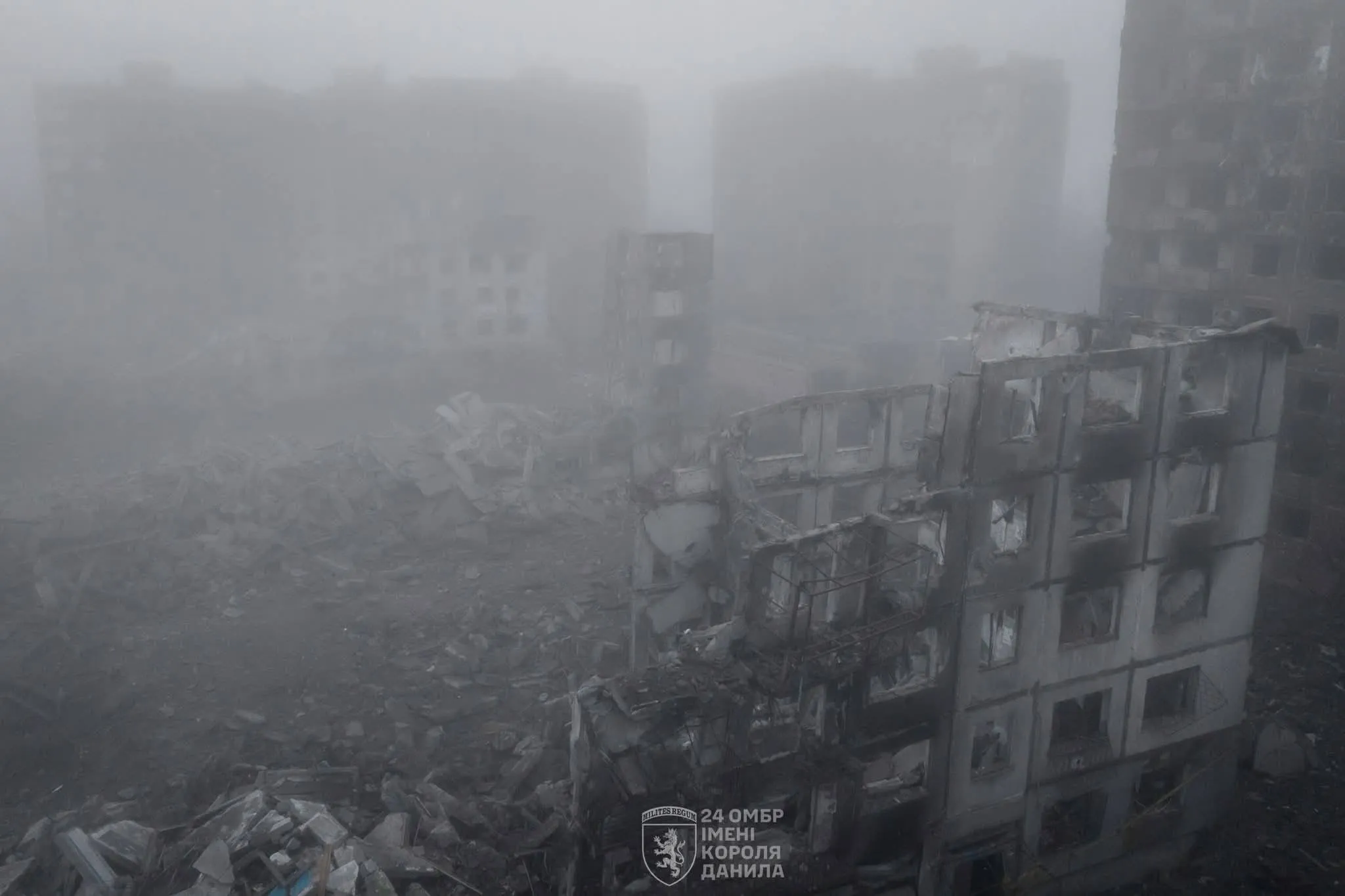
Kostiantynivka is enduring even more massive strikes. The Russians are trying to destroy every building in the city. Sometimes they drop dozens of aerial bombs at a time.
“Seventy guided aerial bombs were recorded in a single day over the city itself. There were 250-kilogram bombs, and there was even a case where half-ton and two-ton bombs were dropped. Very often. Russian artillery and aviation are targeting the city; they are completely destroying the infrastructure. In other words, there are hardly any shelters left where one can hide within the city itself,” said a soldier with the call sign “Maestro” on Suspilne TV.
Cities in northern Donetsk Oblast are also constantly under attack by various types of drones: FPVs, “Lancets,” “Molniyas,” and upgraded fiber-optic strike UAVs capable of flying about 50 km. The nets along highways and within the cities themselves offer little protection, as drones can break through them.
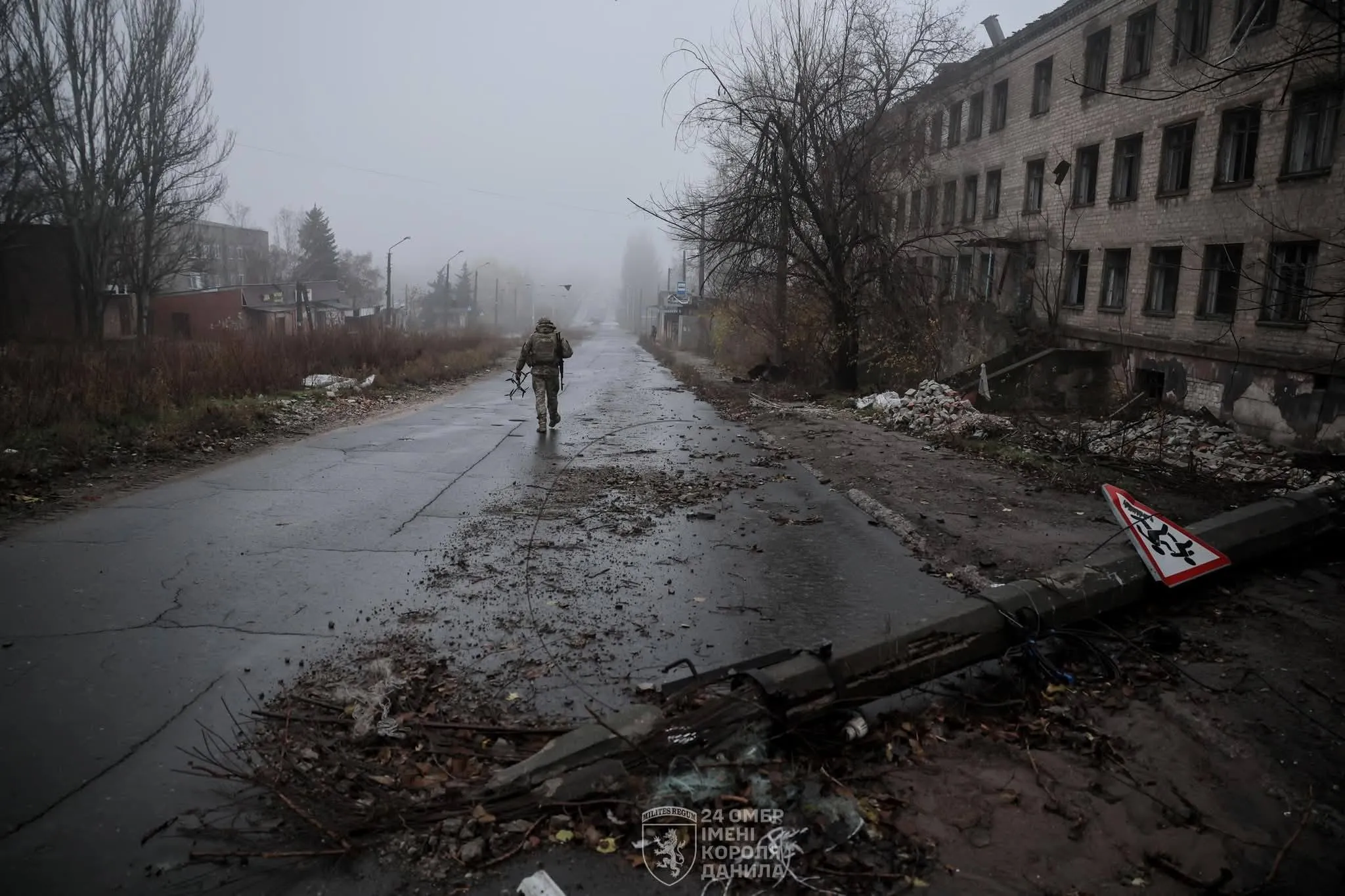
By intensifying shelling of residential areas and highways, the Russians are driving the civilian population out of major cities and their surrounding areas. Opportunities to leave will remain available over the next few months. For those who delay evacuation, the threat to their lives will grow.
For example, despite heavy fighting, as of March 25, 2026, more than 2,780 residents remained in Kostiantynivka. According to Regional Military Administration Head Vadym Filashkin, the city has no gas, water, or electricity; there is one stronghold and two wells in operation. Meanwhile, the occupiers control all access routes. Infantry units are being deployed to evacuate local residents.
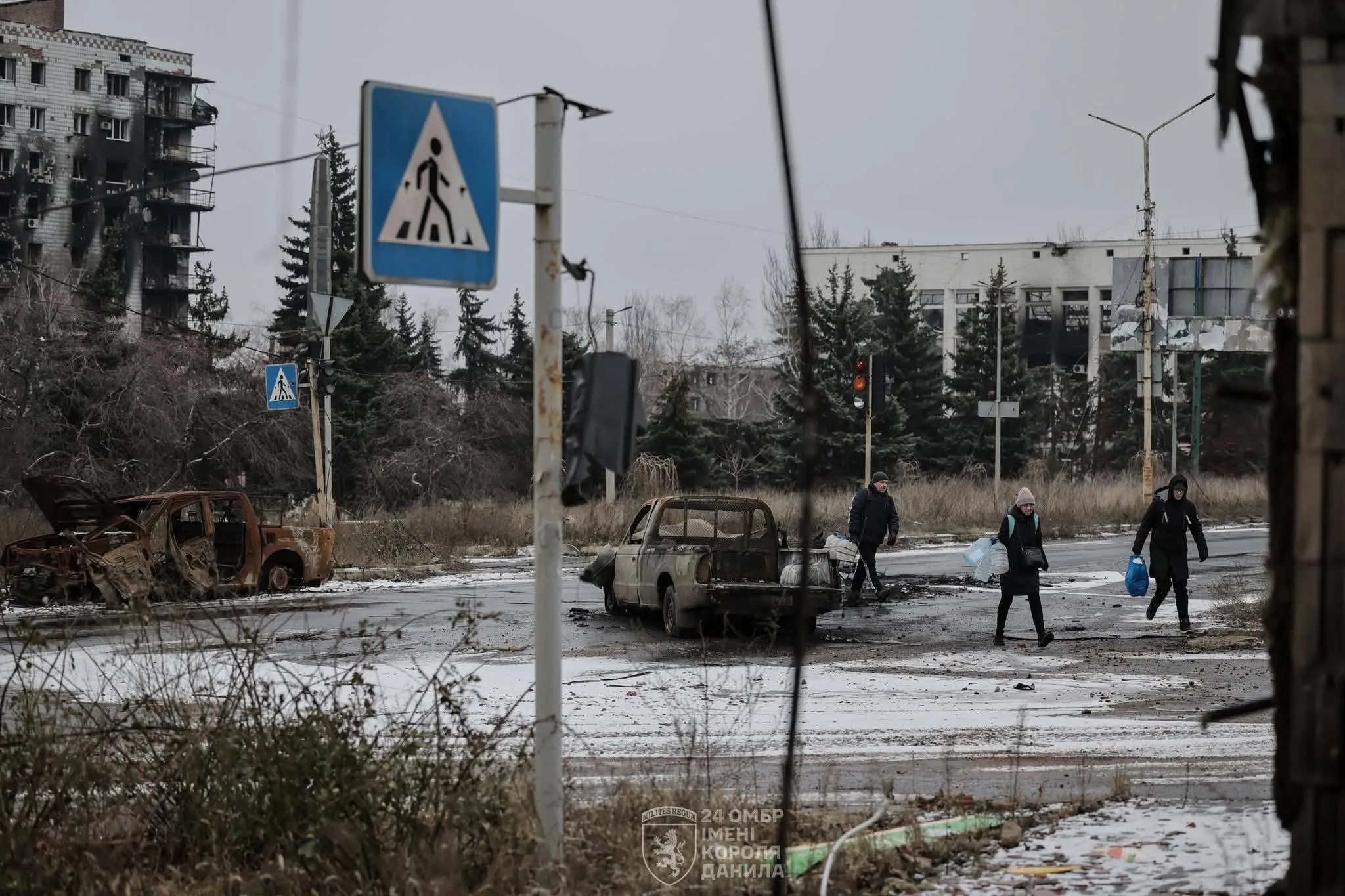
“Unfortunately, it is impossible for civilians or volunteers to enter the area. We can only ask the military to deliver drinking water, food packages, and medications to the locals. And occasionally evacuate people from there when they have the opportunity,” Filashkin explained.
The regional governor emphasizes that the situation in Sloviansk and Kramatorsk is also deteriorating, and therefore urges residents to make arrangements for their own evacuation.
“Almost every other day, the enemy drops 5–6 aerial bombs on both Kramatorsk and Sloviansk. A huge number of people still live in these cities. There are 48,000 people in Sloviansk alone,” Filashkin said during a nationwide telethon on April 15.
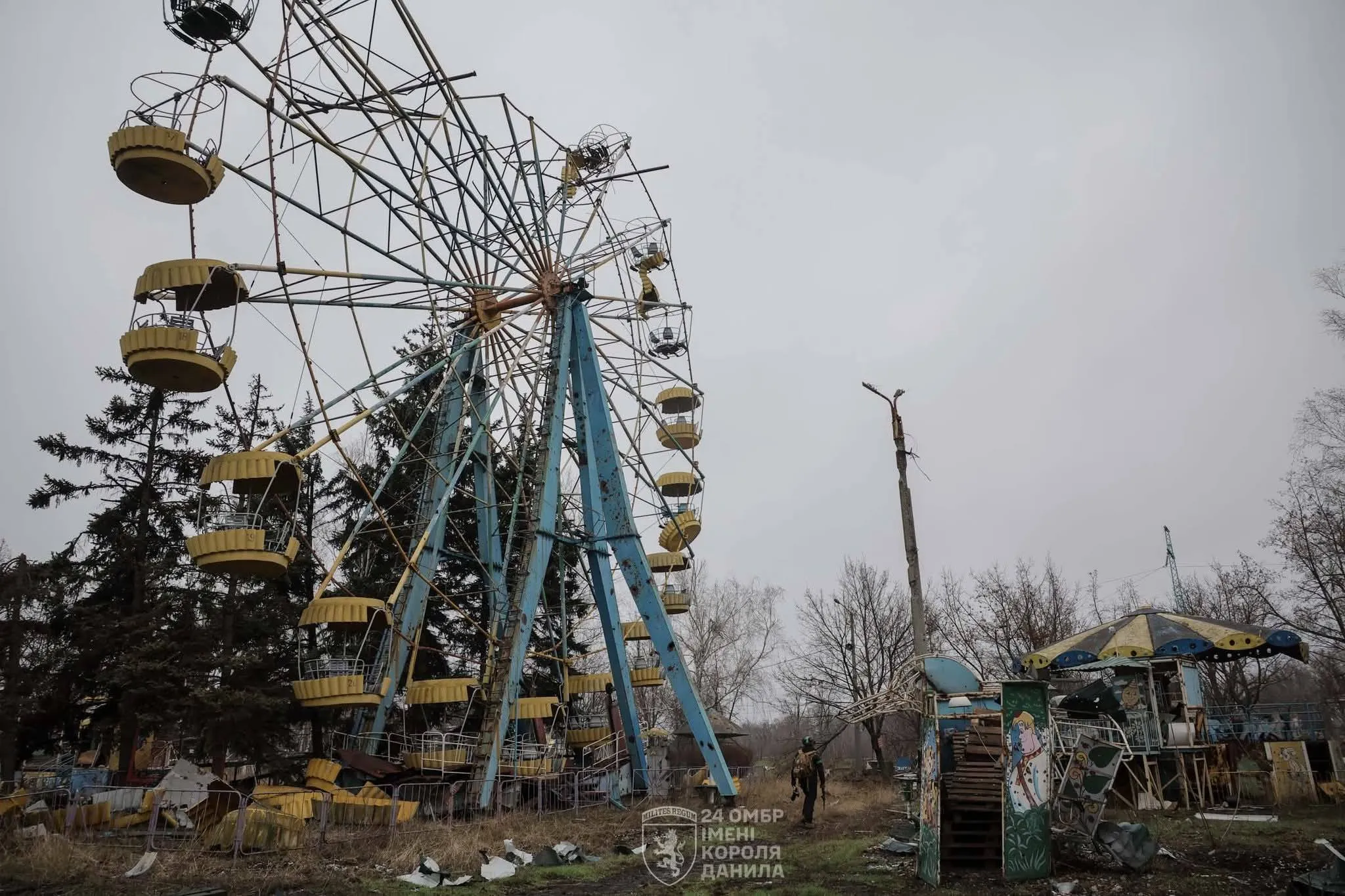
Before the hostilities began, an average of up to 90,000 people lived in the region’s major cities, with 147,000 and 105,000 residing in Kramatorsk and Sloviansk, respectively. The war has nearly halved this population. As of March 27, 2026, according to data from the Donetsk Regional State Administration’s Strategic Communications Department, there were approximately 58,000 people in Kramatorsk and about 41,000 in Sloviansk.
Wear-and-tear tactics and new assaults
The area of urban and industrial developments in the four largest cities of the Sloviansk-Kramatorsk agglomeration is more than four times the size of Bakhmut and more than seven times the size of Pokrovsk. This is precisely why this defensive belt is so coveted by the Russian occupation army, analysts at the U.S. Institute for the Study of War (ISW) emphasize.
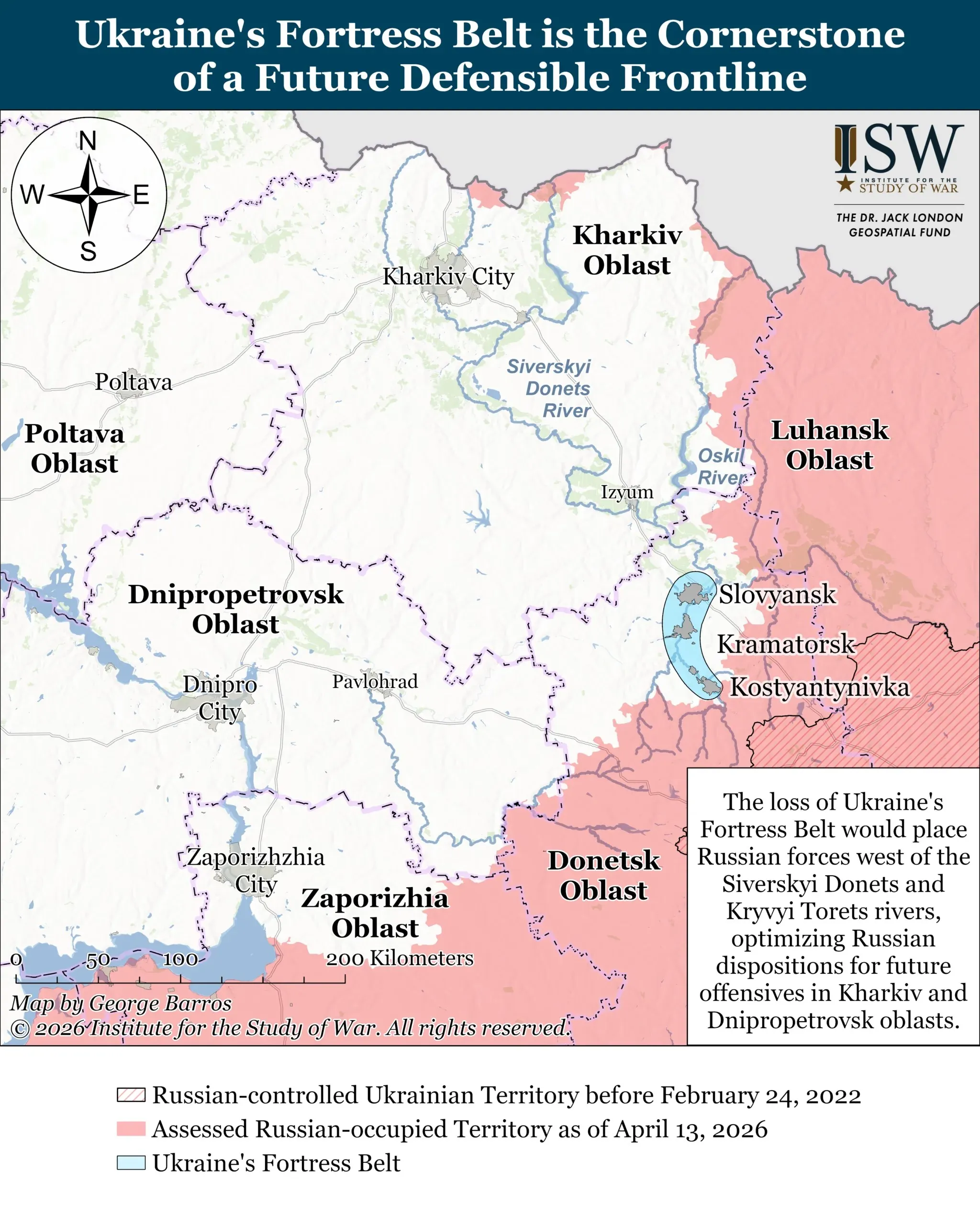
Urban combat in this sector of the front can be particularly grueling. The ISW report dated April 14 notes that the heavy costs incurred by the Russians in the battle for Bakhmut or Pokrovsk pale in comparison to those required to capture the Sloviansk-Kramatorsk defensive belt. For example, the military campaign to capture Bakhmut—a city with a population of 71,000—lasted 9 months. The Russians spent another 22 months attempting to capture Pokrovsk—a city with a population of 60,000.
With the onset of spring, the occupying army is intensifying its offensive operations toward the Sloviansk-Kramatorsk agglomeration, deploying more equipment. Thus, on the evening of March 31, the Defense Forces halted the largest mechanized assault by the occupiers since the beginning of the year in the Sloviansk direction. The Russians attacked Ukrainian Armed Forces positions on motorcycles: they operated in small groups of 3–4 vehicles, attempting to break through the lines. Ukrainian units then detected the enemy on the approaches and destroyed all the vehicles, as well as eliminating enemy infantry using FPV drones.
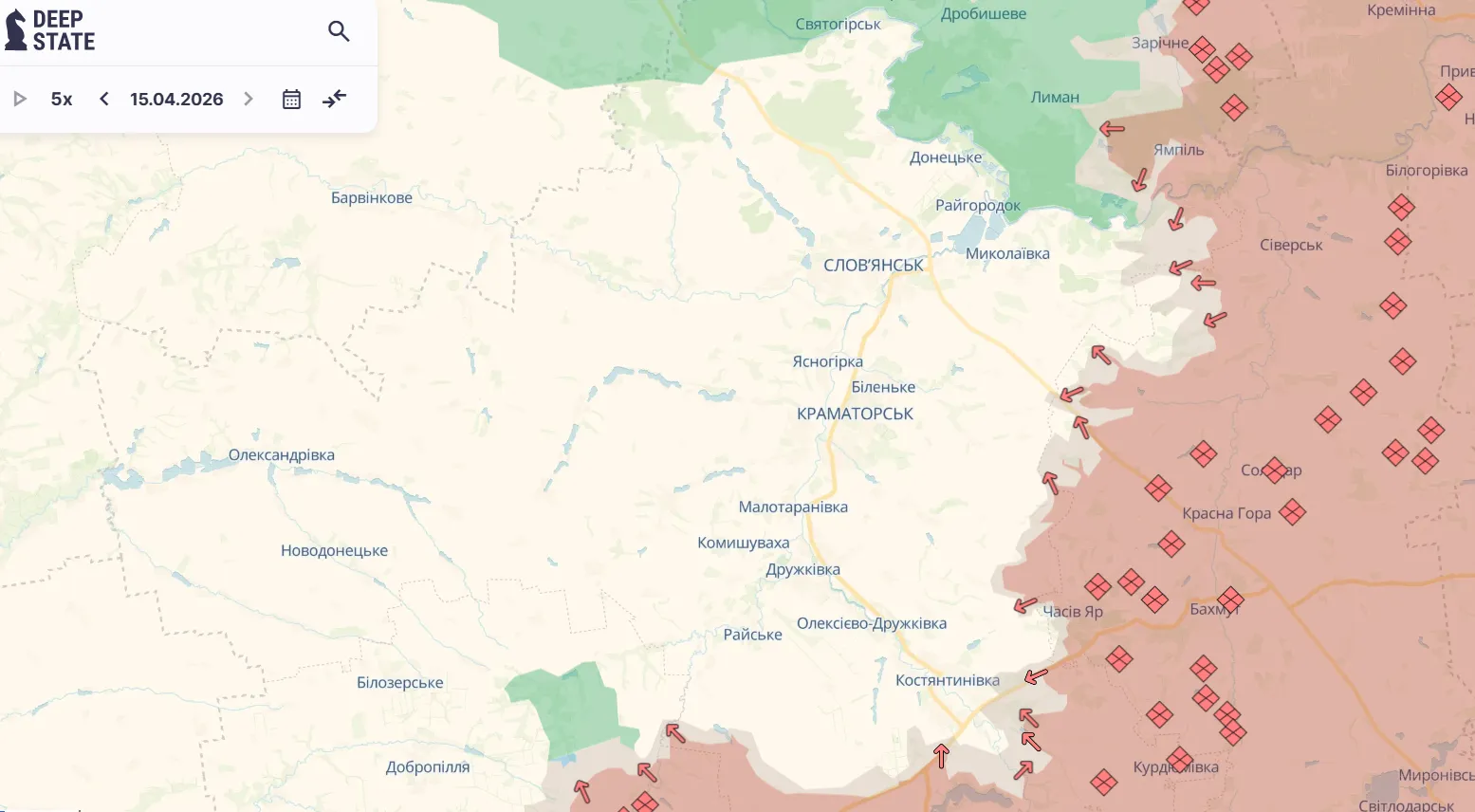
“The target is Sloviansk and the surrounding settlements, because logistical arteries pass through Sloviansk, leading to Kramatorsk itself. That is why the enemy is focusing its attention there. Kramatorsk is more about open terrain and prepared engineering obstacles. If the enemy advances on us across open terrain, they will suffer heavy losses,” explained Dmytro Zaporozhets, spokesperson for the 11th Army Corps.
The enemy is actively pushing toward Sloviansk both from the direction of Kramatorsk and straight through the center, Zaporozhets notes. It is there, in the Sloviansk direction, where the most intense assault operations are currently taking place. The enemy cannot afford to slow down its offensive operations due to the geographical location of its positions.
Dmytro Snegirev: Russians are turning Kostiantynivka into ruins
Occupation forces are launching dozens of strikes daily with guided and high-explosive aerial bombs on Kostiantynivka, turning residential neighborhoods into ruins. FAB-3000 bombs are effectively destroying the city, leaving minimal chances for the civilian population, confirms military analyst Dmytro Snegirev.

“In addition to FABs, the occupiers are actively using barrel and rocket artillery, as well as drones. Their tactical advantage is based on controlling the dominant heights in both Chasiv Yar and Toretsk, while Kostiantynivka is located in a low-lying area. This significantly complicates the task for Ukrainian defenders, as the enemy gains the ability to control fire over the city itself and the positions of the Ukrainian Defense Forces.
However, this poses the greatest danger to the civilian population. The possibility of evacuation has been virtually reduced to zero. This is because, in addition to artillery, the Russians are actively using drones, even attacking civilian transport. To intensify the strikes, the Russian Federation has deployed drone operators from the “Rubicon” unit to the area.
The occupiers continue their attempts to break through to the area of the railway station and along Bakhmutskaya and Toretskaya streets. In other words, fighting is now effectively taking place within the city. There is no reason to expect that the Russians will abandon their strategic intentions. Operational reserves are being actively concentrated in this direction, creating the conditions for an intensification of the occupying forces’ offensive operations.
This also applies to the Lyman direction, where the main fighting is concentrated around the strategically important settlement of Rai-Oleksandrivka, which is key for the Ukrainian Defense Forces. Currently, fighting is ongoing in the forest belts near this area.
Rai-Oleksandrivka is located approximately 10–12 km from Sloviansk and Kramatorsk. This allows the occupiers to use not only FPV drones but also barrel and rocket artillery. The fact that Sloviansk is already within the strike zone is evidenced by the shutdown of the Sloviansk Thermal Power Plant, which provided electricity to the territories of Donetsk Oblast controlled by Ukraine.
Currently, our Defense Forces are actively conducting counterattacks to halt the occupiers’ advance, primarily in the direction of Sloviansk and Kramatorsk. Particularly important operations are underway in the Lyman direction, where clearance operations are being conducted in the settlements of Sosnove, Yarova, and Oleksandrivka, as well as raids in the Yampil Forest. I would like to note that these raids are not a counteroffensive. They are blocking the entry of Russian units and preventing them from fully consolidating their positions in the occupied territories.
Overall, the enemy is attempting to execute a plan to flank Ukrainian military positions near Sloviansk, seeking to create conditions for an offensive against fortified areas. First and foremost, this involves the use of tactics to bring Defense Forces locations under fire control. The Russians “honed” this tactic in the battles for Avdiivka, Bakhmut, and Soledar, and are now applying it with the specific characteristics of the Sloviansk-Kramatorsk agglomeration in mind.
However, the current situation differs from the battles for Bakhmut, as the Defense Forces have significantly increased the number of UAV operator units. The occupiers, in fact, confirm that Ukraine holds a significant advantage in both the number of UAV operator units and, most importantly, in the frequency of deploying FPV drones and loitering munitions.
Moreover, the radius of our Defense Forces’ strike zone has increased to 20 km. This makes covert redeployment of personnel and equipment impossible and slows the Russians’ advance. In other words, the main difference from the battles in Bakhmut is that we are using innovative technologies developed both by Ukraine and our strategic partners. Above all, the so-called “drone wall” is significantly changing the course of hostilities.”


