
Russia is pressing forward on Kostiantynivka with KABs and infantry
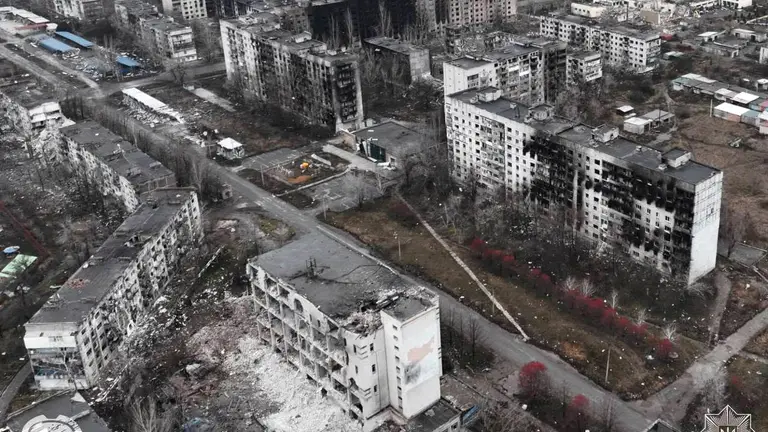
The defense of Kostiantynivka in the Donetsk region lasted quite a long time, but the situation is now becoming increasingly difficult for Ukrainian forces. Russia is not only advancing with infantry but is also making massive use of guided aerial bombs, against which Ukraine has so far struggled to find an effective response. Military analyst Vasyl Pekhno believes that the city’s defense is gradually coming to an end.
According to Vasyl Pekhno, in the current situation, it is important to look beyond simply how long the Ukrainian military can hold a particular city. The key question is what benefit this defense provides and at what cost.
If holding a certain section of the front begins to result in more losses than benefits, the command must assess the feasibility of continuing the defense. According to the analyst, this is precisely the situation currently unfolding around Kostiantynivka.
Russia is pressing forward with infantry and KABs
Pekhno noted that it is particularly important for Ukraine today to preserve its personnel. At the same time, the Russian army has the ability to deploy significant numbers of infantry to specific sections of the front.
Russian troops are attempting to infiltrate cities, hiding in ruined buildings, basements, and other shelters. At the same time, the occupiers are using airpower and launching massive strikes with guided bombs. “This is a completely obvious reality. You’d have to be incredibly naive to think this is realistic. Why is this impossible? Because the Russians, in addition to having a significant advantage in manpower—which allows them to spread out large numbers of infantry throughout cities and hide in shelters, building ruins, or basements—also have air power. This allows them to launch strikes with a large number of guided bombs virtually unimpeded,” the military analyst explained.
According to him, the danger posed by guided bombs is often underestimated by people who are far from the front lines. For cities near the front lines, these bombs can be an even more serious problem than ballistic missiles. Pekhno cited data on Russian ballistic missile production for comparison. According to Ukrainian intelligence, Russia can produce about 100–105 ballistic missiles per month.
Even if we assume that all of them would be aimed at Kyiv, the columnist noted that the scale of potential destruction still cannot be directly compared to what KABs do to frontline cities. “It still won’t even come close to the level of threat or destruction that KABs pose to frontline territories and cities like Sumy, Kharkiv, Zaporizhzhia, or Dnipro,” Pekhno emphasized.
How Much Explosive Do KABs Carry?
The military analyst also compared the warhead of a KAB-500 guided aerial bomb to that of an “Iskander” ballistic missile. According to him, the warhead of a KAB-500 weighs about 300 kilograms, while that of an “Iskander” weighs about 450 kilograms. In other words, a single such missile is roughly equivalent in warhead power to one and a half KABs. But the main problem, as Pekhno noted, lies in the number of aerial bombs. Russia can drop hundreds of KABs on the front lines every day.
“We, too, have nothing to counter them with. We underestimate the threats and capabilities of the enemy, specifically guided aerial weapons, when they drop 250–300 KABs per day, including on Kostiantynivka,” he said. According to the analyst, demands to simply “concrete over” certain sections of the front line do not solve the problem. “To those who say we should have ‘concreted over’ certain sections of the front line, just tell me how to do that if we don’t have the capability to shoot down the Russian guided aerial bombs’ launch vehicles?” Pekhno noted.
What’s Happening with the Defense of Kostiantynivka
Pekhno believes that the Ukrainian defense of Kostiantynivka is gradually coming to an end. At the same time, he emphasized that this does not mean the city will fall suddenly. According to him, Kostiantynivka has held out for quite a long time. During this time, the Russian army has suffered significant personnel losses. “Unfortunately, we won’t be able to hold them off indefinitely as long as the Russians are able to drop KABs. This is the scenario currently unfolding in Kostiantynivka. It cannot be said that it is unexpected or catastrophically rapid,” said the military analyst.
He compared the situation to instances when Russian troops quickly captured populated areas. In his view, a far worse scenario is a rapid collapse of defenses, where a city or key position is lost in a matter of weeks. In parallel with the situation near Kostiantynivka, the situation is also changing in other areas of Donetsk Oblast.
Pekhno reported that the defense of Rodynske in the Dobropillia sector has come to an end. Russian troops are already advancing toward the outermost line of defense, which runs near Dobropillia, particularly in the areas of Bilytske and Vodyanske.
Could the situation change?
According to Pekhno, Russian troops are still advancing and will likely continue to do so. At the same time, the outcome will depend on several factors. One of the main ones is whether Ukraine will be able to more effectively counter Russian guided aerial bombs and medium-range drones being used near the front lines. It is also important whether Ukrainian specialists will be able to scale up new military technologies and how extensive a potential new mobilization in Russia might be.
Another factor could be the strengthening of Ukraine’s air force. Ukraine continues to work on international agreements and is awaiting the arrival of Gripen fighter jets. Pekhno believes that these aircraft will not be able to completely solve the problem of Russian aerial bombs, but they could pose an additional threat to Russian aviation.
If Ukraine gains more capabilities to counter Russian aircraft and precision-guided munition carriers, this could change the situation on the front lines. Then, according to the analyst, it will be easier for the Ukrainian military to defend cities such as Kostiantynivka, Druzhkivka, Sloviansk, Kramatorsk, Lyman, and Kupiansk. For now, however, the main problem remains the same: the Russian army has the capability to use guided aerial bombs on a massive scale, while Ukraine lacks sufficient means to systematically destroy the aircraft launching them. Military analyst Vasyl Pekhno noted this during a broadcast on Channel 24.
In Russia, company executives, accountants, and HR managers have begun preparing to carry out duties related to the mobilization of employees.
Russia’s Federal Tax Service has begun sending out mass notifications to citizens of working age who have no official income but make large purchases. Tax officials are attempting to identify possible hidden sources of income amid a growing budget deficit.
In Russia, prospective students were promised admission to a film institute in exchange for a contract with the Ministry of Defense.


