
Air defense turrets shoot down Russian drones at a distance of up to 1.4 km
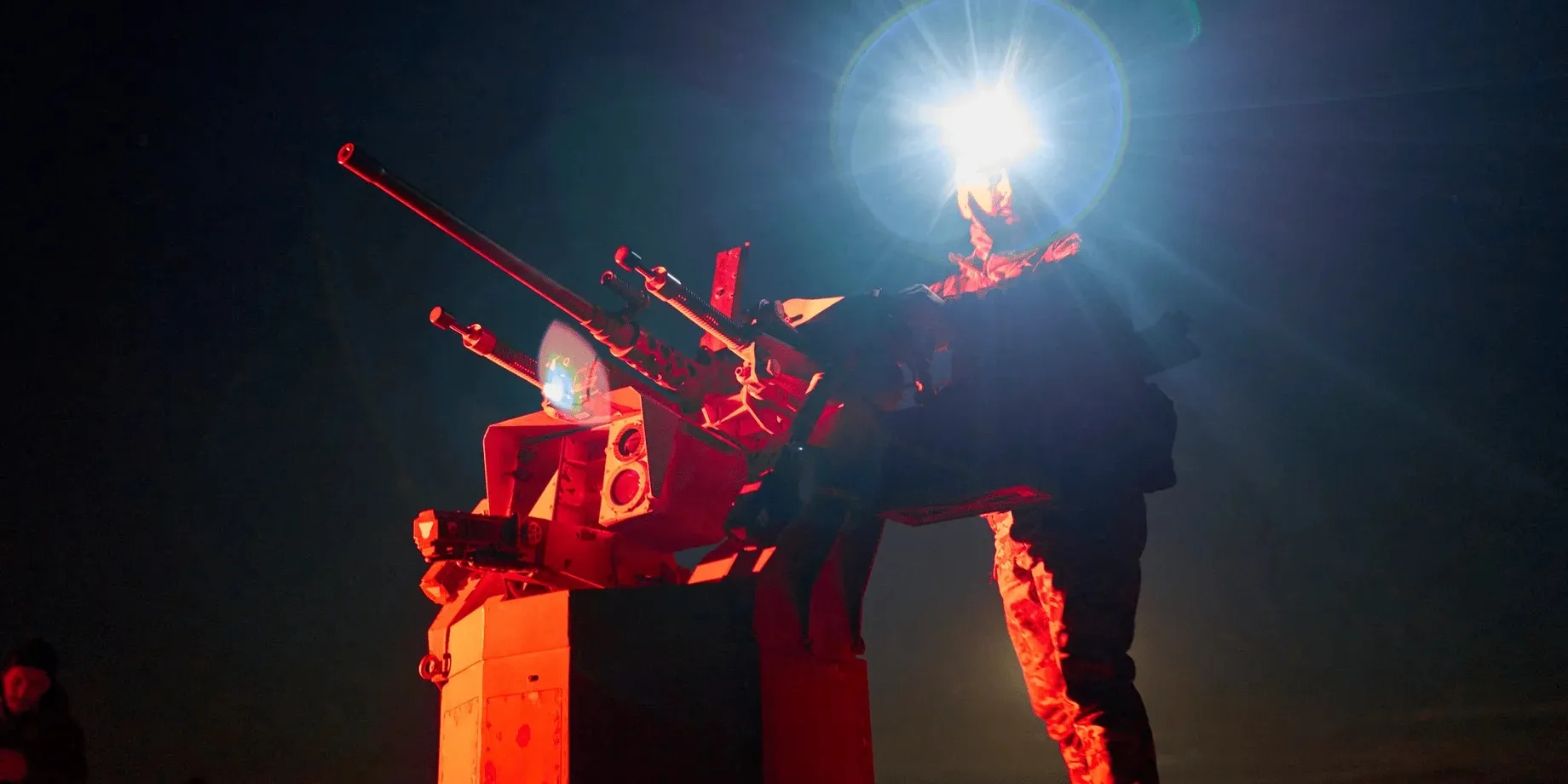
There are already 12 automated turrets in operation in Kyiv, which are helping to shoot down Russian jet drones. According to Yuriy Cherevashchenko, deputy commander of the Air Force, their effectiveness in different directions ranges from 20% to 40%, with an average of about 28%. These systems have already struck individual targets at distances of up to 1.4 kilometers.
On October 6, Yuriy Cherevashchenko, Deputy Commander of the Ukrainian Air Force, spoke about the turrets’ operations. He addressed a meeting of the Verkhovna Rada’s Temporary Investigative Commission. The meeting was broadcast on the YouTube channel of People’s Deputy Oleksiy Goncharenko.
According to the military official, automated turrets are already being used not only in Kyiv. In total, about 200 such air defense systems have been deployed in various regions of Ukraine. The main areas where they are operating are the Kyiv, Kharkiv, Zaporizhzhia, and Odesa regions.
The turrets are already shooting down jet-powered drones
Cherevashchenko explained that Ukraine is currently using turrets equipped with 12.7-mm machine guns. They are capable of engaging high-speed targets, including jet-powered drones. The maximum engagement range recorded so far is 1,400 meters. At the same time, jet drones and “Banderole”-type drones, according to the military official, are usually shot down at distances of up to 800 meters.
“We generally shoot down jet-powered drones and ‘Banderole’ drones at distances of up to 800 meters,” Cherevashchenko said. However, some shoot-downs have been recorded at ranges of up to 1.4 kilometers. These are targets capable of flying at speeds of about 500–600 km/h. It is precisely this high speed that makes them more difficult to intercept. The Air Force also predicts that Russia may further increase the speed of such drones.
How effective are the turrets?
According to data presented by Cherevashchenko, the effectiveness of the turrets depends on the direction and number of targets during an attack. In different areas, it ranges from 20% to 40%. On average, the rate currently stands at about 28%. In other words, this does not refer to the guaranteed destruction of every target, but rather to the proportion of drones hit while the system is in operation. “Statistics currently show that in different areas, depending on the intensity of the strikes, the effectiveness ranges from 20 to 40 percent. On average, the effectiveness is around 28%,” said the deputy commander of the Air Force.
He explained that the result is influenced, in particular, by how far away the turret detects the target. A radar or other system may detect a drone at a considerable distance, but the machine gun is effective only at closer ranges. Therefore, the exact moment of opening fire and the distance to the target are of great importance.
The turret does not fire completely autonomously
Despite the use of artificial intelligence and automated guidance, turrets do not operate entirely without human intervention. The system receives information from radars and information and telecommunications systems. It can then independently locate a target, lock onto it, and track it.
However, the final decision to open fire rests with the operator. This is done primarily for safety reasons. Other Defense Forces units and systems may be operating simultaneously near the turret, so a fully automated decision to fire could create additional risks. “This is, first and foremost, a safety measure. And secondly, it ensures the safe use of other weapons,” Cherevashchenko explained.
Thus, artificial intelligence assists specifically during the target search and tracking phases. A human no longer needs to manually control the high-speed drone from the moment a target is detected. This is particularly important when the target is moving at high speed.
12 turrets have been installed in Kyiv
President Volodymyr Zelenskyy had previously announced the installation of turrets in the capital. On October 4, he stated that more than 12 such systems had already been installed in Kyiv. Eight more automated combat modules were planned for installation in the Kyiv region. These are systems designed for large-caliber machine guns. Their purpose is to supplement other air defense systems and engage targets at close range.
The turrets are not intended to replace the entire air defense system. They function as one of its components. Their advantage lies in their ability to automatically detect and track fast-moving targets, as well as to open fire quickly upon an operator’s command.
Earlier, Air Force spokesperson Yuriy Ignat reported that robotic turrets had already been used to shoot down jet-powered drones, including the “Geran-5.” According to him, machine vision and artificial intelligence help minimize the human factor during targeting.
Plans to Make the Turrets More Powerful
Cherevashchenko also noted that these systems are undergoing continuous improvement. Specifically, there are plans to install a larger-caliber machine gun. The idea is that this will increase the turret’s range and firepower. This is particularly important for Ukraine due to changes in Russian attack drones. Russia is increasingly using jet-powered drones, which are more difficult to intercept because of their speed.
According to Cherevashchenko, jet-powered drones currently account for about 40% of all drones used by Russia in its attacks. The Air Force predicts that this share could rise to 80% in the future. At the same time, the military official forecasts that the speed of such drones could increase to 800–900 km/h. He noted that such speeds have not yet been recorded.
Ukraine is also developing other countermeasures against jet-powered drones
Turrets are just one of the areas the Ukrainian military is working on. Cherevashchenko also spoke about small interceptor missiles. According to him, they are already being manufactured by the hundreds, and the stated effectiveness of such systems is about 50%. Interceptor drones are being developed separately. According to the military official, two main models have already been codified by the Ministry of Defense—the Predator and the Steliter. In total, about 20 companies are currently collaborating with the Air Force to develop such systems.
Cherevashchenko noted that 14 companies are already conducting test flights. Six of them have achieved some success in destroying jet-powered drones, and the Air Force considers three of these designs to be promising. When asked about the timeline for scaling up, the military official replied that the required number of interceptors is not expected until at least the end of November. This means that in the coming weeks, Ukraine will continue testing and selecting technologies that can be deployed on a larger scale.
Where Else Are Such Systems in Use?
According to Cherevashchenko, about 200 automated air defense systems have already been deployed in various areas. In addition to the Kyiv region, they are being used in the Kharkiv, Zaporizhzhia, and Odesa regions. These systems are needed first and foremost in areas threatened by high-speed drones and where it is crucial to strengthen the close-range air defense line. They can complement mobile fire groups and other air defense systems.
At the same time, the military official also spoke about the challenges facing mobile fire groups. According to him, the quality of operations in this area needs to be improved, and there is a personnel shortage of about 40%. Therefore, the turrets are viewed not as a standalone solution but as part of a multi-layered defense system. Together with radars, mobile fire groups, missiles, and interceptor drones, they are intended to help protect various sections of airspace from Russian attacks. The TSK meeting
">was broadcast on the politician’s YouTube channel.As a reminder, consumer sentiment in Russia is rapidly deteriorating, confidence in the economy is declining, and anxiety is growing over a possible new wave of mobilization. This was reported by the Foreign Intelligence Service of Ukraine.
After three years of unexpected economic growth, Russia is facing a sudden slowdown—war expenses, inflation, and falling oil prices have begun to weigh on an economy that, until recently, seemed resilient to sanctions.
Consumer lending in Russia has fallen to a six-year low.




